
Integration and Innovation of a Micro-Topic-Pedagogy Teaching Model under the New Engineering Education Paradigm

Adv. Sci. Technol. Eng. Syst. J. 10(4), 32–40 (2025);
 DOI: 10.25046/aj100404
The rapid evolution of global technologies and industrial restructuring demands innovative pedagogical approaches to foster interdisciplinary engineering expertise. This research pioneers a blended instructional framework anchored in micro-topic pedagogy under the New Engineering Education (NEE) paradigm, orchestrating case studies, heuristic scaffolding, and research-driven inquiry strategies within digitally augmented learning ecosystems. A quasi-experimental study was conducted with 132 participants (53 in the experimental cohort adopting the micro-topic framework; 79 in the control group receiving conventional instruction). Performance metrics derived from assessments, perception surveys, and behavioral analytics were evaluated through boxplot visualization. Learners in the intervention cohort exhibited marked enhancements in applied skill development (mean score gain: 5.2 points, p<0.01) and active participation (85% endorsement rate). Real-time simulation tools and adaptive feedback mechanisms further amplified interdomain troubleshooting proficiency by 23%. By synergizing technology-mediated experiential learning with industry-aligned challenges, this model bridges academic rigor and professional demands, providing a scalable blueprint for engineering education innovation.
1. Introduction
The rapid advancement of global technologies and industrial restructuring has rendered traditional engineering education inadequate in addressing the demands of emerging technologies and complex engineering challenges for interdisciplinary talent [1]. In response, China’s New Engineering Education (NEE) initiative has been proposed to cultivate engineers with cross-disciplinary perspectives, innovative thinking, and practical competencies [2]. This paradigm shift not only modernizes conventional pedagogical frameworks but also aligns with industrial upgrading and global competitiveness, equipping graduates with problem-solving agility in dynamic technological landscapes. Under the NEE framework, engineering education must prioritize innovation and practicality, transcending knowledge-centric approaches to emphasize hands-on skills, collaborative aptitude, and creative problem-solving. Consequently, pedagogical reforms that integrate authentic engineering contexts into curricula have become a cornerstone of higher education transformation [3,4].
Traditional engineering education, characterized by teacher-centered knowledge transmission and theoretical emphasis, fails to equip students with practical experience or interdisciplinary integration skills, hindering their adaptability to complex engineering projects [5]. Furthermore, the exponential growth of technologies—such as artificial intelligence and big data—demands rapid knowledge renewal and cross-domain collaboration, exposing the limitations of conventional pedagogies [6-8]. Universities must urgently innovate teaching models to transcend classroom boundaries and meet the NEE’s broad requirements for talent development [9].
Amidst global technological acceleration and industrial transformation, engineering education is undergoing a critical shift from traditional instruction to the New Engineering Education (NEE) paradigm. Conventional models, which focus on single-discipline knowledge transfer and basic technical training, fall short in nurturing the interdisciplinary, innovative, and practical competencies required for modern engineering challenges. Recent studies across disciplines have explored blended pedagogies—such as case-based learning, inquiry-driven methods, and micro-lectures—demonstrating their efficacy in enhancing knowledge retention, practical skills, and learner autonomy. For instance, a “virtual-physical integration” approach in fermentation engineering courses utilized virtual simulations and real-world case studies to deepen students applied understanding in near-authentic environments [10]. Similarly, Micro-lectures combined with case-based teaching have been shown to significantly improve self-directed learning and satisfaction in orthopedic nursing education [11]. Case-based teaching has also proven effective in medical education; for instance, case studies in geriatric Chinese medicine graduate programs not only strengthened theoretical knowledge but also significantly enhanced practical skills, innovative thinking, and self-assessment confidence [12]. In art education, inquiry-based learning fostered creativity and adaptability by guiding students to independently explore solutions to complex problems [13].
Additionally, heuristic and inquiry-based pedagogies have been shown to enhance disciplinary mastery and holistic competencies across fields. Case-based methods in ophthalmology courses have been shown to improve both student satisfaction and professional knowledge acquisition, highlighting their potential in cultivating “excellence-oriented clinicians” [14]. In materials science laboratories, inquiry-driven approaches have been revealed to significantly boost innovation capabilities, teamwork, and self-regulated learning [15]. Likewise, the integration of micro-lectures with problem-based learning (PBL) in burn surgery education has been shown to lead to measurable improvements in academic performance and learner satisfaction [16].
However, existing research predominantly focuses on optimizing isolated teaching methods within single disciplines [17-19], with limited exploration of multidimensional pedagogical integration. While methods like inquiry-based learning, case studies, and micro-lectures improve discipline-specific outcomes, they inadequately address the NEE’s demands for cross-disciplinary synergy, practice-oriented training, and systemic innovation. For example, Rigid skill-training frameworks in traditional models have been identified as hindering students ability to flexibly apply knowledge in complex scenarios [20].
Under this backdrop, the micro-topic pedagogy emerges as a transformative approach. Grounded in the principle of “problems as projects, solutions as research, and outcomes as achievements,” this model deconstructs complex engineering challenges into manageable micro-tasks, enabling students to conduct autonomous research and solve real-world problems within constrained timelines. It synergizes three methodologies: 1) Case-based learning to contextualize theoretical knowledge in authentic scenarios; 2) Heuristic scaffolding to stimulate divergent thinking and multidimensional problem-solving; 3) Inquiry-driven exploration to foster innovation through self-directed experimentation [21].
This tripartite integration creates a flexible, practice-oriented framework that emphasizes learning-by-doing in realistic environments. By prioritizing student agency, collaborative teamwork, and critical reflection, the model bridges academic content with industrial practice. Students gain hands-on experience in independent thinking, problem-solving, and creative innovation, thereby aligning with the NEE’s demand for adaptable, interdisciplinary competencies.
2. Theoretical Foundations of the Micro-Topic-Pedagogy
2.1. Definition and Characteristics of Micro-Topic Pedagogy
The micro-topic approach refers to a small-scale (typically 4-6 weeks), short-cycle, and problem-focused instructional project. Through well-designed, real-world-related mini research topics, students conduct independent research within a limited timeframe and propose practical solutions. These micro-topics typically address real-world applications, with a moderate scope and appropriate difficulty level, aiming to develop students’ ability to solve practical problems efficiently. This teaching approach provides students with opportunities for independent inquiry and hands-on practice, fully reflecting the “problems define topics, solutions drive research, and outcomes demonstrate learning” educational philosophy.
Compared to traditional research projects, the micro-topic approach is characterized by innovation and flexibility in the following aspects: 1) Short Duration, Fast-Paced Execution – Micro-topics are designed for shorter research cycles, making them adaptable to a single semester or even a few weeks. Unlike long-term projects, micro-topics align flexibly with teaching schedules and objectives. 2) Specific Problems, Clear Objectives – Micro-topics focus on well-defined real-world problems, often closely related to students’ coursework, professional fields, or future career scenarios, thereby increasing student engagement and motivation. 3) Practice-Oriented with Dynamic Feedback – Students apply learned knowledge through hands-on exploration, and instructors provide timely feedback and guidance, ensuring effective learning outcomes.
The core role of the micro-topic teaching model is to enhance student engagement and foster innovative thinking. By introducing real-world problem scenarios, students not only apply theoretical knowledge in practice but also develop critical thinking and problem-solving skills. The micro-topic approach prioritizes student-centered learning, encouraging learning by doing, where students actively engage in hands-on tasks and real-world applications. This teaching method effectively reduces passive knowledge reception and stimulates active thinking, exploration, and collaboration through well-designed problem-solving activities.
Additionally, the micro-topic teaching approach offers multiple educational benefits: 1) Constructivist Learning – Rooted in constructivist theory [22,23], students develop a deeper understanding of knowledge through self-directed inquiry, improving their independent learning and innovative thinking abilities. 2) Teamwork and Collaboration – Micro-topics are typically conducted in groups, allowing students to engage in task distribution, discussion, and cooperative problem-solving, thereby enhancing their teamwork skills. 3) Career-Relevant Learning – Many micro-topics are closely linked to real-world professional contexts, helping students understand how academic knowledge translates into practical applications.
Thus, the micro-topic teaching method is not only an innovative pedagogical approach but also a key driver in fostering independent learning, teamwork, and creative thinking. Throughout this process, students deepen their practical knowledge application and continuously enhance their problem-solving competencies through hands-on experiences.
2.2. Theoretical Foundations of the Integrated Teaching Model
The uniqueness of micro-topic pedagogy lies in its capacity to flexibly integrate multiple teaching methodologies through project-driven challenges, fostering active problem-solving and innovative thinking. By synergizing case-based, heuristic, and inquiry-driven approaches, this model establishes a multidimensional blended framework that holistically enhances educational outcomes.
The micro-topic-pedagogy teaching model is distinct in its ability to flexibly integrate multiple instructional strategies, fostering students’ active engagement and innovative problem-solving skills through guided project-based learning. Specifically, this model synthesizes case-based, heuristic, and inquiry-based pedagogies, forming a “multi-dimensional integration” framework that enhances overall teaching effectiveness.
- Case-Based Learning
Case-based learning (CBL) is an instructional approach that engages students with real-world or simulated scenarios, aiming to bridge theoretical concepts with practical applications [24]. Within the micro-topic framework, CBL provides students with authentic problem contexts, reinforcing the principle that “problems define the research topics.” In designing micro-topics, instructors can select domain-specific case studies and guide students through research-driven problem-solving processes. This approach enables students to apply theoretical knowledge to practical situations, fostering a deeper and more intuitive understanding of core concepts.
By engaging in case analysis and hands-on activities, students learn to extract key issues from complex scenarios and develop solutions through iterative micro-topic research. This method not only solidifies theoretical comprehension but also enhances students’ ability to address real-world challenges. The integration of CBL within micro-topic teaching situates learning in a realistic context, allowing students to develop problem-solving competencies through experiential learning.
- Heuristic Teaching
Heuristic teaching encourages critical thinking by posing thought-provoking questions, stimulating students’ creativity, and fostering an exploratory mindset [25]. Within the micro-topic framework, heuristic teaching promotes the notion that “solutions drive research” by prompting students to develop and refine strategies in response to specific challenges. Through structured questioning and guided discussions, instructors help students delineate core research problems and explore potential solutions. Thought-provoking inquiries not only cultivate curiosity but also encourage students to examine issues from multiple perspectives, leading to innovative solutions. In this approach, students must not only propose countermeasures but also validate their effectiveness through research and experimentation. The iterative process of hypothesis testing and optimization integrates the principle of “solution-driven research” into micro-topic instruction.
By embedding heuristic teaching within micro-topic learning, students are encouraged to think autonomously, maximize their creative potential, and connect research processes with real-world problem-solving. This approach fosters independent inquiry and enhances students’ ability to tackle complex, interdisciplinary challenges.
- Inquiry-Based Learning
Inquiry-based learning (IBL) emphasizes student-driven exploration and experimentation to identify and solve problems. Within the micro-topic framework, IBL facilitates the design of open-ended research tasks, encouraging students to actively engage in exploration and develop innovative solutions [26]. Micro-topic instruction, grounded in IBL, immerses students in authentic research contexts where they investigate and refine their hypotheses through experimental validation. This method shifts learning from passive knowledge acquisition to active knowledge construction, where students not only absorb information but also develop insights through iterative problem-solving.
A distinctive feature of IBL is its emphasis on the learning process itself. Within micro-topic teaching, research activities, such as conducting experiments, analyzing data, and reviewing literature—are integral to the learning journey. The outcomes of these inquiries extend beyond mere problem resolution; they contribute to students’ cognitive development, analytical skills, and critical thinking capabilities. By embedding IBL into micro-topic learning, students cultivate independent research competencies and develop the ability to address complex, real-world problems through systematic inquiry.
- Multi-Dimensional Integration in the Micro-Topic Teaching Model
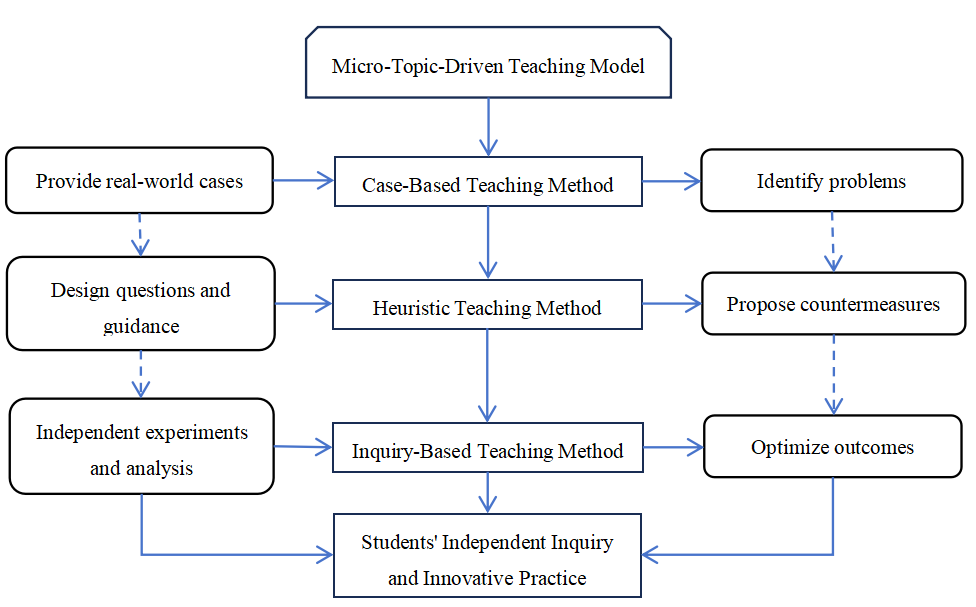
The core strength of the micro-topic-pedagogy teaching model lies in its ability to integrate case-based, heuristic, and inquiry-based pedagogies into a cohesive and adaptable instructional framework, Figure 1 illustrates the integration of case-based, heuristic, and inquiry-based pedagogies within the MTP framework, highlighting their roles in problem identification, solution development, and outcome validation. This multi-dimensional integration fosters an engaging, practice-oriented learning environment that enhances students innovation capacity, self-directed learning, and practical skills.
By structuring learning around specific, real-world problems, the micro-topic model enables students to engage in research-driven inquiry. Initially, problem-based cases ground their investigations in authentic contexts, followed by heuristic strategies that stimulate critical thinking and guided exploration. Finally, inquiry-based activities allow students to validate and refine their proposed solutions through systematic research. This sequential and integrative approach transforms students from passive recipients of knowledge into active explorers and problem solvers.
The micro-topic model effectively harnesses multi-dimensional integration to cultivate student agency and enthusiasm for learning. Through iterative problem-solving, students refine their approaches and develop solutions that bridge theoretical understanding with practical application. This comprehensive pedagogical strategy not only strengthens students’ theoretical foundations but also enhances their cognitive flexibility and creative problem-solving abilities, preparing them to meet the Design questions and guidance evolving demands of modern engineering education.
3. Design and Implementation of the Micro-Topic-Pedagogy Teaching Model
3.1. Principles of Micro-Topic Design and Implementation
Topic Selection Criteria: The design of micro-topics should align closely with the instructional objectives of the course, taking into account students’ disciplinary backgrounds, interests, and future practical applications. Effective topic selection ensures that students not only deepen their understanding of course content but also identify real-world applications of theoretical concepts. Furthermore, selected topics should be sufficiently challenging to stimulate intellectual engagement without exceeding students’ cognitive and technical capabilities. Topic selection should ensure diversity and representativeness by incorporating a range of real-world problems from different industry sectors. The design process must integrate students’ academic progression, cognitive levels, and practical needs to enhance both conceptual comprehension and applied learning.
Establishing Instructional Objectives: Clearly defined and specific instructional objectives are essential to ensuring that micro-topics align seamlessly with the course curriculum. Each micro-topic should facilitate mastery of core theoretical knowledge while simultaneously fostering students’ ability to solve practical problems. Thus, instructional goals should encompass not only knowledge acquisition but also the development of practical skills, teamwork, and innovative thinking. When formulating objectives, instructors should consider both the expected learning outcomes and the experiential gains students accumulate throughout the micro-topic research process.
The micro-topic implementation process follows a structured sequence:
- Preliminary Investigation: Collect relevant data to inform instructional design, ensuring alignment with both academic and industry requirements.
- Instructional Design: Based on the investigation findings, define clear learning objectives and select appropriate teaching methodologies.
- Teaching Implementation: Conduct instructional sessions while documenting classroom activities and student engagement for subsequent analysis.
- Evaluation and Optimization: Assess learning outcomes through data-driven analysis and refine teaching strategies based on student feedback.
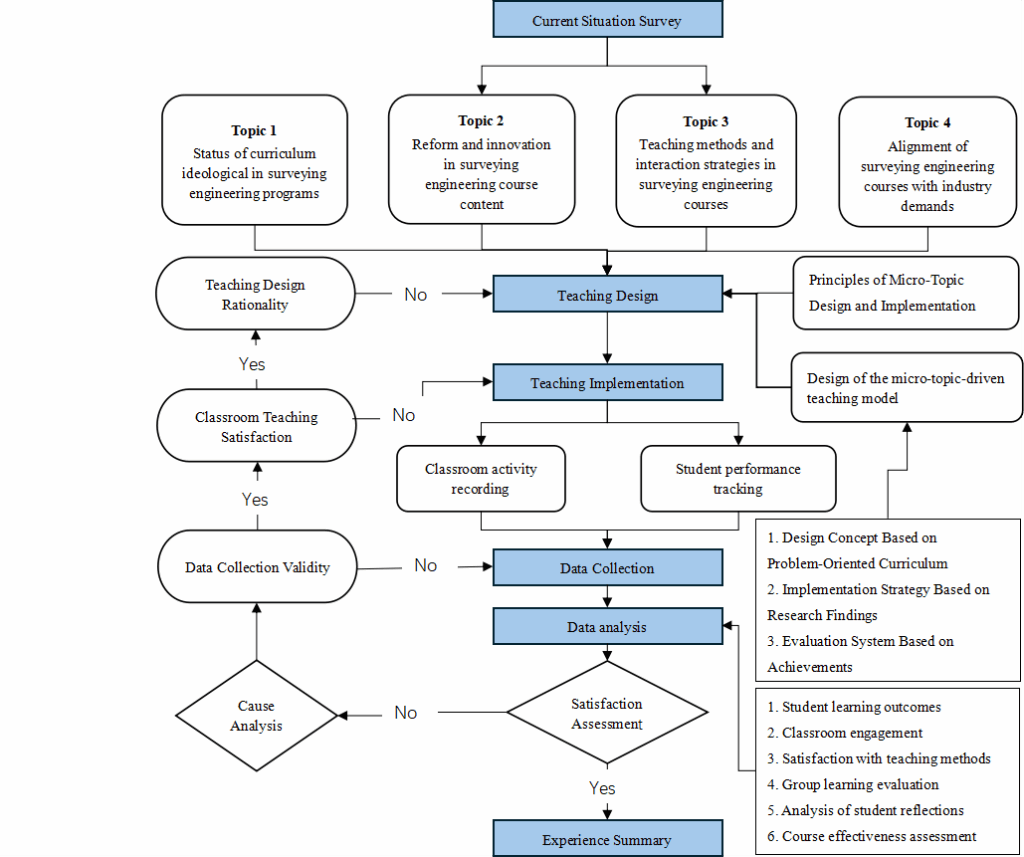
Taking the surveying and mapping engineering discipline as an example, the implementation process (as illustrated in Figure 2) begins with an assessment of the current state of professional courses, including ideological-political integration, curriculum development, teaching methodologies, and industry demands. This information informs the instructional design to ensure that course content remains relevant to professional industry standards.
During the teaching implementation phase, instructors systematically document student engagement and classroom interactions. Learning outcomes are then evaluated through data analysis, and iterative refinements to teaching methods are made based on feedback. This cyclical optimization process enhances teaching quality and fosters improved student learning experiences. Specifically, for surveying and mapping engineering students, this structured implementation framework provides robust support for the development of practical skills and innovative problem-solving capabilities.
3.2. Classroom Activity Design Under the Micro-Topic-Pedagogy Approach
- Case Analysis and Discussion
Through case-based learning, students gain a deeper understanding of the background and complexity of real-world problems. In micro-topic-pedagogy classrooms, instructors should select representative real-world cases tailored to students’ learning needs. These cases serve as tools to help students identify key issues, analyze root causes, and develop feasible solutions. Case analysis not only facilitates classroom discussions but also provides students with an effective means of applying theoretical knowledge to practical scenarios.
- Heuristic Question Design
Instructors should create thought-provoking problem scenarios that stimulate critical thinking. Under heuristic teaching principles, carefully crafted, challenging questions guide students to explore problems from multiple perspectives and investigate possible solutions. The design of heuristic questions should be closely aligned with real-world challenges, encouraging students to go beyond surface-level observations and explore underlying causes and fundamental principles. This heuristic guidance expands students’ thinking and fosters an innovative mindset.
- Inquiry-Based Task Assignments
The design of inquiry-based tasks is crucial in micro-topic teaching. Instructors should introduce tasks that are challenging, open-ended, and practice-oriented, allowing students to engage in independent exploration while solving problems. For example, in project-based learning, instructors should incorporate multiple stages of exploration characterized by variability and uncertainty. Students are encouraged to utilize experimental methods, field investigations, and data analysis to independently identify and address research problems. Inquiry-based tasks cultivate students’ abilities in independent thinking and research while reinforcing their theoretical knowledge through practical applications.
3.3. Role Positioning of Teachers and Students
- The Guiding Role of Teachers
In micro-topic-pedagogy teaching, the role of the teacher extends beyond that of a knowledge transmitter to that of a facilitator and feedback provider. Throughout the design and implementation of micro-topics, instructors are responsible for offering effective guidance in topic selection, research direction, access to learning resources, and feedback on students’ findings. Teachers should encourage students to pose challenging questions, engage in reflective learning, and iteratively refine their research approaches. Additionally, timely and specific feedback is crucial in helping students refine their problem-solving strategies and enhance their learning outcomes.
- The Active Role of Students
The micro-topic-pedagogy teaching model emphasizes student-centered learning, requiring students to actively participate in topic design, research, discussion, and presentation. In this process, students must develop both independent thinking and collaborative teamwork skills. By engaging in self-directed inquiry, they take ownership of problem-solving and progressively enhance their innovative and practical competencies. Through active participation in micro-topics, students transition from passive recipients of knowledge to proactive learners and researchers.
- Interactive Mechanism Between Teachers and Students
Effective teacher-student interaction is fundamental to optimizing learning outcomes in micro-topic-pedagogy teaching. Teachers not only serve as knowledge facilitators but also as cognitive mentors and research advisors. By designing thought-provoking questions and structuring problem-solving tasks, instructors guide students through the entire process—from identifying research topics and formulating strategies to executing tasks and conducting reflective analysis. In this dynamic learning environment, students engage in independent inquiry and collaborative problem-solving, progressively refining their critical thinking and problem-solving abilities.
This interactive mechanism fosters a positive learning attitude and creates an iterative feedback loop that supports continuous learning and improvement. By establishing an interactive and inquiry-driven classroom environment, micro-topic teaching significantly enhances student engagement, practical application skills, and overall learning effectiveness.
4. Evaluation and Feedback on the Effectiveness of Micro-Topic Teaching
4.1. Data Analysis and Assessment Framework of Teaching Effectiveness
To objectively and systematically evaluate the effectiveness of the micro-topic-pedagogy teaching model, it is essential to establish a structured data analysis and assessment framework. First, quantitative data are collected through final exams and questionnaire surveys to measure students’ overall satisfaction with the micro-topic approach, their recognition of the teaching model, and their learning experience.
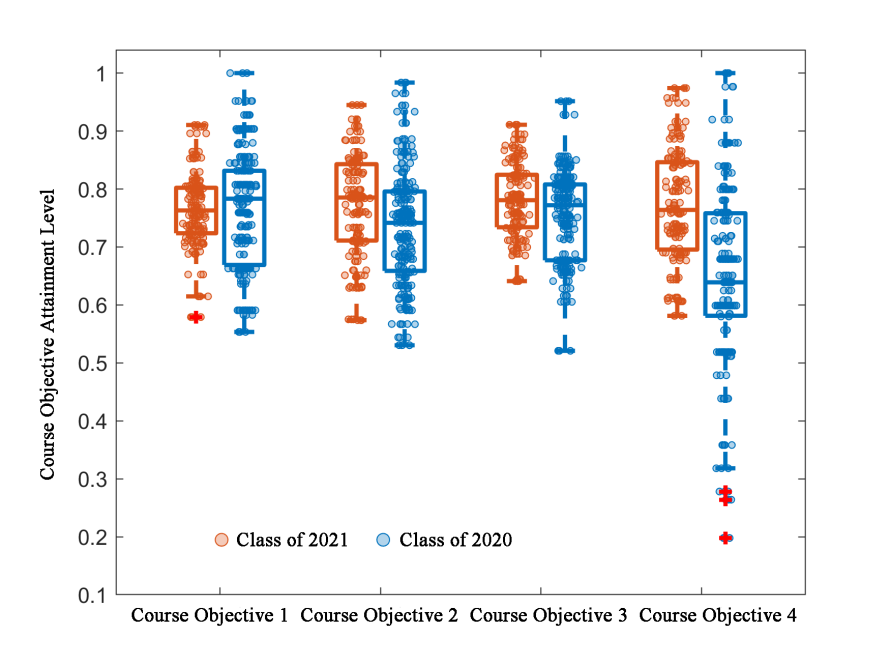
After implementing the micro-topic teaching model among students in the Class of 2021, significant improvements in academic performance were observed. A quasi-experimental design was implemented with 132 students (53 in the experimental group using the micro-topic model; 79 in the control group with traditional instruction). The average score increased to 77.5, marking an approximate 5-point improvement compared to the Class of 2020 (p<0.01), as illustrated in Figure 3. This enhancement can be attributed to the integration of personalized learning, the combination of theoretical and practical applications, and the cultivation of critical thinking skills.

Boxplot analysis indicates that the distribution of scores among the 2021 cohort is more concentrated, with a higher median compared to the 2020 cohort. The narrower interquartile range suggests greater consistency and stability in academic performance. Additionally, violin plot analysis reveals that the middle section of the 2021 cohort’s distribution is wider, indicating a concentration of scores around the mean. In contrast, the 2020 cohort exhibits a wider distribution in the lower score range, suggesting a prevalence of lower academic performance.
These observed improvements not only reflect an overall enhancement in student performance but also demonstrate the positive impact of the micro-topic-pedagogy teaching model in improving educational quality and student learning outcomes.
4.2. Analysis of Course Learning Outcomes
A further comparison of the achievement levels of four course objectives between the 2021 and 2020 cohorts reveals that students in the 2021 cohort demonstrated overall higher attainment across all objectives, as illustrated in Figure 4. The specific findings are as follows:
The mean attainment level for each course objective in the 2021 cohort is consistently higher than that of the 2020 cohort, indicating better knowledge acquisition and skill application among students who experienced the micro-topic-pedagogy teaching model. The distribution of attainment levels in the 2021 cohort is more concentrated, reflecting improved teaching effectiveness and greater stability in students’ learning outcomes.
These results suggest that the micro-topic-pedagogy teaching model significantly enhances students’ achievement of course objectives, reinforcing its positive impact on engineering education quality and student learning performance.
The course objectives were designed to comprehensively cover the full spectrum of learning – from theoretical understanding to practical application, and from technical proficiency to professional responsibility – aligning with the educational requirements of engineering surveying.
Course Objective 1: Students should be able to accurately articulate complex problems in engineering surveying.
Course Objective 2: Emphasizes the mastery and application of fundamental theories, requiring students to propose solutions for complex surveying challenges.
Course Objective 3: Focuses on equipping students with the ability to select appropriate technical approaches in real-world engineering scenarios.
Course Objective 4: Highlights students’ ability to analyze the societal impact of engineering surveying and cultivate a sense of professional responsibility.
These well-structured course objectives provide a solid foundation for training high-quality engineering surveying professionals, ensuring that students develop both technical competencies and ethical awareness in their field.
In addition to quantitative assessments, instructors systematically recorded student’s classroom performance to evaluate their engagement in team collaboration, classroom discussions, and micro-topic research activities. Student presentations, research reports, and other project-based deliverables also served as key indicators of their actual learning outcomes.
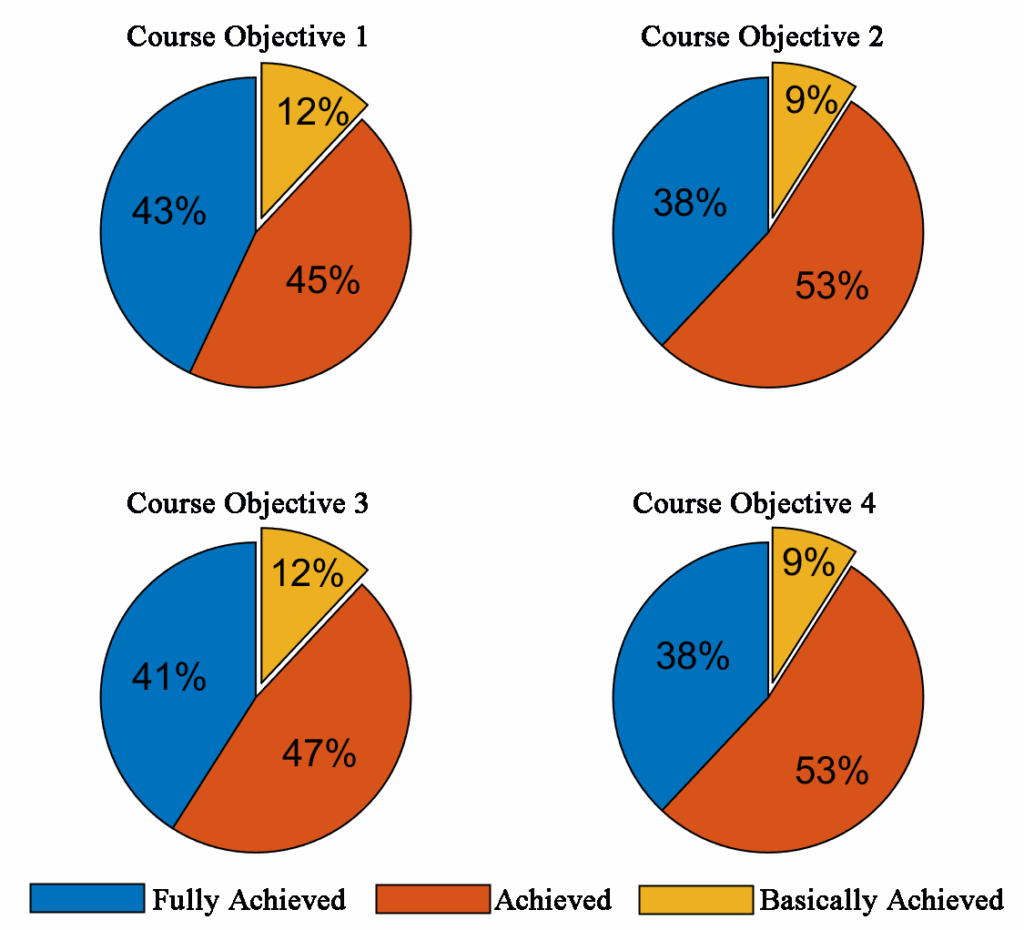
Pie chart analysis further confirmed these findings (Figure 5), showing that the attainment rates of all four course objectives exceeded 88%. This suggests that the majority of students not only successfully achieved the intended learning goals but also demonstrated high levels of enthusiasm and recognition for the classroom activities and the teaching model. The data indicate that the micro-topic-pedagogy teaching model effectively stimulates students’ learning interest, while enhancing their self-directed learning abilities and problem-solving skills.
These results highlight the strong applicability of the micro-topic teaching model in New Engineering Education (NEE) disciplines, providing a robust framework for cultivating practice-oriented and innovation-driven engineering talents.
The assessment framework is designed around the “growth as an outcome” principle, emphasizing both students’ final achievements and their developmental progress throughout the research process. Beyond technical competencies, the evaluation also considers students’ improvements in critical thinking, collaboration skills, and social responsibility.
By integrating boxplot and pie chart analysis, instructors can continuously refine teaching methodologies, ensuring that the micro-topic approach sustainably enhances both educational quality and student competencies. This dual-impact strategy supports the long-term advancement of teaching effectiveness and student skill development, reinforcing the micro-topic model as a valuable innovation in engineering education reform.
4.3. Student Feedback and Performance Evaluation
To comprehensively assess the impact of the micro-topic-pedagogy teaching model on students’ learning outcomes and skill development, a mixed-methods evaluation framework was implemented, integrating quantitative and qualitative approaches. Quantitative analysis utilized exam scores, performance metrics, and Likert-scale surveys to measure progress in knowledge acquisition, skill application, and teamwork. Results revealed that 85% (95% CI: 80%-90%) of students rated the model as “satisfactory” or “very satisfactory,” with 42% expressing strong approval (Figure 6). These findings underscore the model’s efficacy in meeting diverse learning needs and enhancing educational experiences through structured, outcome-focused tasks.
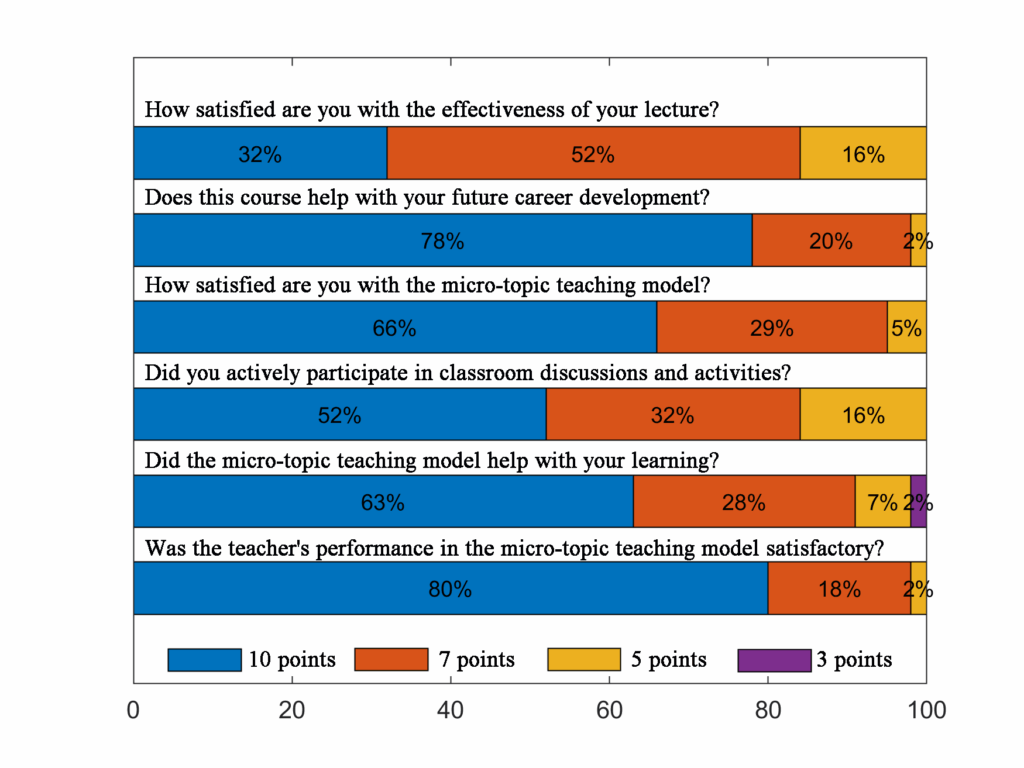
Qualitative insights were derived from student reflections, classroom participation records, and team role analyses, offering nuanced perspectives on innovation capabilities, practical skills, and self-directed learning growth. This approach enabled instructors to track individual development trajectories and tailor guidance effectively. Complementing this, a dynamic assessment mechanism provided real-time monitoring of student progress through iterative feedback loops. For instance, 78% of students reported that instructor interventions significantly advanced their research, while 67% noted improved innovative thinking, highlighting the value of adaptive teaching strategies in fostering intellectual agility.
The integration of continuous feedback allowed educators to refine instructional content and pedagogical tactics iteratively. By aligning teaching adjustments with student-reported challenges and successes—such as optimizing project timelines or integrating peer-review cycles—the model evolved to better support problem-solving proficiency and critical thinking. This responsive framework not only sustained student motivation but also ensured that micro-topics remained aligned with both academic objectives and real-world relevance, ultimately cultivating adaptable, solution-oriented learners prepared for complex professional environments.
5. Advantages and Challenges of the Micro-Topic-Pedagogy Teaching Model
5.1 Advantages of the Teaching Model
One of the key advantages of the micro-topic-pedagogy teaching model is its ability to enhance student agency and engagement. By integrating real-world problems into the classroom, this model encourages students to actively participate in topic selection, research, and outcome presentation. Unlike traditional passive learning methods, the micro-topic approach transforms students into active inquirers, fostering creativity and critical thinking throughout the problem-solving process. Students are not merely receiving knowledge but rather developing a comprehensive skill set through research-based learning and real-world application. This includes teamwork, leadership, and self-directed learning abilities.
The blended pedagogical approach of case-based, heuristic, and inquiry-based learning significantly enhances teaching effectiveness, as evidenced by a 23% improvement in cross-disciplinary problem-solving competencies (p<0.01). As students engage in problem identification, strategy development, and result presentation, they experience an iterative learning cycle that embodies the principles of ‘problems define research, solutions drive inquiry, and outcomes demonstrate learning’. The seamless integration of multiple teaching strategies not only reinforces theoretical knowledge but also strengthens students’ problem-solving skills through real-world application. For example, experimental group students demonstrated statistically significant advancements in resolving interdisciplinary challenges, such as optimizing smart city infrastructure through IoT-enabled simulations. This approach effectively promotes both practical competency and innovative thinking, fostering students’ comprehensive professional development.
5.2 Challenges and Recommendations for Improvement
Despite its clear benefits, the implementation of the micro-topic-pedagogy teaching model presents several challenges. First, it imposes higher instructional demands on teachers, requiring meticulous design of research topics aligned with course objectives, continuous guidance and feedback, and effective management of multiple student groups at varying research stages within limited class time. Balancing topic complexity with time constraints further complicates classroom dynamics. Second, ensuring the practical relevance and feasibility of micro-topics remains critical. Overly simplistic topics risk reducing engagement, while overly complex ones may exceed students’ capabilities, leading to frustration. Striking a balance between challenge and achievability is essential, alongside aligning topics with professional aspirations and industry demands to enhance authenticity and applicability.
To address these challenges, strategic improvements are proposed. For instructional workload, group-based assignments and staged feedback mechanisms can optimize classroom management, while efficient resource allocation ensures quality guidance. For topic design, educators must calibrate difficulty levels to match student competencies and integrate real-world engineering applications to bolster relevance. For example, incorporating industry-aligned projects (e.g., sustainable infrastructure design) ensures students gain practical skills while solving authentic problems. These adjustments not only mitigate implementation hurdles but also enhance the model’s educational impact.
In conclusion, the micro-topic-pedagogy teaching model significantly enhances student engagement, critical thinking, and learning outcomes. However, its effectiveness hinges on resolving challenges related to teacher workload, topic complexity, and classroom logistics. By refining topic design, optimizing resource distribution, and aligning objectives with industry needs, educators can maximize the model’s potential. This approach not only supports engineering education reform but also equips students with interdisciplinary problem-solving skills essential for modern technological landscapes. Ongoing refinement through multi-stakeholder engagement will further solidify its role in fostering adaptable, innovative professionals.
6. Conclusion and Future Prospects
This study provides an in-depth exploration of the innovative micro-topic-pedagogy teaching model and its effectiveness within the New Engineering Education (NEE) paradigm. By seamlessly integrating case-based, heuristic, and inquiry-based teaching strategies, the micro-topic approach offers students a balanced platform for theoretical learning and practical application. It significantly enhances their self-directed learning abilities, creative thinking, and hands-on skills. Throughout the micro-topic learning cycle, students experience a complete inquiry and problem-solving process, from problem identification and strategy development to final presentation of results. This model not only improves academic performance but also strengthens students’ competence in tackling complex engineering challenges.
The micro-topic-pedagogy teaching model presents new perspectives and practical insights for educational reform. By bridging theoretical learning with real-world problem-solving, it overcomes limitations of traditional instruction and significantly enhances students’ comprehensive skills. The model proves particularly effective in developing interdisciplinary thinking, teamwork, and innovation awareness. Its flexibility and applicability make it a valuable reference model for curriculum reform across various disciplines, offering new pathways for talent development in modern higher education.
Despite its proven educational benefits, the implementation of the micro-topic approach still faces challenges. Future research and practice should further refine micro-topic design and execution. For instance, leveraging artificial intelligence (AI) and big data analytics could enable more personalized feedback and topic customization, better accommodating students’ diverse learning needs. Additionally, as the demand for interdisciplinary knowledge continues to grow, integrating broader subject areas into micro-topic research will be a key direction for future exploration. Technology-driven optimization and improved resource allocation will allow the micro-topic model to adapt to increasingly complex and diverse educational environments.
Further innovation can also arise from combining the micro-topic model with other advanced teaching methodologies, such as Project-Based Learning (PBL) and the flipped classroom. The synergy of multiple pedagogical approaches would broaden learning experiences, address varied learning preferences, and further enhance instructional effectiveness. As education reform is a continuous process, the ongoing development and innovation of the micro-topic teaching model will provide new opportunities for future teaching methodologies, driving higher education toward greater innovation and practical excellence.
Conflict of Interest
The authors declare no conflict of interest.
Acknowledgment
This research was supported by the Research and Practice Project of Higher Education Teaching Reform in Hebei Province under Grant No. 2023GJJG295. The authors would like to express their sincere gratitude to the funding body for its valuable financial support, which has been instrumental in facilitating the completion of this study.
- J. Gao, G. Chen, Q. Wang, Y. Liu, “Industry-specific transformation and upgrading of surveying and mapping engineering programs under the new engineering paradigm.” Bulletin of Surveying and Mapping, 2022(5), 166–169, 2022. doi: 10.13474/j.cnki.11-2246.2022.0160
- M. Ye, Y. Deng, Y. Zhang, L. Zhu, “Chinese Paradigm in the Transformation of Engineering Education: Explorational Research and Theoretical Formation of ‘Emerging Engineering Education’.” Research on Science and Education Development, 3(3), 18–35, 2023. doi: 10.20105/j.cnki.jstes.2023.03.003
- Q. Liu, “Training of innovative applied talents in materials science under the new engineering paradigm—A review of Material Technology and Equipment.” Nonferrous Metals Engineering, 12(1), 144, 2022. doi: 10.3969/j.issn.2095-1744.2022.01.021
- Z. Xu, Y. Li, Y. Dong, W. Zhou, “Semi-open project-based training for complex engineering problem-solving abilities.” Computer Education, 2019(2), 37–40, 2019. doi: 10.16512/j.cnki.jsjjy.2019.02.010
- S. Liu, “Reconstruction and innovation of talent training mode for new engineering practice teaching.” Journal of Hubei Normal University (Philosophy and Social Sciences Edition), 43(2), 113–117, 2023. doi: 10.3969/j.issn.2096-3130.2023.02.017
- Z. Li, J. Gao, “Exploration and practice for curriculum ideology and politics construction of characteristic specialty in the age of artificial intelligence: Taking the surveying and mapping engineering in China University of Mining and Technology as an example.” Bulletin of Surveying and Mapping, 2022(S1), 17–20, 2022. doi: 10.13474/j.cnki.11-2246.2022.0504
- B. Zhang, L. Xu, J. Pan, H. Li, “Development of an industry-education-integrated AI talent training system under the new engineering paradigm.” Computer Education, 2023(5), 1–6, 2023. doi: 10.16512/j.cnki.jsjjy.2023.05.034
- S. Wang, Y. Zhang, F. Han, L. Chen, L. “Exploration and practice of talent training for the integration of bachelor’s, master’s and doctoral degrees in surveying and mapping engineering major under the background of smart surveying and mapping.” Bulletin of Surveying and Mapping, 2024(8), 172–176, 2024. doi: 10.13474/j.cnki.11-2246.2024.0830
- O. Xie, X. Niu, Z. Cao, S. Zhu, “Exploration on the Practical and Innovative Talents Training Mode in Local Colleges under the Background of ‘New Engineering’.” Innovation Education Research, 8(5), 629–634, 2020. doi: 10.12677/CES.2020.85103
- Zhu, C., Li, N., Fu, C., Shen, L. “Application of Case-Based Teaching Method of ‘Virtual and Real Combination’ in Fermentation Engineering Teaching.” Journal of Dezhou University, 38(4), 45–49, 2022. doi: 10.3969/j.issn.1004-9444.2025.02.014
- F. Xue, Y. Zheng, H. Lin, B. Feng, “Evaluation of micro-lecture combined with case-based teaching in orthopedic clinical nursing education.” Chinese Journal of Metallurgical Industrial Medicine, 40(5), 60–64, 2023. doi: 10.13586/j.cnki.yjyx1984.2024.05.084
- Z. Zhao, L. Long, Z. Liu, L. Tan, F. Jia, “Application of Case-based Teaching Method in Teaching Postgraduates of TCM Geriatrics.” Chinese Medical Records, 33(6), 15–18, 2022. doi: 10.3969/j.issn.1672-2566.2024.09.027
- M. K. Samira, “The Role of Arts in Education: Enhancing Creativity and Critical Thinking.” Research Output Journal of Education, 2024 3(3):66-70. doi: 10.64252/1pc28s62
- J. Zhang, G. Shi, Q. Chen, J. Liu, “Application of Case-Based Teaching Method in Ophthalmology Education for Clinical Medicine under the Excellence Physician Training Program.” Chinese Higher Medical Education, 39(2), 47–50, 2023. doi: 10.3969/j.issn.1002-1701.2024.08.061
- T. Zhai, “Application of inquiry-based teaching in the comprehensive materials experiment course.” China Educational Technology Equipment, 45(5), 88–92, 2023. doi: 10.3969/j.issn.1671-489X.2024.15.074
- J. Liu, “Application of micro-class combined with problem-based learning teaching method in burn surgery teaching.” Chinese Journal of Burns, 42(4), 25–28, 2023. doi: 10.3969/j.issn.2095-0616.2022.19.026
- D. Opanga, N. Venuste, “The effect of the use of English as a language of instruction and inquiry-based learning on biology learning in Sub-Saharan Africa secondary schools: A systematic review of the literature.” African Journal of Research in Mathematics, Science and Technology Education, 26(3), 275–285, 2022. doi: 10.1080/18117295.2022.2141961
- C. Wu, X. Jiang, “Inquiry-based Teaching Method Practice in Experimental Course Teaching of Synthesis and Preparation of Nanomaterials.” Journal of Hubei Polytechnic Institute, 39(2), 54–58, 2023. doi: 10.3969/j.issn.2095-4565.2023.02.012
- G. Neda, R. Dragana, “Problem-based and inquiry-based learning in the teaching of nature and society.” Journal of Education, Society & Multiculturalism, 3(2), 99–116., 2022. doi: 10.2478/jesm-2022-0020
- M. Gube, S. P. Lajoie, “Adaptive expertise and creative thinking: A Synthetic review and implications for practice.” Thinking Skills and Creativity, 35, 100630, 2020. doi: 10.1016/j.tsc.2020.100630
- D. Zhang, Y. Yang, S. Wang, “Application of Inquiry Teaching in the Practice of Pharmacognosy Teaching.” Journal of Dali University, 4(10), 56–59, 2019. doi: 10.3969/j.issn.2096-2266.2019.10.012
- J. Beattie, M. Binder, H. Beks, S. Richards, “Influence of a rural longitudinal integrated clerkship on medical graduates’ geographic and specialty decisions: A constructivist grounded theory study.” BMC Medical Education, 24(1), 795, 2024. doi: 10.1186/s12909-024-05793-5
- J. Jin, X. Duan, X. Li, W. Zhang, “Research on instructional design in the era of intelligent education from a new constructivist perspective.” Journal of Beijing Electronic Science and Technology Institute, 32(2), 116–127, 2024. doi: 10.3969/j.issn.1672-464X.2024.02.012
- L. Ying, “Application of case-based teaching in college students’ mental health education course reform.” China Educational Technology Equipment, 2022(9), 114–116, 2022. doi: 10.3969/j.issn.1671-489X.2022.09.114
- C. Li, Z. Wang, L. Sun, “Practical exploration of heuristic teaching in petroleum engineering education.” Education Modernization, 5(34), 48–49, 2018. doi: 10.16541/j.cnki.2095-8420.2018.34.023
- R. Sam “Systematic review of inquiry-based learning: assessing impact and best practices in education.” F1000Research 2024, 13:1045, 2024. doi: 10.12688/f1000research.155367.1
No related articles were found.