
Smart Ambulance: Speed Clearance in the Internet of Things paradigm using Voice Chat

Adv. Sci. Technol. Eng. Syst. J. 4(6), 280–284 (2019);
 DOI: 10.25046/aj040635
In recent years, researchers have focused on the development of many applications of information and communication which could lead to enhance human life. The congestion and road traffic are one of the most problems facing the ambulance transportation to provide fast healthcare services for patients. In this work, a tracking and data transfer system has been introduced such that a central monitoring and tracking unit can observe ambulance using MQTT protocol where each vehicle is occupied with the embedded system unit. When an ambulance being on the road it will communicate with other cars by means of socket communication whenever the ambulance enters a new region of the city. Chat between drivers has been designed using speech recognition library-based Google API. The proposed system has been designed and implemented using a python source network programming.
1. Introduction
IoT is the next step of the evolution of the internet, which merge heterogeneous ubiquitous devices by means of network connectivity to improve the entire system. The devices could be home appliances, environmental, vehicle or buildings. Smart city is one of IoT applications, where the final goal is to improve life quality of people [1]. Some problems such as accident, traffic congestion, emergency vehicle, and large number of cars transportation are one of the most yet problems in large cities. The idea of smart city has been introduced the objective to find solutions for such problems. The traffic light control system is not fully adapted to different traffic situations that can found in the course of a day. According to street situation, it is needed that traffic flow being controlled and managed according to the current situation under the control of an on-site traffic officer, where the traffic lights can be controlled dynamically [2].
Different from other IoT applications, the internet of vehicle (IoV) has dynamic characteristics and frequently changing network topologies along with many existing communications that expose nodes of IoV. When vehicles are capable of transfer information between the vehicular ad-hoc networks (VANETS) are formed. Mobility is an essential characteristic in VANETS, but unlike MANETS fixed mobility patterns are followed in vehicular scenarios. Normally, there are two types of communications can be found which are: Vehicle to Vehicle communications (V2V) that as many vehicles formed a VANETS and Vehicle to Infrastructure communication (V2I) that is hybrid VANETS with both fixed and mobile nodes. The fixed infrastructure can be easily connected to the internet acting as an access point for the VANETS or MANETS [3, 4].
Traffic jam on the road is one of the most issues that ambulance, fire brigades, and police are faced. They may get stuck in this status, which could threat patients’ lives. Also, currently, these vehicles use the siren to inform other road user to clear the path which is annoying approach same times. In this work, we developed a voice chat system such that each car would have an embedded card (Raspberry pi3) with sound system (Mike and speakers) to encounter the proposed problem. The developed system is fully auto smarted and hand free.
The rest of this paper is organized as follows; section two provides a survey of the most related work. Section three provide the require preliminaries in this work such as IoT protocol, socket programming, and speech recognition. Section four discussed the proposed system design. Results and discussion are introduced in section five and finally section six the conclusion.
2. Related Work
In [5] introduce an IoT scenario to clear the traffic light by sending a command such that the ambulance would have a clear path without any delay. They used an embedded system to control traffic lights. In [6] proposed smart home system with multi-function where voice command is used to control the home appliances. The proposed system can recognize user voice independent of the accent with a dedicated hardware module. In [7] proved speech recognition transcription system for healthcare application. The proposed system can be used by counselor to record the speech of patient and convert it to text in data base systems.
In [8] proposed a central monitoring and control system using the internet for a traffic management system for smart city controlled by traffic using a smartphone. In [9] proposed a wireless detection, and monitoring system for vehicle speed. An intelligent wireless monitoring is designed to identify speed of the vehicle with a protocol laboratory environment which produces random data on vehicle speed. The proposed system has been designed based Java script socket programming for vehicle monitoring using server computer. In [10] Provides image processing algorithm to track vehicles such that the location of the vehicle and any malicious activity could be discovered. They proposed a smartphone application which mail image of the interior and exterior environment of the vehicle along with its GPS location to the CIS.
In [11] discussed the connected car concept for car maintenance they use the MQTT Protocol to implement the predictive system by sharing different types of data with backend application. In [12] implemented a wifi based road sign to improve car driver awareness by using Qduino provides Arduino API where real time multithread event handling are presented. In [13] discusses in the client server application using socket programming in a distributed.
In this work, ambulance tracking with data transfer system has been design and implemented such that a control and emergency monitoring and tracking CEMT can observe ambulance using MQTT protocol. Where each vehicle is provided with an embedded system (Raspberry pi3) unit. When an ambulance is being in the road it will communication with other vehicles or road traffic by means of socket communication. Chat between drivers has been designed and implemented using speech recognition library based Google API. The voice chat has been designed and implemented experimentally. The proposed system design is combination different work discussed previously like [5, 8, 9, 12].
- Preliminaries
- MQTT Protocol
The message Queuing Telemetry Transport (MQTT) protocol is a machine to machine M2M protocol, which runs over TCP/IP. It uses a Publish/subscribes model between IoT nodes. A broker cloud server (Eclipse cloud server) is the station where the publisher nodes send their messages in a specific topic, where the client node checks these topics. Nodes may subscribe in some topics and not in another. Also, other nodes can publish in a specific topic. If for an instant, a node publishes in a topic, then each node subscribes in that topic would receive the message while other nodes whose not subscriber in that topic would not receive the message [14]. In this work, all messages which are transferred between IoT nodes have been encrypted in the publisher and decrypted in the subscriber side using One Time Pad (OTP) technique and DNA computing. Figure 1. Shows a schematic diagram at MQTT protocol.
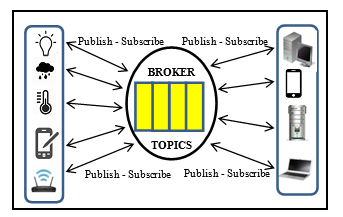 Figure 1: Schematic diagram at MQTT protocol.
3.2. Socket Programming and Interface
The Socket is communication channel between computers based internet protocol. Socket programming is the using of application socket programming to establish the communication link. In terms of server client schemes, the client is an application program that sends a request to the server and waits for response by the server. Socket interface could be programmed by many high level languages; in this work, python network programming has been used which provides many modules such as socket ( ), bind ( ), listen ( ), accept ( ), connect ( ), send ( ), recv ( ). Figure 2. shows the structured programming of socket on both sides where the ambulance is considered as a server computer while the other cars in the road are a client. [15, 16].
- Speech Recognition
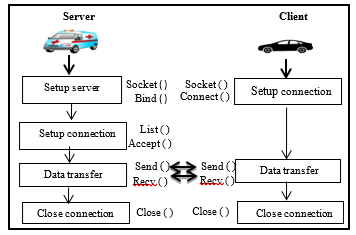 Fig. 2 Structure and Flow Chart Socket Programming.
The final goal of this work is to implement a hand free personal assistance for car’s a driver which uses speech recognition to convert speech into text and in the other side (other cars) convert the text into speech. By doing so, the proposed system will not effect on the drivers focus on the road. The proposed system is achieved by using different libraries based python such as: speech recognition, Pyaudio and espeak. The speech recognizer has been designed by using Google’s speech recognition application interface (API) [17, 18]. 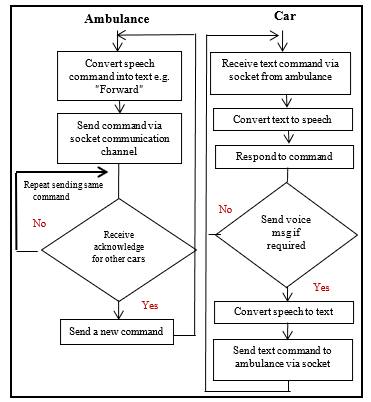 Figure 3. Shows the proposal voice to text and text to the voice system design of an ambulance and cars.
4. Proposed System Description
Figure 4. Shows system design; it consists of a control and emergency monitoring and track ing CEMT which monitor and communicate with ambulance by using MQTT protocol. The CMET is located in the hospital, its responsibility is to send command and arrange the work of ambulance if there any emergency case. Also, it tracks the ambulance when moving in the city. Each ambulance vehicle can communicate with other cars on the road as a (V2V) by means of voice to text and text to voice; this has been done by using socket programming along with MQTT protocol. The proposed system works as follows:
- When an emergency case is happened for a patient. The CMET send a message to ambulance in the hospital via MQTT. The message structure is shown in Figure 5. Which include task such as the location of the patient and his status,
- When an ambulance moves to the patient location, it will send its latitude and longitude to the CMET which will convert it to a location in the maps. For this, a google maps has been used and a python library “geopy” is used.
- When ambulance responded to that order. It will send its locations to the CEMT each time it enters a new region.
- The ambulance will broadcast its IP address and list of ports for socket communication using MQTT such that
- each car in that region will receive the IP and ports of the ambulance.
- The driver of the ambulance can start conversation with neigh boring cars by sending voice message which would be converted into a text that is sent to other cars.
- Cars receive text message and convert it into a voice message and respond to the required command.
In these works four commands have been proposed, namely: Forward, Right, Left, and Kill. If the ambulance drivers want to speed up forward and there is a car in front of the ambulance. Then the driver
can send a voice command message “Forward” this voice message is converted into a text message and sent using a socket interface. When the front car receives a text message it will convert it into a voice message again. By doing so, the process will not disturbed the drivers. The same is done with the other commands left and right. The “kill” command will close any connection between the ambulance and other cars preparing to enter a new region where the process is repeated again.
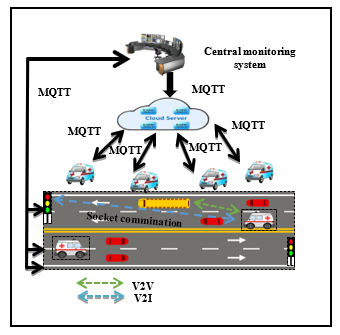 Figure 4: Propose System Design.
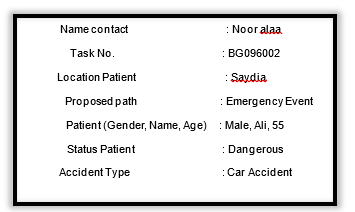 Figure 5: Standard Messages for Car Ambulance.
5. Result and Discussion
A monitoring and tracking system of ambulance has been designed which uses two techniques MQTT as an IoT protocol and socket programming. MQTT is used when the ambulance and vehicle are away from the central units which give the required commands to ambulance. While socket communication is used to transfer immediate and direct commands between ambulance and another vehicle to clear the path for the ambulance and hence decrease time for the patient to reach the hospital. Fig. 6 (A) and (B) shows a sample of speech recognition and commands. The proposed system has been designed and implemented experimentally and tested by using an embedded system represented by a raspberrypi3 which is the main device used in this work, it has a 1.4 GHZ, quad core process 1G SDRAM, HDMI, USB ports, DSI display port and other features provide fast processing and internet connectivity. Google speech recognition API has been used which is not quite accurate for any accent and take same times to recognize the speech depends on the connection speed of the internet. The proposed system is a promising technique which will enhance healthcare services provided by health organization to improve the life of people.
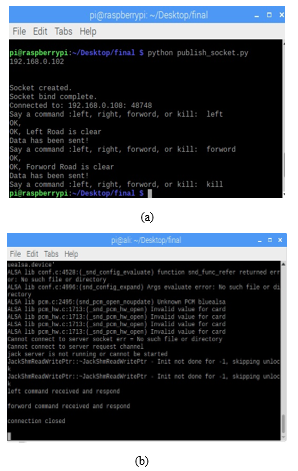 Figure 6: Practical Implementation of Ambulance Voice Chat Based Socket Programming.
Conclusion
In this work, a CMET control the operation of the ambulance through MQTT protocol. Also, socket communication is implemented for voice chat between ambulance and other cars in the roads. The speech commands are converted into a text by using Google API. The speech recognition is not accurate enough, because the process depends a speech accent, also, ambient could affect the accuracy of recognition. Multi experimental and different accent has been used to reach a good accuracy finally.
- A., Salahuddin, M.A., Hussini, S.J., Khreishah, A., Khalil, I., Guizani, M. and Al-Fuqaha, “A Smart cities: A survey on data management, security, and enabling technologies” in IEEE Communications Surveys & Tutorials, vol. 19, pp. 2456-2501, 2017.
- Tammishetty, S., Ragunathan, T., Battula, S.K., Rani, B.V., RaviBabu, P., Nagireddy, R., Jorika, V. and Reddy, V.M, “IOT-based traffic signal control technique for helping emergency vehicles” in Proceedings of the First International Conference on Computational Intelligence and Informatics, pp. 433-440. Springer, Singapore, 2017.
- Wang, S., Wang, J., & Yu, Z, “Privacy-Preserving Authentication in Wireless IoT: Applications, Approaches, and Challenges” in IEEE Wireless Communications, vol. 25, pp. 60-67, 2018.
- Chatrapathi, C., M. Newlin Rajkumar, and V. Venkatesakumar, “VANET based integrated framework for smart accident management system” in: International Conference on Soft-Computing and Networks Security (ICSNS), pp. 1-7, 2015.
- Venkatesh, H., Perur, S.D. and Jagadish, M.C, “An approach to make way for intelligent ambulance using IoT” in International Journal of Electrical and Electronics Research, vol.3, 2015.
- Mittal, Y., Toshniwal, P., Sharma, S., Singhal, D., Gupta, R. and Mittal, V.K, “A voice-controlled multi-functional smart home automation system” in Annual IEEE India Conference (INDICON), pp. 1-6, 2015.
- Lakdawala, B., Khan, F., Khan, A., Tomar, Y., Gupta, R. and Shaikh, A, “Voice to Text transcription using CMU Sphinx a mobile application for healthcare organization” in Second International Conference on Inventive Communication and Computational Technologies (ICICCT), pp. 749-753, 2018.
- Misbahuddin, S., Zubairi, J.A., Saggaf, A., Basuni, J., Sulaiman, A. and Al-Sofi, “A.: IoT based dynamic road traffic management for smart cities” in: 12th International Conference on High-capacity Optical Networks and Enabling/Emerging Technologies (HONET), pp. 1-5, 2015.
- Ahsan, M., Haider, J., McManis, J. and Hashmi, M.S.J, “Developing intelligent software interface for wireless monitoring of vehicle speed and management of associated data” IET Wireless Sensor Systems, vol. 6, pp. 90-99, 2016.
- Leelavathi T C, Dr. Shivaleelavathi B G, Shubha B, “IoT for Smart Car using Raspberry PI” International Research Journal of Engineering and Technology (IRJET), vol. 3, pp. 2395-0056, 2016.
- Dhall, R. and Solanki, V, “An IoT Based Predictive Connected Car Maintenance”, International Journal of Interactive Multimedia & Artificial Intelligence, vol. 4, 2017.
- Bhawiyuga, A., Sabriansyah, R.A., Yahya, W. and Putra, R.E, “A Wi-Fi based electronic road sign for enhancing the awareness of vehicle driver”, Journal of Physics: Conference Series, Vol. 801, pp. 012085. IOP Publishing, 2017.
- Maata, R.L.R., Cordova, R., Sudramurthy, B. and Halibas, “A Design and Implementation of Client Server Based Application using Socket Programming in a Distributed Computing Environment” in IEEE International Conference on Computational Intelligence and Computing Research (ICCIC), pp. 1-4, 2017.
- Hejazi, H., Rajab, H., Cinkler, T. and Lengyel, L, “Survey of platforms for massive IoT” in IEEE International Conference on Future IoT Technologies (Future IoT), pp. 1-8, 2018.
- Zulkefli, M.A.M., Mukherjee, P., Sun, Z., Zheng, J., Liu, H.X. and Huang, P, “Hardware-in-the-loop test bed for evaluating connected vehicle applications” Transportation Research Part C: Emerging Technologies, vol. 78, pp. 50-62, 2017.
- Barbon, G., Margolis, M., Palumbo, F., Raimondi, F. and Weldin, N, “Taking Arduino to the Internet of Things: the ASIP programming model”. Computer Communications, pp. 128-140, 2016.
- Mehrabani, M., Bangalore, S. and Stern, B, “Personalized speech recognition for Internet of Things” in IEEE 2nd World Forum on Internet of Things (WF-IoT), pp. 369-374, 2015.
- Gharaibeh Chayapathy, V., Anitha, G.S. and Sharath, B, ” IOT based home automation by using personal assistant” in International Conference on Smart Technologies for Smart Nation (Smart Tech Con), pp. 385-389,2017.