
Learning Tool for Kids on Android Platform

Volume 5, Issue 5, Page No 212–216, 2020
Adv. Sci. Technol. Eng. Syst. J. 5(5), 212–216 (2020);
DOI: 10.25046/aj050526
Keywords: Education, Mobile Application
The evolution of IT keeps growing worldwide, especially mobile technology. Today, mobile technology not only held by adults but also kids. The proportion of kids who used smart- phones is increasing each year. The growing technology in mobile applications encourages developers to build educational apps to help kids learn to know alphabets, numbers, animals, and simple calculations in a fun way. This paper describes an educational “Homy Kid Lesson” as an Android-based application. The goal of this Homy Kid Lesson is helping children to know numbers, recognize letters, recognize animal names, and to perform simple calculations with an attractive interface. Research methods include data collection, design, and implementation. The development is done through the research literature, comparing it with similar apps, interviews, and questionnaires. Application design uses a storyboard. Its implementation refers to Extreme Programming (XP) model. The result is an educational application “Homy Kid Lesson” which can be a learning tool and as electronic media for learning with interest and fun concept. Contribution and novelty are increasing the ability of children to recognize letters and numbers early, increase the knowledge of animal names, introducing how to spell the letters and numbers to children also train the child’s ability to simple counting and introduced the method of learning with electronic media.
1. Introduction
The development of information technology (IT) is more advanced and growing. It is also accompanied by the increasing needs of the community for technology and information. The information received is easily accessible from various locations, which can also be easily consumed by the community through technology. The development of multimedia technology also quickly offers a major change in the current human lifestyle [1]. Another supporting factor is the increasing use of smartphones, especially those based on Android. The Android operating system is an operating system on smartphones that are freely available for commercial or noncommercial use [2]. The Android operating system was introduced in 2008. Android continues to grow because it has advantages of open source and Android also offers many tools for building software that offers possibilities for application development [3].
Currently, the learning media for children in Android software is still limited such as learning letters, numbers, animals, and simple calculations for children. These apps usually offer only one learning material, such as an app for learning a letter or an app for learning numbers. Seeing these conditions would be better if learning materials are combined and used as a medium of learning for children, to facilitate the children learn letters, numbers, animals, and simple calculation [4]. Therefore the application built under the name “Homy Kid Lesson” by providing features with music and animation to help children recognize letters, numbers, and animal names in a fun way, and also do simple calculations (addition and subtraction) of course with interesting and interactive images. The goal of this Homy Kid Lesson application to help the children to know numbers, recognize letters, recognize animal names, and to perform simple calculations. The benefits of this application increase the ability of children to recognize letters and numbers early, increasing the knowledge of animal names, introducing how to spell the letters and numbers to children also train the child’s ability to simple counting and introduced the method of learning with electronic media.
2. Methodology
Mobile learning in pre-school education has potential benefits suggested by Mike et. al [5]. With the implementation of a systematic study, researchers wanted a positive impact on the use of mobile devices and ICT (information and communication technology) in kindergarten, not only of computers in the classroom but also on the technology used to assist teachers. The main concern is how to maximize the benefits of this instrument to improve the children’s experience of ICT in education.
Mobile application for teaching mathematics has been proposed by Zaranis et. al [6] in kindergarten to helps students more active in learning and improve their initiative and opportunity for self-study. It shows that mobile application is very effective in increasing the motivation of kindergarten students for this is the position of kindergarten students to organize what, when, and where they learn. It becomes an easy platform for learning.
The basic functional requirements for mobile apps for children with special needs is proposed by Kraleva et. al [7]. This issue became very important in the last years because an increase in the number of children with special needs on a worldwide scale is observed and at the same time the increase in the use of mobile technologies.
Research design-based method proposed by Soykan et. al [8] developed for students and teachers in teaching concept skills to develop disabled students and to examine the process of developing software based on the infrastructure of operant conditioning theory. Their design-based research method developed for students and teachers in teaching concept skills to developmentally disabled students and to examine the process of developing software based on the infrastructure of operant conditioning theory.
Analysis of this type of application is done by analyzing similar apps that have been developed before. It gets an overview of these applications and gets additions so that apps can be made better. A comparison of these applications is shown in table 1.
Table 1: Comparison with Similar Applications
| ABC
Sound Apps |
Number
Baby Flash Cards Apps |
Animal 123 Apps | Homy
Kid Lesson Apps |
|
| Learn Alphabet | 3 | 7 | 7 | 3 |
| Learn
Number |
7 | 3 | 7 | 3 |
| Learn Animals | 7 | 7 | 3 | 3 |
| Animation | 7 | 7 | 7 | 3 |
| Learn Mu-
sic |
7 | 7 | 7 | 3 |
The development combines three different levels for the system integration, framework, and structure of the game. On a conceptual level, a game is considered as a system (i.e. a set of interrelated elements). A game is designed by specifying certain relevant factors, taking into account the two fundamental dimensions of space and time: the space dimension overs the static configuration of gaming locations (virtual) and includes associated objects, attributes, and relationships, and its evolution over time covers the game dynamics. On a technical level, the framework describes the basic architecture of the game development system which describes the system and its tools for developing the places, objects, actor roles, and scenarios of the video game. On a practical level, i.e. the structure of the game, the options offered to the players, and the multimedia representation of the game environment. The research method used in this study is shown in Figure 1.
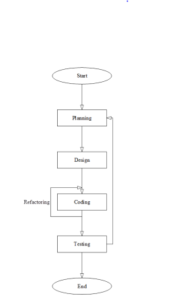
Figure 1: The research method used in this study.
The proposed app uses a model of Agile Extreme Programming (XP) [9], which has stages of development as follows: Planning, that focus to get an overview of the functions and application software through communication with the user. This phase consists of several parts: literature studies, questionnaires, interviews, and analysis of similar applications. Results of communication with the user later collected in an index of stories in which each point of the index is determined to build priorities. The design stage aims to build the pattern of the logic of a system based on a result of communication with the users. It provides a kind of design in the development of applications, namely the application design, system design using CRC maps are then formulated in UML9 also build user interface design using a storyboard. Coding, first make a unity check to test the system to be implemented and write application code on the XP model applies the concept of paired programming. Testing at this stage on XP also carried out at the coding stage is with unit tests. After each module in the unit test, the final process test this application by using Eight Golden Rules Theorem [10] as an acceptance test.
Based on the results of the questionnaire and the questionnaire obtained, several conclusions can be drawn. Most respondents agreed that the introduction of numbers, letters, and names of animals is important for young children. Most respondents agreed that early childhood children should be taught simple calculations (addition and subtraction). Some respondents answered that the method of learning while playing is very well used in providing educational insight to early childhood. Some respondents think that the application of education can help in providing educational insight into early childhood. Respondents on average agree that the educational applications of mobile devices can increase interest in learning in young children. The average respondent said that the age range of 3-5 years is the ideal age to provide educational insight to early childhood because in this age range the child is experiencing growth and development which is often referred to as “Golden Age”. Respondents said that to increase motivation to learn in young children must be done with an attractive and attractive environment as well as a supportive environment. Respondents gave positive responses to educational applications that could help in providing educational insight into early childhood. The app will add music and animation functions to make it easier for children to recognize the letters, recognize the numbers. It will add animation to introduce the names of the animals. The survey results showed that as many as 105 respondents answered that letter recognition is important for early childhood. With so many respondents assessing the importance of this, the application will present a letter recognition feature for toddlers. As many as 105 respondents answered that the recognition of numbers is important for early childhood. With a fairly dominant number of respondents, this application will present a number recognition feature for young children. The survey results showed that as many as 105 respondents answered that the recognition of animal names is important for early childhood. With the results obtained, the application will present the name recognition feature for early childhood. The survey results showed that 77 respondents answered that early childhood should be taught simple calculations. From the viewpoint of quite a lot of respondents, the application will present a simple calculation feature for young children. Figure 2 shows the use case for the application.
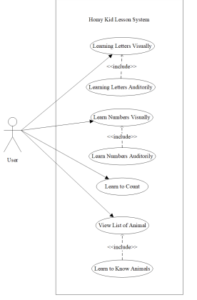
Figure 2: Use Case for “Homy Kid Lesson” app
3. Result
Here is the main page image of the educational app “Homy Kid Lesson”. On the main page, there are four main features of the application: learn to know the letters, learn to know numbers, and learn to know the names of animals and make simple calculations, figure 3.
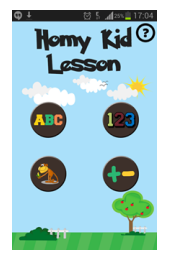
Figure 3: Home Menu
The feature screen, shown in figure 4, “ABC” contains alphabet letter keys from A to Z to learn to recognize letters. When one of the letters is selected, the page appears to learn the letter along with the spelling of the selected letter. There is also a feature to learn with music when the “music” button is pressed.
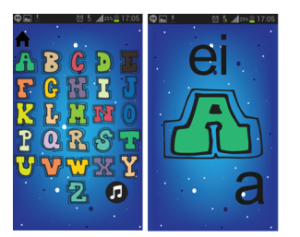
Figure 4: Learn to Know Letter
The feature screen “123”, shown in figure 5, contains buttons of rows with numbers from 1 to 10, when user pressed then will show a page to learn numbers. There is also a function to learn music when the “music” button is pressed.

Figure 5: Learn to Know Number
The feature screen “Animals”, shown in figure 6, contains a list of images of animals, when user selected one of the animals then will display the physical shape of the animal with the sound of the selected animal.
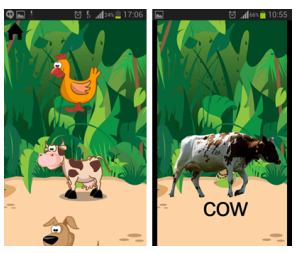
Figure 6: Learn to Know Animals
The feature screen “Count” contains two main menu plus (+) and minus (−). The plus (+) button is a function to perform addition mode and minus (−) functions to perform calculations in the subtraction mode. In this calculation menu, the user can try ten simple calculation questions see figure 7.
Table 2 shows questionnaire results of 52 respondents that have tried “Homy Kid Lesson” application.
Table 2: Questionnaire Results
| Answer | Number of Respondents | Percentage |
| Very Attractive | 30 | 58% |
| Attractive | 22 | 42% |
| Less Attractive | 0 | 0% |
| Not Attractive | 0 | 0% |

Figure 7: Learn to Know Calculation
As shown in table 2, all respondents said the educational application “Homy Kid Lesson” is very attractive to use. Application evaluation was carried out by giving questionnaires to 52 parents and teachers. They tried the educational application “Homy Kid Lesson” directly. This evaluation questionnaire includes questions relating to the eight golden rules and five measurable human factors by Shneiderman and Plaisant. Based on the evaluation results obtained, it can be concluded that the educational application ”Homy Kid Lesson” is interesting in terms of appearance design, learning features, instructions, and easy to use. Overall, the educational application ”Homy Kid Lesson” received a positive response so the application ”Homy Kid Lesson” could be an alternative learning media for children. This app increases the ability of children to recognize letters and numbers early, increasing the knowledge of animal names, introducing how to spell the letters and numbers to children also train the child’s ability to simple counting and introduced the method of learning with electronic media.
4. Conclusion
Educational applications “Homy Kid Lesson” can help children to learn about letters, numbers, and names of animals and to perform simple calculations. The educational application “Homy Kid Lesson” can help children learn to spell letters and words. The educational application “Homy Kid Lesson” becomes an alternative learning tool for children.
More features such as Bahasa as an add-on feature for recognizing letters and numbers. Add math material such as multiplication and division; add more objects or images for features to recognize animal names.
The contribution to this research is that this application acts as an alternative medium of learning for children. The learning method used in this application uses a fun playstyle approach.
- T. Vaughan, Multimedia: Making It Work, McGraw-Hill Osborne Media New York, 2010.
- L. D. Darcey, Android Application Development in 24 Hours, Sams Publishing Indiana, 2012.
- M. Gargenta, Learning Android: Develop Mobile Apps Using Java and Eclipse, O’Reilly Media USA, 2011.
- Sutomo, Android: Pemrograman Aplikasi Mobile Smartphone dan Tablet PC berbasis Android, Informatika Bandung, 2012.
- M. McCabe, S. Tedesco, “Using QR codes and mobile devices to foster an inclusive learning environment for mathematics education” International Journal of Technology and Inclusive Education (IJTIE), 1(1), 37–43, (2012). https://doi.org/10.20533/ijtie.2047.0533.2012.0006
- N. Zaraniz, M. Kalogiannakis, S. Papadakis, “Using mobile devices for teach- ing realistic mathematics in kindergarten education” Creative Education, 4(7), 1, (2013). https://doi.org/10.4236/ce.2013.47a1001
- R. Kraleva, Velin Kralev, “An evaluation of the mobile apps for children with special education needs based on the utility function metrics” International Journal on Advanced Science Engineering and Information Technology, 8(6), 2269–2277, (2018). https://doi.org/10.18517/ijaseit.8.6.6309
- E. Soykan, Fezile Ozdamlı, “Development process of instructional mobile application for special needs children” International Jour- nal of Technology Enhanced Learning 11,3, 259–278, (2019). https://doi.org/10.1504/ijtel.2019.10020449
- R. Pressman, Software engineering: a practitioner’s approach, Palgrave macmil- lan, 2005
- B. Shneiderman, C. Plaisant, M. Cohen, S. Jacobs, N. Elmqvist, N. Diakopou- los, Designing the user interface: strategies for effective human-computer interaction, Pearson, 2016
- Andi Kristanto, Utari Dewi, Dina Fitria Murad, Yumiati, Santi Dewiki, Tiara Sevi Nurmania, "Utilization of Generative Artificial Intelligence to Improve Students’ Visual Literacy Skills", Advances in Science, Technology and Engineering Systems Journal, vol. 10, no. 3, pp. 1–8, 2025. doi: 10.25046/aj100301
- Surapol Vorapatratorn, Nontawat Thongsibsong, "AI-Based Photography Assessment System using Convolutional Neural Networks", Advances in Science, Technology and Engineering Systems Journal, vol. 10, no. 2, pp. 28–34, 2025. doi: 10.25046/aj100203
- Koji Oda, Toshiyasu Kato, Yasushi Kambayashi, "Evaluation of a Classroom Support System for Programming Education Using Tangible Materials", Advances in Science, Technology and Engineering Systems Journal, vol. 9, no. 5, pp. 21–29, 2024. doi: 10.25046/aj090503
- Woratida Sawangnamwong, Siam Charoenseang, "Assistive System for Collaborative Assembly Task using Augmented Reality", Advances in Science, Technology and Engineering Systems Journal, vol. 9, no. 4, pp. 110–118, 2024. doi: 10.25046/aj090412
- Mauricio Flores-Nicolás, Magally Martínez-Reyes, Felipe de Jesús Matías-Torres, "The Graded Multidisciplinary Model: Fostering Instructional Design for Activity Development in STEM/STEAM Education", Advances in Science, Technology and Engineering Systems Journal, vol. 8, no. 5, pp. 55–61, 2023. doi: 10.25046/aj080506
- Lucksawan Yutthanakorn, Siam Charoenseang, "Augmented Reality Based Visual Programming of Robot Training for Educational Demonstration Site", Advances in Science, Technology and Engineering Systems Journal, vol. 8, no. 5, pp. 8–16, 2023. doi: 10.25046/aj080502
- Kohei Okawa, Felix Jimenez, Shuichi Akizuki, Tomohiro Yoshikawa, "Investigating the Impression Effects of a Teacher-Type Robot Equipped a Perplexion Estimation Method on College Students", Advances in Science, Technology and Engineering Systems Journal, vol. 8, no. 4, pp. 28–35, 2023. doi: 10.25046/aj080404
- Yu Yan, Eric Wallace Cooper, Richard Lee, "Inferring Student Needs Based on Facial Expression in Video Images", Advances in Science, Technology and Engineering Systems Journal, vol. 8, no. 3, pp. 19–28, 2023. doi: 10.25046/aj080303
- Ossama Embarak, "Multi-Layered Machine Learning Model For Mining Learners Academic Performance", Advances in Science, Technology and Engineering Systems Journal, vol. 6, no. 1, pp. 850–861, 2021. doi: 10.25046/aj060194
- Luís Cláudio Dallier Saldanha, "A Review of the Role of Information Technology in Brazilian Higher Educational Institutions during Covid-19 Pandemic", Advances in Science, Technology and Engineering Systems Journal, vol. 7, no. 6, pp. 189–194, 2022. doi: 10.25046/aj070620
- Angela Pearce, "The Perceptions of Students and Teachers When using ICTs for Educational Practices Matter: A Systematic Review", Advances in Science, Technology and Engineering Systems Journal, vol. 7, no. 6, pp. 1–12, 2022. doi: 10.25046/aj070601
- Maria J. Poblaciones, "Opinion and Effectiveness of Kahoot! use in Online Distance Learning in Crop Production at Higher Education Level: A Case of Study", Advances in Science, Technology and Engineering Systems Journal, vol. 7, no. 1, pp. 8–13, 2022. doi: 10.25046/aj070102
- Radwan Qasrawi, Stephanny VicunaPolo, Diala Abu Al-Halawa, Sameh Hallaq, Ziad Abdeen, "Predicting School Children Academic Performance Using Machine Learning Techniques", Advances in Science, Technology and Engineering Systems Journal, vol. 6, no. 5, pp. 08–15, 2021. doi: 10.25046/aj060502
- Malak Amro, Stephanny VicunaPolo, Rashid Jayousi, Radwan Qasrawi, "Personalized Serious Games for Improving Attention Skills among Palestinian Adolescents", Advances in Science, Technology and Engineering Systems Journal, vol. 6, no. 4, pp. 368–375, 2021. doi: 10.25046/aj060441
- Jorge Joo-Nagata, Fernando Martínez-Abad, "Evaluation of Information Competencies in the School Setting in Santiago de Chile", Advances in Science, Technology and Engineering Systems Journal, vol. 6, no. 4, pp. 298–305, 2021. doi: 10.25046/aj060433
- Asep Herry Hernawan, Deni Darmawan, Asyifa Imanda Septiana, Idriyani Rachman, Yayoi Kodama, "Developing Kamishibai and Hologram Multimedia for Environmental Education at Elementary School", Advances in Science, Technology and Engineering Systems Journal, vol. 6, no. 2, pp. 656–664, 2021. doi: 10.25046/aj060276
- Phillip Blunt, Bertram Haskins, "A Model for the Application of Automatic Speech Recognition for Generating Lesson Summaries", Advances in Science, Technology and Engineering Systems Journal, vol. 6, no. 2, pp. 526–540, 2021. doi: 10.25046/aj060260
- Mariutsi Alexandra Osorio-Sanabria, Astrid Jaime, Tamara Alcantara-Concepcion, Piedad Barreto, "Open Access Research Trends in Higher Education: A Literature Review", Advances in Science, Technology and Engineering Systems Journal, vol. 6, no. 2, pp. 499–511, 2021. doi: 10.25046/aj060257
- Irina Golitsyna, Farid Eminov, Bulat Eminov, "Teaching/Learning Strategies in Context of Education 4.0", Advances in Science, Technology and Engineering Systems Journal, vol. 6, no. 2, pp. 472–479, 2021. doi: 10.25046/aj060254
- Tan Pey Fang, Wan Ramli Wan Daud, Lilia Halim, Mohd Shahbudin Masdar, "How Ready is Renewable Energy? A Review Paper on Educational Materials and Reports Available for the Teaching of Hydrogen Fuel Cells in Schools", Advances in Science, Technology and Engineering Systems Journal, vol. 6, no. 2, pp. 01–11, 2021. doi: 10.25046/aj060201
- Muhammad Haqeem bin Mohd Nasir, Wan Siti Halimatul Munirah binti Wan Ahmad, Nurul Asyikin binti Mohamed Radzi, Fairuz Abdullah, "Performance Evaluation Reprogrammable Hybrid Fiber-Wireless Router Testbed for Educational Module", Advances in Science, Technology and Engineering Systems Journal, vol. 6, no. 1, pp. 1199–1207, 2021. doi: 10.25046/aj0601136
- Angelina, Weliati, Edwin Christian Jonatan Wardoyo, Sugiarto Hartono, "Mobile Application Design for Student Learning", Advances in Science, Technology and Engineering Systems Journal, vol. 6, no. 1, pp. 776–782, 2021. doi: 10.25046/aj060186
- Meyliana, Yakob Utama Chandra, Cadelina Cassandra, Surjandy, Erick Fernando, Henry Antonius Eka Widjaja, Andy Effendi, Ivan sangkereng, Charles Joseph, Harjanto Prabowo, "Recording of Student Attendance with Blockchain Technology to Avoid Fake Presence Data in Teaching Learning Process", Advances in Science, Technology and Engineering Systems Journal, vol. 6, no. 1, pp. 742–747, 2021. doi: 10.25046/aj060181
- Fang-Lin Chao, Wei Zhong Feng, Kaiquan Shi, "Smart Collar and Chest Strap Design for Rescue Dog through Multidisciplinary Approach", Advances in Science, Technology and Engineering Systems Journal, vol. 6, no. 1, pp. 386–392, 2021. doi: 10.25046/aj060144
- Najat Messaoudi, Jaafar Khalid Naciri, Bahloul Bensassi, "Mathematical Modelling of Output Responses and Performance Variations of an Education System due to Changes in Input Parameters", Advances in Science, Technology and Engineering Systems Journal, vol. 6, no. 1, pp. 327–335, 2021. doi: 10.25046/aj060137
- Wilfredo Carcausto, Juan Morales, María Patricia Cucho-Leyva, Noel Alcas-Zapata, Mirella Patricia Villena-Guerrero, "Distance Teaching-Learning Experience in Early Childhood Education Teachers During the Coronavirus Pandemic", Advances in Science, Technology and Engineering Systems Journal, vol. 6, no. 1, pp. 269–274, 2021. doi: 10.25046/aj060131
- Tarjo, Zuraidah Mohd Sanusi, Prasetyono, Mohammad Nizarul Alim, Rita Yuliana, Alexander Anggono, Yusarina Mat-Isa, Henryan Vishnu Vidyantha, Mochamad Ali Imron, "Current Views on Issues and Technology Development in Forensic Accounting Education of Indonesia", Advances in Science, Technology and Engineering Systems Journal, vol. 6, no. 1, pp. 78–86, 2021. doi: 10.25046/aj060109
- Meyliana, Yakob Utama Chandra, Cadelina Cassandra, Surjandy, Erick Fernando, Henry Antonius Eka Widjaja, Harjanto Prabowo, "Education Value Chain Model for Examination, Grading, and Evaluation Process in Higher Education based on Blockchain Technology", Advances in Science, Technology and Engineering Systems Journal, vol. 5, no. 6, pp. 1698–1703, 2020. doi: 10.25046/aj0506202
- Chinedu Wilfred Okonkwo, Magda Huisman, Estelle Taylor, "A Framework for Adoption and Diffusion of Mobile Applications in Africa", Advances in Science, Technology and Engineering Systems Journal, vol. 5, no. 6, pp. 1577–1592, 2020. doi: 10.25046/aj0506189
- Tarek Frikha, Hedi Choura, Najmeddine Abdennour, Oussama Ghorbel, Mohamed Abid, "ESP2: Embedded Smart Parking Prototype", Advances in Science, Technology and Engineering Systems Journal, vol. 5, no. 6, pp. 1569–1576, 2020. doi: 10.25046/aj0506188
- Tedi Priatna, Dian Sa’adillah Maylawati, Hamdan Sugilar, Muhammad Ali Ramdhani, "Social Engineering to Establish Digital Culture in Higher Education", Advances in Science, Technology and Engineering Systems Journal, vol. 5, no. 6, pp. 1474–1479, 2020. doi: 10.25046/aj0506177
- Sasithorn Chookaew, Suppachai Howimanporn, Santi Hutamarn, "Investigating Students’ Computational Thinking through STEM Robot-based Learning Activities", Advances in Science, Technology and Engineering Systems Journal, vol. 5, no. 6, pp. 1366–1371, 2020. doi: 10.25046/aj0506164
- Lili Sifuentes-Gomez, Doris Vega-Davila, Betty Flores-Paz, Brian Meneses-Claudio, Hernan Matta-Solis, Eduardo Matta-Solis, "Social Skills and Resilience in Adolescents of an Educational Institution in North Lima, 2019", Advances in Science, Technology and Engineering Systems Journal, vol. 5, no. 6, pp. 1350–1355, 2020. doi: 10.25046/aj0506162
- Asep Herry Hernawan, Mustari Bosra, "Developing a Modular Material-Based Independent Training Model for Primary School Teacher Training", Advances in Science, Technology and Engineering Systems Journal, vol. 5, no. 6, pp. 1054–1063, 2020. doi: 10.25046/aj0506128
- Alexi Delgado, Enrique Lee Huamaní, Alfredo Chiara-Sotomayor, Florencio Roman-Casahuamán, "Design of a Mobile Application for the School Enrollment Process in Order to Prevent Covid-19", Advances in Science, Technology and Engineering Systems Journal, vol. 5, no. 6, pp. 1042–1046, 2020. doi: 10.25046/aj0506126
- Fernando Richter Vidal, Feliz Gouveia, Christophe Soares, "Blockchain Application in Higher Education Diploma Management and Results Analysis", Advances in Science, Technology and Engineering Systems Journal, vol. 5, no. 6, pp. 871–882, 2020. doi: 10.25046/aj0506104
- Zdenko Balaž, Krystian Wawrzynek, "Cognitive Cybernetics in the Foresight of Globalitarianism", Advances in Science, Technology and Engineering Systems Journal, vol. 5, no. 6, pp. 718–723, 2020. doi: 10.25046/aj050686
- Kayode Emmanuel Oyetade, Tranos Zuva, Anneke Harmse, "Technology Adoption in Education: A Systematic Literature Review", Advances in Science, Technology and Engineering Systems Journal, vol. 5, no. 6, pp. 108–112, 2020. doi: 10.25046/aj050611
- Wongpanya Nuankaew, Pratya Nuankaew, "Tolerance of Characteristics and Attributes in Developing Student’s Academic Achievements", Advances in Science, Technology and Engineering Systems Journal, vol. 5, no. 5, pp. 1126–1136, 2020. doi: 10.25046/aj0505137
- Nghia Duong-Trung, Nga Quynh Thi Tang, Xuan Son Ha, "Interpretation of Machine Learning Models for Medical Diagnosis", Advances in Science, Technology and Engineering Systems Journal, vol. 5, no. 5, pp. 469–477, 2020. doi: 10.25046/aj050558
- Gyeongyong Heo, "Arduino-Compatible Modular Kit Design and Implementation for Programming Education", Advances in Science, Technology and Engineering Systems Journal, vol. 5, no. 5, pp. 295–301, 2020. doi: 10.25046/aj050537
- Lhachimi Mohamed Younes, Mamouni My Ismail, Achtaich Naceur, "A Didactic Balance to Solve Equations", Advances in Science, Technology and Engineering Systems Journal, vol. 5, no. 5, pp. 288–294, 2020. doi: 10.25046/aj050536
- Wongpanya Nuankaew, Kanakarn Phanniphong, Sittichai Bussaman, Direk Teeraputon, Pratya Nuankaew, "Mentoring Model in an Active Learning Culture for Undergraduate Projects", Advances in Science, Technology and Engineering Systems Journal, vol. 5, no. 4, pp. 805–815, 2020. doi: 10.25046/aj050495
- Pratya Nuankaew, "Clustering of Mindset towards Self-Regulated Learning of Undergraduate Students at the University of Phayao", Advances in Science, Technology and Engineering Systems Journal, vol. 5, no. 4, pp. 676–685, 2020. doi: 10.25046/aj050481
- Natalya Chernova, Victor Chernov, Margarita Emelianova, Raisa Akhunzianova, Danil Sukhopluev, "Social-Interactive Learning Concept Used for Electronic Educational Resource “Post-Graduate Foreign Language” and the Obtained Learning Curve", Advances in Science, Technology and Engineering Systems Journal, vol. 5, no. 4, pp. 655–659, 2020. doi: 10.25046/aj050478
- Sarun Duangsuwan, Chakree Teekapakvisit, Myo Myint Maw, "Development of Soil Moisture Monitoring by using IoT and UAV-SC for Smart Farming Application", Advances in Science, Technology and Engineering Systems Journal, vol. 5, no. 4, pp. 381–387, 2020. doi: 10.25046/aj050444
- Yogi Udjaja, Sasmoko, Jurike V. Moniaga, Kevin Zulfian Bay, "High-Order Thinking Skills: The Educational Treasure Hunt Game", Advances in Science, Technology and Engineering Systems Journal, vol. 5, no. 4, pp. 196–202, 2020. doi: 10.25046/aj050424
- Alexi Delgado, Enrique Lee Huamaní, Elizabeth Jenny Cortez-De La Peña, "A Mobile Application Design to Prevent Criminal Acts in Lima, Peru", Advances in Science, Technology and Engineering Systems Journal, vol. 5, no. 4, pp. 40–46, 2020. doi: 10.25046/aj050406
- Bulat Kubekov, Anar Utegenova, Leonid Bobrov, Vitaliy Naumenko, Aibek Ibraimkulov, "Ontologic Design of Software Engineering Knowledge Area Knowledge Components", Advances in Science, Technology and Engineering Systems Journal, vol. 5, no. 4, pp. 30–34, 2020. doi: 10.25046/aj050404
- Ruslan Vynokurov, Volodymyr Tigariev, Oleksii Lopakov, Kateryna Kirkopulo, Olena Pavlyshko, "Centralized System of Universities Learning Materials", Advances in Science, Technology and Engineering Systems Journal, vol. 5, no. 3, pp. 28–33, 2020. doi: 10.25046/aj050304
- Zuhri Syarifudin, Suharjito, "Mobile Based for Basic English Learning Assessment with Augmented Reality", Advances in Science, Technology and Engineering Systems Journal, vol. 5, no. 2, pp. 774–780, 2020. doi: 10.25046/aj050297
- Nuno Martins, Jéssica Campos, Ricardo Simoes, "Activerest: Design of A Graphical Interface for the Remote use of Continuous and Holistic Care Providers", Advances in Science, Technology and Engineering Systems Journal, vol. 5, no. 2, pp. 635–645, 2020. doi: 10.25046/aj050279
- Diego Iquira-Becerra, Michael Flores-Conislla, Juan Deyby Carlos-Chullo, Briseida Sotelo-Castro, Claudia Payalich-Quispe, Carlo Corrales-Delgado, "A Critical Analysis of Usability and Learning Methods on an Augmented Reality Application for Zoology Education", Advances in Science, Technology and Engineering Systems Journal, vol. 5, no. 2, pp. 384–392, 2020. doi: 10.25046/aj050250
- Airil Haimi Mohd Adnan, Mohamad Syafiq Ya Shak, Rafidah Abd Karim, Mohd Haniff Mohd Tahir, Dianna Suzieanna M Shah, "360-Degree Videos, VR Experiences and the Application of Education 4.0 Technologies in Malaysia for Exposure and Immersion", Advances in Science, Technology and Engineering Systems Journal, vol. 5, no. 1, pp. 373–381, 2020. doi: 10.25046/aj050148
- Lena Nuryanti, Deni Darmawan, Achmad Hufad, "The Implementation Model of Character Building in Curriculum 2013 Through The Scout Movement as A Required Extracurricular in Primary And Secondary Education", Advances in Science, Technology and Engineering Systems Journal, vol. 5, no. 1, pp. 361–367, 2020. doi: 10.25046/aj050146
- Dana Paľová, Martin Vejačka, Lukáš Kakalejčík, "Project-Based Learning as a Tool of Enhancing of Entrepreneurial Attitude of Students", Advances in Science, Technology and Engineering Systems Journal, vol. 5, no. 1, pp. 346–354, 2020. doi: 10.25046/aj050144
- Woochun Jun, "A Study on Development of Information and Communication Ethics Sensitivity Measurement for Elementary School Students", Advances in Science, Technology and Engineering Systems Journal, vol. 5, no. 1, pp. 169–173, 2020. doi: 10.25046/aj050122
- Ahmad Yusairi Bani Hashim, Silah Hayati Kamsani, Mahasan Mat Ali, Syamimi Shamsuddin, Ahmad Zaki Shukor, "Simulation and Reproduction of a Manipulator According to Classical Arm Representation and Trajectory Planning", Advances in Science, Technology and Engineering Systems Journal, vol. 4, no. 6, pp. 158–162, 2019. doi: 10.25046/aj040619
- Woochun Jun, "Development of Teaching Aids Selection Standards in Maker Education", Advances in Science, Technology and Engineering Systems Journal, vol. 4, no. 5, pp. 139–142, 2019. doi: 10.25046/aj040518
- Woochun Jun, "A Study on Development of Evaluation Metrics for Learners in Physical Computing", Advances in Science, Technology and Engineering Systems Journal, vol. 4, no. 5, pp. 82–87, 2019. doi: 10.25046/aj040510
- Yuto Yoshizawa, Yutaka Watanobe, "Logic Error Detection System based on Structure Pattern and Error Degree", Advances in Science, Technology and Engineering Systems Journal, vol. 4, no. 5, pp. 01–15, 2019. doi: 10.25046/aj040501
- Anna Tatsiopoulou, Christos Tatsiopoulos, Basillis Boutsinas, "Providing Underlying Process Mining in Gamified Applications – An Intelligent Knowledge Tool for Analyzing Game Player’s Actions", Advances in Science, Technology and Engineering Systems Journal, vol. 4, no. 4, pp. 212–220, 2019. doi: 10.25046/aj040426
- Alimam Mohammed Abdellah, Alimam Mohammed Karim, Seghuiouer Hamid, "Career Recommendation System for Scientific Students Based on Ontologies", Advances in Science, Technology and Engineering Systems Journal, vol. 4, no. 4, pp. 29–41, 2019. doi: 10.25046/aj040404
- Iryna Zhuravska, Dmytro Lernatovych, Oleksandr Burenko, "Detection the Places of the Heat Energy Leak on the Underground Thermal Pipelines Using the Computer System", Advances in Science, Technology and Engineering Systems Journal, vol. 4, no. 3, pp. 01–09, 2019. doi: 10.25046/aj040301
- Yuhei Tanizaki, Felix Jimenez, Tomohiro Yoshikawa, Takeshi Furuhashi, Masayoshi Kanoh, "Effects of Educational Support Robots using Sympathy Expression Method with Body Movement and Facial Expression on the Learners in Short and Long-term Experiments", Advances in Science, Technology and Engineering Systems Journal, vol. 4, no. 2, pp. 183–189, 2019. doi: 10.25046/aj040224
- Jurij Tekutov, Saulius Gudas, Vitalijus Denisovas, Julija Smirnova, "Educational Domain Management Knowledge Content Identification and Knowledge Updating Method, Based on Enterprise Management Information Interactions", Advances in Science, Technology and Engineering Systems Journal, vol. 4, no. 2, pp. 140–152, 2019. doi: 10.25046/aj040219
- Majed Almotairi, Mohammed Abdulkareem Alyami, Yeong-Tae Song, "Enhancing and Monitoring Patient Outcomes Through Customized Learning", Advances in Science, Technology and Engineering Systems Journal, vol. 4, no. 1, pp. 183–192, 2019. doi: 10.25046/aj040118
- João Manuel Leitão Pires Caldeira, Vasco Nuno da Gama de Jesus Soares, Pedro Miguel de Figueiredo Dinis Oliveira Gaspar, Joel José Puga Coelho Rodrigues, Ricardo Manuel Valentim Fontes, José Luís Lopes Silva, "iSensA – A System for Collecting and Integrating Sensor Data", Advances in Science, Technology and Engineering Systems Journal, vol. 3, no. 6, pp. 213–221, 2018. doi: 10.25046/aj030628
- Procheta Nag, Saikat Mondal, Arun More, "A Holistic User Centric Acute Myocardial Infarction Prediction System With Model Evaluation Using Data Mining Techniques", Advances in Science, Technology and Engineering Systems Journal, vol. 3, no. 6, pp. 56–66, 2018. doi: 10.25046/aj030605
- Eiken Lübbers, Dierk Schoen, "Implementation of a Robot Contest for Distance Education", Advances in Science, Technology and Engineering Systems Journal, vol. 3, no. 5, pp. 161–165, 2018. doi: 10.25046/aj030520
- Alzain Alzain, Steve Clark, Gren Ireson, Ali Jwaid, "Learning Personalization Based on Learning Style instruments", Advances in Science, Technology and Engineering Systems Journal, vol. 3, no. 3, pp. 108–115, 2018. doi: 10.25046/aj030315
- Tsz Hei Yeung, Chi Kit Ng, Vincent Ng, "A Smart Mobile Application for Assisting Parents in Anti-Drug Support", Advances in Science, Technology and Engineering Systems Journal, vol. 3, no. 1, pp. 434–442, 2018. doi: 10.25046/aj030153
- Ghassan Frache, Hector Nistazakis, George Tombras, "Constructing Learning-by-Doing Pedagogical Model for Delivering 21st Century Engineering Education", Advances in Science, Technology and Engineering Systems Journal, vol. 3, no. 1, pp. 115–124, 2018. doi: 10.25046/aj030114
- Wongpanya Nuankaew, Pratya Nuankaew, Kanakarn Phanniphong, "Lifelong Learning Application: Mobile Application to Promote Lifelong Learning and Introduce Educational Institutions", Advances in Science, Technology and Engineering Systems Journal, vol. 2, no. 3, pp. 1556–1564, 2017. doi: 10.25046/aj0203194
- Isabel Cristina Siqueira da Silva, Gerson Klein, Denise Munchen Brandão, "Segmented and Detailed Visualization of Anatomical Structures based on Augmented Reality for Health Education and Knowledge Discovery", Advances in Science, Technology and Engineering Systems Journal, vol. 2, no. 3, pp. 469–478, 2017. doi: 10.25046/aj020360
- Carlos Guevara, Jose Aguilar, Alexandra González-Eras, "The Model of Adaptive Learning Objects for virtual environments instanced by the competencies", Advances in Science, Technology and Engineering Systems Journal, vol. 2, no. 3, pp. 345–355, 2017. doi: 10.25046/aj020344
- Lucila Romero, Milagros Gutierrez, Laura Caliusco, "Semantic modeling of portfolio assessment in e-learning environment", Advances in Science, Technology and Engineering Systems Journal, vol. 2, no. 1, pp. 149–156, 2017. doi: 10.25046/aj020117