
Investigating the Influence Biomass Additive on the Thermal Performance of a Fired-Clay for Producing the Inner Liner of a Biomass Cook-Stove

 , Mustapha Abdullahi 2, Bappah Adamu Umar 2, 4, Kelechi U. Adie 3
Adv. Sci. Technol. Eng. Syst. J. 11(1), 69–77 (2026);
 DOI: 10.25046/aj110107
This study investigated the influence of a biomass additive on the thermal performance of the inner liner of fired-clay cook-stoves. Fired-clay cook-stoves are essential cooking devices, particularly in areas with limited access to modern energy resources. The study aimed to enhance the thermal efficiency of the cook-stoves by incorporating rice husk into the inner liner material. The shrinkage, porosity, bulk density, thermal conductivity and heat retention performance of the produced fired-clay were evaluated. Different proportions of rice husk mixed with clay were examined to determine the desired combinations. It was found that the sample with 30% rice husk has apparent porosity of 71.41% and bulk density of 0.995343g/cm3 and that of the sample with no rice husk, was 41.38% and 1.526922g/cm3 respectively. The results indicated improvement in thermal insulation performance with the rice husk additive, and thus improved combustion efficiency of the cook-stove. This study offered a valuable insight in using rice husk as a sustainable biomass additive to enhance insulation performance of a fired-clay for producing cook-stoves, thereby contributing in producing a more efficient and environmentally friendly cooking device. The use of rice husk as a biomass additive offers additional environmental benefits, as such re-purposing the use of agricultural waste and emission mitigation of greenhouse gases.
1. Introduction
Millions of people around the world, especially in the developing countries, still depend on open-fire and three-stone stoves that depend on biomass fuels for heating and cooking [1]. However, the development of cook-stoves has changed over the past few decades with modifications from the three-stone fire to better efficient cook-stoves with good aesthetic and quality insulation materials. The cook-stoves with a much better thermal efficiency are expensive due to high quality materials and insulators used by the manufacturers, though they tend to have improved performance efficiency [2]. The need for more efficient cook-stoves is on the rise and much effort to modify the previous ones aimed at improving the thermal performance and reducing emission. Since most insulation materials used for producing the inner liner of a cook-stove are clay-based materials, deciding the best performing clay mixtures in respect to its thermal resistance is essential to improve insulation performance of cook-stoves. Heat is always lost from the body of cook-stoves by conduction and radiation, thus it is necessary to make use of proper insulation to help reduce heat loss.
Cook stoves are designed to increase fuel efficiency and reduce smoke alongside the pollution emissions due to poor fuel combustion efficiency. Improving the insulating part of the inner liner cook-stove reduces the amount of fuel used and improves the quality of heat transferred to the cooking pot [3]. Improved cook-stoves design focused on the approach to increase combustion and insulating efficiencies through a series of design structures. Heat transfer quality in a stove indicates the extent of thermal energy absorbed by the cooking pot compared to the amount of thermal energy released during the combustion processes and the level of insulation of the inner liner. The combustion efficiency and thermal performance of cook-stoves are key factors in ensuring their energy conservation and minimizing their environmental impact [4]. The inner liner of a cook stove plays a vital role in improving the combustion efficiency and thermal performance of energy efficient cook-stoves, making it essential to investigate how to improve the insulation performance of the inner liner of cook-stoves. Adding combustible organic pore-forming additives in the clay body can improve the insulation performance by creating porosity in the clay body when they are burnt off during firing [5]. The pore-formers can also help to reduce the heat absorbed by the liner and modify other properties like water absorption, thermal performance and density. The possibility of using straw and reed residue generated during bleached pulp production was determined during clay brick formation. It was seen that besides the composition of the additive, it also depends on the clay body’s porosity and internal structure and also the thermal conductivity is determined by the clay body [6].
In [7], the authors carried out some laboratory tests on samples made of brick clay with up to 30% volume of sawdust and/or paper-making sludge as pore-forming agents. During firing, it was observed that the sawdust and the sludge helped to reinforce the structure of the body and prevented cracking. A very porous structure was then obtained after firing at a temperature of up to 920°C [2]. Also, determination of the water absorption, porosity, bulk density and compressive strength of the fired samples were achieved. Incorporating biomass particles into the clay mixture could be envisaged in creating voids during the firing process, and thus modifying clay properties was seen to improve the structure and properties of clay. Making ceramic materials lighter by creating air cavities was found to be the most effective way of increasing thermal technical properties. In [8], the authors found that cook-stoves enhanced with biomass additives saved 35–50% on fuel compared to other conventional stoves, lowering household expenses. Each family might save up to 300 kg of fuel each year as a result of this and cook in a much healthier environment. In [9], the authors evaluated the improved biomass cookstove by considering the water boiling test, and the results indicate that the thermal efficiency for boiling 5 L of water was 25%. In [10], the researchers state that coffee husk pellets, which is a byproduct gotten from the waste coffee husk production considered as a very potential solid fuel. They further evaluated stoves with hole system design by considering the Water Boiling Test (WBT) and emission test. The results showed that 16.47 % and 298 ppm were the maximum thermal efficiency and CO emissions respectively.
From the above studies, there is a paucity of published information on the thermal and insulation performance of cook-stoves based on the material used in producing the combustion chamber inner liner and biomass additives in the clay material. This work focused on addressing the insulation performance of the inner liner of a biomass cook-stove. The heat lost from the inner liner of a cook-stove during fuel combustion can reduce the overall efficiency of the stove. Biomass additives can have various influences on the production and performance of the combustion chamber in a cook-stove. Thus, the influence of biomass additives (such as rice husk in this case) in improving the insulation performance of fired clay for production of the inner liner of a cook-stove are investigated in this study to reduce heat losses and improve the insulation performance of the cook-stove. Different mixtures of clay materials (ball clay, kaolin) and a biomass additive (such as rice husk) are used in this study to obtain the mixture compositions that could be used to produce the inner liner with improved insulation performance of the cook-stove.
2. Materials and Methods
The materials used in this study are the metal boxes used to mold the mixed clay, kaolin and rice husk into a rectangular shape, the LPG cylinder used for firing the samples in the kiln, the kiln used for firing the formed samples. The infrared thermometer device was used to measure temperature at a distance, without touching the object.
2.1. Clay and Rice Husk Preparation
The ball clay and kaolin used for this study were gotten from the National Stove Eligibility Laboratory (NSEL) in the National Center for Energy Research Development (NCERD), University of Nigeria, Nsukka (UNN) and the rice husk from a rice mill in Enugu state, Nigeria. The ball clay was first crushed into fine powder and dirt removed. The rice husk was sieved to obtain a uniform particle sizes and dirt removed. All the samples were mixed in varying ratios summing up to 300g for each sample.
2.2. Samples Preparation
The ball clay, kaolin, and rice husk were mixed to form the samples (S). Tables 1 to 4 are the percentage by weight composition mixture of the clay (C), kaolin (K), and the biomass additive (rice husk,R). For each of the mixtures, water was added to create plasticity and molded using rectangular metal molds with dimensions of 11cm length, 8cm breadth and 3cm thickness. The weights of the samples after moulding, after sun drying and after firing in the kiln, and % weight loss after firing samples are presented in Tables 1 to 4.
| Sample (S) | S1 | S2 | S3 | S4 |
|---|---|---|---|---|
| Mixture of Rice husk (R), Clay (C) and Kaolin (K) | 40%C, 60%K, 0%R | 30%C, 70%K, 0%R | 20%C, 80%K, 0%R | 10%C, 90%K, 0%R |
| Weight after moulding (g) | 372.7 | 391.9 | 382.4 | 389.5 |
| Weight after sun drying (g) | 281.5 | 288.3 | 283.9 | 287.9 |
| Weight after firing (g) | 245.3 | 250.4 | 244 | 248.5 |
| Weight loss (%) | 34.18 | 36.11 | 36.19 | 36.20 |
| Sample (S) | S5 | S6 | S7 | S8 |
|---|---|---|---|---|
| Mixture of Rice husk (R), Clay (C) and Kaolin (K) | 35%C, 65%K, 10%R |
25%C, 65%K, 10%R |
15%C, 75%K, 10%R |
5%C, 85%K, 10%R |
| Weight after moulding (g) | 386.2 | 397.4 | 393.1 | 389.8 |
| Weight after sun drying (g) | 285.2 | 295.5 | 288.6 | 286.1 |
| Weight after firing (g) in the kiln | 231.5 | 238.7 | 232.1 | 228.6 |
| Weight loss (%) | 40.06 | 39.93 | 40.96 | 41.35 |
| Sample (S) | S9 | S10 | S11 | S12 |
|---|---|---|---|---|
| Mixture of Rice husk (R), Clay (C) and Kaolin (K) | 30% C, 50% K, 20% R |
20% C, 60% K, 20% R |
10% C, 70% K, 20% R |
0% C, 80% K, 20% R |
| Weight after moulding (g) | 399.9 | 397.4 | 396.1 | 394.1 |
| Weight after sun drying (g) | 291.7 | 288.0 | 288.2 | 287.5 |
| Weight after firing (g) in the kiln | 220.5 | 215.0 | 214.9 | 212.7 |
| Weight loss (%) | 44.86 | 45.90 | 45.75 | 46.03 |
| Sample (S) | S13 | S14 | S15 | S16 |
|---|---|---|---|---|
| Mixture of Rice husk (R), Clay (C) and Kaolin (K) | 25% C, 45% K, 30% R |
15% C, 55% K, 30% R |
5% C, 65% K, 30% R |
0% C, 70% K, 30% R |
| Weight after moulding (g) | 409.8 | 401.9 | 402.7 | 404.7 |
| Weight after sun drying (g) | 287.2 | 294.2 | 297.0 | 291.3 |
| Weight after firing (g) in the kiln | 195.2 | 200.2 | 203.1 | 198.8 |
| Weight loss (%) | 52.37 | 50.19 | 49.56 | 50.88 |
The produced samples were sun dried for two weeks, after which they were fired using a LPG fired kiln shown in Figure 1. The mini kiln insulated with ceramic fiber was developed at the NCERD, UNN. The firing process in the kiln was done in three stages.
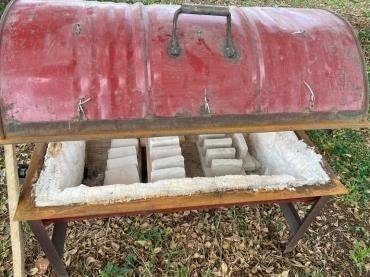

Stage 1 is the preheating, which involved raising the temperature of the kiln to less than 100°C, while leaving the door of the kiln opened as shown in Figure 1, for 2 hours to gradually drive off the moisture still trapped in the samples, which would cause busting during firing of the samples.
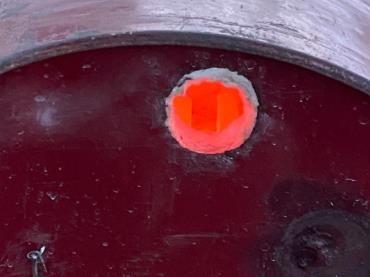
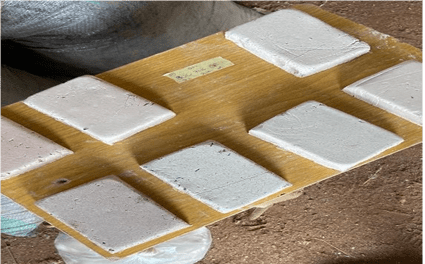
At stage 2, the door of the kiln was further lowered, but not completely closed as shown in Figure 2 and the temperature rose to above 100°C for 1 hour to ensure that any remaining moisture in the samples had completely evaporated. After preheating, (i.e. at stage 3), the door of the kiln was completely closed. As shown by the red hot colour inside of the kiln in Figure 3, the temperature inside the kiln gradually increased to about 1000°C to 1300°C, which is the firing temperature range for 6 hours. At this temperature, the pore forming agents (ie. rice husk) had burnt completely and pores are formed. After the 6 hours firing, the gas supply was turned off and the samples were allowed to cool inside the kiln until room temperature was achieved on the next day. This was to prevent thermal shock, which could occur where a material experiences abrupt change in temperature and developed stresses and strains in their internal structure, that could cause cracking. Figure 4 shows the fired samples that were removed from the kiln on the next day and kept in an open air environment.
2.3. Fired Sample Shrinkage
Even though the samples appeared very dry after the sun drying, but they still contain some water, the chemically bonded water and the residual moisture. During the firing stage, this water was burnt out, thereby make the samples to shrink. Also, during the firing, the rice husk in the samples also burnt out, making the samples to shrink further. The shrinkage of the fired samples was determined by measuring their dimensions before and after firing them in the kiln. The percentage shrinkage is calculated based on Equation (1).
$$
\text{Fired shrinkage (\%)} =
\frac{D_o – D_1}{D_o} \times 100
\tag{1}
$$
Do = dimension after sun drying, D1 = dimension after firing. The dimensions include length, breadth and thickness.
2.4. Porosity and Bulk density
After firing, the rice husk had burnt out completely and created pores in the internal structure of the samples. The porosity and bulk density tests were carried out by immersing each of the samples in a bowl with one liter of water as shown in Figure 5 and leaving it for 15 minutes to absorb water into the pores.
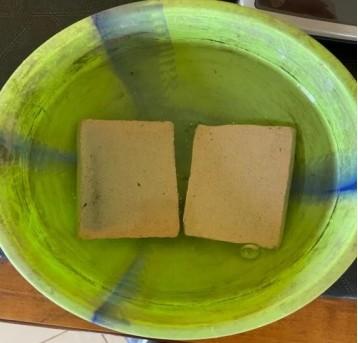
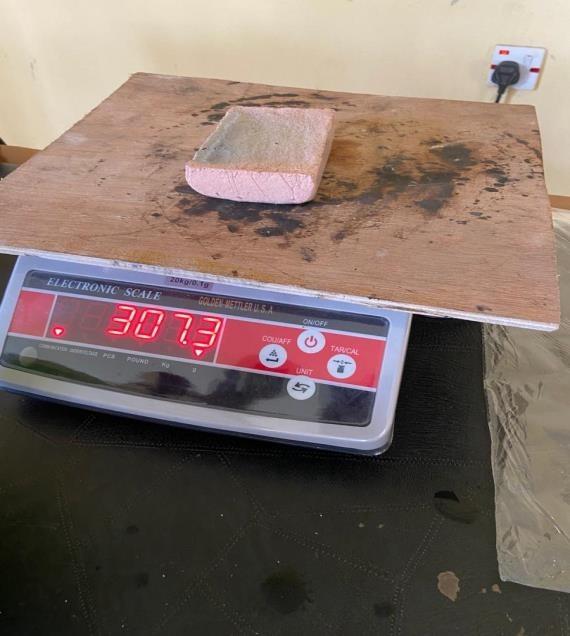
After 15 minutes, the sample was taken out of the water and weighed as shown in Figure 6 to get the saturated weight. The porosity measures the volume of pore spaces formed within the material, and an increase in porosity means there are more empty spaces within the sample. The bulk density on the other hand measures the weight of the solid per unit volume, including both solids and pores. The porosity and bulk density of the samples are determined based on Equations (2) and (3) respectively.
$$
\text{Apparent porosity, } P(\%) =
\frac{w – D}{w – S}
\times 100
\tag{2}
$$
where w = saturated weight, D = dried weight, S = suspended weight.
$$
\text{Bulk density, } D =
\frac{W}{V}
\tag{3}
$$
where W = dry weight, V = Volume of sample = L×B×H
2.5. Thermal Conductivity Test
For the purpose of determining the thermal conductivity of the samples, the following procedures were carried out. As shown in Figure 7, each sample was wrapped with ceramic fiber on the four sides to prevent the heat losses from those sides to the surrounding, and instead the heat be directed vertically upwards to the outer surface of the sample. The unwrapped surface of each sample was in turn placed on a hot plate with a steady heat supply at 450°C, to allow heat transfer through the surface in direct contact with the hot plate to the outer surface exposed to the ambient air. After every 5 minutes, the temperature of the outer surface exposed to the ambient air was measured using an infrared thermometer until a steady state was reached. The temperatures were recorded in order to determine the thermal conductivity of the respective samples.
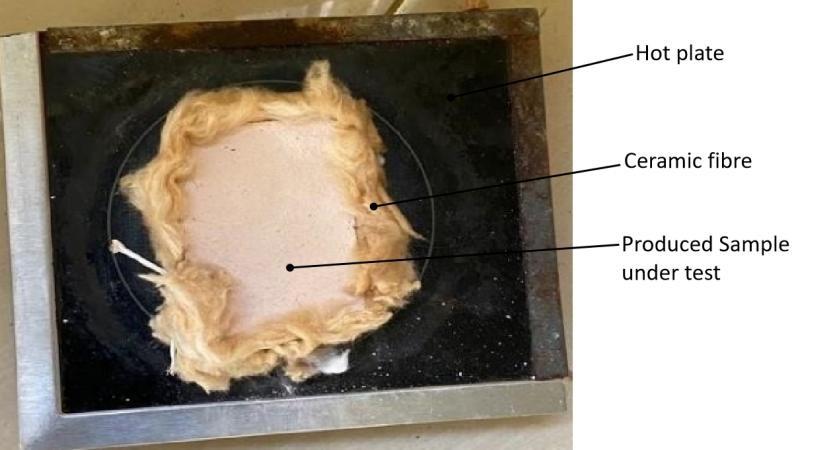
The thermal conductivity [11] of the samples was determined based on Equation 4.
$$
\text{Thermal conductivity, } k =
\frac{Q \times \Delta x}
{A \times \Delta T}
\tag{4}
$$
where Q = quantity of heat transferred,
= distance between two isothermal planes,
A= surface area of each sample,
= temperature difference
Equation 4 gives the first order approximation in determining thermal conductivity of the samples, which is very essential considering the complex differential equations prior to numerical modelling. The sample material properties were assumed constant and independent of temperature.
3. Results and Discussion
The design and structure of the inner liner of cook stoves are to minimize heat loss to the surrounding and to improve the thermal efficiency. The samples made of clay, kaolin, with rice husk as a biomass additive were fired in a kiln to determine the mixture composition that could minimize heat loss and improve the thermal efficiency of cook-stoves. In this section, the shrinkage, porosity, bulk density and thermal conductivity tests results of the sample are analyzed.
3.1. Shrinkage and Breadth
Clay shrinks when dried and fired because of the organic materials that burnt out at high temperature forming pores, leading to loss in dimensions and weight. The amount of shrinkage depends on the type of clay in use. In depth understanding of how clay shrinks is an important factor when taking the final size of the product into consideration. The influence of biomass additive on the shrinkage and weight loss after firing the considered sample mixtures of clay, kaolin and rice husk in Tables 1 to 4 are presented in Figures 8 to 12.
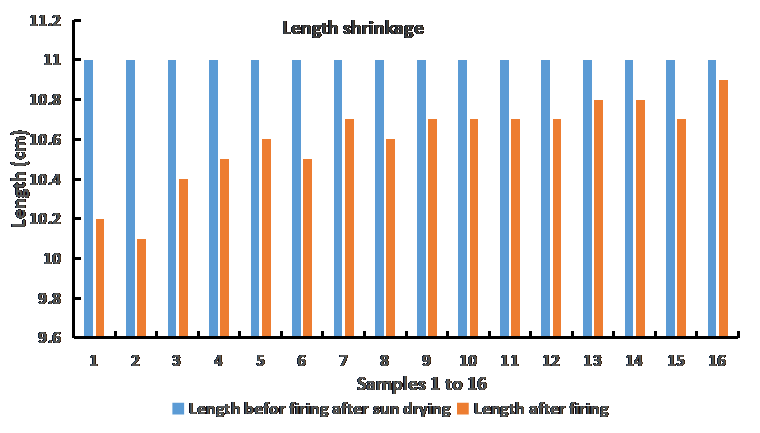
Figure 8 shows the influence of the rice husk additive on the length shrinkage of the fired samples. As expected, it can be seen the length of the samples shrunk after firing in the kiln depending on the quantity of the additive added in the mixture.
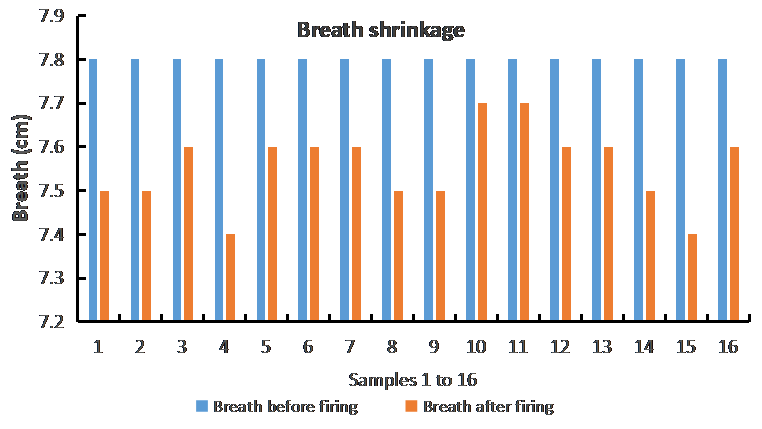
Figure 9 shows the influence of the rice husk additive on the breadth shrinkage of the samples. It can be observed that the breath of the samples decreased after firing due to the different percentages of the added additive that burnt out at high temperature of the kiln.
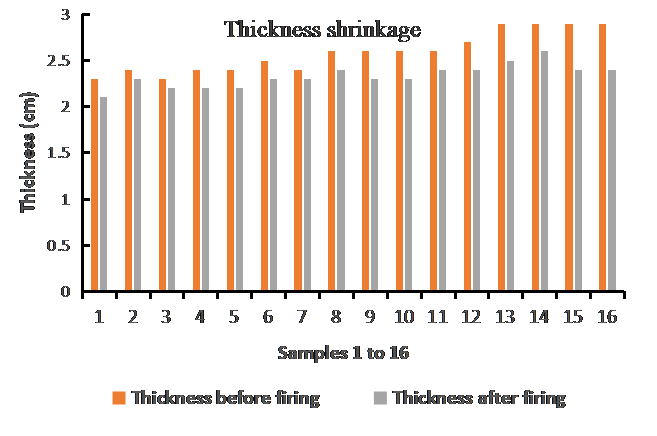
Figure 10 shows the influence of the additive on the thickness shrinkage of the fired samples. It can be seen that the thickness also shrunk after firing the samples in the kiln.
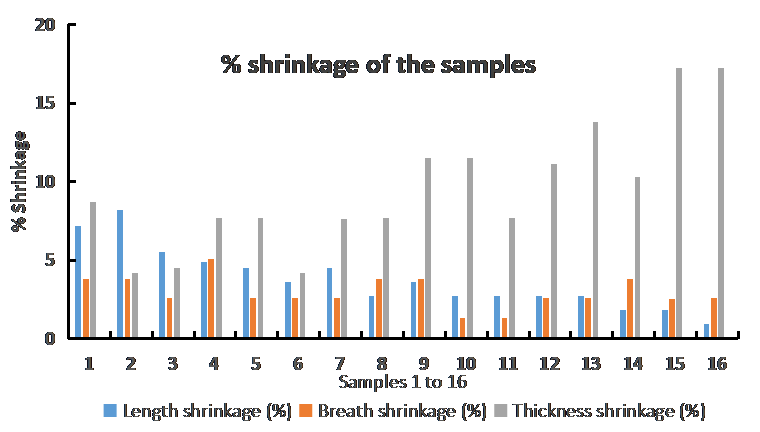
Figure 11 compared the shrinkage effect on the length, breath and thickness of the samples. It can be observed that the shrinkage affected the thickness more than the case of the length and breath of the samples.
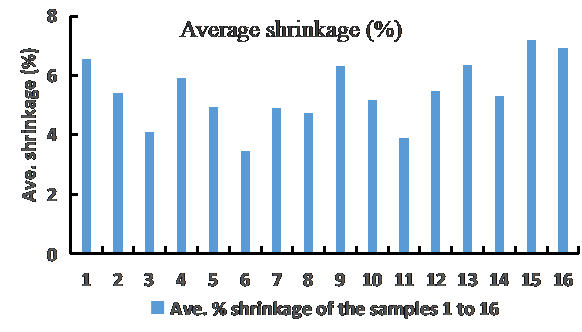
Figure 12 shows that the shrinkage are different for different proportion of the additive added in the samples.
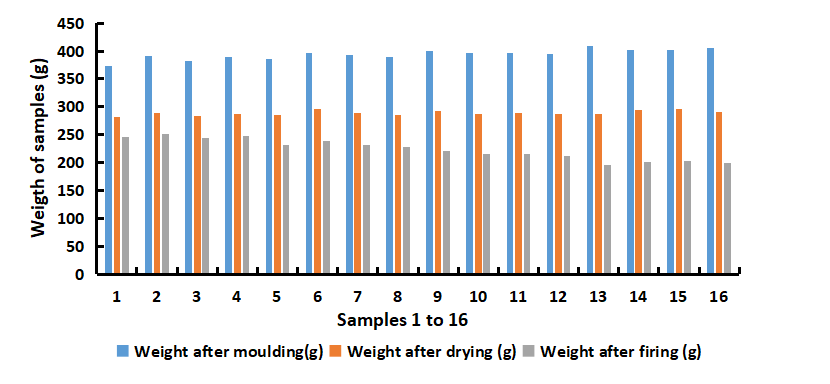
Figure 13 shows that weights of the samples are different and decreased after firing due to the different percentages of the rice husk additive that burnt out at high temperature of the kiln.
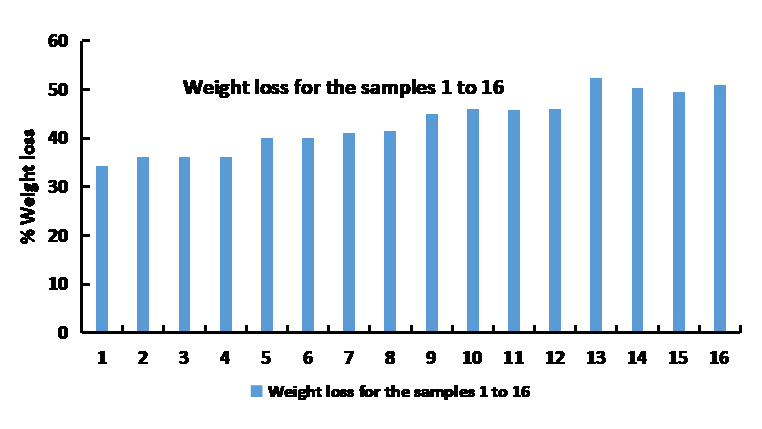
Figure 14 shows that samples with 30% rice husk lost more weight compared to those with 20%, 10% and 0% rice husk additive. The samples with 30% rice husk lost about half of its weight, while those without rice husk lost only about 35%. This result is in agreement with that of Arthur [12]. It confirms that, the higher the shrinkage, the denser and less porous the material. They observed relatively higher values of firing shrinkage with decreasing amount of additives may be attributed to conversion of additives into ashes.
3.2. Porosity and Bulk Density of the Samples
Porosity is an important factor in determining the heat conduction through the clay samples. Samples with high porosity often have a low thermal conductivity and hence better insulation. Also, such samples possess a low bulk density, which reduces the overall weight.
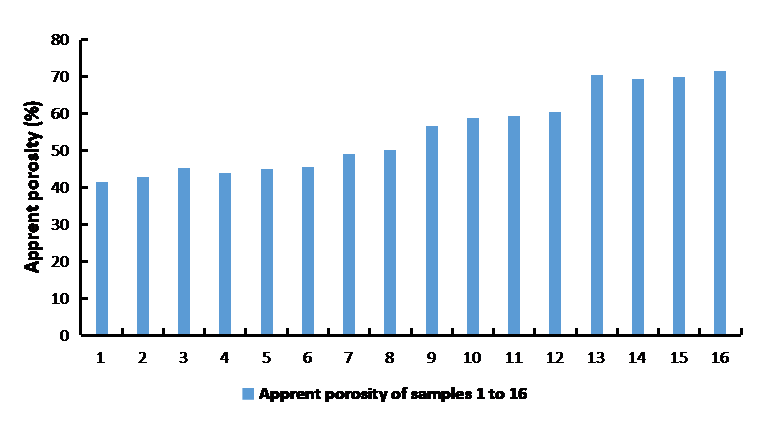
Figure 15 show the influence of the rice husk additive on the porosity of the samples considered in this study. It indicates that the porosity increased with an increase in the percentage of rice husk in the samples (S1 to S16).
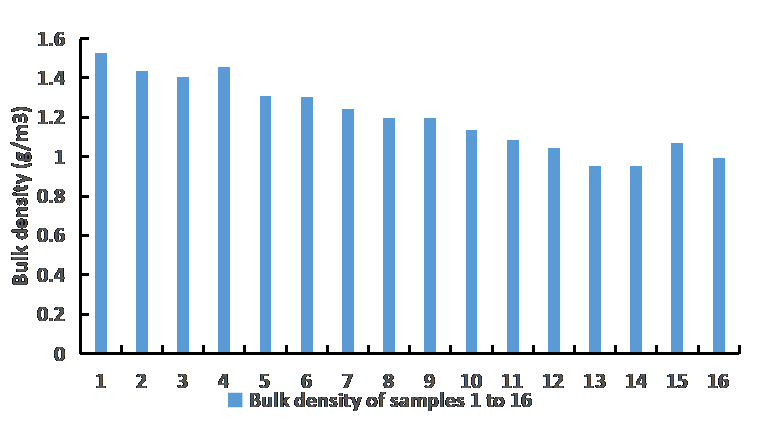
Figure 16 shows the influence of the rice husk additive on the bulk density of the samples. It can be observed that the bulk density of the samples decreased with the increase in the percentage of rice husk in the samples (S1-4 = 0% rice husk, S5-8 = 10% rice husk, S9-12 = 20% rice husk, to S13-16 = 30% rice husk,).
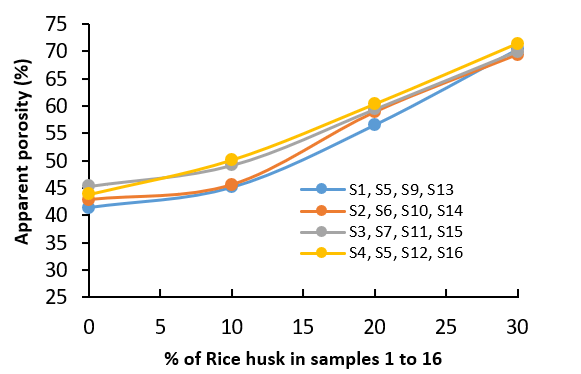
Figure 17 shows an increase in the porosity of the samples as the percentage of the rice husk increased. This indicates that the bulk density is indirectly proportional to the percentage of rice husk additive in the sample.
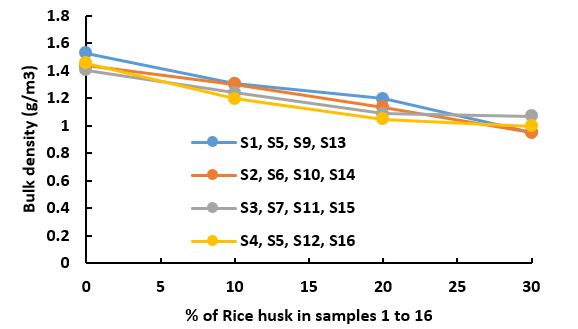
Figure 18 shows a decrease in the bulk density of the samples as the percentage of the rice husk increased. From Figure 17, S16 which has 30% rice husk has a higher porosity value (71.41%) than S5 (45.08%) which has 10% rice husk. This result is in line with the tests carried out by [13] and [14] on the effect of rice husk and rice husk ash on properties of clay bricks, which indicated that the porosity increased from 21% to 64% and bulk density decreased from 1.78g/cm3 to 0.73g/cm3 as the percentage of rice husk in the sample increased from 0% to 30%. Also in [15] and [16], the authors worked porosity tests and found that the apparent porosity of the clay was 15.38% while those with the additives were 23.91, 34.09, 44.89, and 42.85 for 5%, 10%, 15% and 20% respectively.
3.3. Thermal Conductivity of the Samples
Thermal conductivity tests are important for insulation applications where thermal gradients dictate the use of a material for refractory applications. Thermal conductivity depends not only on the properties of clay but also on the geometry and quantity of the additives. Figure 19 shows the influence of percentage (%) by weight of rice husk additive on the thermal conductivity of the samples (S1 to S16), based on the procedure presented in Figure 7. For all the tested samples, the value of thermal conductivity is lower with the higher percentage of the rice husk additive, which is in line with work of Arthur [12].
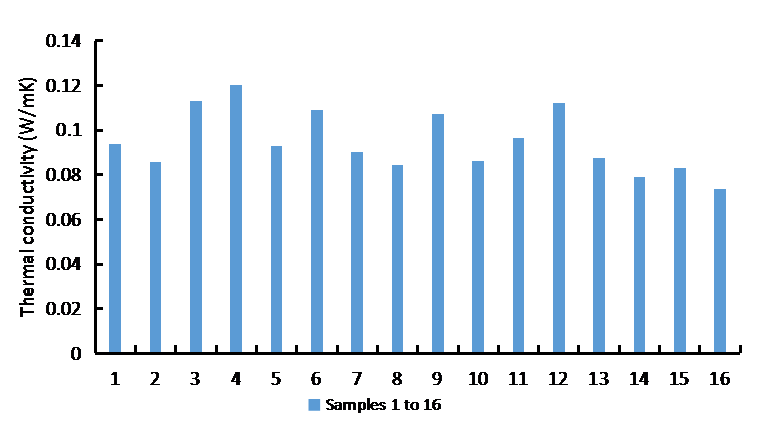
This can be due to the increase in pores arising from the burning off the additive that created pores in the internal structure of the samples. This reduces the heat flow rate in a porous medium causing a decrease in thermal conductivity of the samples. As such, the percentage increase in the rice husk additive improves the sample’s thermal insulating properties as more pores were created in the micro-structure of the samples. This indicates that the mixture of clay and kaolin with rice husk is more insulating than the unreinforced clay, since the rice husk is primarily responsible for creating the thermally insulating pores.
Figures 20 to 23 show the temperature variations at interval of 5 minutes where the considered samples with 0%, 10%, 20% and 30% of rice husk additives where subjected to a steady heating for 25 minutes during the thermal conductivity tests experiment presented in Figure 7.
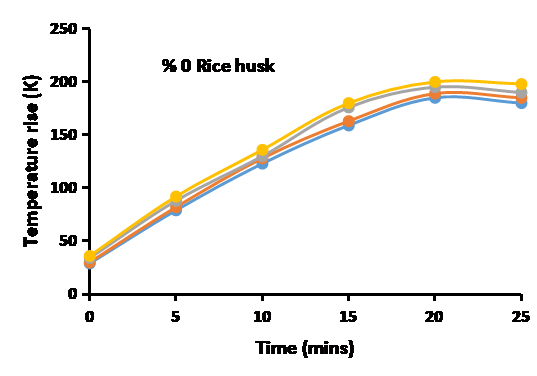
Figure 20 shows the temperature rise for the samples case with 0%, of rice husk additive subjected to a steady heating for 25 minutes.
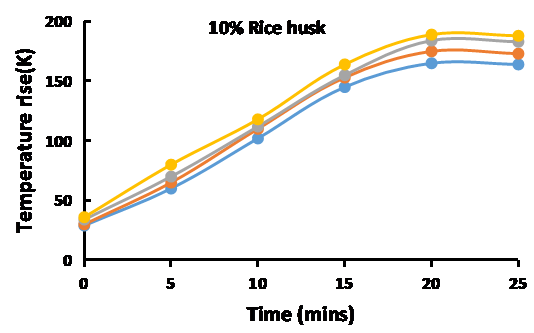
Figure 21 shows the temperature rise for the sample case with 10%, of rice husk additive subjected to a steady heating for 25 minutes.
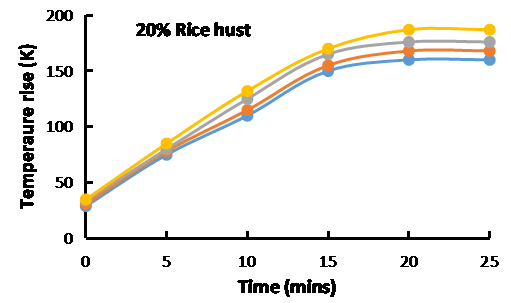
Figure 22 shows the temperature rise for the sample case with 20%, of rice husk additive subjected to a steady heating for 25 minutes.
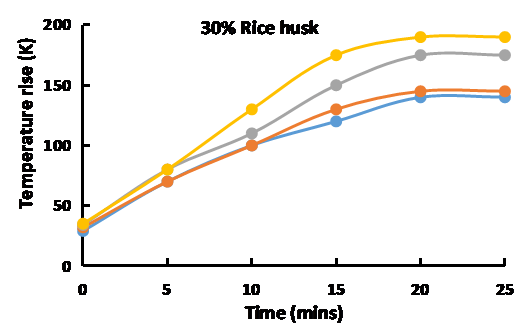
Figure 23 shows the temperature rise for the sample case with 30%, of rice husk additive subjected to a steady heating for 25 minutes. It can be observed from Figures 20 to 23 that the temperature of the samples with 0%, 10%, 20% and 30% rice husk additives increased steadily till they reached steady state at approximately 25 minutes. It can also be observed that the temperature of the samples decreased with an increase in the percentage (%) of rice husk additive in the samples. Figures 20 to 23 also showed different thermal performance capability of the samples with the rice husk additives in reducing the heat loss by conduction across the wall thickness of the samples, if such rice husk additive is used in producing the inner liner of a biomass cook-stove. The difference in thermal performance of the samples could be due to the increase in porosity created by the increase in the rice husk additive, as well as the micro-structural changes that occurred when the samples were fired at high temperature. Obviously, the thermal conductivity value decreases with an increase in the percentage of the rice husk additive resulting from the increase in pores created in the micro-structure, which reduces the heat flow rate in the porous medium, thereby causing a decrease in thermal conductivity of the samples.
4. Conclusion
The inner liner of a biomass cook-stove is a vital part of the combustion chamber of a cook-stove. This study has investigated the influence of rice husk additive on the fired clay and kaolin mixture to determine the suitable proportion for producing the inner liner of a cook-stove that improves its insulation performance and thermal efficiency, and still maintain low bulk density. It was found that the apparent porosity of the samples increased with an increase in the rice husk additive and the bulk density decreased. This indicates that the rice husk is very effective in creating pores in the produced samples making them more porous and reducing the bulk density, hence reducing the overall weight. It was also found that the thermal conductivity of the samples decreased with an increase in the rice husk additive due to the increase in pores, which reduces the heat flow rate in a porous medium, and thus causing a decrease in thermal conductivity of the samples. This study shows the prospect of using rice husk additive to enhance the insulation performance of the inner liner of cook-stoves, thereby contributing in producing a more efficient and environmentally friendly cooking device.
- D. F. Barnes, K. Openshaw, K. R. Smith, R. van der Plas, “What makes people cook with improved biomass stoves? A comparative international review of stove programs”, World Bank Technical Paper, 242:1-44, 1994.
- E. Kyuvi, J. Nyangaya, A. Aganda, “Improvement of ceramic insulation of cook stoves using carbonized organic waste”, Journal of Energy Research and Reviews, 14(3):51-64, 2023, DOI: 10.9734/JENRR/2023/v14i3286
- E. Adkins, J. Chen, J. Winiecki, V. Modi, “Testing institutional biomass cookstoves in rural Kenyan schools for the Millennium Villages Project”, Energy for Sustainable Development, 14(3):186-193, 2010, DOI: 10.1016/j.esd.2010.07.002
- N. S. Rathore, C. K. Singh, N. Rathore, N. L. Panwar, “Thermal performance and heat storage behaviour of three pots improved cookstove”, Energy Nexus, 6:1-9, 2022, DOI: 10.1016/j.nexus.2022.100074
- C. Bories, M.-E. Borredon, E. Vedrenne, G. Vilarem, “Development of eco-friendly porous fired clay bricks using pore-forming agents: a review”, Journal of Environmental Management, 143:186-196, 2014, DOI: 10.1016/j.jenvman.2014.05.006
- I. Demir, “Effect of organic residues addition on the technological properties of clay bricks”, Waste Management, 28(3):622-627, 2008, DOI: 10.1016/j.wasman.2007.03.019
- V. Ducman, T. Kopar, “Sawdust and paper-making sludge as pore-forming agents for lightweight clay bricks”, Industrial Ceramics, 21(2):81-86, 2001.
- S. A. Mehetre, N. L. Panwar, D. Sharma, H. Kumar, “Improved biomass cook-stoves for sustainable development: a review”, Renewable and Sustainable Energy Reviews, 73:672-687, 2017, DOI: 10.1016/j.rser.2017.01.150
- R. Barpatragohain, N. Bharali, P. P. Dutta, “Thermal performance evaluation of an improved biomass cookstove for domestic applications”, Proceedings of International Conference on Thermofluids (Lecture Notes in Mechanical Engineering), 579-590, 2021, DOI: 10.1007/978-981-15-7831-1_54
- S. H. Soni, B. Prayogo, M. M. Tasliman, R. Fabrobi, “Effect of holes system designing for low energy stove using coffee husk bio-pellet as solid fuel”, Journal of Advanced Research in Fluid Mechanics and Thermal Sciences, 51(2):215-226, 2018.
- Y. A. Cengel, M. A. Boles, “Thermodynamics: an engineering approach (5th ed.)”, McGraw-Hill, 2006.
- E. K. Arthur, E. Gikunoo, “Property analysis of thermal insulating materials made from Ghanaian anthill clay deposits”, Cogent Engineering, 7:1-20, 2020, DOI: 10.1080/23311916.2020.1827493
- S. Janbuala, T. Wasanapiarnpong, “Effect of rice husk and rice husk ash on properties of lightweight clay bricks”, Key Engineering Materials, 65:74-79, 2015, DOI: 10.4028/www.scientific.net/KEM.659.74
- S. Janbuala, T. Wasanapiarnpong, “Lightweight clay brick ceramic prepared with bagasse addition”, ARPN Journal of Engineering and Applied Sciences, 11(13):8380-8384, 2016.
- V. E. Ojukwu, R. O. Ajemba, “The effect of sawdust, cow dung, and CaC2 wastes on properties of refractory bricks”, Journal of Engineering and Applied Sciences, 21(1):799-812, 2022.
- T. O. Nwokeocha, C. H. Achebe, P. C. Okolie, “Effect of firing temperature on the refractory properties of Mgbom clay”, Umudike Journal of Engineering and Technology (UJET), 6(2):76-81, 2020, DOI: 10.33922/j.ujet_v6i2_9
No related articles were found.