
Education Value Chain Model for Examination, Grading, and Evaluation Process in Higher Education based on Blockchain Technology

Volume 5, Issue 6, Page No 1698–1703, 2020
Adv. Sci. Technol. Eng. Syst. J. 5(6), 1698–1703 (2020);
DOI: 10.25046/aj0506202
Keywords: Blockchain, Examination, Evaluation, Grading, Higher education, Student
Blockchain is a solution to improve data integrity and minimize data manipulation. Blockchain technology can be used in student examination management in universities. The process of managing student examination produces some information that can be stored in a blockchain database such as information about the lecturer as the exam creator, exam proctor, student attendance, student exam scores, and the student study continuity status. Blockchain technology ensures student data is valid and reliable, therefore, the company’s or organizational trust the teaching and learning process in higher education. This research was conducted using a qualitative approach, which is user center design (UCD) the goal is building a blockchain technology model that can be used by universities in the process of managing student examination, grading, and evaluation. This process will be repeated every semester until students graduate from the university. The propose of this research is to create a business process model based on blockchain technology that can improve data integrity in universities.
1. Introduction
In teaching and learning process in higher education, students will pass through midterm exams, final exams, lab exams, and certification exams [1]. This examination is carried out to measure the student comprehension during the teaching and learning process. Lecturer can also measure how far learning objectives achieved during the process [2].
After examination, students will get the score according to the criteria determined by the department or university. All grade will be recorded in Student Academic Transcript. This Academic Transcript is a reference for company to hired new graduate working in their company [3]. The company will filter the grade and choose the relevant position according to the student ability [4].
Valid and reliable grade will increase the company or organizational confidence and trust in the teaching and learning process that occurs in higher education [5]. However, in 2019 until now, there have been several cases of diploma certificate forgery. As the impact, the company or organization doubts about the data originality stated on the academic transcript and they need to crosscheck back the data to the university [6].
This is challenge by the university to keep the data integrity and security from any manipulation. According to the case happen in 2019, employee working in the company can also be a threat who manipulate the data [7].
This problem requires universities to updates the technology used, especially those concerning the data integrity and security. Blockchain technology is immutable, unchangeable. It also peer to peer, distributed (transparent), validated, and secured, which are very suitable for solving data integrity and security issues [7], [8].
One of the main processes in producing student grades is student examinations management process. This process has several sub processes, they are examination creation process, exam proctor attendance recapitulation, Student attendance recapitulation, the grading process (collecting exam answer and grading from lecture, and the evaluation process (to determine the student status for next semester).
All of the processes will produce data and information in academic transcript which are very important for students, the validity of data and information is a top priority for universities to For this reason, blockchain solutions are needed in managing student value data [9].
Based on the phenomena, the research question for this research is how to build an education value chain model in student exam management process based on blockchain technology in universities? The goal is to build an education value chain model for exam management process to ensure the data integrity.
2. Literature Review
2.1. Education Value Chain
This section discusses the Education value chain in general, starting from prospective students applying to the university, pass the test, and accepted as students. Students follow two types of activities during their study at higher education, they are intra-curricular and extra-curricular activities.
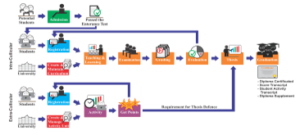
Figure 1: Education Value Chain
The intra-curricular activity starts from course registration for each semester. Then students will follow the teaching and learning process, students will take mid and final exams in each semester. For each exam, lecturer will give the score to students. Based on the results, students will be evaluated by the department and academic advisory unit so student status can be known every semester. In the final semester, students will take a final project or thesis, and thesis defense will be carried out at the end. Apart from following intra-curricular activities, students also take part in extra-curricular activities. Students will register to student organizations and participate in the organization activity. As a result of participating in the activities, students will get points. The points are collected into Student Activity Transcript (SAT). This SAT points is a pre-requisite for thesis defense [7].
2.2. Examination
In general, in one semester there are two exams, mid exam and final exam. With examination, the department or university can find out how far students can understand the overall material delivered and how far the learning objectives achieved. In addition, exam answers can provide feedback for lecturers, departments, and universities [10].
2.3. Grading
After the student takes the exam, the lecturer will give a score in accordance with the assessment measurement set by the university. Grading is the starting point for students to get a cumulative achievement index measured from the cognitive side of students during the teaching and learning process. Assessment may vary according to the type of exam being performed. The theory exam can be assessed based on the answers written by students. Oral exams or presentations are assessed directly based on the results of student presentations. Meanwhile, practical lab exams can be assessed based on the results of the practicum work made [11].
2.4. Evaluation of Study Progress
After students finish their semester, the department and academic supervisor unit will evaluate the learning progress. If students get the satisfactory results, the student may be got appreciation. However, if the evaluation process result is not good, Student will follow various coaching and guidance determined based on student cases and discussions between departments and student advisory units. On the other hand, if students get poor grades and less motivation, then the department and student advisory unit will try to provide solutions according to student interests [12].
2.5. Blockchain in Education
Blockchain research in education can provide new insights to education practitioners. Blockchain technology can be used to improve data integrity to minimize crimes such as diploma certificate forgery. In addition, previous research related to blockchain implementation is the application of smart contracts to business processes in universities [9][13].
3. Research Methodology
Research methodhology used in this research is user-centered design (UCD) [14]. In UCD methodology, research begins with an understanding of the context of use, at this stage a literature study is carried out related to the implementation of blockchain technology in universities. The next stage is to specify user requirements by conducting observations, interviews, and focus group discussions (FGD) to determine the teaching and learning process, especially in examination, grading, and evaluation.
Then a design solution was carried out by creating an education value chain model for the examination, grading and evaluation processes that apply to universities based on blockchain technology. At this stage, it is also described in detail the business processes and identify which activities need to store data and information to the blockchain database. The next stage is evaluate the requirements, FGD is conducted to see whether the model can be accepted and implemented in each university. This evaluation becomes input for validation on the design solution, specify user requirements and understand context of use. If there are things that are still not suitable, then it becomes feedback for the improvement of each stage in this research methodology.
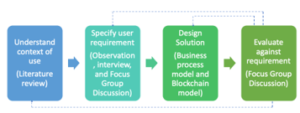
Figure 2: Research Methodology
4. Result and Discussion
The teaching and learning process in higher education which is discussed in this study is the examination, grading and evaluation process as shown in Figure 3.
These three processes are focused on the process of student examination management and evaluations starting from the preparation, execution, and evaluation of student study. All data generated in this process will be stored in a blockchain database so that universities can guarantee the data they have cannot be manipulated and have a good integrity.
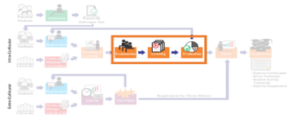
Figure 3: Focus of Research
The examination process begins with exam schedule by the student scheduling department. From the exam schedule, the department will determine the lecturer as the exam question creator. The lecturer will fill out an Exam Agreement Form that contains the topic of the questions and the learning outcomes that will be achieved by students after completing the exam. This form is filled to get the standardized exam questions and approval from the department. The data of the lecturer will be recorded on the blockchain database for honorarium.
The questions that have been completed will be examined by the department and given to the academic operations section to be distributed according to the exam schedule to students.
The exam scheduling section will also schedule the lecturers as exam proctor and the attendance realization data will be stored in a blockchain database as proof of payment of exam proctor fees.
Students take the exam twice per semester (mid exam and final exam). For a practicum course, students take a practicum exam. In each exam, the attendance will be recorded, and this data is stored in a blockchain database as proof of student attendance in the exam.
If the student is absent or cannot attend the exam, student can apply for a make-up exam in accordance with the applicable terms and conditions.
The exam answers are collected by the exam proctor to academic operations section. The academic operational section will validate the answer and distribute it to the lecturer. The lecturer will check the answers and gives score to each student. The score is entered by the lecturer through the system and will be validated by the department in the score judiciary. Student scores consist of several components, such as assignment scores, mid-test scores and final exam scores. This score is stored in the blockchain database. Lecturers will receive the examiner’s honorarium according to the number of exam files corrected and proof of payment of this honorarium is stored in the blockchain database.
All grades entered in one semester will be evaluated by the academic supervisor and department. The results of the evaluation will determine the status of students in the continuity of the studies. The status will be stored in the blockchain database.
Figure 4 shows the transactions illustration from the education value chain model for the examination, grading and evaluation processes based on blockchain technology. Users who play a role in the examination, grading, and evaluation processes are students, lecturers, academic operations, scheduling units, student advisory units, and faculty / departments.
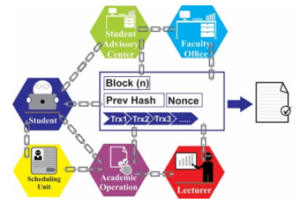
Figure 4: Transaction Illustration of Education Value Chain Model for Examination, Grading, and Evaluation for Higher Education based on Blockchain Technology
Figure 5 (a and b) shows the college’s business process in teaching and learning activities focusing on the examination, grading, and evaluation processes. From the business process described in Figure 4 above, the data storage in the blockchain database is important in connection to the financial audit and payment process. The data are:
- Record name of lecturer as the exam creator
- This data contains the semester period, lecturer code, course code, class code, exam date, and honorarium amount.
- Record name of Exam Proctor
- This data contains the semester period, lecturer code, course code, class code, exam date, exam room.
- Record the attendance list of students and exam proctor
- This data contains the semester period, lecturer code, course code, class code, exam date, exam room, student code, and the amount of the exam proctor fee.
- Record a score of students and Record the new score.
- This data contains the semester period, course code, class code, exam date, exam room, student code, exam component code, and student scores.
- Record a payment of scoring honorarium to lecturer
- This data contains the semester period, lecturer code, course code, class code, exam date, exam room, number of students and the amount of honorarium
- Record the student’s evaluation for each semester
- This data contains the semester period, course code, student code, component code grades, grades, social studies, and GPA
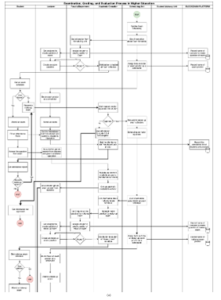
Figure 5: (a) Business Process of of Education Value Chain Model for Examination, Grading, and Evaluation for Higher Education based on Blockchain Technology
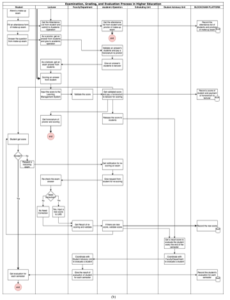
(b) Business Process of of Education Value Chain Model for Examination, Grading, and Evaluation for Higher Education based on Blockchain Technology
5. Conclusions
By using blockchain technology, it can be concluded that data integrity will be guaranteed, and data storage is more secure because the data has been validated and cannot be changed. Data changes can still occur by making new transactions without eliminating previous transactions, for example when students protest the score which causes the previous score to change. The Both scores are stored in the blockchain database.
Following the research methodology, we have conducted a focus group discussion to validate the model that has been made and the results are that all participants agree with this model and they think this study can be easily applied in universities in recording the academic transcript.
The process of examination, grading, and evaluation is very appropriate using blockchain technology, because this process is very crucial and requires data validity to produce the academic transcript for students.
In the current condition of the Covid-19 pandemic, using blockchain technology is more needed because the process input and evaluation are done digitally. With blockchain technology, universities make a digital transformation in the education sector and make education technology more effective, especially during the Covid-19 pandemic.
The limitations of this study are the process of interviewing and focus group discussion using virtual conferencing to get answers from the speakers and there is limited time in digging deeper into the information needed. So it is necessary to do the validity of the resulting model several times. Future research will build an integrated overall model to produce a value chain with data integrity starting from students entering higher education until students graduate and get diplomas, transcripts, diploma companion documents, and student activity transcripts.
Acknowledge
This study is supported by the Directorate General of Strengthening for Research and Development, Ministry of Research, Technology, and Higher Education, Republic of Indonesia as a part of Penelitian Terapan Unggulan Perguruan Tinggi Research Grant to Bina Nusantara University entitled “Implementasi Blockchain Platform untuk Menciptakan “Good Governance” pada Perguruan Tinggi” or “The Implementation of Blockchain Platform to Create “Good Governance” in Higher Education” with contract number: 12/AKM/PNT/2019 and contract date: 27 March 2019.
Conflict of Interest
The authors declare no conflict of interest.
- M.M.A. Getso, Z. Johari, “the Blockchain Revolution and Higher Eucation,” International Journal of Information Systems and Engineering, 5(1), 57–65, 2017, doi:10.24924/ijise/2017.04/v5.iss1/57.65.
- R. Wuthisatian, “Student exam performance in different proctored environments: Evidence from an online economics course,” International Review of Economics Education, 35(August), 100196, 2020, doi:10.1016/j.iree.2020.100196.
- Z. Wu, T. He, C. Mao, C. Huang, “Exam paper generation based on performance prediction of student group,” Information Sciences, 532, 72–90, 2020, doi:10.1016/j.ins.2020.04.043.
- M. Apte, A. Bhave-gudipudi, “ScienceDirect Cooperative Learning techniques to bridge gaps in academia and corporate,” Procedia Computer Science, 172(2019), 289–295, 2020, doi:10.1016/j.procs.2020.05.046.
- A. Herrarte, R. Llorente-heras, A. Herrarte, R. Llorente-heras, “Competencies, occupational status, and earnings among European university graduates,” 2017, doi:10.1016/j.econedurev.2017.10.006.
- Meyliana, Y.U. Chandra, C. Cassandra, Surjandy, E. Fernando, A.E. Widjaja, H. Prabowo, “A Proposed Model of Secure Academic Transcript Records with Blockchain Technology in Higher Education,” (Conrist 2019), 172–177, 2020, doi:10.5220/0009907401720177.
- M. Meyliana, Y.U. Chandra, C. Cassandra, S. Surjandy, H.A. Eka Widjaja, E. Fernando, H. Prabowo, C. Joseph, “DEFYING THE CERTIFICATION DIPLOMA FORGERY WITH BLOCKCHAIN PLATFORM: A PROPOSED MODEL,” in Proceedings of the International Conferences ICT, Society, and Human Beings 2019; Connected Smart Cities 2019; and Web Based Communities and Social Media 2019, IADIS Press: 63–71, 2019, doi:10.33965/ict2019_201908L008.
- S. Singh, N. Singh, “Blockchain: Future of financial and cyber security,” Proceedings of the 2016 2nd International Conference on Contemporary Computing and Informatics, IC3I 2016, 463–467, 2016, doi:10.1109/IC3I.2016.7918009.
- M. Turkanovic, M. Holbl, K. Kosic, M. Hericko, A. Kamisalic, “EduCTX: A blockchain-based higher education credit platform,” IEEE Access, 6, 2018, doi:10.1109/ACCESS.2018.2789929.
- L.M. Daniels, M.J. Gierl, “The impact of immediate test score reporting on university students ’ achievement emotions in the context of computer-based multiple- choice exams,” Learning and Instruction, 2017, doi:10.1016/j.learninstruc.2017.04.001.
- I. Cornelisz, M. Meeter, C. van Klaveren, “Educational equity and teacher discretion effects in high stake exams,” Economics of Education Review, 73(November 2018), 101908, 2019, doi:10.1016/j.econedurev.2019.07.002.
- H. Liao, J. Hitchcock, Reported Credibility Techniques in Higher Education Evaluation Studies that use Qualitative Methods: A Research Synthesis, Elsevier Ltd, 2018, doi:10.1016/j.evalprogplan.2018.03.005.
- R. Bdiwi, C. de Runz, S. Faiz, A.A. Cherif, “Towards a New Ubiquitous Learning Environment Based on Blockchain Technology,” 2017 IEEE 17th International Conference on Advanced Learning Technologies (ICALT), 101–102, 2017, doi:10.1109/ICALT.2017.37.
- What is User Centered Design? | Interaction Design Foundation (IxDF), Nov. 2020.
- Marlene Böhmer, Thorsten Herfet, "PerfVis+: From Timestamps to Insight through Integration of Visual and Statistical Analysis", Advances in Science, Technology and Engineering Systems Journal, vol. 10, no. 6, pp. 77–87, 2025. doi: 10.25046/aj100607
- Shaista Ashraf Farooqi, Aedah Abd Rahman, Amna Saad, "Federated Learning with Differential Privacy and Blockchain for Security and Privacy in IoMT A Theoretical Comparison and Review", Advances in Science, Technology and Engineering Systems Journal, vol. 10, no. 6, pp. 65–76, 2025. doi: 10.25046/aj100606
- Li Weiguo, Chen Yanhong, Yang Libing, Yang Liyan, "Integration and Innovation of a Micro-Topic-Pedagogy Teaching Model under the New Engineering Education Paradigm", Advances in Science, Technology and Engineering Systems Journal, vol. 10, no. 4, pp. 32–40, 2025. doi: 10.25046/aj100404
- Glender Brás, Samara Leal, Breno Sousa, Gabriel Paes, Cleberson Junior, João Souza, Rafael Assis, Tamires Marques, Thiago Teles Calazans Silva, "Machine Learning Methods for University Student Performance Prediction in Basic Skills based on Psychometric Profile", Advances in Science, Technology and Engineering Systems Journal, vol. 10, no. 4, pp. 1–13, 2025. doi: 10.25046/aj100401
- Andi Kristanto, Utari Dewi, Dina Fitria Murad, Yumiati, Santi Dewiki, Tiara Sevi Nurmania, "Utilization of Generative Artificial Intelligence to Improve Students’ Visual Literacy Skills", Advances in Science, Technology and Engineering Systems Journal, vol. 10, no. 3, pp. 1–8, 2025. doi: 10.25046/aj100301
- Brandon Wetzel, Haiping Xu, "Deploying Trusted and Immutable Predictive Models on a Public Blockchain Network", Advances in Science, Technology and Engineering Systems Journal, vol. 9, no. 3, pp. 72–83, 2024. doi: 10.25046/aj090307
- Falko Gawantka, Franz Just, Marina Savelyeva, Markus Wappler, Jörg Lässig, "A Novel Metric for Evaluating the Stability of XAI Explanations", Advances in Science, Technology and Engineering Systems Journal, vol. 9, no. 1, pp. 133–142, 2024. doi: 10.25046/aj090113
- Gil Hyun Kang, Hwi Jin Kwon, In Soo Chung, Chul Su Kim, "Development and Usability Evaluation of Mobile Augmented Reality Contents for Railway Vehicle Maintenance Training: Air Compressor Case", Advances in Science, Technology and Engineering Systems Journal, vol. 9, no. 1, pp. 91–103, 2024. doi: 10.25046/aj090109
- Samiha Fairooz, Shakila Yeasmin Miti, Zihadul Islam, Meem Tasfia Zaman, "A Secure Medical History Card Powered by Blockchain Technology", Advances in Science, Technology and Engineering Systems Journal, vol. 8, no. 6, pp. 96–106, 2023. doi: 10.25046/aj080611
- Sergii Grybniak, Yevhen Leonchyk, Igor Mazurok, Oleksandr Nashyvan, Alisa Vorokhta, "Waterfall: Salto Collazo. High-Level Design of Tokenomics", Advances in Science, Technology and Engineering Systems Journal, vol. 8, no. 3, pp. 231–243, 2023. doi: 10.25046/aj080326
- Yu-Jin An, Ha-Young Oh, Hyun-Jong Kim, "Forecasting Bitcoin Prices: An LSTM Deep-Learning Approach Using On-Chain Data", Advances in Science, Technology and Engineering Systems Journal, vol. 8, no. 3, pp. 186–192, 2023. doi: 10.25046/aj080321
- Marcos Felipe, Haiping Xu, "HistoChain: Improving Consortium Blockchain Scalability using Historical Blockchains", Advances in Science, Technology and Engineering Systems Journal, vol. 8, no. 3, pp. 89–99, 2023. doi: 10.25046/aj080311
- Yu Yan, Eric Wallace Cooper, Richard Lee, "Inferring Student Needs Based on Facial Expression in Video Images", Advances in Science, Technology and Engineering Systems Journal, vol. 8, no. 3, pp. 19–28, 2023. doi: 10.25046/aj080303
- Zhanna Dedovets, Mikhail Rodionov, Anna Novichkova, "A Model for Teaching Mathematics to Gifted Students Based on an Effective Combination of Various Approaches for their Preparation", Advances in Science, Technology and Engineering Systems Journal, vol. 8, no. 1, pp. 138–148, 2023. doi: 10.25046/aj080117
- Ossama Embarak, "Multi-Layered Machine Learning Model For Mining Learners Academic Performance", Advances in Science, Technology and Engineering Systems Journal, vol. 6, no. 1, pp. 850–861, 2021. doi: 10.25046/aj060194
- Lai Kecheng, He Qikun, Hu Ning, Fujinami Tsutomu, "Estimating Subjective Appetite based on Cerebral Blood Flow", Advances in Science, Technology and Engineering Systems Journal, vol. 7, no. 6, pp. 195–203, 2022. doi: 10.25046/aj070621
- Segundo Moisés Toapanta Toapanta, Rodrigo Humberto Del Pozo Durango, Luis Enrique Mafla Gallegos, Eriannys Zharayth Gómez Díaz, Yngrid Josefina Melo Quintana, Joan Noheli Miranda Jimenez, Ma. Roció Maciel Arellano, José Antonio Orizaga Trejo, "Prototype to Mitigate the Risks, Vulnerabilities and Threats of Information to Ensure Data Integrity", Advances in Science, Technology and Engineering Systems Journal, vol. 7, no. 6, pp. 139–150, 2022. doi: 10.25046/aj070614
- Cong Qi, Yue Lei, Yuejun Cai, "Blockchain Applications in Suning and PingAn", Advances in Science, Technology and Engineering Systems Journal, vol. 7, no. 5, pp. 167–177, 2022. doi: 10.25046/aj070518
- Ming Fong Sie, Jingze Wu, Seth Austin Harding, Chien-Lung Lin, San-Tai Wang, Shih-wei Liao, "Secured Multi-Layer Blockchain Framework for IoT Aggregate Verification", Advances in Science, Technology and Engineering Systems Journal, vol. 7, no. 3, pp. 106–115, 2022. doi: 10.25046/aj070312
- Alvin Thamrin, Haiping Xu, Rui Ming, "Cloud-Based Hierarchical Consortium Blockchain Networks for Timely Publication and Efficient Retrieval of Electronic Health Records", Advances in Science, Technology and Engineering Systems Journal, vol. 7, no. 2, pp. 179–190, 2022. doi: 10.25046/aj070218
- Maria J. Poblaciones, "Opinion and Effectiveness of Kahoot! use in Online Distance Learning in Crop Production at Higher Education Level: A Case of Study", Advances in Science, Technology and Engineering Systems Journal, vol. 7, no. 1, pp. 8–13, 2022. doi: 10.25046/aj070102
- Theresa Ugonwa Okafor, "Self-Regulated Learning and Academic Achievement of Physics Students in Selected Secondary Schools in Aguata Local Government Area of Anambra State, Nigeria", Advances in Science, Technology and Engineering Systems Journal, vol. 7, no. 1, pp. 1–7, 2022. doi: 10.25046/aj070101
- Mohammad Givi Efgivia, Al-Bahra, Abdul Karim Halim, R Andi Ahmad Gunadi, "The Influence of Online Learning on Learning Interest and Motivation and Their Impact on Student Achievement at Educational Technology Study Program – Ibn Khaldun University Bogor", Advances in Science, Technology and Engineering Systems Journal, vol. 6, no. 6, pp. 82–87, 2021. doi: 10.25046/aj060612
- Caglar Arslan, Selen Sipahio?lu, Emre ?afak, Mesut Gözütok, Tacettin Köprülü, "Comparative Analysis and Modern Applications of PoW, PoS, PPoS Blockchain Consensus Mechanisms and New Distributed Ledger Technologies", Advances in Science, Technology and Engineering Systems Journal, vol. 6, no. 5, pp. 279–290, 2021. doi: 10.25046/aj060531
- Marko Suvajdzic, Dragana Stojanovic, "Discover DaVinci: Blockchain, Art and New Ways of Digital Learning", Advances in Science, Technology and Engineering Systems Journal, vol. 6, no. 5, pp. 273–278, 2021. doi: 10.25046/aj060530
- Rotimi Adediran Ibitomi, Tefo Gordan Sekgweleo, Tiko Iyamu, "Decision Support System for Testing and Evaluating Software in Organizations", Advances in Science, Technology and Engineering Systems Journal, vol. 6, no. 3, pp. 303–310, 2021. doi: 10.25046/aj060334
- Mariutsi Alexandra Osorio-Sanabria, Astrid Jaime, Tamara Alcantara-Concepcion, Piedad Barreto, "Open Access Research Trends in Higher Education: A Literature Review", Advances in Science, Technology and Engineering Systems Journal, vol. 6, no. 2, pp. 499–511, 2021. doi: 10.25046/aj060257
- Titin Siswantining, Herley Shaori Al-Ash, Kasiyah Junus, Lia Sadita, Diana Nur Vitasari, Luthfiralda Sjahfirdi, Harinaldi, "Students’ Preparedness to Learn in e-Learning Environment and their Perception on The MPKT Lecturers’ Readiness to Manage Online Class", Advances in Science, Technology and Engineering Systems Journal, vol. 6, no. 2, pp. 387–398, 2021. doi: 10.25046/aj060245
- Erick Fernando, Meyliana Meyliana, Harco Leslie Hendric Spits Warnars, Edi Abdurachman, Surjandy Surjandy, "Blockchain Technology-Based Good Distribution Practice Model of Pharmacy Industry in Indonesia", Advances in Science, Technology and Engineering Systems Journal, vol. 6, no. 2, pp. 267–273, 2021. doi: 10.25046/aj060230
- Yousra Karim, Abdelghani Cherkaoui, "Fuzzy Analytical Hierarchy Process and Fuzzy Comprehensive Evaluation Method Applied to Assess and Improve Human and Organizational Factors Maturity in Mining Industry", Advances in Science, Technology and Engineering Systems Journal, vol. 6, no. 2, pp. 75–84, 2021. doi: 10.25046/aj060210
- Meyliana, Cadelina Cassandra, Yakob Utama Chandra, Surjandy, Erick Fernando, Henry Antonius Eka Widjaja, Harjanto Prabowo, "Recording of Academic Transcript Data to Prevent the Forgery based on Blockchain Technology", Advances in Science, Technology and Engineering Systems Journal, vol. 6, no. 1, pp. 1273–1278, 2021. doi: 10.25046/aj0601145
- Teodoro Díaz-Leyva, Nestor Alvarado-Bravo, Jorge Sánchez-Ayte, Almintor Torres-Quiroz, Carlos Dávila-Ignacio, Florcita Aldana-Trejo, José Razo-Quispe, Omar Chamorro-Atalaya, "Variation in Self-Perception of Professional Competencies in Systems Engineering Students, due to the COVID -19 Pandemic", Advances in Science, Technology and Engineering Systems Journal, vol. 6, no. 1, pp. 1024–1029, 2021. doi: 10.25046/aj0601113
- Safaa Albasri, Mihail Popescu, Salman Ahmad, James Keller, "Procrustes Dynamic Time Wrapping Analysis for Automated Surgical Skill Evaluation", Advances in Science, Technology and Engineering Systems Journal, vol. 6, no. 1, pp. 912–921, 2021. doi: 10.25046/aj0601100
- Erick Fernando, Meyliana, Harco Leslie Hendric Spits Warnars, Edi Abdurachman, "Blockchain Technology for Tracing Drug with a Multichain Platform: Simulation Method", Advances in Science, Technology and Engineering Systems Journal, vol. 6, no. 1, pp. 765–769, 2021. doi: 10.25046/aj060184
- Achmad Ichwan Yasir, Gede Putra Kusuma, "Deep Deterministic Policy Gradients for Optimizing Simulated PoA Blockchain Networks Based on Healthcare Data Characteristics", Advances in Science, Technology and Engineering Systems Journal, vol. 6, no. 1, pp. 757–764, 2021. doi: 10.25046/aj060183
- Meyliana, Yakob Utama Chandra, Cadelina Cassandra, Surjandy, Erick Fernando, Henry Antonius Eka Widjaja, Andy Effendi, Ivan sangkereng, Charles Joseph, Harjanto Prabowo, "Recording of Student Attendance with Blockchain Technology to Avoid Fake Presence Data in Teaching Learning Process", Advances in Science, Technology and Engineering Systems Journal, vol. 6, no. 1, pp. 742–747, 2021. doi: 10.25046/aj060181
- Nakhoon Choi, Heeyoul Kim, "A Novel Blockchain-Based Authentication and Access Control Model for Smart Environment", Advances in Science, Technology and Engineering Systems Journal, vol. 6, no. 1, pp. 651–657, 2021. doi: 10.25046/aj060171
- Jairo Zegarra-Apaza, Sara Oliveros-Huerta, Santiago Vilela-Cruz, Rosita Chero-Benites, Gissett Marcelo-Ruiz, Leslie Yelina Herrera-Nolasco, Brian Meneses-Claudio, Hernan Matta-Solis, Eduardo Matta-Solis, "Cardiovascular Risk in Patients who go to the Medical Office of a Private Health Center in North Lima", Advances in Science, Technology and Engineering Systems Journal, vol. 6, no. 1, pp. 626–630, 2021. doi: 10.25046/aj060168
- Ndiatenda Ndou, Ritesh Ajoodha, Ashwini Jadhav, "A Case Study to Enhance Student Support Initiatives Through Forecasting Student Success in Higher-Education", Advances in Science, Technology and Engineering Systems Journal, vol. 6, no. 1, pp. 230–241, 2021. doi: 10.25046/aj060126
- Minkyung Kim, Kangseok Kim, Jai-Hoon Kim, "Analysis of Real-time Blockchain Considering Service Level Agreement (SLA)", Advances in Science, Technology and Engineering Systems Journal, vol. 6, no. 1, pp. 218–223, 2021. doi: 10.25046/aj060124
- Walter Cervera-Flores, Yenifer Choque-Garibay, Nahuel Gonzalez-Cordero, Brian Meneses-Claudio, Hernan Solis-Matta, Lourdes Matta-Zamudio, "Level of Empathy in Nursing Students Attending Clinical Practices of the Universidad de Ciencias y Humanidades", Advances in Science, Technology and Engineering Systems Journal, vol. 6, no. 1, pp. 178–183, 2021. doi: 10.25046/aj060120
- Yanet Cruz Flores, Tania Retuerto-Azaña, Jaquelin Nuñez-Artica, Brian Meneses-Claudio, Hernan Matta Solis, Lourdes Matta-Zamudio, "Lifestyle in Nursing Students at a University of North Lima", Advances in Science, Technology and Engineering Systems Journal, vol. 6, no. 1, pp. 164–168, 2021. doi: 10.25046/aj060118
- Lonia Masangu, Ashwini Jadhav, Ritesh Ajoodha, "Predicting Student Academic Performance Using Data Mining Techniques", Advances in Science, Technology and Engineering Systems Journal, vol. 6, no. 1, pp. 153–163, 2021. doi: 10.25046/aj060117
- Jennifer Snell Ballard, Jerry Lee, "Recognition of Maximal Lift Capacity using the Polylift", Advances in Science, Technology and Engineering Systems Journal, vol. 6, no. 1, pp. 121–127, 2021. doi: 10.25046/aj060113
- Devika K N, Ramesh Bhakthavatchalu, "Modified Blockchain based Hardware Paradigm for Data Provenance in Academia", Advances in Science, Technology and Engineering Systems Journal, vol. 6, no. 1, pp. 66–77, 2021. doi: 10.25046/aj060108
- Tedi Priatna, Dian Sa’adillah Maylawati, Hamdan Sugilar, Muhammad Ali Ramdhani, "Social Engineering to Establish Digital Culture in Higher Education", Advances in Science, Technology and Engineering Systems Journal, vol. 5, no. 6, pp. 1474–1479, 2020. doi: 10.25046/aj0506177
- Evelyn Roncal-Cespedes, Gloria Castillo-Laban, Brian Meneses-Claudio, Hernan Matta-Solis, Lourdes Matta-Zamudio, Eduardo Matta-Solis, "Social skills and Resilience in Adolescents of Secondary Education of the Kumamoto I 3092 Educational Institution, of the Puente Piedra District – Lima 2019", Advances in Science, Technology and Engineering Systems Journal, vol. 5, no. 6, pp. 1345–1349, 2020. doi: 10.25046/aj0506161
- Liseth Acuña-Medina, Yumira Arias-Quispe, Yackeline Espeza-Veláquez, Brian Meneses-Claudio, Hernan Matta-Solis, Eduardo Matta-Solis, "Empathy in Nursing Students that do the Non-Medical Internship in Three Universities in Lima, 2019", Advances in Science, Technology and Engineering Systems Journal, vol. 5, no. 6, pp. 944–950, 2020. doi: 10.25046/aj0506112
- Rosmery Ramos-Sandoval, Jano Ramos-Diaz, "Barriers and Supports in Engineering Career Development: An Exploration of First-Year Students", Advances in Science, Technology and Engineering Systems Journal, vol. 5, no. 6, pp. 920–925, 2020. doi: 10.25046/aj0506109
- Fernando Richter Vidal, Feliz Gouveia, Christophe Soares, "Blockchain Application in Higher Education Diploma Management and Results Analysis", Advances in Science, Technology and Engineering Systems Journal, vol. 5, no. 6, pp. 871–882, 2020. doi: 10.25046/aj0506104
- Ogbuefi Uche Chinweoke, Ibeni Christopher, "Load Evaluation with Fast Decoupled-Newton Raphson Algorithms: Evidence from Port Harcourt Electricity", Advances in Science, Technology and Engineering Systems Journal, vol. 5, no. 5, pp. 1099–1110, 2020. doi: 10.25046/aj0505134
- Lucia Silva-Bueno, Brian Meneses-Claudio, Hernan Matta-Solis, Lourdes Matta-Zamudio, "Health-Related Quality of life in Students of an Education Institution of Ventanilla", Advances in Science, Technology and Engineering Systems Journal, vol. 5, no. 5, pp. 966–972, 2020. doi: 10.25046/aj0505118
- Gcobisile Matafeni, Ritesh Ajoodha, "Using Big Data Analytics to Predict Learner Attrition based on First Year Marks at a South African University", Advances in Science, Technology and Engineering Systems Journal, vol. 5, no. 5, pp. 920–926, 2020. doi: 10.25046/aj0505112
- Yanfi Yanfi, Yogi Udjaja, Azani Cempaka Sari, "User’s Demographic Characteristic on the Evaluation of Gamification Interactive Typing for Primary School Visually Impaired with System Usability Scale", Advances in Science, Technology and Engineering Systems Journal, vol. 5, no. 5, pp. 876–881, 2020. doi: 10.25046/aj0505107
- Surjandy, Meyliana, Kristianus Oktriono, Mika Milenia Catherine, Chutiporn Anutariya, Erick Fernando, "Smartphone Influence Factor of University Student’s Academic Achievement", Advances in Science, Technology and Engineering Systems Journal, vol. 5, no. 5, pp. 692–697, 2020. doi: 10.25046/aj050585
- Fatma Mallouli, Aya Hellal, Fatimah Abdulraheem Alzahrani, Abdulsalam Ali Almadani, Nahla Sharief Saeed, "Comparative Study of Cryptocurrency Algorithms: Coronavirus Towards Bitcoin’s Expansion", Advances in Science, Technology and Engineering Systems Journal, vol. 5, no. 5, pp. 452–459, 2020. doi: 10.25046/aj050556
- Liana Khamis Qabajeh, Mohammad Moustafa Qabajeh, "Detailed Security Evaluation of ARANz, ARAN and AODV Protocols", Advances in Science, Technology and Engineering Systems Journal, vol. 5, no. 5, pp. 176–192, 2020. doi: 10.25046/aj050523
- Giuliana Gaona-Gamarra, Brian Meneses-Claudio, Avid Roman-Gonzalez, "The Ludocreative Expression for the Production of Texts in Children of Early Education", Advances in Science, Technology and Engineering Systems Journal, vol. 5, no. 5, pp. 127–136, 2020. doi: 10.25046/aj050518
- Natalya Viktorovna Matveeva, Ludmila Vladimirovna Makar, "Ethics as a Motivation Indicator in Second Language Vocational Digital Teaching", Advances in Science, Technology and Engineering Systems Journal, vol. 5, no. 4, pp. 776–782, 2020. doi: 10.25046/aj050492
- Arif Furkan Mendi, Tolga Erol, Emre Şafak, "Generating a Blockchain Smart Contract Application Framework", Advances in Science, Technology and Engineering Systems Journal, vol. 5, no. 3, pp. 191–197, 2020. doi: 10.25046/aj050325
- Basem Assiri, "Using Leader Election and Blockchain in E-Health", Advances in Science, Technology and Engineering Systems Journal, vol. 5, no. 3, pp. 46–54, 2020. doi: 10.25046/aj050307
- Segundo Moisés Toapanta Toapanta, Daniela Monserrate Moreira Gamboa, Luis Enrique Mafla Gallegos, "Analysis of the Blockchain for Adoption in Electronic Commerce Management in Ecuador", Advances in Science, Technology and Engineering Systems Journal, vol. 5, no. 2, pp. 762–768, 2020. doi: 10.25046/aj050295
- Woochun Jun, "A Study on Development of Information and Communication Ethics Sensitivity Measurement for Elementary School Students", Advances in Science, Technology and Engineering Systems Journal, vol. 5, no. 1, pp. 169–173, 2020. doi: 10.25046/aj050122
- Tracey Woolrych, Melissa Zaccagnini, Moira Stephens, Murray Stace, Rebekkha Middleton, Melissa Bergner, Sian O’sullivan, Reetu Verma, "Into the Online Space: Outcomes for a PASS Online Pilot Across Different First Year University Subjects", Advances in Science, Technology and Engineering Systems Journal, vol. 5, no. 1, pp. 142–150, 2020. doi: 10.25046/aj050119
- Saleh Albahli, Rehan Ullah Khan, Ali Mustafa Qamar, "A Blockchain-Based Architecture for Smart Healthcare System: A Case Study of Saudi Arabia", Advances in Science, Technology and Engineering Systems Journal, vol. 5, no. 1, pp. 40–47, 2020. doi: 10.25046/aj050106
- Aref Hassan Kurd Ali, Halikul Lenando, Mohamad Alrfaay, Slim Chaoui, Haithem Ben Chikha, Akram Ajouli, "Performance Analysis of Routing Protocols in Resource-Constrained Opportunistic Networks", Advances in Science, Technology and Engineering Systems Journal, vol. 4, no. 6, pp. 402–413, 2019. doi: 10.25046/aj040651
- Woochun Jun, "Development of Evaluation Metrics for Learners in Unplugged Activity", Advances in Science, Technology and Engineering Systems Journal, vol. 4, no. 6, pp. 216–219, 2019. doi: 10.25046/aj040628
- Omar Freddy Chamorro Atalaya, Dora Yvonne Arce Santillan, Jorge Isaac Castro Bedriñana, Teodoro Neri Díaz Leyva, Denisse Marie Barrientos Pichilingue, "Comparative Analysis of Student Dissatisfaction of the Continuing Academic Semesters at UNTELS", Advances in Science, Technology and Engineering Systems Journal, vol. 4, no. 6, pp. 203–207, 2019. doi: 10.25046/aj040626
- Omar Freddy Chamorro Atalaya, Dora Yvonne Arce Santillan, Jorge Isaac Castro Bedriñana, Yesica Pamela Leandro Chacón, Martin Díaz Choque, "The Correlation of the Specific and Global Performance of Teachers in UNTELS Engineering Schools", Advances in Science, Technology and Engineering Systems Journal, vol. 4, no. 6, pp. 196–202, 2019. doi: 10.25046/aj040625
- Pablo Pérez-Gosende, "Evaluation of Classroom Furniture Design for Ecuadorian University Students: An Anthropometry-Based Approach", Advances in Science, Technology and Engineering Systems Journal, vol. 4, no. 6, pp. 163–172, 2019. doi: 10.25046/aj040620
- Toshiyasu Kato, Yuki Terawaki, Yasushi Kodama, Teruhiko Unoki, Yasushi Kambayashi, "Estimating Academic results from Trainees’ Activities in Programming Exercises Using Four Types of Machine Learning", Advances in Science, Technology and Engineering Systems Journal, vol. 4, no. 5, pp. 321–326, 2019. doi: 10.25046/aj040541
- Omar Freddy Chamorro Atalaya, Teodoro Neri Díaz Leyva, Dora Yvonne Arce Santillan, Jorge Isaac Castro Bedriñana, Denisse Marie Barrientos Pichilingue, Avid Roman-Gonzalez, "Satisfaction of the Graduate for the Continuous Improvement of Educational Quality in UNTELS", Advances in Science, Technology and Engineering Systems Journal, vol. 4, no. 5, pp. 151–157, 2019. doi: 10.25046/aj040520
- Rowaida Khalil Ibrahim, Subhi Rafeeq Mohammed Zeebaree, Karwan Fahmi Sami Jacksi, "Survey on Semantic Similarity Based on Document Clustering", Advances in Science, Technology and Engineering Systems Journal, vol. 4, no. 5, pp. 115–122, 2019. doi: 10.25046/aj040515
- Woochun Jun, "A Study on Development of Evaluation Metrics for Learners in Physical Computing", Advances in Science, Technology and Engineering Systems Journal, vol. 4, no. 5, pp. 82–87, 2019. doi: 10.25046/aj040510
- Anang Hudaya Muhamad Amin, Nazrul Muhaimin Ahmad, Subarmaniam Kannan, "Event Monitoring using Distributed Pattern Recognition Approach on Integrated IoT-Blockchain Network", Advances in Science, Technology and Engineering Systems Journal, vol. 4, no. 4, pp. 256–264, 2019. doi: 10.25046/aj040432
- Vaibhav B. Vaijapurkar, Yerram Ravinder, "Development of Tactile Display and an Efficient Approach to Enhance Perceptual Analysis in Rehabilitation", Advances in Science, Technology and Engineering Systems Journal, vol. 4, no. 4, pp. 01–11, 2019. doi: 10.25046/aj040401
- Segundo Moisés Toapanta Toapanta, Adrian Alberto Chávez Monteverde, Javier Gonzalo Ortiz Rojas, Luis Enrique Mafla Gallegos, "Proposal of Ledger Technology to Apply to a Public Organization in Ecuador", Advances in Science, Technology and Engineering Systems Journal, vol. 4, no. 3, pp. 251–259, 2019. doi: 10.25046/aj040333
- Zuha Samsudeen, Dhanushka Perera, Mgnas Fernando, "Behavioral Analysis of Bitcoin Users on Illegal Transactions", Advances in Science, Technology and Engineering Systems Journal, vol. 4, no. 2, pp. 402–412, 2019. doi: 10.25046/aj040250
- Khalifa Sylla, Samuel Ouya, Masamba Seck, Gervais Mendy, "The Value of Integrating MSRP Protocol in E-learning Platforms of Universities", Advances in Science, Technology and Engineering Systems Journal, vol. 3, no. 5, pp. 321–327, 2018. doi: 10.25046/aj030538
- Mikhail Rodionov, Zhanna Dedovets, "Developing Students’ Motivation for Learning through Practical Problems in School", Advances in Science, Technology and Engineering Systems Journal, vol. 3, no. 5, pp. 258–266, 2018. doi: 10.25046/aj030531
- Nicola Fabiano, "The Internet of Things ecosystem: the blockchain and data protection issues", Advances in Science, Technology and Engineering Systems Journal, vol. 3, no. 2, pp. 1–7, 2018. doi: 10.25046/aj030201
- Ghassan Frache, Hector Nistazakis, George Tombras, "Constructing Learning-by-Doing Pedagogical Model for Delivering 21st Century Engineering Education", Advances in Science, Technology and Engineering Systems Journal, vol. 3, no. 1, pp. 115–124, 2018. doi: 10.25046/aj030114
- Wongpanya Nuankaew, Pratya Nuankaew, Kanakarn Phanniphong, "Lifelong Learning Application: Mobile Application to Promote Lifelong Learning and Introduce Educational Institutions", Advances in Science, Technology and Engineering Systems Journal, vol. 2, no. 3, pp. 1556–1564, 2017. doi: 10.25046/aj0203194
- Mustafa Çöçelli, Ethem Arkın, "A Category Based Threat Evaluation Model Using Platform Kinematics Data", Advances in Science, Technology and Engineering Systems Journal, vol. 2, no. 3, pp. 1330–1341, 2017. doi: 10.25046/aj0203168
- Shuji Shinohara, Yasuhiro Omiya, Mitsuteru Nakamura, Naoki Hagiwara, Masakazu Higuchi, Shunji Mitsuyoshi, Shinichi Tokuno, "Multilingual evaluation of voice disability index using pitch rate", Advances in Science, Technology and Engineering Systems Journal, vol. 2, no. 3, pp. 765–772, 2017. doi: 10.25046/aj020397
- Adeyemi I. Olabisi, Thankgod E. Boye, Emagbetere Eyere, "Evaluation of Pure Aluminium Inoculated with Varying Grain Sizes of an Agro-waste based Inoculant", Advances in Science, Technology and Engineering Systems Journal, vol. 2, no. 4, pp. 14–25, 2017. doi: 10.25046/aj020403
- Martín, María de los Ángeles, Diván, Mario José, "Applications of Case Based Organizational Memory Supported by the PAbMM Architecture", Advances in Science, Technology and Engineering Systems Journal, vol. 2, no. 3, pp. 12–23, 2017. doi: 10.25046/aj020303
- Lucila Romero, Milagros Gutierrez, Laura Caliusco, "Semantic modeling of portfolio assessment in e-learning environment", Advances in Science, Technology and Engineering Systems Journal, vol. 2, no. 1, pp. 149–156, 2017. doi: 10.25046/aj020117
- Samantha Mathara Arachchi, Siong Choy Chong, Alik Kathabi, "System Testing Evaluation for Enterprise Resource Planning to Reduce Failure Rate", Advances in Science, Technology and Engineering Systems Journal, vol. 2, no. 1, pp. 6–15, 2016. doi: 10.25046/aj020102
- Thulasimani Munohsamy, "Students’ Perception of Library Services in Academia: A Case Study of Universiti Teknologi Brunei", Advances in Science, Technology and Engineering Systems Journal, vol. 1, no. 6, pp. 1–4, 2016. doi: 10.25046/aj010601