
Design of a Mobile Application for the School Enrollment Process in Order to Prevent Covid-19

Volume 5, Issue 6, Page No 1042–1046, 2020
Adv. Sci. Technol. Eng. Syst. J. 5(6), 1042–1046 (2020);
DOI: 10.25046/aj0506126
Keywords: Android, Registration process, Mobile Application, Agile Methodology, Health
In 2020, a great change occurred around the world due to the covid-19 pandemic, daily activities were restructured and thanks to technological advance it has been an ideal means to carry out remote work. With regard to education in Peru, it was paralyzed for a long time and only obtained in later months the option of video offerings software for the interaction of teachers and students, given these new activities carried out. In schools, we are proposing a mobile application prototype that is adaptable to any school in Perú in order to facilitate the registration process of parents for their children due to the global crisis that we are going through. Parents will have a follow-up and ideal control for your children. The methodology that will help us to carry out this application will be the agile methodology with the scrum framework, since it adapts to the needs of the client, and to the constant changes in the development process of the mobile application. Since high student demand requires fast delivery of the application with cost and time efficiency. The mobile application to which students and tutors will be automatically transferred will have easy access to use it in the registration processes and in their academic controls. Our task is created in three points of view, student, tutor and teacher. The student was validated, with the registration or registration and login for the students already registered. Where the student can validate their personal data already registered and see their school monitoring, such as grades, attendance, courses, schedules and payments. The result obtained is the proposal of a productive approach, optimizing the license plate control processes, through a mobile application, where each agent can perform this function, and thus reduce the risk of contagion in these moments of pandemic. And so, in this way, interconnect all the enrollments, the benefactors in a system, saving their information and the data of the students. With these results, it will be of great benefit for the school to minimize the time and thus increase the competitiveness between the schools, also for the parents and for the students who despite the difficulties continue to progress in life.
1. Introduction
In December 2019, a large and growing outbreak of a new coronavirus was reported in Wuhan, Hubei Province, China [1]. The global COVID-19 pandemic spreads easily to people nearby, especially in crowds with mobile people (for example, city centers). A widely accepted strategy to mitigate its spread is social distancing, avoiding crowds [2].
One of the first broad-spectrum measures has been the closure of educational centers at all levels, which has affected 91.3% of the total number of students enrolled in the world: more than 1.5 billion people have been left without power attend their face-to-face classes, according to UNESCO [3].
Several methodologies were found for the construction of the mobile application, but in this case the Scrum methodology was used, which is a framework for agile software development that has expanded to other industries.It is a process in which a set of good practices are applied on a regular basis to work collaboratively, in teams and to obtain the best possible project results. The evolution of software development methods has taken place since 1970. The Agile Methodology also offers services to companies to create the right product that makes them aggressive in the market [4], [5]. The Agile methodology is considered one of the best approaches for the development of mobile applications [6]. Many unavoidable developmental changes could also be identified [7]. Finally, Balsamiq was chosen for the development of the design, as it is useful for communicating ideas [8].
This article uses the design of a mobile application to analyze the enrollment and school monitoring process in the Comas District [9], in order to allow parents to access enrollment without the need to go to schools. It will also include a search and database of school monitoring information per student.
The objective of this research work is to help parents maintain control of their children at school, using a tool that will be easy to use for the different processes that the institution handles. In addition, with the study of information that we carry out it will allow us to avoid spreading the coronavirus.
The present work is structured in the following way, in the next section number II the methodology used for the construction of the application will be described in detail. In section III the results obtained will be evidenced and finally in section IV the own results will be discussed and the conclusions will be presented.
2. Methodology
In this section we will detail what steps will be followed for the development of the mobile application, so we will use the Agile Scrum Methodology as shown in Figure 1 which explains in a general way the behavior of Scrum, using this methodology is advantageous due to the flexibility in the requirements and ease in adapting to changes.
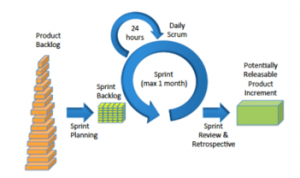
Figure 1: Diagram of the Scrum methodology
2.1. Analysis
Agile Scrum Methodology: As Troy Dimes wrote, scrum is like a lifeline for those companies that face difficulties in not even having a methodology to develop software. Scrum is a framework for creating complex software and delivering it on time in a much simpler way. Scrum is not a methodology; it is a reference framework within the agile software development methodology, which will enable it to create excellent software, through the application of a set of guidelines to be followed by work teams and the use of specific roles [10].
Scrum defines three roles: The Scrum master, the product owner, and the development team. The scrum master’s role is to ensure that the team is adopting the methodology, its practices and values and norms; is the team leader, but does not manage development [11]. For its part, the development team is responsible for converting what the customer wants, the Product Backlog, into functional iterations of the product; the development team does not have hierarchies, and all its members have the same level and position: developer. The optimal team size is between three and nine people [12].
Sprint planning
This stage takes place at the Sprint Planning meeting where the activities to be carried out are defined. This activity takes eight hours for a month of Sprint. If Sprint is shorter, the time is allocated proportionally [12].
Development stage
At this stage, the sprint managers must guarantee that last minute changes that affect the objectives are not generated. In addition, they must ensure that they meet the established deadlines.
Sprint review
The Sprint Review occurs at the end of the Sprint and lasts for four hours for a one-month project (or a proportion of that time if the duration is shorter). At this stage: the project owner reviews what was done, identifies what was not done, and discusses the Product Backlog; the development team counts the problems it found and the way they were solved, and shows the product and how it works.
Feedback
Empirical process control is retrospective and not predictive, which would imply that decisions are made based on evidence and knowledge is nurtured in experience. The lessons to be learned in this stage will allow us to learn how sprints can be much more effective and agile.
2.2. Design and tools
Programming platform (Android Studio)
It is the official integrated development environment for the Android platform, is one of the most used IDES for the development of Android applications due to its intuitive interface for the arrangement of the elements used in the architecture of the project [13].
Database manager (Microsoft SQL Server)
The storage and management of data is mainly done through the database of the business management system, so it is very important to study the design and implementation of the database in the system [14].
Design Tool (Balsamiq Wireframes)
In this research, the Balsamiq Mockups tool is used as a tool that will facilitate the development of the project’s prototypes [15].
2.3. Procedure
Product blacklog
The Product Backlog is a list, ordered by value, risk, priority and need of the requirements that the product owner defines, updates and orders. The list has as a particular characteristic that it is neveFinished, since it evolved during the development of the project [12].
Sprint backlog
It is the task list that contains selected tasks from the Product Backlog, in which it subdivides the user stories that describe the functionalities that make up the project. This listing is defined and estimated at the Sprint Planning meeting at the start of the iteration [16].
Sprint planning meeting
It is the Sprint planning meeting based on the Product Backlog and they participate: Product Owner (responsible for the subject) who prioritizes the tasks to include in the Sprint Backlog, the Scrum Master and the Development Team [16].
3. Case study
This section will develop what is the planning of the sprints of each of the modules and the estimates of the times in which it is being carried out in the mobile application development stage.
3.1. Sprint planning
- As a user you can enter the application through an account generated by the school.
- As a user you can view the courses with their grades, schedules and pensions.
- As a user, you may be able to register me once you have paid the registration fee.
- As a proxy you can know the names of the teachers with their respective courses that my son will take.
- As a proxy you can know the respective qualifications of my son with their respective states.
- As administrator, you can keep track of student pensions.
- As administrator you can generate detailed reports of each student.
3.2. Development Stage
Time estimation
In this phase we will see the duration of each of the sprints as shown in Table 1.
Product scope
This is the estimate of the time it takes for the equipment to be able to have the user’s history points, for which the estimates of the scope of the equipment will be noted in Figure 2.
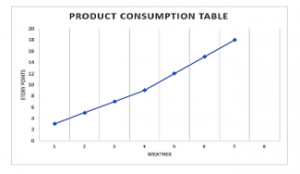
Figure 2: Product scope
Table 1: Duration of Sprints
| Name | Duration | Start | Final |
| Mobile Application for the Enrollment Process | 3 months | 01/06/2020 | 01/10/2020 |
| 1. User Module | 2 weeks | 01/06/2020 | 15/06/2020 |
| 2. Enrolment Module | 2 weeks | 16/06/2020 | 30/06/2020 |
| 3. Schedule Module | 2 weeks | 31/06/2020 | 13/07/2020 |
| 4. Courses Module | 2 weeks | 14/07/2020 | 27/07/2020 |
| 5. Ratings Module | 2 weeks | 28/07/2020 | 10/07/2020 |
| 6. Pension Module | 4 weeks | 10/07/2020 | 10/08/2020 |
| 7. Reporting Module | 5 weeks | 11/08/2020 | 31/09/2020 |
3.3. Prototypes of the mobile application
In this stage we will see the creation of the mobile application design that we will carry out and we will detail the functions that each of the modules will have as we see in Figure 3 (a), Figure 3 (b), Figure 3 (c) and Figure 3 (d).
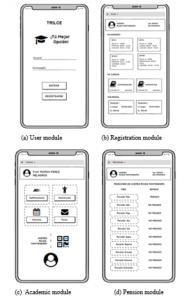
Figure 3: Prototype phase of the mobile application
Increment 1: Main Start
This increase shows the start of the application which, if we have a user already generated by the institution, we could enter the account that maintains personal data of the students Figure 3 (a).
Increment 2: Enrollment module
This increase shows the process that must be carried out to enroll each student, and as a requirement to proceed, they would have to pay the enrollment for the school year Figure 3 (b).
Increment 3: Detailed courses module
In this increase it will show the detailed course with its qualifications, assists, schedules and forums, in addition to having a QR code to download the report Figure 3 (c).
Increment 4: Pension module
In this increase it shows the pensions of each student, detailed by month and the state if it is already canceled or even just canceled Figure 3 (d).
4. Results and discussion
4.1. About the case study
Compared to other research works, we have observed the design of the work of an Android mobile application for an online Travel Agency, where the use of the NinjaMock tool is specified, where we can see that, on the contrary, its interface does not provides a professional visual finish, increasingly difficult to use [17].
The google API services will be used to obtain the latitude and longitude of the reported location [18]. The importance of the interface is a means for the user to interact with the software and hardware. The interface will help the user to interact with the system much easier than with the old method of giving a command at the command prompt. The following image is the Trusted Halal interface. Malaysia Cosmetic Products System Application [19] [20].
Due to the covid-19 pandemic, enrollment in Peru was 7,834,543, unlike last year, which was 8,024,672. Figure 4 extracted from the Ministry of Education [21] shows the number of enrollments in 2020 and a large decrease in enrollment is observed, therefore the proposal of this research will help students to enroll successfully using mobile applications.
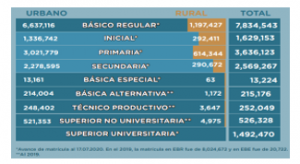
Figure 4: Statistical data of enrolled in 2020 under the covid-19 pandemic
4.2. About the methodology
The tool used in the present work, which is Balsamiq Mockups, is easier and more adaptable to any user, and that shows us a good effectiveness before its prototypes made. In Balsamiq Mockups, mobile applications are designed in a smarter and easier way [22]. We have observed as an important factor in a project and the first decision of the application is the development prototype therefore the prototyping software Balsamiq Mockups served as a benefit to be able to create our Wireframes easily and quickly [23].
Riadh proposed designing the notification system using GCM (Google Cloud Messaging) of the Android app and connecting to the website and providing information that helps instructor to select who will send notification [24].
In this project, the methodology to be used is Agile Scrum Methodology. Scrum is a lightweight project management framework with the ability to iteratively and incrementally control and manage all types of projects. Through use. The “Product Owner” Scrum methodology will work closely with the team to detect and prioritize system functionality [25].
Differences in Methodologies: This part will detail the differences of using the agile methodology, as opposed to using other methodologies that exist. Table 2 will detail the differences that each methodology will have.
Table 2: Traditional Methodology vs Agile Methodology
| Traditional methodologies | Agile methodologies |
| Predictive | Adaptive |
| Process-oriented | People-oriented |
| Rigid process | Flexible process |
| It is conceived as a project | A project is subdivided into several smaller projects. |
| Little communication with the client | Constant communication with the client. |
| Software delivery at the end of development. | Constant software deliveries |
| Extensive documentation | Little documentation |
5. Conclusions
In this research we designed the proposal of a mobile application, helping to achieve a better solution at the time of registration of enrollment and monitoring of students.
This proposal does not try to meet one level but to seek a comprehensive solution in the short term and can be adapted to any educational institution as has been determined in Table 2 with respect to the duration of the Spring. This work can be improved and will be carried out when they go through the final users in which the satisfaction of the users will be determined with statistical data. We can conclude that the design proposal of the mobile application will be of great benefit to parents when registering their children and monitoring and controlling their daily activities, a proposal that is being promoted in schools in Lima, Peru.
- C. Huang et al., “Clinical features of patients infected with 2019 novel coronavirus in Wuhan, China,” The Lancet, 395(10223), 497–506, 2020, doi:10.1016/S0140-6736(20)30183-5.
- Centers for Disease Control and Prevention, Coronavirus (COVID-19), 2019.
- UNESCO, Education: From disruption to recovery, 2019.
- B. Mathur, S.M. Satapathy, “An analytical comparison of mobile application development using agile methodologies,” Proceedings of the International Conference on Trends in Electronics and Informatics, 4, 1147–1152, 2019, doi:10.1109/icoei.2019.8862532.
- P. Abrahamsson, A. Hanhineva, H. Hulkko, T. Ihme, J. Jäälinoja, M. Korkala, J. Koskela, P. Kyllönen, O. Salo, “Mobile-D: An agile approach for mobile application development,” Proceedings of the Conference on Object-Oriented Programming Systems, Languages, and Applications, 174–175, 2004, doi:10.1145/1028664.1028736.
- S. Holla, M.M. Katti, “ANDROID BASED MOBILE APPLICATION DEVELOPMENT and its SECURITY,” International Journal of Computer Trends and Technology, 3(3), 486–490, 2012, doi:10.1080/10304312.2012.706462.
- A. Cockburn, L. Williams, Agile Software Development: It’s about Feedback and Change, IEEE Computer Society: 39–43, 2003.
- I. Bouchrika, L. Ait-Oubelli, A. Rabir, N. Harrathi, “Mockup-based navigational diagram for the development of interactive web applications,” ACM International Conference Proceeding Series, (7), 27–32, 2013, doi:10.1145/2503859.2503864.
- R.C. Jisha, M.P. Mathews, S.P. Kini, V. Kumar, U. V. Harisankar, M. Shilpa, “An Android Application for School Bus Tracking and Student Monitoring System,” International Conference on Computational Intelligence and Computing Research, 1–4, 2018, doi:10.1109/ICCIC.2018.8782320.
- A. Mundra, S. Misra, C.A. Dhawale, “Practical scrum-scrum team: Way to produce successful and quality software,” International Conference on Computational Science and Its Applications, 119–123, 2013, doi:10.1109/ICCSA.2013.25.
- K. Schwaber, J. Sutherland, The Scrum Guide: The Definitive The Rules of the Game, 2017.
- M. Wadhwa, N. Sharma, “Review of Agile Software Development Methodologies,” International Journal of Advanced Research in Computer Science and Software Engineering, 3(2), 370–374, 2015.
- R. V Golhar, P.A. Vyawahare, P.H. Borghare, A. Manusmare, “Design And Implementation Of Android Base Mobile App For An Institute,” International Conference on Electrical, Electronics, and Optimization Techniques, 3660–3663, 2016.
- L.J. Zhu, “Research and application of SQL Server in the trade management system,” International Conference on Computer Research and Development, 3, 209–213, 2011, doi:10.1109/ICCRD.2011.5764282.
- A. Delgado, J. Sosa, “Mobile application design of geolocation to collect solid waste: A case study in Lima, Peru,” International Conference on Electronics, Electrical Engineering and Computing, 1–4, 2019, doi:10.1109/INTERCON.2019.8853594.
- P.L. Alfonzo, “Implementación de SCRUM en el diseño del proyecto del Trabajo Final de Aplicación,” Scientia Et Technica, 19(4), 413–418, 2014, doi:10.22517/23447214.9021.
- A. Gómez, Aplicación Android para la empresa Travelling-Service, 2014.
- Z. Jiantao, P. Xuan, “Design and implementation of field staff management system on android mobile,” International Conference on Instrumentation and Measurement, Computer, Communication and Control, 791–794, 2013, doi:10.1109/IMCCC.2013.176.
- V.N. Vithana, D. Asirvatham, M.G.M. Johar, “Investigating the Issues of Using Agile Methods in Offshore Software Development in Sri Lanka,” Studies in Computational Intelligence, 710(March), 515–523, 2017, doi:10.1007/978-3-319-56660-3_44.
- A. Delgado, “Social conflict analysis on a mining project using shannon entropy,” International Congress on Electronics, Electrical Engineering and Computing, 3–6, 2017, doi:10.1109/INTERCON.2017.8079661.
- MINEDU, Propuesta de metas educativas e Indicadores al 2021 Lima, 2010.
- K. Kalimullah, D. Sushmitha, “Influence of Design Elements in Mobile Applications on User Experience of Elderly People,” Procedia Computer Science, 113, 352–359, 2017, doi:10.1016/j.procs.2017.08.344.
- Balsamiq Studios, Quick and Easy Wireframing Tool, 2020.
- M. H., “Notification System to Students using an Android Application,” International Journal of Computer Applications, 140(1), 22–27, 2016, doi:10.5120/ijca2016909189.
- A. Srivastava, S. Bhardwaj, S. Saraswat, “SCRUM model for agile methodology,” International Conference on Computing, Communication and Automation, 6, 864–869, 2017.
- Vikas Thammanna Gowda, Landis Humphrey, Aiden Kadoch, YinBo Chen, Olivia Roberts, "Multi Attribute Stratified Sampling: An Automated Framework for Privacy-Preserving Healthcare Data Publishing with Multiple Sensitive Attributes", Advances in Science, Technology and Engineering Systems Journal, vol. 11, no. 1, pp. 51–68, 2026. doi: 10.25046/aj110106
- Ya Gao, Fatma Layas, Xiangyu Dong, Yijing Li, Jiayi Li, "A Study of the Digital Health Management Needs of the Elderly", Advances in Science, Technology and Engineering Systems Journal, vol. 10, no. 2, pp. 42–48, 2025. doi: 10.25046/aj100205
- Le Truong Vinh Phuc, Mituteru Nakamura, Masakazu Higuchi, Shinichi Tokuno, "Effectiveness of a voice analysis technique in the assessment of depression status of individuals from Ho Chi Minh City, Viet Nam: A cross-sectional study", Advances in Science, Technology and Engineering Systems Journal, vol. 9, no. 4, pp. 73–78, 2024. doi: 10.25046/aj090408
- Declan Mallamo, Michael Azarian, Michael Pecht, "Early Detection of SMPS Electromagnetic Interference Failures Using Fuzzy Multi-Task Functional Fusion Prediction", Advances in Science, Technology and Engineering Systems Journal, vol. 9, no. 4, pp. 35–50, 2024. doi: 10.25046/aj090405
- Viktor Denkovski, Irena Stojmenovska, Goce Gavrilov, Vladimir Radevski, Vladimir Trajkovik, "Exploring Current Challenges on Security and Privacy in an Operational eHealth Information System", Advances in Science, Technology and Engineering Systems Journal, vol. 9, no. 2, pp. 45–54, 2024. doi: 10.25046/aj090206
- Wordh Ul Hasan, Kimia Tuz Zaman, Shadi Alian, Tianyi Liang, Vikram Pandey, Jun Kong, Cui Tao, Juan Li, "Bridging Culture and Care: A Mobile App for Diabetes Self-Care Honoring Native American Cultural Practices", Advances in Science, Technology and Engineering Systems Journal, vol. 9, no. 1, pp. 104–113, 2024. doi: 10.25046/aj090110
- Samiha Fairooz, Shakila Yeasmin Miti, Zihadul Islam, Meem Tasfia Zaman, "A Secure Medical History Card Powered by Blockchain Technology", Advances in Science, Technology and Engineering Systems Journal, vol. 8, no. 6, pp. 96–106, 2023. doi: 10.25046/aj080611
- Nizar Sakli, Chokri Baccouch, Hedia Bellali, Ahmed Zouinkhi, Mustapha Najjari, "IoT System and Deep Learning Model to Predict Cardiovascular Disease Based on ECG Signal", Advances in Science, Technology and Engineering Systems Journal, vol. 8, no. 6, pp. 08–18, 2023. doi: 10.25046/aj080602
- Yehan Kodithuwakku, Chanuka Bandara, Ashan Sandanayake, R.A.R Wijesinghe, Velmanickam Logeeshan, "Smart Healthcare Kit for Domestic Purposes", Advances in Science, Technology and Engineering Systems Journal, vol. 8, no. 3, pp. 170–177, 2023. doi: 10.25046/aj080319
- Marcos Felipe, Haiping Xu, "HistoChain: Improving Consortium Blockchain Scalability using Historical Blockchains", Advances in Science, Technology and Engineering Systems Journal, vol. 8, no. 3, pp. 89–99, 2023. doi: 10.25046/aj080311
- Mario Cuomo, Federica Massimi, Francesco Benedetto, "Detecting CTC Attack in IoMT Communications using Deep Learning Approach", Advances in Science, Technology and Engineering Systems Journal, vol. 8, no. 2, pp. 130–138, 2023. doi: 10.25046/aj080215
- Fatima-Zahra Elbouni, Aziza EL Ouaazizi, "Birds Images Prediction with Watson Visual Recognition Services from IBM-Cloud and Conventional Neural Network", Advances in Science, Technology and Engineering Systems Journal, vol. 7, no. 6, pp. 181–188, 2022. doi: 10.25046/aj070619
- Nomawethu Tungela, Tiko Iyamu, "A Structuration View of the South African National Health Insurance Readiness", Advances in Science, Technology and Engineering Systems Journal, vol. 7, no. 6, pp. 174–180, 2022. doi: 10.25046/aj070618
- Fabrizio Striani, Chiara Colucci, Angelo Corallo, Roberto Paiano, Claudio Pascarelli, "Process Mining in Healthcare: A Systematic Literature Review and A Case Study", Advances in Science, Technology and Engineering Systems Journal, vol. 7, no. 6, pp. 151–160, 2022. doi: 10.25046/aj070615
- Brahim Zraibi, Mohamed Mansouri, Salah Eddine Loukili, Said Ben Alla, "Hybrid Neural Network Method for Predicting the SOH and RUL of Lithium-Ion Batteries", Advances in Science, Technology and Engineering Systems Journal, vol. 7, no. 5, pp. 193–198, 2022. doi: 10.25046/aj070520
- Alvin Thamrin, Haiping Xu, Rui Ming, "Cloud-Based Hierarchical Consortium Blockchain Networks for Timely Publication and Efficient Retrieval of Electronic Health Records", Advances in Science, Technology and Engineering Systems Journal, vol. 7, no. 2, pp. 179–190, 2022. doi: 10.25046/aj070218
- Mohammad Shadeed, Layth Abu Arram, Majdi Owda, "Forensic Analysis of “WhatsApp” Artifacts in Android without Root", Advances in Science, Technology and Engineering Systems Journal, vol. 7, no. 2, pp. 127–132, 2022. doi: 10.25046/aj070212
- Antonio Casquero Jiménez, Jorge Pérez Martínez, "Remote Patient Monitoring Systems with 5G Networks", Advances in Science, Technology and Engineering Systems Journal, vol. 6, no. 4, pp. 44–51, 2021. doi: 10.25046/aj060406
- Abderrahmane Ouddasser, Anass Mellouki, Yassine Belyagou, Kamal Yazzif, "The health Sector Between Innovation and Organizational Performance: Applied Research in Moroccan Hospitals", Advances in Science, Technology and Engineering Systems Journal, vol. 6, no. 3, pp. 277–285, 2021. doi: 10.25046/aj060331
- Adewoyin Olusegun Oladotun, Omeje Maxwell, Joel Emmanuel Sunday, Mojisola Rachael Usikalu, Zaidi Embong, Alam Saeed, "Evaluation of Radiological Health Risk Associated with Indian Tiles Available in Nigerian Markets", Advances in Science, Technology and Engineering Systems Journal, vol. 6, no. 3, pp. 271–276, 2021. doi: 10.25046/aj060330
- Mohammad Kanan, Siraj Essemmar, "Quality Function Deployment: Comprehensive Framework for Patient Satisfaction in Private Hospitals", Advances in Science, Technology and Engineering Systems Journal, vol. 6, no. 1, pp. 1440–1449, 2021. doi: 10.25046/aj0601163
- Hyeongjoo Kim, Sunyong Byun, "Designing and Applying a Moral Turing Test", Advances in Science, Technology and Engineering Systems Journal, vol. 6, no. 2, pp. 93–98, 2021. doi: 10.25046/aj060212
- Alberto Modenese, Fabriziomaria Gobba, "Exposure to Optical Radiation and Electromagnetic Fields at the Workplace: Criteria for Occupational Health Surveillance According to Current European Legislation", Advances in Science, Technology and Engineering Systems Journal, vol. 6, no. 1, pp. 1403–1413, 2021. doi: 10.25046/aj0601159
- Angelina, Weliati, Edwin Christian Jonatan Wardoyo, Sugiarto Hartono, "Mobile Application Design for Student Learning", Advances in Science, Technology and Engineering Systems Journal, vol. 6, no. 1, pp. 776–782, 2021. doi: 10.25046/aj060186
- Achmad Ichwan Yasir, Gede Putra Kusuma, "Deep Deterministic Policy Gradients for Optimizing Simulated PoA Blockchain Networks Based on Healthcare Data Characteristics", Advances in Science, Technology and Engineering Systems Journal, vol. 6, no. 1, pp. 757–764, 2021. doi: 10.25046/aj060183
- Jairo Zegarra-Apaza, Sara Oliveros-Huerta, Santiago Vilela-Cruz, Rosita Chero-Benites, Gissett Marcelo-Ruiz, Leslie Yelina Herrera-Nolasco, Brian Meneses-Claudio, Hernan Matta-Solis, Eduardo Matta-Solis, "Cardiovascular Risk in Patients who go to the Medical Office of a Private Health Center in North Lima", Advances in Science, Technology and Engineering Systems Journal, vol. 6, no. 1, pp. 626–630, 2021. doi: 10.25046/aj060168
- Yanet Cruz Flores, Tania Retuerto-Azaña, Jaquelin Nuñez-Artica, Brian Meneses-Claudio, Hernan Matta Solis, Lourdes Matta-Zamudio, "Lifestyle in Nursing Students at a University of North Lima", Advances in Science, Technology and Engineering Systems Journal, vol. 6, no. 1, pp. 164–168, 2021. doi: 10.25046/aj060118
- Eva Rolia, Dwita Sutjiningsih, Yasman, Titin Siswantining, "Modeling Watershed Health Assessment for Five Watersheds in Lampung Province, Indonesia", Advances in Science, Technology and Engineering Systems Journal, vol. 6, no. 1, pp. 99–111, 2021. doi: 10.25046/aj060111
- Chinedu Wilfred Okonkwo, Magda Huisman, Estelle Taylor, "A Framework for Adoption and Diffusion of Mobile Applications in Africa", Advances in Science, Technology and Engineering Systems Journal, vol. 5, no. 6, pp. 1577–1592, 2020. doi: 10.25046/aj0506189
- Tarek Frikha, Hedi Choura, Najmeddine Abdennour, Oussama Ghorbel, Mohamed Abid, "ESP2: Embedded Smart Parking Prototype", Advances in Science, Technology and Engineering Systems Journal, vol. 5, no. 6, pp. 1569–1576, 2020. doi: 10.25046/aj0506188
- Marouane EL Midaoui, Mohammed Qbadou, Khalifa Mansouri, "A Novel Approach of Smart Logistics for the Health-Care Sector Using Genetic Algorithm", Advances in Science, Technology and Engineering Systems Journal, vol. 5, no. 6, pp. 1143–1152, 2020. doi: 10.25046/aj0506138
- Lucia Silva-Bueno, Brian Meneses-Claudio, Hernan Matta-Solis, Lourdes Matta-Zamudio, "Health-Related Quality of life in Students of an Education Institution of Ventanilla", Advances in Science, Technology and Engineering Systems Journal, vol. 5, no. 5, pp. 966–972, 2020. doi: 10.25046/aj0505118
- Juan Morales, Marlene Raquel Basilio-Rojas, Maria Rosa Gonzales-Gonzales, Ana Paula Goyzueta, "Primary Healthcare Response to COVID 19 in a District of Callao, Peru", Advances in Science, Technology and Engineering Systems Journal, vol. 5, no. 5, pp. 864–868, 2020. doi: 10.25046/aj0505105
- Kofi Osei-Tutu, Yeong-Tae Song, "Enterprise Architecture Institutionalization for Health Information Exchange (HIE) Cloud Migration", Advances in Science, Technology and Engineering Systems Journal, vol. 5, no. 5, pp. 680–691, 2020. doi: 10.25046/aj050584
- Ana Paula Nascimento, Cristina Prudêncio, Mónica Vieira, Rui Pimenta, Helena Bacelar-Nicolau, "A Typological Study of Portuguese Mortality from Non-communicable Diseases", Advances in Science, Technology and Engineering Systems Journal, vol. 5, no. 5, pp. 613–619, 2020. doi: 10.25046/aj050575
- Nghia Duong-Trung, Nga Quynh Thi Tang, Xuan Son Ha, "Interpretation of Machine Learning Models for Medical Diagnosis", Advances in Science, Technology and Engineering Systems Journal, vol. 5, no. 5, pp. 469–477, 2020. doi: 10.25046/aj050558
- Sathyabama Kaliyapillai, Saruladha Krishnamurthy, "Differential Evolution based Hyperparameters Tuned Deep Learning Models for Disease Diagnosis and Classification", Advances in Science, Technology and Engineering Systems Journal, vol. 5, no. 5, pp. 253–261, 2020. doi: 10.25046/aj050531
- Gulam, Afan Galih Salman, Bayu Kanigoro, "Learning Tool for Kids on Android Platform", Advances in Science, Technology and Engineering Systems Journal, vol. 5, no. 5, pp. 212–216, 2020. doi: 10.25046/aj050526
- Sarun Duangsuwan, Chakree Teekapakvisit, Myo Myint Maw, "Development of Soil Moisture Monitoring by using IoT and UAV-SC for Smart Farming Application", Advances in Science, Technology and Engineering Systems Journal, vol. 5, no. 4, pp. 381–387, 2020. doi: 10.25046/aj050444
- Phathutshedzo Makovhololo, Tiko Iyamu, "Diffusion of Technology for Language Challenges in the South African Healthcare Environment", Advances in Science, Technology and Engineering Systems Journal, vol. 5, no. 4, pp. 257–265, 2020. doi: 10.25046/aj050432
- Alexi Delgado, Enrique Lee Huamaní, Elizabeth Jenny Cortez-De La Peña, "A Mobile Application Design to Prevent Criminal Acts in Lima, Peru", Advances in Science, Technology and Engineering Systems Journal, vol. 5, no. 4, pp. 40–46, 2020. doi: 10.25046/aj050406
- Maximo Giovani Tanzado Espinoza, Joseline Roxana Neira Melendrez, Luis Antonio Neira Clemente, "A Survey and an IoT Cybersecurity Recommendation for Public and Private Hospitals in Ecuador", Advances in Science, Technology and Engineering Systems Journal, vol. 5, no. 3, pp. 518–528, 2020. doi: 10.25046/aj050364
- Linda Acosta-Salgado, Auguste Rakotondranaivo, Eric Bonjour, "Analysis and Improvement of an Innovative Solution Through Risk Reduction: Application to Home Care for the Elderly", Advances in Science, Technology and Engineering Systems Journal, vol. 5, no. 3, pp. 158–165, 2020. doi: 10.25046/aj050321
- Jorge Castro-Bedriñana, Doris Chirinos-Peinado, Elva Ríos Ríos, "Socioeconomic and Productive Disparity in Child Stunting in the Central Andes of Peru, Taking as a Model the Community of Tunanmarca, Jauja", Advances in Science, Technology and Engineering Systems Journal, vol. 5, no. 3, pp. 135–141, 2020. doi: 10.25046/aj050318
- Basem Assiri, "Using Leader Election and Blockchain in E-Health", Advances in Science, Technology and Engineering Systems Journal, vol. 5, no. 3, pp. 46–54, 2020. doi: 10.25046/aj050307
- Zuhri Syarifudin, Suharjito, "Mobile Based for Basic English Learning Assessment with Augmented Reality", Advances in Science, Technology and Engineering Systems Journal, vol. 5, no. 2, pp. 774–780, 2020. doi: 10.25046/aj050297
- Farirai Chitsa, Tiko Iyamu, "Towards Enterprise Technical Architecture for the Implementation of the South African NHI", Advances in Science, Technology and Engineering Systems Journal, vol. 5, no. 2, pp. 724–729, 2020. doi: 10.25046/aj050290
- Rajesh Kannan Megalingam, Santosh Tantravahi, Hemanth Sai Surya Kumar Tammana, Nagasai Thokala, Hari Sudarshan Rahul Puram, Naveen Samudrala, "ROS Based Multimode Control of Wheeled Robot", Advances in Science, Technology and Engineering Systems Journal, vol. 5, no. 2, pp. 688–696, 2020. doi: 10.25046/aj050285
- Nuno Martins, Jéssica Campos, Ricardo Simoes, "Activerest: Design of A Graphical Interface for the Remote use of Continuous and Holistic Care Providers", Advances in Science, Technology and Engineering Systems Journal, vol. 5, no. 2, pp. 635–645, 2020. doi: 10.25046/aj050279
- Lorenzo Damiani, Roberto Revetria, Emanuele Morra, "Safety in Industry 4.0: The Multi-Purpose Applications of Augmented Reality in Digital Factories", Advances in Science, Technology and Engineering Systems Journal, vol. 5, no. 2, pp. 248–253, 2020. doi: 10.25046/aj050232
- Carlotta Patrone, Maryna Mezzano Kozlova, Monica Brenta, Francesca Filauro, Donatella Campanella, Antonietta Ribatti, Elisabetta Scuderi, Tiziana Marini, Gabriele Galli, Roberto Revetria, "Hospital Warehouse Management during the construction of a new building through Lean Techniques", Advances in Science, Technology and Engineering Systems Journal, vol. 5, no. 1, pp. 256–262, 2020. doi: 10.25046/aj050132
- Lorenzo Damiani, Roberto Revetria, Emanuele Morra, Pietro Giribone, "A Smart Box for Blood Bags Transport: Simulation Model of the Cooling Autonomy Control System", Advances in Science, Technology and Engineering Systems Journal, vol. 5, no. 1, pp. 249–255, 2020. doi: 10.25046/aj050131
- Saleh Albahli, Rehan Ullah Khan, Ali Mustafa Qamar, "A Blockchain-Based Architecture for Smart Healthcare System: A Case Study of Saudi Arabia", Advances in Science, Technology and Engineering Systems Journal, vol. 5, no. 1, pp. 40–47, 2020. doi: 10.25046/aj050106
- Omar Chamorro-Atalaya, Jaime Yataco-Yataco, Dora Arce-Santillan, "Industrial Network for The Control and Supervision of The Acetic Acid Dispatch Process, and Its Influence on The Reduction of Chemical Contaminants for Operators", Advances in Science, Technology and Engineering Systems Journal, vol. 5, no. 1, pp. 13–20, 2020. doi: 10.25046/aj050103
- Shreyas K K, Abhishek H P, Sneha M, Shobha G, Deepak Kumar, "Integration of Third-Party Routing Stack to NetScaler CPX", Advances in Science, Technology and Engineering Systems Journal, vol. 4, no. 6, pp. 192–195, 2019. doi: 10.25046/aj040624
- Alvina Aulia, Yogi Udjaja, Irma Kartika Wairooy, Adithia Panji Hutama, Dinar Khansa Shabira, Sabilal Muhtadin, "Android Application to Detect Cat Disease Using an Expert System", Advances in Science, Technology and Engineering Systems Journal, vol. 4, no. 5, pp. 158–162, 2019. doi: 10.25046/aj040521
- Andrea Daly, Dean Richardson, Sean Thorpe, "An Investigative Study on Technology Impact on the Quality of Working Life in a University Healthcare and Pharmacy", Advances in Science, Technology and Engineering Systems Journal, vol. 4, no. 4, pp. 503–508, 2019. doi: 10.25046/aj040460
- Mário Rodrigues, Rita Santos, Alexandra Queirós, Anabela Silva, João Amaral, Patrícia Simões, Jorge Gonçalves, Ciro Martins, António Pereira, Nelson Pacheco da Rocha, "Supporting Better Physical Activity in a Smart City: a Framework for Suggesting and Supervising Walking Paths", Advances in Science, Technology and Engineering Systems Journal, vol. 4, no. 4, pp. 404–413, 2019. doi: 10.25046/aj040449
- Anatolii Petrenko, Bogdan Bulakh, "Automatic Service Orchestration for e-Health Application", Advances in Science, Technology and Engineering Systems Journal, vol. 4, no. 4, pp. 244–250, 2019. doi: 10.25046/aj040430
- Mukundan Kandadai Agaram, "Intelligent Foundations for Knowledge Based Systems", Advances in Science, Technology and Engineering Systems Journal, vol. 4, no. 4, pp. 73–93, 2019. doi: 10.25046/aj040410
- Iryna Zhuravska, Dmytro Lernatovych, Oleksandr Burenko, "Detection the Places of the Heat Energy Leak on the Underground Thermal Pipelines Using the Computer System", Advances in Science, Technology and Engineering Systems Journal, vol. 4, no. 3, pp. 01–09, 2019. doi: 10.25046/aj040301
- Callum Owen-Bridge, Stewart Blakeway, Emanuele Lindo Secco, "An Integrated & Secure System for Wearable Devices", Advances in Science, Technology and Engineering Systems Journal, vol. 3, no. 6, pp. 432–437, 2018. doi: 10.25046/aj030651
- João Manuel Leitão Pires Caldeira, Vasco Nuno da Gama de Jesus Soares, Pedro Miguel de Figueiredo Dinis Oliveira Gaspar, Joel José Puga Coelho Rodrigues, Ricardo Manuel Valentim Fontes, José Luís Lopes Silva, "iSensA – A System for Collecting and Integrating Sensor Data", Advances in Science, Technology and Engineering Systems Journal, vol. 3, no. 6, pp. 213–221, 2018. doi: 10.25046/aj030628
- Tareq Khan, "A Wi-Fi based Architecture of a Smart Home Controlled by Smartphone and Wall Display IoT Device", Advances in Science, Technology and Engineering Systems Journal, vol. 3, no. 6, pp. 180–184, 2018. doi: 10.25046/aj030623
- Procheta Nag, Saikat Mondal, Arun More, "A Holistic User Centric Acute Myocardial Infarction Prediction System With Model Evaluation Using Data Mining Techniques", Advances in Science, Technology and Engineering Systems Journal, vol. 3, no. 6, pp. 56–66, 2018. doi: 10.25046/aj030605
- Yasuhiro Omiya, Naoki Hagiwara, Takeshi Takano, Shuji Shinohara, Mitsuteru Nakamura, Masakazu Higuchi, Shunji Mitsuyoshi, Hiroyuki Toda, Shinichi Tokuno, "Difference in Speech Analysis Results by Coding", Advances in Science, Technology and Engineering Systems Journal, vol. 3, no. 5, pp. 488–491, 2018. doi: 10.25046/aj030555
- Satyam Paul, Raheleh Jafari, "Recent Advances in Intelligent-Based Structural Health Monitoring of Civil Structures", Advances in Science, Technology and Engineering Systems Journal, vol. 3, no. 5, pp. 339–353, 2018. doi: 10.25046/aj030540
- Zijadin Krasniqi, Adriana Gjonaj, "The impact of Big Data on the Android Mobile Platform for Natural Disaster Situations", Advances in Science, Technology and Engineering Systems Journal, vol. 3, no. 2, pp. 206–210, 2018. doi: 10.25046/aj030224
- Kaoutar Jenoui, Abdellah Abouabdellah, "A decision-making-approach for the purchasing organizational structure in Moroccan health care system", Advances in Science, Technology and Engineering Systems Journal, vol. 3, no. 2, pp. 195–205, 2018. doi: 10.25046/aj030223
- Charles Frank, Asmail Habach, Raed Seetan, Abdullah Wahbeh, "Predicting Smoking Status Using Machine Learning Algorithms and Statistical Analysis", Advances in Science, Technology and Engineering Systems Journal, vol. 3, no. 2, pp. 184–189, 2018. doi: 10.25046/aj030221
- Mohammed Abdulkareem Alyami, Majed Almotairi, Alberto R. Yataco, Yeong-Tae Song, "Improving Patient Outcomes Through Untethered Patient-Centered Health Records", Advances in Science, Technology and Engineering Systems Journal, vol. 3, no. 2, pp. 164–173, 2018. doi: 10.25046/aj030219
- Tsz Hei Yeung, Chi Kit Ng, Vincent Ng, "A Smart Mobile Application for Assisting Parents in Anti-Drug Support", Advances in Science, Technology and Engineering Systems Journal, vol. 3, no. 1, pp. 434–442, 2018. doi: 10.25046/aj030153
- M. Raihan, Saikat Mondal, Pritam Khan Boni, Arun More, Md. Omar Faruqe Sagor, "Smartphone Based Heart Attack Risk Prediction System with Statistical Analysis and Data Mining Approaches", Advances in Science, Technology and Engineering Systems Journal, vol. 2, no. 3, pp. 1815–1822, 2017. doi: 10.25046/aj0203221
- D. Siva Sankara Reddy, R. Udaya Kumar, "Big Data Analytics for Healthcare Organization: A Study of BDA Process, Benefits and Challenges of BDA", Advances in Science, Technology and Engineering Systems Journal, vol. 2, no. 4, pp. 189–196, 2017. doi: 10.25046/aj020425
- Isabel Cristina Siqueira da Silva, Gerson Klein, Denise Munchen Brandão, "Segmented and Detailed Visualization of Anatomical Structures based on Augmented Reality for Health Education and Knowledge Discovery", Advances in Science, Technology and Engineering Systems Journal, vol. 2, no. 3, pp. 469–478, 2017. doi: 10.25046/aj020360
- Naoki Hagiwara, Yasuhiro Omiya, Shuji Shinohara, Mitsuteru Nakamura, Masakazu Higuchi, Shunji Mitsuyoshi, Hideo Yasunaga, Shinichi Tokuno, "Validity of Mind Monitoring System as a Mental Health Indicator using Voice", Advances in Science, Technology and Engineering Systems Journal, vol. 2, no. 3, pp. 338–344, 2017. doi: 10.25046/aj020343
- Patrick Albert Chikumba, "Management of Health Information in Malawi: Role of Technology", Advances in Science, Technology and Engineering Systems Journal, vol. 2, no. 1, pp. 157–166, 2017. doi: 10.25046/aj020118
- Dillon Chrimes, Belaid Moa, Mu-Hsing (Alex) Kuo, Andre Kushniruk, "Operational Efficiencies and Simulated Performance of Big Data Analytics Platform over Billions of Patient Records of a Hospital System", Advances in Science, Technology and Engineering Systems Journal, vol. 2, no. 1, pp. 23–41, 2017. doi: 10.25046/aj020104