
Private 5G MIMO for Cable TV IP Broadcasting

Adv. Sci. Technol. Eng. Syst. J. 10(6), 23–28 (2025);
 DOI: 10.25046/aj100602
Private 5G utilization by cable TV is expected to be an alternative to wired services, especially for multi-dwelling units and rural communal TV receiving areas. On the other hand, the 100 MHz of the sub-6 frequency band for private 5G is not sufficient for cable TV services consisting of multi-channel broadcasting and Internet, and some measures to improve frequency utilization efficiency are needed. In this paper, we propose a hybrid MIMO technology for private 5G that applies diversity MIMO for reliable broadcasting and multi-stream MIMO for efficient data communication at the same time.
1. Introduction
Cable television fulfils the function of a comprehensive information media that provides re-transmission of terrestrial broadcasting programs, multi-channel cable broadcasting, Internet and telephony together, and also plays an important role as a regional information and communications infrastructure as a medium for transmitting information essential for daily life, such as evacuation information during disasters. On the other hand, in order to bridge the digital divide, there is a strong need to reduce the cost of the last one mile of cable television transmission lines by FTTH(Fiber To The Home) in areas where infrastructure development lags behind that of urban areas, and expectations for FWA (Fixed Wireless Access) services using Private 5G (5th Generation Mobile Communication System), which can significantly reduce construction costs, are increasing as a solution to this problem.
In addition, when looking at the provision of advanced broadcasting services (4K and 8K TV) for cable television, there are many in-building facilities in older housing complexes that do not support these services due to a limited transmission bandwidth, and the aging of the buildings themselves makes it impossible to replace the coaxial cables in the in-building facilities, making the provision of these services an urgent issue. The use of FWA in private 5G systems is attracting attention as a promising solution.
If private 5G systems are not only used in the telecommunications field as FWAs, but are also expected to expand their use in the broadcasting field [1], for example, transmission capacity of 200 Mbps or more will be required for broadcasting 20 4K programs, and the shortage of sub-6 frequency bands (4.8 GHz to 4.9 GHz) for private 5G systems will be a serious problem.
On the other hand, Multicast and Broadcast Services (MBS) of 5G NR (New Radio) [2] is being considered in 3GPP, an international standards organization for mobile communication systems such as 5G, but there has been no consideration of technical measures to deal with the frequency crunch caused by the use of broadcasting. Additionally, there have been no product developments for private 5G radio equipment compatible with MBS.
Against this background, in order to meet the demand for the effective use of MBS frequencies, we have focused on MIMO(Multiple Input Multiple Output) technology [3][4], which has been studied mainly from the physical layer perspective including rarely for broadcast applications [5][6][7]. Namely we have applied a hybrid type of MIMO technology that effectively enables both media to coexist on MIMO from the application layer perspective, which consists of different requirements such as reliability for IP broadcasting and efficiency for data communication.
In the next section, we will explain the adaptive MBS proposed by the authors regarding the overall system configuration of IP broadcasting and unicast distribution, and the feature functions [8][9]. In Section 3, after explaining the multiplex configuration on MIMO for IP broadcasting and data communication streams (including unicast distribution) based on the adaptive MBS, the concepts of time-division multiplexing and frequency-division multiplexing are described, and the comparison of the two is discussed qualitatively in terms of MIMO effect, transmission efficiency and transmission time delay from the perspective of the resource block scheduler. Section 4 introduces the private 5G radio propagation simulator developed by the authors for IP broadcasting to residential complexes, with the aim of quantitatively understanding the effect of IP broadcasting using the hybrid MIMO studied. The simulation results are partially reported.
The main contribution of this paper is the introduction of hybrid MIMO technology for private 5G to improve frequency utilization efficiency. It applies reliable diversity MIMO for broadcasting and high-efficiency multi-stream MIMO for data communication simultaneously, realizing IP broadcasting services through private 5G.
2. System Configuration for IP Broadcasting with Private 5G
2.1. Adaptive MBS
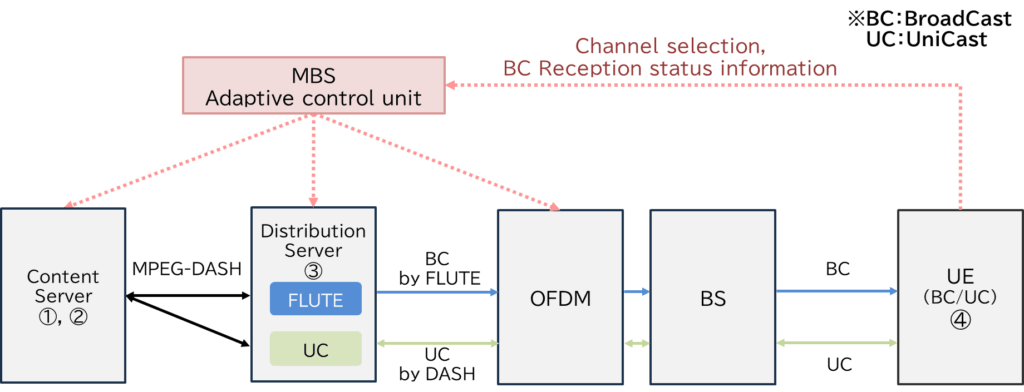
Fig.1 shows the fundamental structure of the adaptive MBS, which adds the following four functions to the MBS defined by 3GPP.
- Limited viewing program distribution
- Variable bit rate encoding linked with Modulation and Coding Scheme (MCS)
- IP broadcast/unicast adaptive distribution
- IP broadcast/unicast seamless synchronous playback
These functions prevent inefficient transmission of programs by stopping the IP broadcasting of non-viewing broadcast programs and single-viewing household programs, replacing them with unicast transmission. Furthermore, unicast transmission is supplemented for households that cannot receive IP broadcasts in low radio propagation environments. As a result transmission efficiency is improved by applying higher-order QAM modulation to households that receive IP broadcasts.
The IP broadcast stream is compressed into a file using MPEG-DASH (Dynamic Adaptive Streaming over HTTP) and then encapsulated using FLUTE (File Delivery over Unidirectional Transport) to add error correction code at the application layer. OFDM modulation is then performed together with the unicast stream of the DASH file. At this time, the transmitter decides whether each program needs to be broadcast or not and chooses the unicast alternative based on the program selection information from the receiver and the IP broadcast reception status information
The video coding rate applied to a program is determined in conjunction with the MCS determined from the reception signal status, thereby preventing transmission capacity overflow (exceeding the resource block) in a low reception power environment as much as possible. This variable rate coding is considered desirable in terms of ensuring broadcast quality if it is linked to the program resolution of 4K, HD and SD, for example.
At the receiver side, synchronous synthesis is performed by buffering both IP broadcast and unicast streams, taking into account the unicast reception start time, in order to seamlessly switch between IP broadcast and unicast in both directions.
2.2. MIMO System Configuration
A configuration for multiplexing both IP broadcasting and data communication streams including unicast over MIMO-OFDM under adaptive MBS is shown in Fig.2.
For the two QAM modulation symbol streams of IP broadcasting and data communication, the scheduler allocates resource blocks consisting of 14 OFDM symbols and 12 subcarriers as shown in Fig.3.
At this time, the MIMO layer is allocated to the IP broadcast stream with priority given to single-stream diversity MIMO for reliability to maintain broadcast quality, and to the data communication stream including unicast stream with priority given to multi-stream MIMO for transmission efficiency. The aforementioned resource block scheduling of both streams on the time-frequency axis results in MIMO multiplexing. As explained later, this multiplexing scheme can include Frequency Division Multiplexing (FDM) on the frequency axis and Time Division Multiplexing (TDM) on the time axis.
After MIMO multiplexing, precoding adapted to the MIMO propagation path is applied to both broadcast and communication streams independently, with common precoding for the receiving households applied to the resource blocks of the broadcast stream and individual household precoding for the resource blocks of the communication stream, which are then sent to the receiving side. Similarly, for MCS that varies according to the received power status, the common MCS for receiving households is applied to the broadcast stream, and the individual MCS for receiving households is applied to the communication stream.
3. Hybrid MIMO
3.1. Diversity and Multi-stream
MIMO technology, utilizing multiple antennas encompasses two primary approaches Space-Time Coding (STC) for improving transmission quality and Space Division Multiplexing (SDM) for enhancing transmission speed. STC employs diversity MIMO techniques for single streams, while SDM uses multi-stream MIMO for the simultaneous processing of multiple streams. When the MIMO channel propagation path characteristics are known at the transmitter side, more advanced techniques can be employed: Maximal Ratio Combining (MRC) diversity and Eigenbeam-Space Division Multiplexing (E-SDM). These techniques demonstrate superior performance in terms of transmission quality and speed compared to STC and SDM, which operate without knowledge of the channel propagation path.
Rank adaptation, an adaptive technology, dynamically adjusts the number of streams and the modulation coding order based on reception conditions. 3GPP standards specify protocols for transitioning between diversity, low-order, and high-order multi-stream modes.
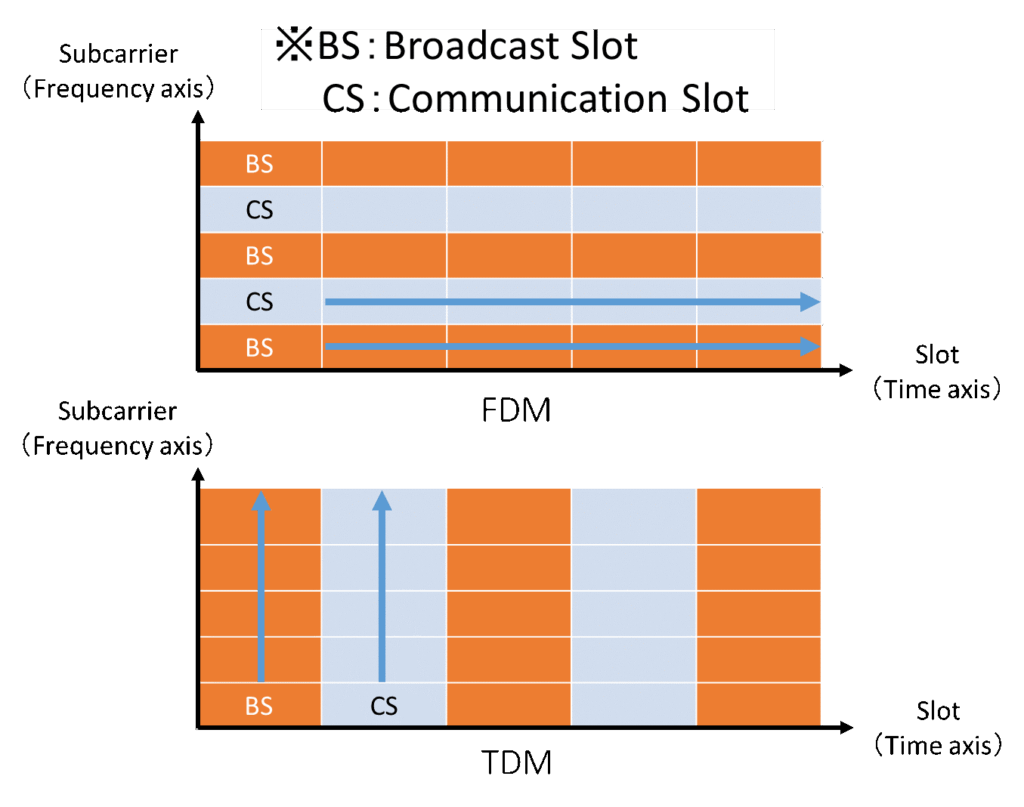
Figure 4 illustrates the Frequency Division Multiplexing (FDM) and Time Division Multiplexing (TDM) configurations when diversity MIMO is applied to IP broadcasting and multi-stream MIMO to data communication. In TDM, data communication and IP broadcasting alternate in time slots based on data volume, while in FDM, they are allocated to different subcarriers.
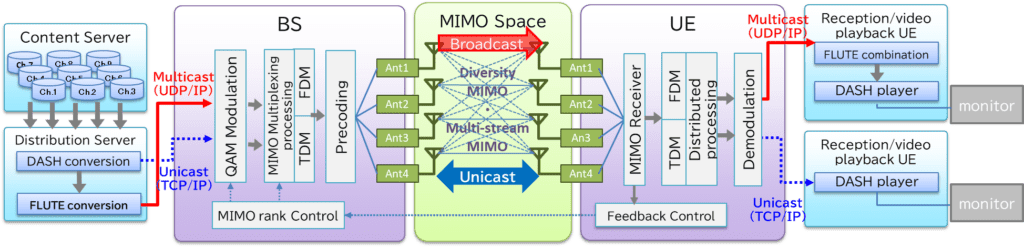
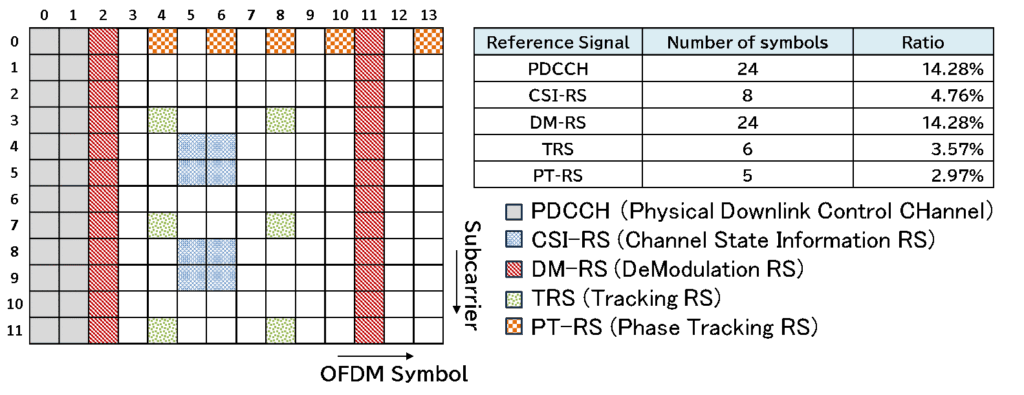
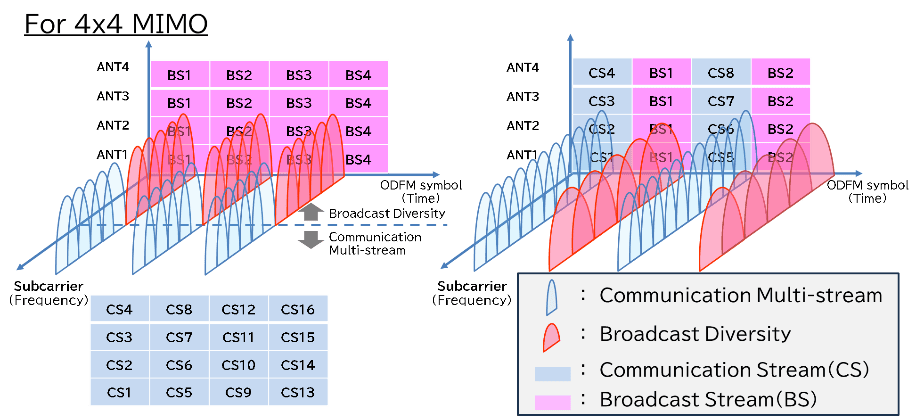
Figure 4: Hybrid MIMO multiplexing
The allocated resource blocks are transmitted using single-stream diversity MIMO for IP broadcasting and multi-stream MIMO for data communication, with the number of streams corresponding to the layer count. In a 4×4 MIMO configuration, this can result in up to approximately 6 dB of improvement in received power for IP broadcasting and a quadrupling of transmission throughput for data communication.
3.2. Considerations
Regarding the choice of the MIMO multiplexing scheme, several assumptions need to be taken into account, as listed below.
- Massive antennas on the transmit side for beamforming in mobile communications are not assumed, and single-user MIMO is assumed, where the MIMO transmission path is shared between terminals in a time-division manner.
- In 3GPP NR, subcarrier spacing of 30 kHz and 60 kHz is specified in the 100 MHz bandwidth of private 5G, and subcarrier spacing cannot be changed by frequency at the same time.
- The Reduction of inter-subcarrier interference caused by phase noise by increasing the subcarrier spacing.
- The OFDM symbol length affects the transmission delay time of the radio section.
- MIMO precoding and QAM modulation based on MCS can be applied to IP broadcasting resource blocks for all households commonly, and to data communication resource blocks for each receiving household individually.
- The resource block allocation arrangement affects the transmission delay time.
- Each terminal is allocated priority in receiving power for data communication resource blocks (IP broadcasting resource blocks are shared by all terminals, so priority in receiving power is not applied).
Given the conditions, we consider a qualitative comparison between TDM and FDM.
- MIMO effect (frequency selectivity)
In wideband FWA, frequency fluctuations are more significant than time fluctuations, which are predominant in narrowband mobile communications. TDM enables individual optimization of receiving terminals using MIMO precoding that accounts for frequency selectivity across all frequency bands, providing a distinct advantage.
- Transmission delay
As illustrated in Figure 5-1, FDM distributes broadcasting resource blocks in the slot direction (time axis), while TDM concentrates them in the subcarrier direction. Consequently, TDM offers reduced packet transmission delay, rendering it more advantageous in this aspect.
- Scheduling accuracy
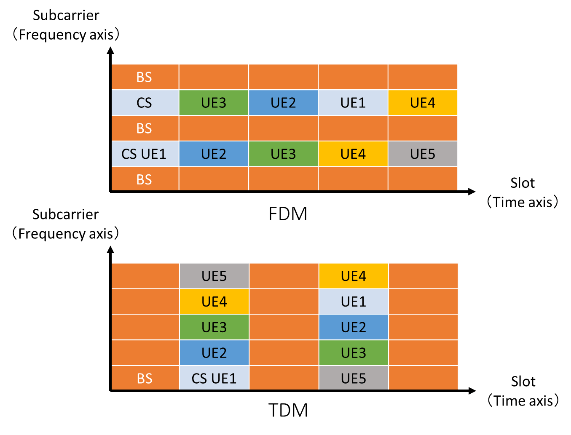
Figure 5-2 demonstrates that in FDM, resource blocks allocated for communication to each User Equipment (UE) are distributed in the slot direction. This necessitates received power prediction when scheduling UEs based on received power, potentially reducing scheduling accuracy. Conversely, TDM concentrates communication resource blocks in the subcarrier direction, allowing for more accurate distribution of resource blocks to receiving terminals based on received power.
- TDD configuration
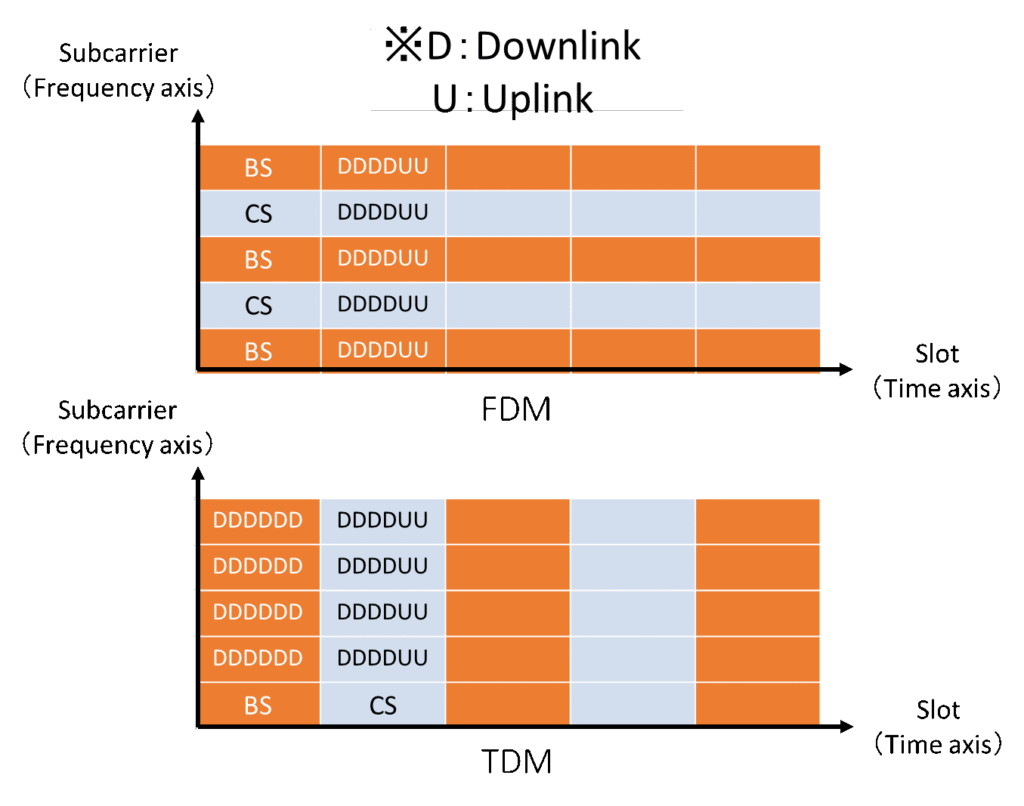
As shown in Figure 5-3, FDM requires sharing of uplink and downlink resource block patterns for IP broadcasting and communication within a 10 ms unit radio frame, potentially decreasing efficiency. TDM, however, allows for optimization of the TDD pattern for both IP broadcasting and communication, enhancing radio frame efficiency. It should be noted that this advantage is predicated on the use of dynamic TDD.
- MIMO Precoding
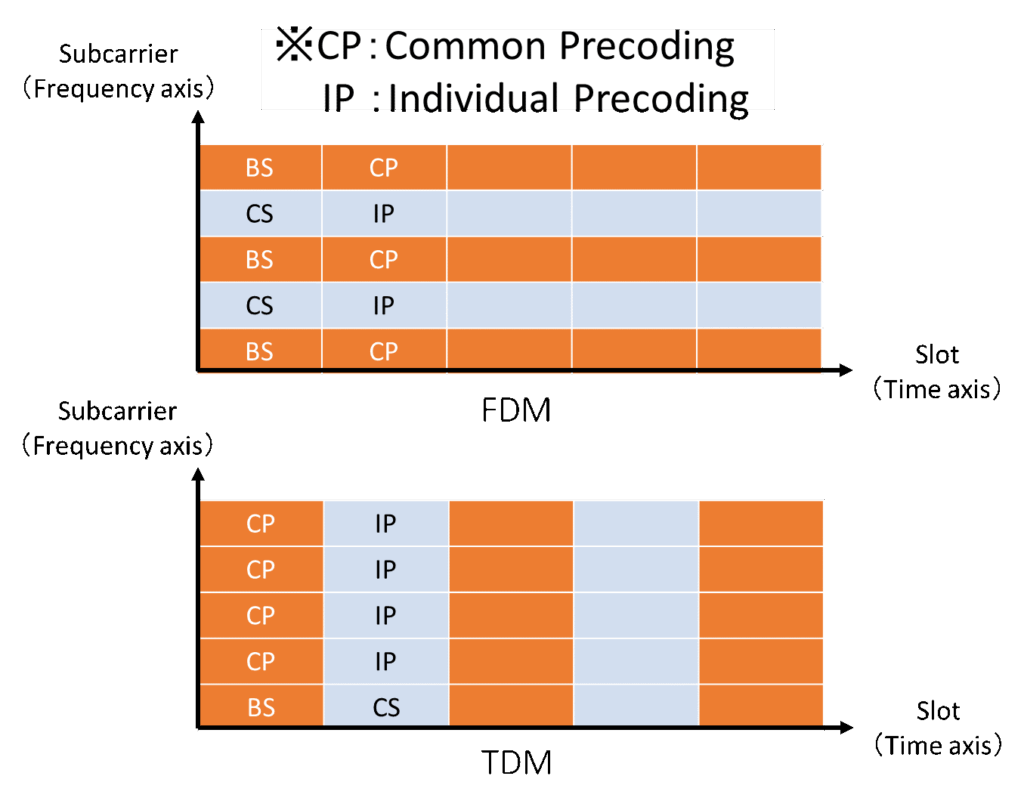
Figure 5-4 illustrates that FDM necessitates the simultaneous application of two types of MIMO precoding (for broadcasting and communication) to each terminal for each slot. In contrast, TDM requires only one type of precoding (either broadcasting or communication) per slot time for each receiving terminal, potentially reducing the implementation load, particularly on the receiving terminal.
- Variable subcarrier spacing
If it is necessary to change the 30kHz and 60kHz subcarrier spacing specified in the 100MHz band of the sub-6 band for broadcasting and communication or synchronization control, in FDM, the subcarrier spacing cannot be changed by the frequency as shown in Figure 5-5 due to frequency interference, and TDM with variable subcarrier intervals is advantageous.
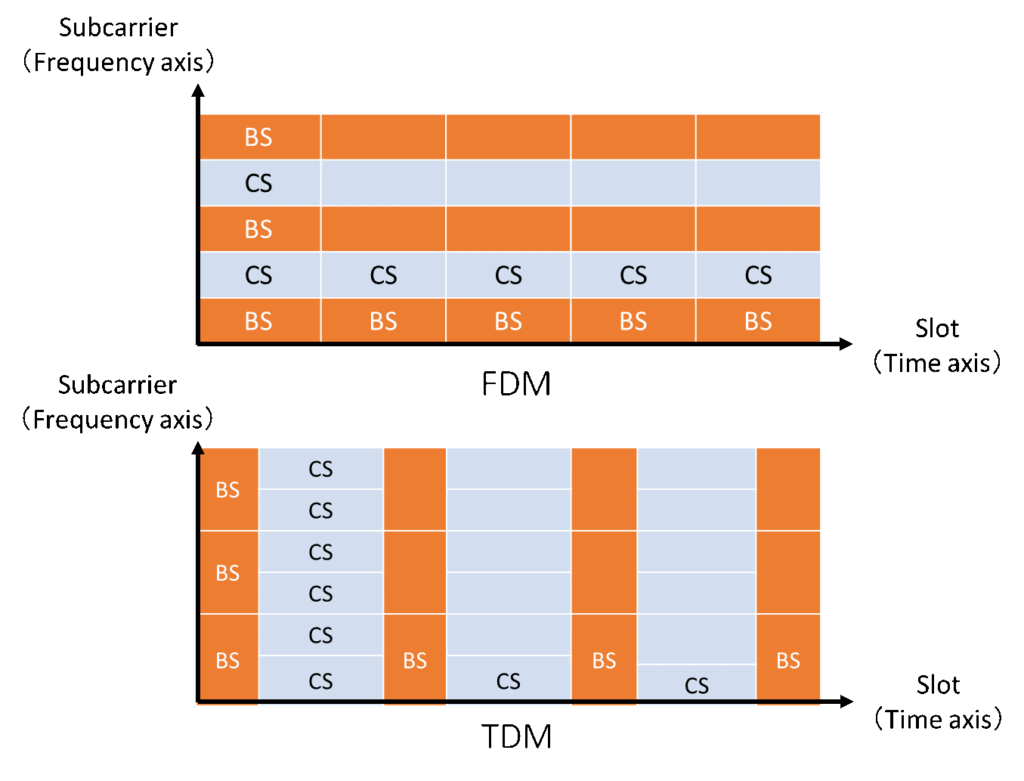
Based on these qualitative considerations, it can be concluded that TDM is advantageous as a MIMO multiplexing method for both IP broadcasting and communication streams. More advanced multiplexing schemes that maximize the MIMO effect might be possible for further study.
4. A MIMO Radio Propagation Simulator for IP Broadcasting to Housing Complexes
4.1. Simulator Configuration
A simulator has been developed to model a cable TV IP broadcasting system utilizing MIMO for private 5G, with a focus on multi-dwelling reception. The simulator incorporates multi-dwelling house models, broadcasting models, and viewing models as input parameters to a conventional radio propagation simulator, while also considering MIMO parameters for enhancing transmission quality and speed. Fig.6 presents the overall configuration diagram.
The left portion of the diagram defines the one-to-one positional relationship between the transmitting base station and the housing complex as a parameter. The household structure within the complex is also defined as an input parameter, enabling the simulation of reception characteristics for each individual household.
This attenuation of radio waves as they penetrate from outdoors to indoors, known as O2I (Outdoor to Indoor) penetration loss, is modeled according to the methodology described in reference [10]. Simulations assume a distance of 100 m to 1 km between the base station and the housing complex, with the Fixed Wireless Access (FWA) line in a Line of Sight (LOS) environment. Considering the propagation loss at breakpoints in the LOS environment and the height of the base station antenna, we adopted the UMa (Urban Macro) model as the basic propagation loss calculation formula.
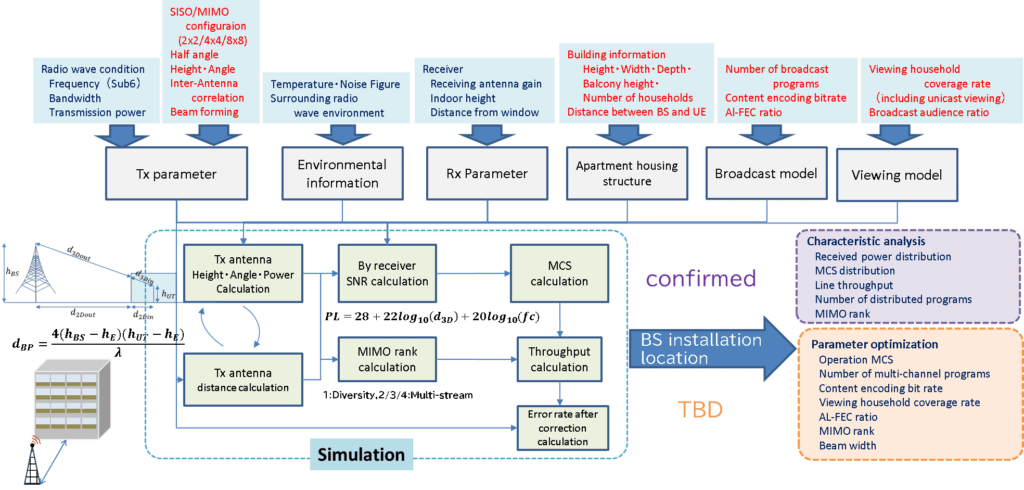
The upper part of the figure shows various configurable parameters from the transmitting antenna to the viewer model. These allow characteristic analysis and parameter optimization under each setting condition.
4.2. Input/Output Parameters and Analysis/Optimisation
The input parameters of the simulator encompass both SISO and MIMO configurations for the transmitting antennas. For MIMO, which is expected to provide a diversity effect on IP broadcast streams, the parameters can be adjusted to reflect the number of antennas, the correlation between MIMO propagation paths, and the implementation of beamforming. The structural parameters of the housing complex include building height, width, balcony height, number of households, and the distance between the base station and each household.
The broadcasting model incorporates parameters such as the number of IP broadcast programs, content coding bit rate, and the error correction coding rate (AL-FEC: Application Layer Forward Error Correction) applied in FLUTE encapsulation following MPEG-DASH. The viewing model allows for time-varying settings of household viewing rates and IP broadcast viewing rates. The simulator outputs include received power distribution, MCS distribution, transmission throughput, BLER distribution, MIMO rank distribution, and the number of IP broadcast-ready programs for each household in the complex.
The system can optimize parameters such as radio beamwidth relative to transmit power, MIMO rank, operational MCS, and AL-FEC ratio for a fixed base station distance.
In adaptive MBS, which assumes both IP broadcasting and unicast, the optimal configuration minimizes the sum of required resource blocks for IP broadcasting Bb(Kb(t)) and broadcast complement unicast Bu(Ku(t)) . These are defined by the following equations.
$$B_b\big(k_b(t)\big) = \frac{L \cdot R \,(1 + A_f)}{D\big(k_b(t)\big)}$$
$$B_u\big(k_u(t)\big) = \frac{N \cdot \big(1 – P(k_b(t))\big) \cdot R}{V_r \, D\big(k_u(t)\big)} \cdot \frac{1}{m(t)}$$
In the above equation
Content parameters: the number of broadcast programs is L, picture coding rate is R, and the FLUTE AL-FEC ratio is .
Viewing parameters: the number of all households is N, the IP broadcast viewing household coverage 𝑃(𝑘), viewing rate is 𝑉𝑟. Transmission parameters: the common modulation index is 𝑘𝑏(𝑡)for all households for IP broadcasting, the individual household modulation index is 𝑘𝑢(𝑡) for unicast, the number of MIMO layers is 𝑚(𝑡), the bit capacity per resource block is 𝐷(k(𝑡)) at modulation index 𝑘.
4.3. Some Results of the Simulation
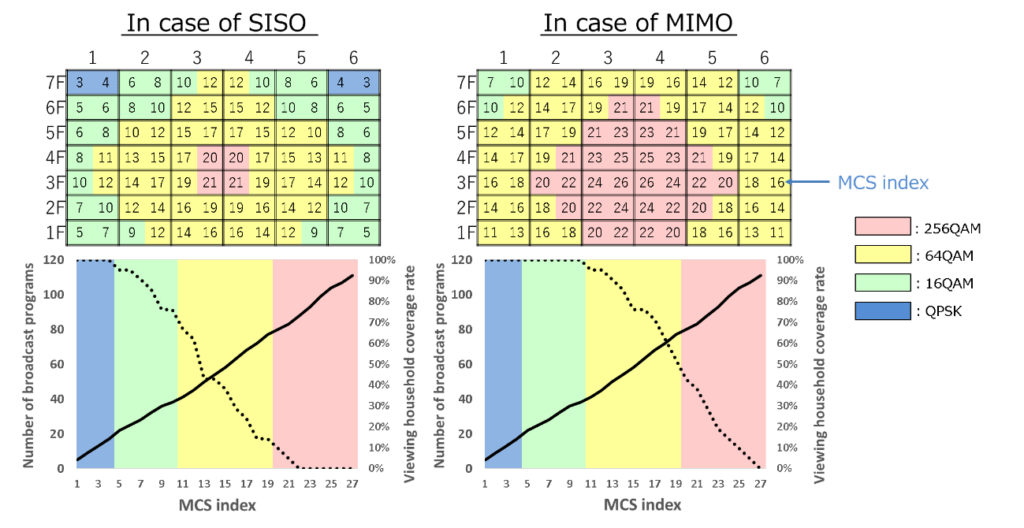
Figure 7 presents the simulation results of the MCS index numbers derived from the received CN by two receiving antennas placed 3 meters apart on a balcony in each household in the (4×4) diversity MIMO and SISO configurations. The simulation assumes a medium-sized apartment complex with 7 floors and 42 households, and a base station (antenna output of 32 dBm) with a LOS environment located 90 m away. The figure compares the characteristics of IP broadcasting household coverage and the maximum number of multi-channel broadcast programs (10 Mbps/program) for each MCS index. The number of households capable of receiving 256QAM increases by over 30%, from 4 households with SISO to 18 households with MIMO.
Furthermore, under 100% viewing coverage conditions in the 100 MHz width of the sub-6GHz frequency band, the number of multi-channel broadcast programs doubles from 20 channels with SISO to 40 channels with MIMO.
5. Conclusion
The replacement of wired cable TV services by private 5G FWA is an urgent issue for the cable industry, and MIMO technology, which has conventionally been discussed at the physical layer, has been examined from the viewpoint of the higher layer of IP broadcasting.
Based on the recognition that MIMO technology is promising for large-capacity, real-time, high-quality transmission of IP broadcasting in limited wireless bandwidth, the study of system implementation as well as more detailed quantitative performance analysis remains an issue from the viewpoint of the coexistence of IP broadcasting and data communication.
- Gomez-Barquero, W. Li, M. Fuentes, J. Xiong, G. Araniti, C. Akamine, J. Wang, “IEEE Transactions on Broadcasting Special Issue on: 5G for Broadband Multimedia Systems and Broadcasting”, IEEE Transactions on Broadcasting, 65(2):351-355, 2019, DOI: 10.1109/TBC.2019.2914866
- 3GPP, “Architectural enhancements for 5G multicast-broadcast services”, 3rd Generation Partnership Project Technical Specification, 247(17.11.0):1-121, 2024.
- Ohgane, Y. Ogawa, “Easy to Understand MIMO System Technology”, Ohmsha, 1-208, 2009.
- Benjebbour, “Evolution of MIMO transmission technology in mobile communication systems”, The Journal of the Institute of Image Information and Television Engineers, 70(1):28-34, 2016, DOI: 10.3169/itej.70.28
- Zhang, C. K. Ho, “MIMO broadcasting for simultaneous wireless information and power transfer”, IEEE Transactions on Wireless Communications, 12(5):1989-2001, 2013, DOI: 10.1109/TWC.2013.031813.120224
- P. Lemayian, J. M. Hamamreh, “Hybrid MIMO: A New Transmission Method For Simultaneously Achieving Spatial Multiplexing and Diversity Gains in MIMO Systems”, RS Open Journal on Innovative Communication Technologies, 2(4): 2021, DOI: 10.46470/03d8ffbd.549d270b
- Asakura, S. Kawashima, T. Ijiguchi, K. Kambara, M. Okano, “Performance analysis of dual-polarized MIMO-SFN considering imbalance of received power”, ITE Transactions on Media Technology and Applications, 10(3):100-109, 2022, DOI: 10.3169/mta.10.100
- Shimizu, S. Matsumoto, “Proposal of adaptive MBMS for multi-channel video distribution by private 5G and its effectiveness”, Proceedings of the Institute of Image Information and Television Engineers Annual Convention, 2022(32C-2), 2022.
- ITU-T, “System architecture for cable television services to use IMT-2020 radio system”, International Telecommunication Union Telecommunication Standardization Sector Recommendation, 153(06/2024):1-13, 2024.
- 3GPP, “Study on channel model for frequencies from 0.5 to 100 GHz”, 3rd Generation Partnership Project Technical Report, 901(14.3.0):1-95, 2018.