
Low-cost Smart Basket Based on ARM System on Chip Architecture: Design and Implementation

Adv. Sci. Technol. Eng. Syst. J. 7(4), 15–23 (2022);
 DOI: 10.25046/aj070403
This paper presents the design and implementation of a low-cost basket based on an ARM system on chip architecture using Raspberry Pi single board computer. The inspiration of this research is how to support the traditional low-income retail store in Thailand driving the local micro-business deal with the economic impacts of survival business from the global retailers. The concept of a smart basket system is to use the open-source software in order to save the budget with the free update system. For the product design, the kansei engineering and form follows function theory are applied. The low-cost basket consists of hardware design based on the system on chip architecture and software design using the proposed smart basket algorithm and user interface. Experimental results show that the proposed smart basket implementation can be convenient for lifestyle shopping experience in the local mini mart. This basket will replace the traditional one, which will help consumers maintain the social distancing and will support the local low-income merchant while running the local business during the COVID-19 pandemic.
1. Introduction
Recently, the modern trade from global retailer changes and affects the traditional low-income retail store in Thailand. Survival strategy for business is how to adapt the traditional business following
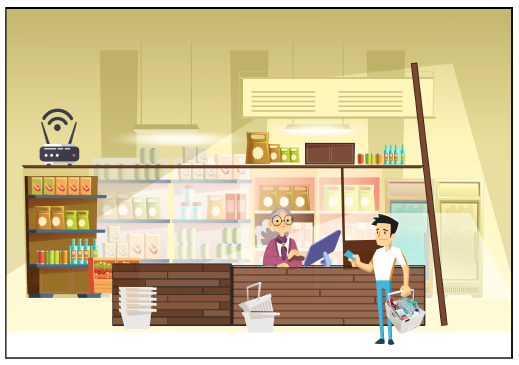
Figure 1: The use of smart basket in traditional retail store
The internet of things (IoT) and radio frequency identification and portable devices are how to manage the power consumption of microprocessors. Moreover, IoT architectures [3] have been upgraded every day to reduce data transmission, latency, power consumption, and bandwidth usage for several applications.
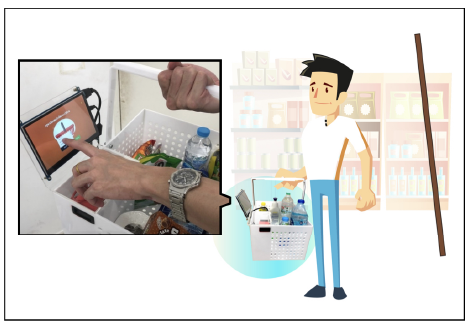
Figure 2: The use of smart basket
According to the embedded system, RISC platform that supports floating-point arithmetic. ARM SoC architecture is embedded in the various industrial control systems, IoT portable devices, and smartphone [4].
In this research, the main objective is to deploy the proposed smart basket for the traditional low-income retail store against the financial crisis and global retailers as shown in Figure 1. The concept of proposed smart basket system is to use the open-source software in order to save cost and easy to update system shown in Figure 2. Design and implementation of a low-cost smart basket should be convenient to improve the lifestyle shopping experience against the COVID-19 at the local supermarkets.
2. Background and Related Work
There are various smart shopping carts and baskets with the RFID, IoT, and embedded system. Nowadays, the effects of coronavirus disease (COVID-19) pandemic living for people around the world has made the changing lifestyle especially shopping at the convenience store and supermarket. In [5], the demonstration experiment of the RFID automatic checkout solution by Panasonic has been proposed. Customers can automatically checkout while walking through the checkout lane with the RFID on basket containing products. In [6], an application on a mobile application to search the shopping shelf in the supermarket has been presented to manage the shopping list.
The utilization of cost-effective smart IoT-based shopping cart has been used in the department store [7]. The development of a smart shopping basket using a barcode reader on a mobile device has been presented in [8]. A smart shopping basket provides a hand-free and hassle-free shopping experience in the supermarket, as detailed in [9]. In [10], an automatic billing on android application for smart shopping has been presented. An automatic WooCommerce application generator framework has been introduced in [11].
There are many researches based on an ARM system such as the spherical magnetic robot using multi-single board ARM computer for controlling and communication [12] and a Mini-UAV for indoor surveillance project in [13]. The advantages of ARM system are affordable to create, low-power consumption, support multiprocessing, and simple circuits.
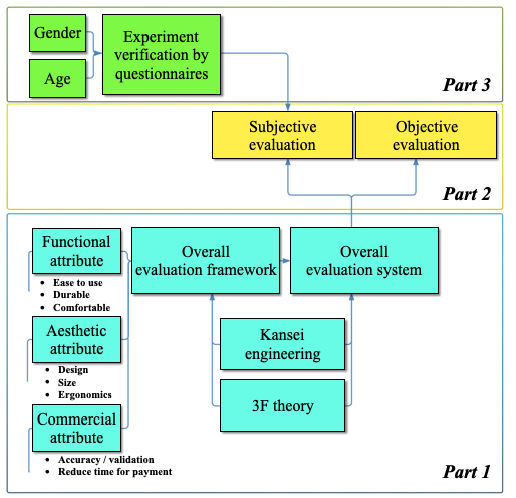
Figure 3: Research framework
For this research, we aim to minimize the production costs of a proposed basket by using the local products in Thailand. The contributions of this paper are summarized as follows: 1) to propose the design and implementation of the low-cost hanging basket based on the kansei engineering and 3F theory for the product design, and 2) to deploy a low-cost basket including with a Raspberry Pi 3 Model B+ SBC, a 1-dimension barcode reader, and a 7-inch TFT LCD display monitor touch screen connected inside the basket by using the online purchase application on the Raspbian operating system for payment.
The rest of this paper is organized as follows. Section 3 presents the proposed low-cost smart basket based on an ARM SoC architecture. Section 4 presents the smart basket algorithm. Section 5 presents the user interface. Section 6 details the experimental results and Section 7 concludes this research.
3. Proposed Low-cost Smart Basket Based on ARM System on Chip Architecture
Proposed low-cost smart basket is used the ARM SoC as a generalpurpose processor in a Raspberry Pi SBC architecture to improve the convenience life shopping experience. The design and implementation of a low-cost smart basket are made from plastic, lightweight, durable and suitable for both dry and wet surfaces.
3.1 Proposed Framework
The research framework is divided into three parts as shown in Figure 3. Part 1 is the main contribution of the design process. Kansei engineering and 3F theory are used to construct an overall evaluation system using a hierarchical model including the attribute and evaluation levels.
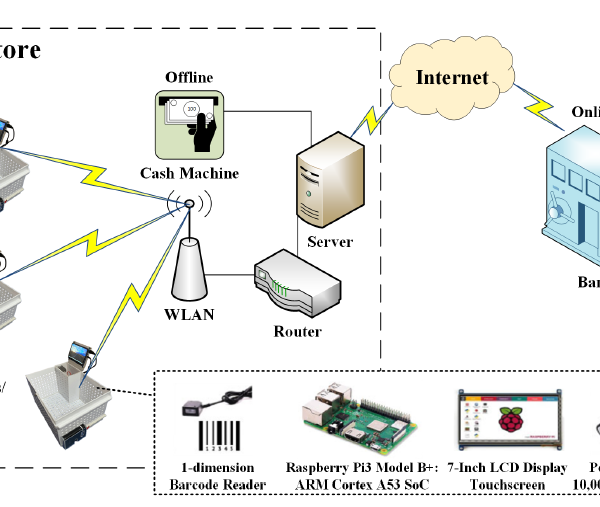
Figure 4: The system architecture of proposed smart basket
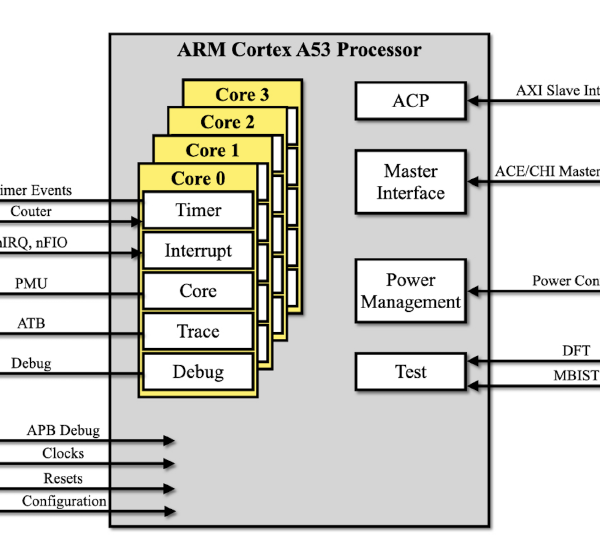
Figure 5: ARM Cortex-A53 processor configuration [15]
Attribute level consists of three levels as the functional attributes: ease to use, durable, comfortable; the aesthetic attribute: design, size, ergonomics; and the commercial attribute: accuracy /validation, reduce time for payment. In part 2, there are two types of evaluation as an objective evaluation and a subjective evaluation. In part 3, the questionnaires are used by the experimental verification for the subjective product evaluation.
3.2. System Architecture
The proposed system architecture of smart basket design as shown in Figure 4 is based on the embedded system and network system. This system architecture can be separated into the retail store and the online banking as follows.
The retail store block divides two parts including as:
- Network system part includes a WLAN, a router, a server, and the cash machine.
- Low-cost smart basket part consists of the Raspberry Pi 3 Model B+ SBC with 1.4GHz ARMv8 SoC, 1GB DDR2 lowpower memory, a 64GB micro-SD storage, a full size of high definition multimedia interface (HDMI), and 2.4-5GHz IEEE802.11.b/g/n/ac wireless LAN. The DC power supply
10,000mAh 5V-2.5A, a 1-dimension barcode reads, and the 7-inch TFT LCD display monitor 800×480 of resolution with the capacitive touch screen control are installed. The Raspbian is used as the operating system. The component of Raspbian includes a Linux kernel 5.10.17 based on the Debian Linux, which is installed on a micro-SD storage in the Raspberry Pi.
The online banking block with the online purchase application for payment develops by the C/C++, XAMPP as a PHP development environment, HTML, and JavaScript are described in the Section 4. Figure 5 shows an ARM Cortex-A53 processor configuration with four cores and an AXI Coherency Extension (ACE) or the Coherent Hub Interface (CHI) Master Interface.
The 64-bit address version of ARM [14] is used. The CortexA53 processor is a mid-range and low-power processor installed the ARMv8 architecture. In this research, the 4-core Cortex-A53 processor is used with an L1 memory system and a single shared L2 cache [15]. There are several low-end IoT devices using ARM as a main processing unit [16] such as OpenMote, LSN50, Memsic Lotus, nRF51 DK, and Arduino MKR1000.
3.3. Design Process and Implementation
Kansei engineering (KE) has been used for the product design following the customer’s feeling and needs in the product function [17]. Following the KE concept, we set the adjectives of these influencing factors for evaluation as “weak to strong” on the 5-point scale. Following [18], the product design can be generally divided into three fundamental components as the appearance, functionality, and quality. The form follows function (3F) theory has been associated with the 20th century architecture, engineering, and industrial design related on the function or purpose.
Table 1: Model of proposed smart basket design using the kansei engineering and 3F theory.
| Basket | Level of | Basket | Design | Design tools |
| management | decision | decision | process | |
| Smart basket | Strategic | Problems to | UX/UI | 1) Concept of |
| definition | solve with shape and | smart basket | ||
| 2) KE & 3F | ||||
| usage | theory | |||
| Brainstrom | Descriptive | 1) Question- | ||
| statistics | naires | |||
| 2) User
Experience |
||||
| Basket | Operational | Formalization | Creation/ | Form |
| image | usage | specification
in 3D |
||
| Smart basket | Operational | Positioning/ | System | C/C++, |
| on embedded | Installation | architecture | XAMPP, | |
| system | HTML,
PHP |
|||
| Inventory & | Stock | |||
| sales report | payment |
Model of the proposed smart basket design using the kansei engineering is shown in Table 1. There are three steps of smart basket management as the smart basket definition, basket image, and smart basket on the embedded system. Level of decision can be divided into two parts as the strategic and operational level.
The basket design process using the kansei engineering and 3F theory are five steps including:
- Discussing plans and brainstorming for launching a basket: In this step, researchers are surveying about a basket used in the supermarket. Then, they are discussing and selecting a set of baskets. Finally, they make a decision about size of 30×41×22cm shown in Figure 6(a).
- Defining the pain points of consumers and solutions: In this step, researchers are looking for three different sizes and weights of a basket sold in the hardware stores. Type I, II and III are made from hard plastic material with 30×41×12cm/0.6kg, 17×27×21cm/0.2kg, and 44×33×25cm/0.7kg as shown in Figure 6(b).
- Developing the strict requirements of basket using 3F theory: In this step, researchers are collecting the information from questionnaires. After that, design and implementation of proposed basket are deployed by 3F theory with all components as shown in Figure 6(c).
- Production implementation: Prototype white plastic basket is implemented and developed with a size of 30×38×22cm and weight of 2.9kg as shown in Figure 6(d).
- Testing and modifying: This step is concerning with the user experience to modify and improve for real usage in the future as shown in Figure 6(e).
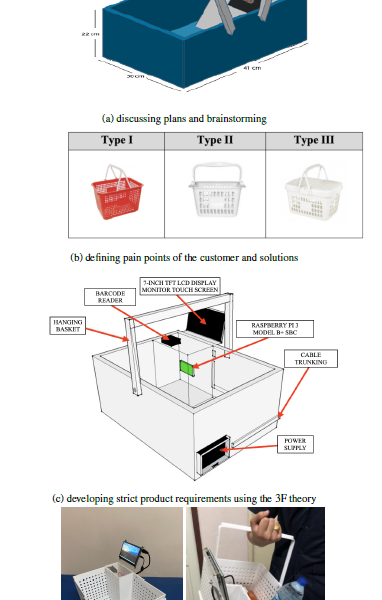
Figure 6: Proposed basket design process using kansei engineering and 3F theory
3.4 User Interface and User Experience
User interface (UI) and user experience (UX) [19] are the stage of product interactive development by users. UI is how users can interact with application and tools. UI provides the meaning of input as allowing the users to control the system and output as enabling the system to inform users. UX is an experience and a person’s perception related on a system and service that can provide the satisfaction and comfort.
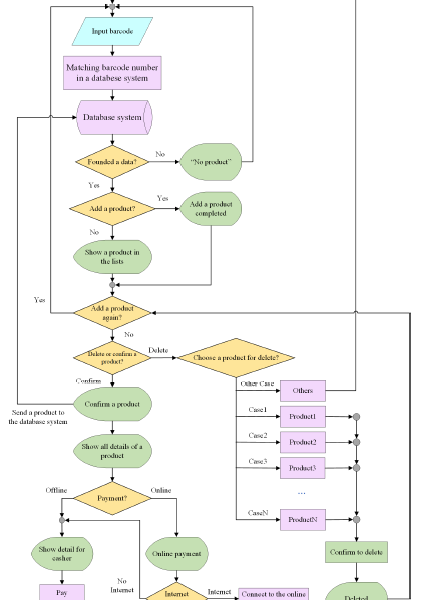
Figure 7: Flowchart of the proposed smart basket
4. Smart Basket Algorithm
In this section, the smart basket algorithm is introduced to manage the stock, database and payment. Flowchart of proposed algorithm is shown in Figure 7.
Basic concept of database system is used as the simple stock management for Thai merchant understanding how to manage and monitor the real-time stock item and sales reports in the small retail store. Smart basket on hand will show the current stock item and reflect the financial plan and forecast, which can prevent the out of stocks happening.
The smart basket algorithm can be divided three parts as: add a product, delete a product, and payment.
- Add a product part: This customer part chooses the product by scanning a barcode. When the Raspberry Pi SBC receives the number of barcode and display the details on a monitor.
- Delete a product part: At the part of deleting the product, when customers scan the barcode more than one from a barcode reader and require to delete. So, the customers will mark the empty box in front of the product and then confirm to delete.
- Payment part: When the customers finish the shopping, there are two options of payment as the online and offline. The summary of products in the basket will send to cashier for payment.
Figure 8 shows the unified modeling language (UML) diagram of overall system. The components of UML diagram consist of the stock basket, basket active, report, employee, stock item, and reset password.
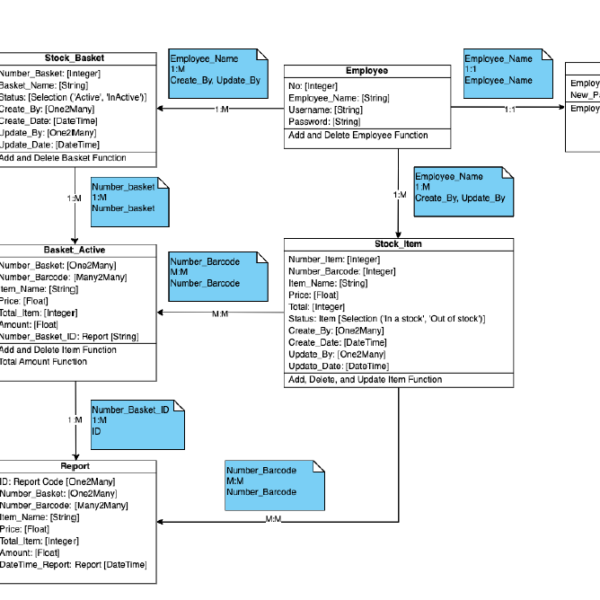
Figure 8: Overall system of the distributed information
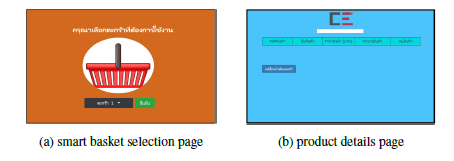
Figure 9: User interface for a smart basket design page 1-2
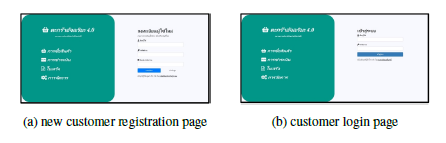
Figure 10: User interface for a smart basket design page 3-4
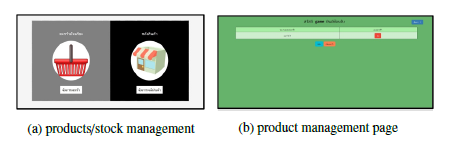
Figure 11: User interface for a smart basket design page 5-6
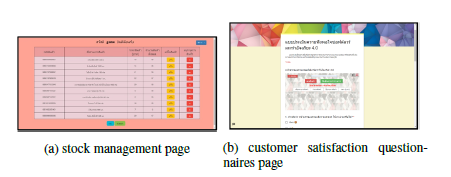
Figure 12: User interface for a smart basket design page 7-8
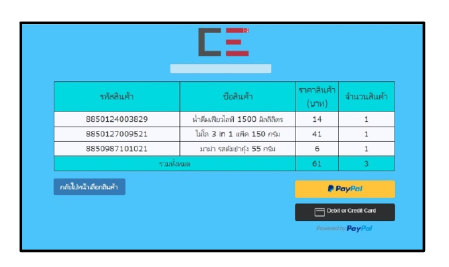
Figure 13: User interface for a payment page
5. User Interface of Smart Basket
The user interface for a smart basket design for Thai people customers composes of nine pages:1) a smart basket selection page is shown in Figure 9(a), 2) the product details page is shown in 9(b), 3) a new customer registration page is shown in Figure 10(a), 4) the customer login page is shown in Figure 10(b), 5) the products or stock management selection page ss shown in Figure 11(a), 6) the product management page is shown in Figure 11(b), 7) stock management page for tracking and monitoring stock ss shown in Figure 12(a), 8) the customer satisfaction questionnaires page is shown in Figure 12(b), and 9) the payment page is designed for customers to purchase items easily and securely in Figure 13.
6. Experimental Results
Experiments of the proposed low-cost smart basket are composed of the hardware and software tests.
There are three types of hardware test repeated 100 times as weight, drop impact test and battery life. Hardware experimental results are shown in Table 2. It is concluded that the maximum weight capacity of proposed basket hold is around 12 kg. Drop impact tests simulate the drop of proposed basket to guarantee the safety of basket during shopping at the maximum height of 30cm.
Table 2: Hardware experimental results of the proposed smart basket
| Weight | Drop impact testing | Battery life |
| Maximum 12 kg. | Maximum 30cm | Maximum 6 hours |
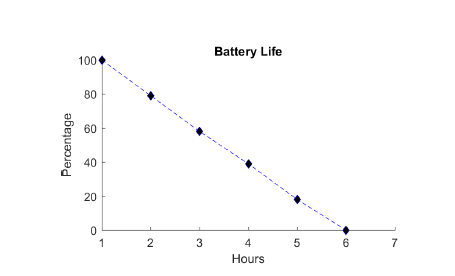
Figure 14: Battery life
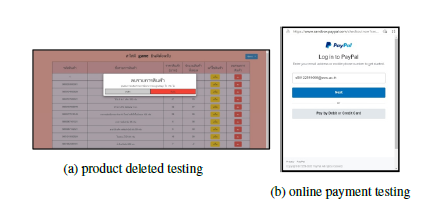
Figure 15: Example of software experiments
For the battery life, a cycle of 10,000mAh battery last is about six hours. Figure 14 shows that the trend of percentage of battery life declines gradually within six hours.
Software test is repeated 100 times concerning with added/deleted products, registration/login and payment. Example of deteted product and online payment tests are demonstrated in Figure 15. The real usage of proposed basket is tested at the local supermarket shown in Figure 16.
Additionally, the results of 100 Thai customers satisfaction questionnaires of the low-cost smart basket that consist of six parts: size, durability, design, application response, appropriate for the supermarket, and comfort are shown in Figure 17(a) to Figure 17(f), respectively. There are five levels of satisfaction including the very satisfied, satisfied, well-done, dissatisfied, and very dissatisfied.
Figure 17 shows the satisfaction from online survey of 100 people with 6 key questions of the use of proposed basket. It can be seen that over 43% of these surveys feel very satisfied for application response to user while shopping in the supermarket. Another 42% gets satisfied for design. In conclusion, it is evident that most customers feel satisfied for ease of application used, while they were shopping.
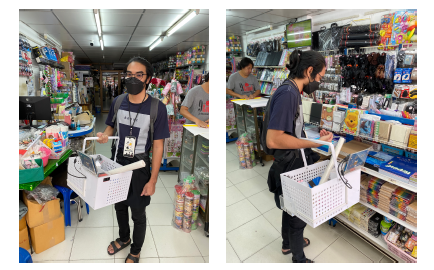
Figure 16: Testing at the local supermarket in Bangkok, Thailand
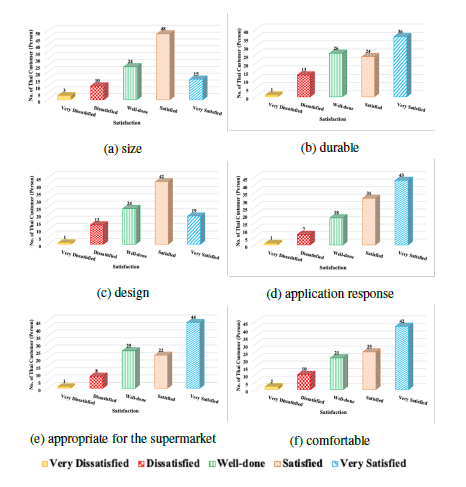
Figure 17: Results of Thai customer satisfaction questionnaires using the low-cost smart basket.
7. Conclusions
In this paper, the design and implementation of a low-cost basket based on an ARM SoC architecture with Raspberry Pi single board computer has been proposed based on the 3F theory of the product design applied for a hanging shopping basket. Hardware design has been applied by ARM system on chip architecture, while the proposed smart basket algorithm has been introduced in the software design to control the user interface and database. Experimental results show that the proposed smart basket implementation can be convenient for the lifestyle shopping experience in the supermarket. This innovation will replace the traditional one, which will help consumers maintain the social distancing during the COVID-19 pandemic.
Conflict of Interest
The authors declare no conflict of interest.
Acknowledgment
The authors would like to thank Watchara Yaima, Phompiriya Amiam, Nattawat Charoenkitja, and Aphirak Thitinaruemit, Department of Computer Engineering, Faculty of Industrial Technology, Suan Sunandha Rajabhat University in Bangkok, Thailand.
- 304 Industrial Park Co., Ltd., “Industry 4.0: Thailand’s Turning Point for the Future of Manufacturing,” 2022, [Online]. Avail- able: https://www.304industrialpark.com/th/articles-detail/51/Industry-40- Thailand.[Accessed May. 30, 2022].
- S. Mekruksavanich, “Supermarket Shopping System using RFID as the IoT Application,” in 2020 Joint International Conference on Digital Arts, Media and Technology with ECTI Northern Section Conference on Electrical, Electronics, Computer, and Telecommunications Engineering (ECTI DAMT & NCON), 2020, 83-86, doi:10.1109/ECTIDAMTNCON48261.2020.9090714.
- R. Krishnamoorthy, K. Krishnan, B. Chokkalingam, S. Padmanaban,
Z. Leonowicz, J. B. Holm-Nielsen, M. Mitolo, “Systematic Approach for State-of-the-Art Architectures and System-on-Chip Selection for Heterogeneous IoT Applications,” IEEE Access, 9, 25594-25622, 2021, doi:10.1109/ACCESS.2021.3055650. - D. Kusswurm, Modern Arm Assembly Language Programming: Covers Armv8-A 32-bit, 64-bit, and SIMD, Apress Media, 2020.
- Panasonic Corporation, “RFID Based Walk-through Check-out Solution for Future Retail,” 2018, [Online]. Available: https://news.panasonic.com/global/topics/2018/55288.html. [Accessed May. 30, 2022].
- M. Shahroz, M. F. Mushtaq, M. Ahmad, S. Ullah, A. Mehmood, G. S. Choi, “IoT-Based Smart Shopping Cart Using Radio Frequency Identification,” IEEE Access, 8, 68426-68438, 2020, doi:10.1109/ACCESS.2020.2986681.
- S. Karjol, A. K. Holla, C. B. Abhilash, P. V. Amrutha, Y. V. Manohar, An IOT-based smart shopping cart for smart shopping, Cognitive Computing and Information Processing, Springer, 2017.
- S. Mekruksavanich, “The Smart Shopping Basket Based on IoT Applications,” in 2019 IEEE International Conference on Software Engineering and Service Science (ICSESS), 2019, 714-717, doi:10.1109/ICSESS47205.2019.9040750.
- G. Arjun Kumar, Shivashankar, Keshvamurthy, K. Suni Kumar, R. Gatti,
M.B. Hegde, “Design And Implementation Of Smart Shopping Basket,” in 2020 International Conference on Recent Trends on Electronics, Information, Communication & Technology (RTEICT), 2020, 714-717, doi:10.1109/RTEICT49044.2020.9315702. - R. K. Megalingam, S. Vishnu, S. Sekhar, V. Sasikumar, S. Sreekumar, T.
R. Nair, “Design and Implementation of an Android Application for Smart Shopping,” in 2019 International Conference on Communication and Signal Processing (ICCSP), 2019, 0470-0474, doi:10.1109/ICCSP.2019.8698109. - M. Dehghani, S. Kolahdouz-Rahimi, “An Automatic Generation of Android Application for WooCommerce,” in 2019 International Conference on Computer and Knowledge Engineering (ICCKE), 2019, 194-200, doi:10.1109/ICCKE48569.2019.8964732.
- S. Prongnuch, S. Sitjongsataporn, “Differential Drive Analysis of Spherical Magnetic Robot Using Multi-Single Board Computer,” International Journal of Intelligent Engineering and Systems, 14(4), 264-275, 2021, doi:10.22266/ijies2021.0831.24.
- N. Boonyathanmig, S. Gongmanee, P. Kayunyeam, P. Wutticho, S. Prongnuch, “Design and Implementation of Mini-UAV for Indoor Surveillance,” in 2021 International Electrical Engineering Congress (iEECON), 2021, 305-308, doi:10.1109/iEECON51072.2021.9440350.
- D.A. Patterson, J.L. Hennessy, Computer organization and design, ARM Ediare interface, Morgan Kaufmann, 2016.
- Arm Limited, “Arm Cortex-A53 MPCore Processor Technical Reference Manual r0p4,” 2018.
- M.O. Ojo, S. Giordano, G. Procissi, I.N. Seitanidisn, “A Review of Low-End, Middle-End, and High-End Iot Devices,” IEEE Access, 6, 70528-70554, 2018, doi:10.1109/ACCESS.2018.2879615.
- C. Enrique, G. Venture, N. Yamanobe, “Applying kansei/affective engineering methodologies in the design of social and service robots: A systematic review,” International Journal of Social Robotics, 13(5), 1161-1171, 2021, doi:10.1007/s12369-020-00709-x.
- Y. Demkiv, “Product design process: 10 steps,” 2022, [Online]. Available: https://qubstudio.com/blog/ten-steps-of-the-product-design-process. [Accessed May. 30, 2022].
- E. Krisnanik, T. Rahayu, “UI/UX integrated holistic monitoring of PAUD using the TCSD method,” Bulletin of Electrical Engineering and Informatics, (4), 2273-2284, 2021, doi:10.11591/eei.v10i4.3108.