
An Immutable Algorithm Approach to Improve the Information Security of a Process for a Public Organization of Ecuador

Volume 4, Issue 3, Page No 25–30, 2019
Adv. Sci. Technol. Eng. Syst. J. 4(3), 25–30 (2019);
DOI: 10.25046/aj040304
Keywords: Algorithms, Cryptography, Security
Currently, information security is among the main characteristics that must be achieved within the security of private and public organizations worldwide. For this reason, globally recognized algorithms such as the AES, IDEA, RC5, DES, RSA are researched with the aim of identifying the most suitable and obtaining a greater degree of security and speed of encryption in order to mitigate the information vulnerabilities between processes and be applied as a feasible alternative in an electoral process. The deductive method was used to analyze the information obtained in the references. After the study it is possible to conclude that to improve security in the processes of public organizations in Ecuador it is necessary to implement cryptographic mechanisms.
1. Introduction
The arrival of Information Technologies for the digital communications of the organizational processes, security problems have increased in an increasing way, that is why it is important to know about the different existing algorithms in order to reduce security problems of the information[1]. In the last decade there have been incidents where computer systems are vulnerable in the presence of hackers, cybercriminals and hacktivists, for such events governments have analyzed the negative effects that can cause these attacks and have developed different defense strategies to deal with the different attempts of intrusions. Most private and public organizations implement the use, creation or customization of cryptographic algorithms specialized in safeguarding the security of digital communications.
Why is it imperative to implement immutable algorithms in the processes of public organizations in Ecuador?
It is necessary to ensure the security of the information of possible attacks of theft, and to guarantee the security in the communications between the processes of the public organizations of Ecuador.
The general objective of the research is to establish a cryptographic algorithm could use a public institution of the Ecuadorian state that provides greater security in the communication and treatment of information.
The articles analyzed in relation to the subject are:
Performance analysis of encryption algorithms for security[1], A Comparative and Analytical Study on Symmetric[2], Dessign of new security algorithm[3], Comparative Analysis of NPN Algorithm & DES[4], Proposed Symmetric Key Cryptography Algorithm[5], Comprehensive Study of Symmetric Key and Asymmetric Key Encryption Algorithms[6], Performance Evaluation of Cryptographic Algorithms: DES and AES[7], DES and AES Performance Evaluation[8], Differential fault analysis against AES-192 and AES-256 with minimal faults[9] ,Implementing the IDEA Cryptographic Algorithm in Virtex-E and Virtex-II FPGAs[10], User Defined Encryption Procedure for IDEA Algorithm[11], Performance evaluation for CAST and RC5 encryption algorithms[12], Selection of parameter ‘r’ in RC5 algorithm on the basis of prime number [13] , Design and implementation of algorithm for des cryptanalysis [14], A-RSA: Augmented RSA [15], High speed implementation of RSA algorithm with modified keys exchange[16].
The deductive method was used to analyze the information obtained in the references and identify the characteristics of each of the security algorithms; that allow improving the security of organizations. This method is taken in view of the fact that the information obtained must be analyzed to consider the qualities presented by each of the algorithms.
In this research phase it can be obtained that AES cipher algorithm is the most efficient due to its features, working together with hardware and software for the application of cryptography in digital communications processes.
2. Materials and Methods
2.1.1. Materials
Cryptography is the skill of writing in an enigmatic way, that is, it is a process of transformation of any data readable to an encrypted data. This ensures that the data can’t be objective of any attack coming from the organization or outside it. For the interaction of processes applying cryptography it is necessary to apply the encrypted method and decrypted method[2].
This science allows the secure transmission of sensitive information in unsafe processes so that it can’t be interpreted by third parties[3].
Cryptography, in addition to providing confidentiality and privacy, within its main features that it provides are: authentication, data integrity, non-repudiation, etc[4,5]. The two main methods are Symmetric Key Cryptography and Asymmetric Key Cryptography[6].
Immutable Algorithm refers to the fact that the data it handles within its encryption process are not going to be modified or altered, the immutable algorithms are algorithms that work in blocks, for that reason not even a single bit of each output of the round.
2.1.2. Definition AES Algorithm
AES is used as a standard algorithm for US federal organizations. AES consists of a key mechanism of 128 bits, 192 bits and 256 bits. Starting from an initial key of 16 bytes (128 bits), which we can show as a block or matrix of 4×4 bytes, 10 keys are generated, these resulting keys plus the first key are called subkeys[7,8].
The algorithm is classified into AES-128, AES-192 and AES-256 which have 10 rounds, 12 rounds and 14 rounds respectively. Each of the rounds is composed of 4 transformations, unlike the last round. These transformations are: SubBytes, ShiftRows, MixColumns and AddRoundKey, as mentioned the last round lacks a transformation which is MixColumns[9].
- SubBytes: It consists of 16 identical boxes (8×8). In this step, a non-linear substitution is performed where each byte is replaced with another, that is, Sbij= S(aij). The denotative is SB.
· ShiftRows: In this step a transposition is carried out, each row of the box moves cyclically in different displacements. Row 0 does not scroll, row 1 moves by 1 byte, row 2 moves by 2 bytes and row 3 by 3 bytes. The denotative is SR.
- MixColumns: This is a mixing operation that runs in the columns of the box, coupling the 4 bytes in each column using a linear transformation. The denotative is MC.
- AddRoundKey: This is an XOR operation bit by bit with the key of the round.
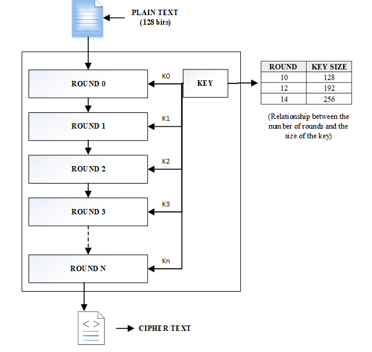
Figure 1: Process AES (Advanced Encryption Standard).
2.1.3. Definition IDEA Algorithm
IDEA is an encryption algorithm that works with a block of 64-bit flat text. It implements a 128-bit input key that it uses to generate 52 subkeys of 16 bits each. The decryption process is the same encryption process but applied in reverse[10].
The encryption stream contains a total of 8 rounds, after the round number 8 performs a transformation in the output. Its operation consists of the first four sub-blocks are 16 bits of key which combines them with four blocks of 16-bit flat text. The exit of each round is the entrance of the next round[11].
IDEA is an encryption algorithm that is based on the concepts of confusion and diffusion, implementing elementary operations, are the following:
- XOR
- Sum of module 216
- Module product 216 + 1
In a round of IDEA:
- Multiply X1 by sub-key Z1.
- Add X2 with sub-key Z2.
- Add X3 with sub-key Z3.
- Multiply X4 by sub-key Z4.
- XOR between step 1 and step 3.
- XOR between step 2 and step 4.
- Multiply step 5 by subkey Z5.
- Add the step 6 and step 7.
- Multiply step 8 by subkey Z6.
- Add the step 7 and step 9.
- XOR between step 1 and step 9.
- XOR between step 3 and step 9.
- XOR between step 2 and step 10.
- XOR between step 4 and step 10[11].
Transformation of the output:
- Multiply X1 by sub-key Z1.
- Add X2 with sub-key Z2.
- Add X3 with sub-key Z3.
- Multiply X4 by sub-key Z4[11]
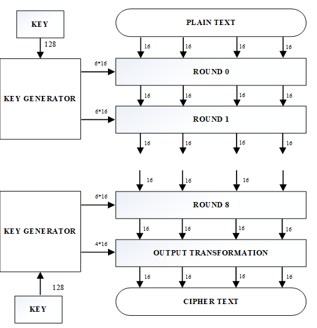
Figure 2: Process IDEA (International Data Encryption Algorithm)
2.1.4. Definition RC5 Algorithm
RC5 was created by the cryptographer Ronald Rivest and is a symmetric method block cipher algorithm. Its operation is simple and very fast since it only implements three classes of computational operations (such as XOR, shift, etc.) and a minimum memory consumption[12].
To encrypt the entry of the block is a plain text that is divided into 2 sub-blocks A and B, the output of this block is an encryption text of 2 w-bit length. Equation(1) shows the operations to encrypt[13].
To decrypt the cipher text, it is treated as a data block and again divided into two sub-blocks. Therefore, one can arrive at the deduction that the decryption method is the inverse of encrypting. Equation(2) shows the operations to encrypt[13].
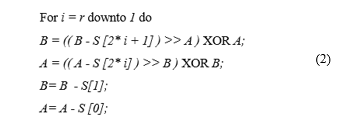
Figure 3: Process RC5 (Rivest Cipher 5)
2.1.5. Definition DES Algorithm
DES is a symmetric key encryption algorithm, it is among the first encryption methods that was implemented commercially, it was mainly used as a security standard for the processing of federal information in the US. It is an encryption algorithm that operates on data bocks, 64-bit blocks, with a 56-bit secret key. It has 16 rounds each with two permutations[14].
The encryption process consists of two permutations called P boxes, which correspond to preliminary permutation and last permutation, and sixteen rounds of Feistel. Each of the 16 round uses a different 48-bit key-key generated by the encryption key that implements a predefined algorithm.
The f function of Feisnel is composed of four sections:
- Box expansion P
- Mix of box P.
- Replacement
- Permutation
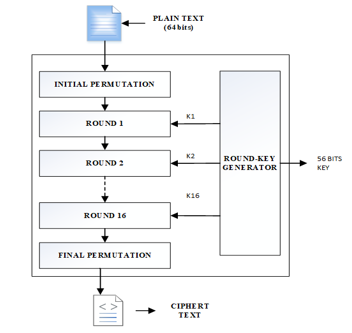
Figure 4: Process DES (Data Encryption Standard)
2.1.6. Definition RSA Algorithm
RSA was founded in 1978 and is an asymmetric cryptographic algorithm named after its founders Rivest, Shamir and Adelman[15]. It is one of the most popular and recognized for the exchange of keys, digital signatures, encryption of data blocks. RSA uses an encryption of variable size of blocks and a key of variable size.
It uses 2 prime numbers to generate the public key and private keys, its size is from 128 to 4096 bits. These two different keys are used in order to encrypt and decipher[15]. It should be noted that RSA is absolutely slow in its methods of encrypting and decrypting; therefore, it is not recommended for large data[16].
RSA encryption is simply a modular expression. The module “n” is not more than the product of 2 large prime numbers (between 100 and 300 digits) chosen at random, both the public key and the private key is obtained from the following equation (3).
The encryption operation is performed by public keys “n” and “e” of the following equation (4).

While to recover the original message from the encrypted message is done with the equation (5).
2.1.7. Methods
We analyzed the available data of the different cryptographic algorithms AES, RC5, IDEA, DES and RSA and it was deduced from the analysis which would be the best to apply it within the public organizations of Ecuador and as a possible alternative of security in digital electoral processes.
Secondly, the following characteristics have been considered as the relevant points to proceed to evaluate the cryptographic algorithms AES, IDEA, RC5, DES and RSA.
Table 1: Selected features for the evaluation of the AES, IDEA and RC5 algorithms
| Characteristic | AES | IDEA | RC5 | DES | RSA |
| Type | Symmetric Algorithm | Symmetric Algorithm | Symmetric Algorithm | Symmetric Algorithm | Asymmetric Algorithm |
| Key length (bits) | 128 bits 192 bits 256 bits | 128 bits | 128 bits | 56 bits | 128, 256, 1024, 2048 y 4096 bits |
| 192 bits | |||||
| 256 bits | |||||
| Block size | 128 bits | 64 bits | 32 bits | 64 bits | – |
| 64 bits | |||||
| 128 bits | |||||
| Number of Rounds | 10, 12 o 14 | 8 | 12 | 16 | – |
Then algorithms were implemented using Netbeans 8.2 as a development environment. The algorithms are programmed in JAVA language under OS Windows 10. The test platform is a laptop (ASUS Q504U) with Intel Core i5-7200U CPU 2.5GHZ 2.71GHZ and 12GB of RAM.
The speed test consists of the time that an encryption algorithm takes to transform a plain text. The speed test helps us measure the performance in units of time. In this paper we also consider the decryption speed for the algorithms to be evaluated.
3. Results
3.1. Cipher Test
In this test we have used 3 files of different sizes, 1 Mb, 10 Mb, and 100 Mb; which will be the files to be encrypted in order to obtain the times when encrypting the file. We have to keep in mind that each cryptographic algorithm uses different key sizes.
Table 2: Results of the cipher times obtained for the cryptographic algorithms with their different keys.
| FILE (MB) | AES | IDEA | RC5 | DES | RSA |
| 256 BITS | 128 BITS | 256 BITS | 256 BITS | 128 BITS | |
| 1 MB | 21 ms | 40 ms | 67 ms | 70 ms | – |
| 10MB | 59 ms | 242 ms | 617 ms | 418 ms | – |
| 100MB | 1489 ms | 1920 ms | 1874 ms | – |
3.2. Decryption Test
In this test we perform the decryption of the files of the previous test in order to obtain the time it takes for each algorithm to decrypt.
Table 3: Results of decryption times obtained for cryptographic algorithms.
| FILE (MB) | AES | IDEA | RC5 | DES | RSA |
| 256 BITS | 128 BITS | 256 BITS | 256 BITS | 128 BITS | |
| 1 MB | 36 ms | 46 ms | 67 ms | 56 ms | – |
| 10MB | 230 ms | 390 ms | 617 ms | 474 ms | – |
| 100MB | 2125 ms | 2269 ms | 2745 ms | – |
3.3. Analysis of result
In the following table we show a weighting assigned to each cryptographic algorithm by the characteristics of key strength and encryption speed. The assigned value corresponds to the value obtained by each algorithm (1 to 3, with 3 being the highest value and 1 being the lowest). As a result, we can show that the AES algorithm provides greater security and the IDEA gives us less security compared to the RC5 algorithm, and as the algorithms of less security this DES and finally we have the RSA algorithm.
Table 4: Analysis of the results.
| Characteristic | Cryptographic Algorithm | ||||
| AES | IDEA | RC5 | DES | RSA | |
| Key strength | 3 | 2 | 3 | 1 | 3 |
| Encryption speed | 3 | 1 | 2 | 2 | – |
| Decryption speed | 3 | 2 | 3 | 1 | – |
| Total | 9 | 5 | 8 | 4 | 3 |
In the following figure we can compare the weights and show that the algorithm AES has better results in comparison with the algorithms IDEA, RC5, DES and RSA. It is worth noting that the RSA algorithm could not be performed because it is only capable of encrypting data of less than 254 bytes and the files under test exceeded its maximum quota.
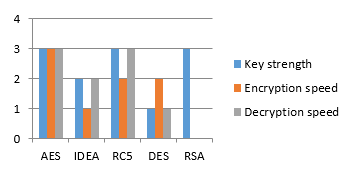
Figure 5: Analysis of results. The evaluation diagram by characteristic of each cryptographic algorithm is shown
- The AES cryptographic algorithm has a value of 3 in the key strength characteristic, this indicates that it has a greater number of combinations among the other analyzed algorithms IDEA and RC5.
- AES cryptographic algorithm has a greater number of stages (rounds), this means that its design is more complex than the IDEA and RC5 algorithms.
- The cryptographic algorithm AES has the highest number in encryption speed however it has the same value in deciphering as algorithm RC5. This means that both are fast, however, the AES cryptographic algorithm is faster at the time of encrypting.
4. Discussion
The majority of developed countries adopt the use of proprietary algorithms since these are designed to their needs and vulnerabilities, there are developing countries which implement the use of immutable algorithms, with the observations made on the cryptographic algorithms it is possible to show that the cryptography has a fundamental role in information security.
The results obtained in this investigation were the criteria of the authors on the importance of the information; it is considered that the AES algorithm can be an alternative to improve the security of the information for a process of a public organization of Ecuador or any other organization.
For this, it was obtained as a result that the AES cryptographic algorithm is the most optimal, according to the score obtained; Within the research, the variables that characterize it were identified: key strength, block size, number of rounds and encryption speed; characteristics mentioned by the authors of the references(1-16).
AES exceeds the algorithms DES, RC5, IDEA, RSA; both in hardware and in software, it is considered as a combination of security, speed, performance and applicability. It also provides greater security by its multiple possible combinations between block sizes, as well as in the use of longer keys and its 3 possible numbers of rounds.
Can speak of immutability on the AES encryption algorithm; its method of encryption of rounds provides us with the security that the exit data of each round can’t be altered on the way to the entrance of the next round.
The implementation of the AES cipher can be considered as a reference for the design of the security of the processes of public organizations of Ecuador, as well as possible viable alternative for an electoral process.
It is concluded that with the implementation of the AES cipher algorithm to improve the security of the information and the treatment thereof, guaranteeing the availability, integrity and confidentiality of the communications and services offered by the public organizations of Ecuador.
5. Conclusion and Future Work
The cipher algorithms play a very important role in the security of the processes inside and outside the organizations, our work in the research was to study the algorithms AES, IDEA, RC5, DES and RSA. By implementing the AES Algorithm, it was obtained that it is the fastest algorithm and gives us greater security.
It is advisable to achieve a degree of security in the keys, for this it is necessary to take into consideration the use of extensive keys, alphanumeric keys, keys with the use of uppercase and lowercase, use of special characters; this way we can delay the time in which he performs a brute force attack on a cryptographic algorithm.
The training of IT staff in cryptology, since in the future they could be responsible for technological advancement and implement their own cryptographic algorithms. Reinforcing information security policies in organizations, since the established rules could be violated due to ignorance or negligence.
It is recommended as future works the analysis of algorithms with the use of Hash methods to guarantee the integrity of the data against brute force attacks.
6. Acknowledgment
The authors thank the Salesian Polytechnic University of Ecuador, the research group of the Guayaquil Headquarters “Information Technology, Security and Information for a Globalized World” (CSITGW) created in accordance with resolution 142-06-2017-07-19 and the Secretariat of Higher Education Science, Technology and Innovation (Senescyt).
- M. Panda, “Performance analysis of encryption algorithms for security,” Int. Conf. Signal Process. Commun. Power Embed. Syst. SCOPES 2016 – Proc., pp. 278–284, 2017.
- B. Mandal, S. Chandra, S. S. Alam, and S. S. Patra, “A comparative and analytical study on symmetric key cryptography,” 2014 Int. Conf. Electron. Commun. Comput. Eng. ICECCE 2014, pp. 131–136, 2014.
- M. Dubai, T. Mahesh, and P. Ghosh, “Design of new security algorithm: Using hybrid Cryptography architecture,” 3rd Int. Conf. Electron. Comput. Technol. (ICECT), 2011., pp. 99–101, 2011.
- M. Sharma, R. B. Garg, and S. Dwivedi, “Comparative analysis of NPN algorithm & des Algorithm,” Proc. – 2014 3rd Int. Conf. Reliab. Infocom Technol. Optim. Trends Futur. Dir. ICRITO 2014, 2015.
- A. Anand, A. Raj, R. Kohli, and V. Bibhu, “Proposed symmetric key cryptography algorithm for data security,” 2016 1st Int. Conf. Innov. Challenges Cyber Secur. ICICCS 2016, no. Iciccs, pp. 159–162, 2016.
- M. B. Yassein, S. Aljawarneh, E. Qawasmeh, W. Mardini, and Y. Khamayseh, “Comprehensive study of symmetric key and asymmetric key encryption algorithms,” 2017 Int. Conf. Eng. Technol., pp. 1–7, 2017.
- S. Kansal and M. Mittal, “Performance Evaluation of Various Symmetric Encryption Algorithms,” Int. J. Netw. Secur. Its Appl., vol. 6, no, pp. 105–109, 2014.
- B. Bhat, A. W. Ali, and A. Gupta, “DES and AES performance evaluation,” Int. Conf. Comput. Commun. Autom. ICCCA 2015, pp. 887–890, 2015.
- C. H. Kim, “Differential fault analysis against AES-192 and AES-256 with minimal faults,” Fault Diagnosis Toler. Cryptogr. – Proc. 7th Int. Work. FDTC 2010, pp. 3–9, 2010.
- J. M. Granado, M. A. Vega, J. M. Sanchez, and J. A. Gomez, “Implementing the IDEA Cryptographic Algorithm in Virtex-E and Virtex-II FPGAs,” vol. 03, pp. 109–112, 2006.
- V. S. Prajwal and K. V. Prema, “User Defined Encryption Procedure for IDEA Algorithm,” 2018 Int. Conf. Adv. Comput. Commun. Informatics, ICACCI 2018, pp. 1668–1671, 2018.
- T. Nie, Y. Li, and C. Song, “Performance evaluation for CAST and RC5 encryption algorithms,” 2010 Int. Conf. Comput. Control Ind. Eng. CCIE 2010, vol. 1, pp. 106–109, 2010.
- H. S. Gill, “Selection of parameter ‘r’ in RC5 algorithm on the basis of prime number,” 2014 Recent Adv. Eng. Comput. Sci. RAECS 2014, pp. 1–4, 2014.
- H. D. Zodpe, P. W. Wani, and R. R. Mehta, “Design and implementation of algorithm for des cryptanalysis,” Proc. 2012 12th Int. Conf. Hybrid Intell. Syst. HIS 2012, pp. 278–282, 2012.
- A. Karakra and A. Alsadeh, “A-RSA: Augmented RSA,” Proc. 2016 SAI Comput. Conf. SAI 2016, pp. 1016–1023, 2016.
- S. A. Nagar and S. Alshamma, “High speed implementation of RSA algorithm with modified keys exchange,” 2012 6th Int. Conf. Sci. Electron. Technol. Inf. Telecommun. SETIT 2012, pp. 639–642, 2012.
- Kazuki Iehira, Hiroyuki Inooue, "Detection Method and Mitigation of Server-Spoofing Attacks on SOME/IP at the Service Discovery Phase", Advances in Science, Technology and Engineering Systems Journal, vol. 11, no. 1, pp. 25–32, 2026. doi: 10.25046/aj110103
- Shaista Ashraf Farooqi, Aedah Abd Rahman, Amna Saad, "Federated Learning with Differential Privacy and Blockchain for Security and Privacy in IoMT A Theoretical Comparison and Review", Advances in Science, Technology and Engineering Systems Journal, vol. 10, no. 6, pp. 65–76, 2025. doi: 10.25046/aj100606
- Mahdi Madani, El-Bay Bourennane, Safwan El Assad, "Hardware and Secure Implementation of Enhanced ZUC Steam Cipher Based on Chaotic Dynamic S-Box", Advances in Science, Technology and Engineering Systems Journal, vol. 10, no. 1, pp. 37–47, 2025. doi: 10.25046/aj100105
- Viktor Denkovski, Irena Stojmenovska, Goce Gavrilov, Vladimir Radevski, Vladimir Trajkovik, "Exploring Current Challenges on Security and Privacy in an Operational eHealth Information System", Advances in Science, Technology and Engineering Systems Journal, vol. 9, no. 2, pp. 45–54, 2024. doi: 10.25046/aj090206
- Fazalur Rehman, Safwan Hashmi, "Enhancing Cloud Security: A Comprehensive Framework for Real-Time Detection, Analysis and Cyber Threat Intelligence Sharing", Advances in Science, Technology and Engineering Systems Journal, vol. 8, no. 6, pp. 107–119, 2023. doi: 10.25046/aj080612
- Hiroki Iwanaga, "Photoluminescence Properties of Eu(III) Complexes with Two Different Phosphine Oxide Structures and Their Potential uses in Micro-LEDs, Security, and Sensing Devices: A Review", Advances in Science, Technology and Engineering Systems Journal, vol. 8, no. 3, pp. 154–160, 2023. doi: 10.25046/aj080317
- Mario Cuomo, Federica Massimi, Francesco Benedetto, "Detecting CTC Attack in IoMT Communications using Deep Learning Approach", Advances in Science, Technology and Engineering Systems Journal, vol. 8, no. 2, pp. 130–138, 2023. doi: 10.25046/aj080215
- Richard Romero Izurieta, Segundo Moisés Toapanta Toapanta, Luis Jhony Caucha Morales, María Mercedes Baño Hifóng, Eriannys Zharayth Gómez Díaz, Oscar Marcelo Zambrano Vizuete, Luis Enrique Mafla Gallegos, José Antonio Orizaga Trejo, "Prototype to Identify the Capacity in Cybersecurity Management for a Public Organization", Advances in Science, Technology and Engineering Systems Journal, vol. 8, no. 1, pp. 108–115, 2023. doi: 10.25046/aj080113
- Segundo Moisés Toapanta Toapanta, Rodrigo Humberto Del Pozo Durango, Luis Enrique Mafla Gallegos, Eriannys Zharayth Gómez Díaz, Yngrid Josefina Melo Quintana, Joan Noheli Miranda Jimenez, Ma. Roció Maciel Arellano, José Antonio Orizaga Trejo, "Prototype to Mitigate the Risks, Vulnerabilities and Threats of Information to Ensure Data Integrity", Advances in Science, Technology and Engineering Systems Journal, vol. 7, no. 6, pp. 139–150, 2022. doi: 10.25046/aj070614
- Tarek Nouioua, Ahmed Hafid Belbachir, "The Security of Information Systems and Image Processing Supported by the Quantum Computer: A review", Advances in Science, Technology and Engineering Systems Journal, vol. 7, no. 6, pp. 77–86, 2022. doi: 10.25046/aj070609
- Muhammad Musleh Uddin, Kazi Rafiqul Islam, Md. Monirul Kabir, "An Improved Model to Analyze the Impact of Cyber-Attacks on Power Systems", Advances in Science, Technology and Engineering Systems Journal, vol. 7, no. 5, pp. 27–34, 2022. doi: 10.25046/aj070504
- Kamil Halouzka, Ladislav Burita, Aneta Coufalikova, Pavel Kozak, Petr Františ, "A Comparison of Cyber Security Reports for 2020 of Central European Countries", Advances in Science, Technology and Engineering Systems Journal, vol. 7, no. 4, pp. 105–113, 2022. doi: 10.25046/aj070414
- Basharat Jamil, Lucía Serrano-Luján, José Manuel Colmenar, "On the Prediction of One-Year Ahead Energy Demand in Turkey using Metaheuristic Algorithms", Advances in Science, Technology and Engineering Systems Journal, vol. 7, no. 4, pp. 79–91, 2022. doi: 10.25046/aj070411
- Tiny du Toit, Hennie Kruger, Lynette Drevin, Nicolaas Maree, "Deep Learning Affective Computing to Elicit Sentiment Towards Information Security Policies", Advances in Science, Technology and Engineering Systems Journal, vol. 7, no. 3, pp. 152–160, 2022. doi: 10.25046/aj070317
- Afsah Sharmin, Farhat Anwar, S M A Motakabber, Aisha Hassan Abdalla Hashim, "A Secure Trust Aware ACO-Based WSN Routing Protocol for IoT", Advances in Science, Technology and Engineering Systems Journal, vol. 7, no. 3, pp. 95–105, 2022. doi: 10.25046/aj070311
- Khosro Salmani, Ken Barker, "Leakage-abuse Attacks Against Forward Private Searchable Symmetric Encryption", Advances in Science, Technology and Engineering Systems Journal, vol. 7, no. 2, pp. 156–170, 2022. doi: 10.25046/aj070216
- Kartit Zaid, Diouri Ouafaa, "Taxonomy of Security Techniques for Routing Protocols in Mobile Ad-hoc Networks", Advances in Science, Technology and Engineering Systems Journal, vol. 7, no. 2, pp. 25–31, 2022. doi: 10.25046/aj070203
- Janusz Gurzynski, Lukasz Kajda, Marcin Tarasiuk, Tomasz Samotyjak, Zbigniew Stachowicz, Slawomir Kownacki, "Control and Monitoring Systems in Medium Voltage Distribution Networks in Poland – Current Status and Directions of Development", Advances in Science, Technology and Engineering Systems Journal, vol. 6, no. 6, pp. 112–118, 2021. doi: 10.25046/aj060615
- Boris Kontsevoi, Sergei Terekhov, "TETRA™ Techniques to Assess and Manage the Software Technical Debt", Advances in Science, Technology and Engineering Systems Journal, vol. 6, no. 5, pp. 303–309, 2021. doi: 10.25046/aj060534
- Osaretin Eboya, Julia Binti Juremi, "iDRP Framework: An Intelligent Malware Exploration Framework for Big Data and Internet of Things (IoT) Ecosystem", Advances in Science, Technology and Engineering Systems Journal, vol. 6, no. 5, pp. 185–202, 2021. doi: 10.25046/aj060521
- Randy Kuang, Dafu Lou, Alex He, Alexandre Conlon, "Quantum Secure Lightweight Cryptography with Quantum Permutation Pad", Advances in Science, Technology and Engineering Systems Journal, vol. 6, no. 4, pp. 401–405, 2021. doi: 10.25046/aj060445
- Jianhua Yang, Lixin Wang, Yien Wang, "Enhance Student Learning Experience in Cybersecurity Education by Designing Hands-on Labs on Stepping-stone Intrusion Detection", Advances in Science, Technology and Engineering Systems Journal, vol. 6, no. 4, pp. 355–367, 2021. doi: 10.25046/aj060440
- Anh Nguyen-Duc, Manh-Viet Do, Quan Luong-Hong, Kiem Nguyen-Khac, Hoang Truong-Anh, "On the Combination of Static Analysis for Software Security Assessment – A Case Study of an Open-Source e-Government Project", Advances in Science, Technology and Engineering Systems Journal, vol. 6, no. 2, pp. 921–932, 2021. doi: 10.25046/aj0602105
- Ahmad AA Alkhatib, Abeer Alsabbagh, Randa Maraqa, Shadi Alzubi, "Load Balancing Techniques in Cloud Computing: Extensive Review", Advances in Science, Technology and Engineering Systems Journal, vol. 6, no. 2, pp. 860–870, 2021. doi: 10.25046/aj060299
- Bismark Tei Asare, Kester Quist-Aphetsi, Laurent Nana, "Node-Node Data Exchange in IoT Devices Using Twofish and DHE", Advances in Science, Technology and Engineering Systems Journal, vol. 6, no. 2, pp. 622–628, 2021. doi: 10.25046/aj060271
- Abdelaziz Lberni, Malika Alami Marktani, Abdelaziz Ahaitouf, Ali Ahaitouf, "Multi-Objective Design of Current Conveyor using Optimization Algorithms", Advances in Science, Technology and Engineering Systems Journal, vol. 6, no. 2, pp. 154–160, 2021. doi: 10.25046/aj060218
- Zarina Din, Dian Indrayani Jambari, Maryati Mohd Yusof, Jamaiah Yahaya, "Challenges in IoT Technology Adoption into Information System Security Management of Smart Cities: A Review", Advances in Science, Technology and Engineering Systems Journal, vol. 6, no. 2, pp. 99–112, 2021. doi: 10.25046/aj060213
- Saliha Assoul, Anass Rabii, Ounsa Roudiès, "An Operational Responsibility and Task Monitoring Method: A Data Breach Case Study", Advances in Science, Technology and Engineering Systems Journal, vol. 6, no. 1, pp. 1157–1163, 2021. doi: 10.25046/aj0601130
- Lonia Masangu, Ashwini Jadhav, Ritesh Ajoodha, "Predicting Student Academic Performance Using Data Mining Techniques", Advances in Science, Technology and Engineering Systems Journal, vol. 6, no. 1, pp. 153–163, 2021. doi: 10.25046/aj060117
- Devika K N, Ramesh Bhakthavatchalu, "Modified Blockchain based Hardware Paradigm for Data Provenance in Academia", Advances in Science, Technology and Engineering Systems Journal, vol. 6, no. 1, pp. 66–77, 2021. doi: 10.25046/aj060108
- Olorunshola Oluwaseyi Ezekiel, Oluyomi Ayanfeoluwa Oluwasola, Irhebhude Martins, "An Evaluation of some Machine Learning Algorithms for the detection of Android Applications Malware", Advances in Science, Technology and Engineering Systems Journal, vol. 5, no. 6, pp. 1741–1749, 2020. doi: 10.25046/aj0506208
- Afsah Sharmin, Farhat Anwar, S M A Motakabber, "Efficient and Scalable Ant Colony Optimization based WSN Routing Protocol for IoT", Advances in Science, Technology and Engineering Systems Journal, vol. 5, no. 6, pp. 1710–1718, 2020. doi: 10.25046/aj0506204
- Pranay Bhardwaj, Carla Purdy, Nawar Obeidat, "A Novel Way to Design ADS-B using UML and TLA+ with Security as a Focus", Advances in Science, Technology and Engineering Systems Journal, vol. 5, no. 6, pp. 1657–1665, 2020. doi: 10.25046/aj0506197
- Revanna Sidamma Kavitha, Uppara Eranna, Mahendra Nanjappa Giriprasad, "A Computational Modelling and Algorithmic Design Approach of Digital Watermarking in Deep Neural Networks", Advances in Science, Technology and Engineering Systems Journal, vol. 5, no. 6, pp. 1560–1568, 2020. doi: 10.25046/aj0506187
- Sara Ftaimi, Tomader Mazri, "Handling Priority Data in Smart Transportation System by using Support Vector Machine Algorithm", Advances in Science, Technology and Engineering Systems Journal, vol. 5, no. 6, pp. 1422–1427, 2020. doi: 10.25046/aj0506172
- Hesham Aly El Zouka, Mustafa Mohamed Hosni, "Time Granularity-based Privacy Protection for Cloud Metering Systems", Advances in Science, Technology and Engineering Systems Journal, vol. 5, no. 6, pp. 1278–1285, 2020. doi: 10.25046/aj0506152
- Boughanja Manale, Tomader Mazri, "5G, Vehicle to Everything Communication: Opportunities, Constraints and Future Directions", Advances in Science, Technology and Engineering Systems Journal, vol. 5, no. 6, pp. 1089–1095, 2020. doi: 10.25046/aj0506132
- Abdulla Obaid Al Zaabi, Chan Yeob Yeun, Ernesto Damiani, Gaemyoung, "An Enhanced Conceptual Security Model for Autonomous Vehicles", Advances in Science, Technology and Engineering Systems Journal, vol. 5, no. 6, pp. 853–864, 2020. doi: 10.25046/aj0506102
- Athraa Ali Kadhem, Noor Izzri Abdul Wahab, Ahmed Abdalla, "The Contribution of Wind Energy Capacity on Generation Systems Adequacy Reliability using Differential Evolution Optimization Algorithm", Advances in Science, Technology and Engineering Systems Journal, vol. 5, no. 6, pp. 331–340, 2020. doi: 10.25046/aj050640
- Jim Scheibmeir, Yashwant Malaiya, "Multi-Model Security and Social Media Analytics of the Digital Twin", Advances in Science, Technology and Engineering Systems Journal, vol. 5, no. 6, pp. 323–330, 2020. doi: 10.25046/aj050639
- Mounir Amraoui, Rachid Latif, Abdelhafid El Ouardi, Abdelouahed Tajer, "Feature Extractors Evaluation Based V-SLAM for Autonomous Vehicles", Advances in Science, Technology and Engineering Systems Journal, vol. 5, no. 5, pp. 1137–1146, 2020. doi: 10.25046/aj0505138
- Gautama Wijaya, Nico Surantha, "Multi-layered Security Design and Evaluation for Cloud-based Web Application: Case Study of Human Resource Management System", Advances in Science, Technology and Engineering Systems Journal, vol. 5, no. 5, pp. 674–679, 2020. doi: 10.25046/aj050583
- Mika Karjalainen, Tero Kokkonen, "Review of Pedagogical Principles of Cyber Security Exercises", Advances in Science, Technology and Engineering Systems Journal, vol. 5, no. 5, pp. 592–600, 2020. doi: 10.25046/aj050572
- Chigozie Enyinna Nwankpa, "Advances in Optimisation Algorithms and Techniques for Deep Learning", Advances in Science, Technology and Engineering Systems Journal, vol. 5, no. 5, pp. 563–577, 2020. doi: 10.25046/aj050570
- Imad El Hajjami, Bachir Benhala, Hamid Bouyghf, "Shape Optimization of Planar Inductors for RF Circuits using a Metaheuristic Technique based on Evolutionary Approach", Advances in Science, Technology and Engineering Systems Journal, vol. 5, no. 5, pp. 426–433, 2020. doi: 10.25046/aj050553
- Martin Kenyeres, Jozef Kenyeres, "Applicability of Generalized Metropolis-Hastings Algorithm to Estimating Aggregate Functions in Wireless Sensor Networks", Advances in Science, Technology and Engineering Systems Journal, vol. 5, no. 5, pp. 224–236, 2020. doi: 10.25046/aj050528
- Liana Khamis Qabajeh, Mohammad Moustafa Qabajeh, "Detailed Security Evaluation of ARANz, ARAN and AODV Protocols", Advances in Science, Technology and Engineering Systems Journal, vol. 5, no. 5, pp. 176–192, 2020. doi: 10.25046/aj050523
- Pham Minh Nam, Phu Tran Tin, "Analysis of Security-Reliability Trade-off for Multi-hop Cognitive Relaying Protocol with TAS/SC Technique", Advances in Science, Technology and Engineering Systems Journal, vol. 5, no. 5, pp. 54–62, 2020. doi: 10.25046/aj050508
- Adamu Abdullahi Garba, Maheyzah Muhamad Siraj, Siti Hajar Othman, "An Explanatory Review on Cybersecurity Capability Maturity Models", Advances in Science, Technology and Engineering Systems Journal, vol. 5, no. 4, pp. 762–769, 2020. doi: 10.25046/aj050490
- Vu Nguyen Hoa Hong, Luong Tuan Anh, "Development Trends of Smart Cities in the Future – Potential Security Risks and Responsive Solutions", Advances in Science, Technology and Engineering Systems Journal, vol. 5, no. 4, pp. 548–556, 2020. doi: 10.25046/aj050465
- Hani AlGhanem, Mohammad Shanaa, Said Salloum, Khaled Shaalan, "The Role of KM in Enhancing AI Algorithms and Systems", Advances in Science, Technology and Engineering Systems Journal, vol. 5, no. 4, pp. 388–396, 2020. doi: 10.25046/aj050445
- Maximo Giovani Tanzado Espinoza, Joseline Roxana Neira Melendrez, Luis Antonio Neira Clemente, "A Survey and an IoT Cybersecurity Recommendation for Public and Private Hospitals in Ecuador", Advances in Science, Technology and Engineering Systems Journal, vol. 5, no. 3, pp. 518–528, 2020. doi: 10.25046/aj050364
- Mainar Swari Mahardika, Achmad Nizar Hidayanto, Putu Agya Paramartha, Louis Dwysevrey Ompusunggu, Rahmatul Mahdalina, Farid Affan, "Measurement of Employee Awareness Levels for Information Security at the Center of Analysis and Information Services Judicial Commission Republic of Indonesia", Advances in Science, Technology and Engineering Systems Journal, vol. 5, no. 3, pp. 501–509, 2020. doi: 10.25046/aj050362
- Suchitra Abel, Yenchih Tang, Jake Singh, Ethan Paek, "Applications of Causal Modeling in Cybersecurity: An Exploratory Approach", Advances in Science, Technology and Engineering Systems Journal, vol. 5, no. 3, pp. 380–387, 2020. doi: 10.25046/aj050349
- Gillala Rekha, Shaveta Malik, Amit Kumar Tyagi, Meghna Manoj Nair, "Intrusion Detection in Cyber Security: Role of Machine Learning and Data Mining in Cyber Security", Advances in Science, Technology and Engineering Systems Journal, vol. 5, no. 3, pp. 72–81, 2020. doi: 10.25046/aj050310
- Basem Assiri, "Using Leader Election and Blockchain in E-Health", Advances in Science, Technology and Engineering Systems Journal, vol. 5, no. 3, pp. 46–54, 2020. doi: 10.25046/aj050307
- Duc Manh Nguyen, Sunghwan Kim, "A Novel Quantum No-Key Protocol for Many Bits Transfer with Error Correction Codes", Advances in Science, Technology and Engineering Systems Journal, vol. 5, no. 2, pp. 781–785, 2020. doi: 10.25046/aj050298
- Segundo Moisés Toapanta Toapanta, Daniela Monserrate Moreira Gamboa, Luis Enrique Mafla Gallegos, "Analysis of the Blockchain for Adoption in Electronic Commerce Management in Ecuador", Advances in Science, Technology and Engineering Systems Journal, vol. 5, no. 2, pp. 762–768, 2020. doi: 10.25046/aj050295
- Rabeb Faleh, Souhir Bedoui, Abdennaceur Kachouri, "Review on Smart Electronic Nose Coupled with Artificial Intelligence for Air Quality Monitoring", Advances in Science, Technology and Engineering Systems Journal, vol. 5, no. 2, pp. 739–747, 2020. doi: 10.25046/aj050292
- Segundo Moisés Toapanta Toapanta, Andrés Aurelio García Henriquez, Luis Enrique Mafla Gallegos, "Analysis of Vulnerabilities, Risks and Threats in the Process of Quota Allocation for the State University of Ecuador", Advances in Science, Technology and Engineering Systems Journal, vol. 5, no. 2, pp. 673–682, 2020. doi: 10.25046/aj050283
- Lylia Alouache, Mohamed Maachaoui, Rachid Chelouah, "Securing Hybrid SDN-based Geographic Routing Protocol using a Distributed Trust Model", Advances in Science, Technology and Engineering Systems Journal, vol. 5, no. 2, pp. 567–577, 2020. doi: 10.25046/aj050271
- Ricardo Simões Santos, António João Pina da Costa Feliciano Abreu, Joaquim José Rodrigues Monteiro, "Using Metaheuristics-Based Methods to Provide Sustainable Market Solutions, Suitable to Consumer Needs", Advances in Science, Technology and Engineering Systems Journal, vol. 5, no. 2, pp. 399–410, 2020. doi: 10.25046/aj050252
- Segundo Moisés Toapanta Toapanta, José David López Cobeña, Luis Enrique Mafla Gallegos, "Analysis of Cyberattacks in Public Organizations in Latin America", Advances in Science, Technology and Engineering Systems Journal, vol. 5, no. 2, pp. 116–125, 2020. doi: 10.25046/aj050215
- Karim El bouchti, Soumia Ziti, Fouzia Omary, Nassim Kharmoum, "New Solution Implementation to Protect Encryption Keys Inside the Database Management System", Advances in Science, Technology and Engineering Systems Journal, vol. 5, no. 2, pp. 87–94, 2020. doi: 10.25046/aj050211
- José Alomía-Lucero, Jorge Castro-Bedriñana, Doris Chirinos-Peinado, "Rooftop Urban Agriculture Model with Two Tomato Varieties (Lycopersicum esculentum Mill) and Toppings in the High Jungle – Peru", Advances in Science, Technology and Engineering Systems Journal, vol. 5, no. 1, pp. 446–450, 2020. doi: 10.25046/aj050157
- Amit Kumar Tyagi, A. Mohan Krishna, Shaveta Malik, Meghna Manoj Nair, Sreenath Niladhuri, "Trust and Reputation Mechanisms in Vehicular Ad-Hoc Networks: A Systematic Review", Advances in Science, Technology and Engineering Systems Journal, vol. 5, no. 1, pp. 387–402, 2020. doi: 10.25046/aj050150
- Amine Kardi, Rachid Zagrouba, "Attacks classification and security mechanisms in Wireless Sensor Networks", Advances in Science, Technology and Engineering Systems Journal, vol. 4, no. 6, pp. 229–243, 2019. doi: 10.25046/aj040630
- Evan Hurwitz, Chigozie Orji, "Multi Biometric Thermal Face Recognition Using FWT and LDA Feature Extraction Methods with RBM DBN and FFNN Classifier Algorithms", Advances in Science, Technology and Engineering Systems Journal, vol. 4, no. 6, pp. 67–90, 2019. doi: 10.25046/aj040609
- Allae Erraissi, Abdessamad Belangour, "A Big Data Security Layer Meta-Model Proposition", Advances in Science, Technology and Engineering Systems Journal, vol. 4, no. 5, pp. 409–418, 2019. doi: 10.25046/aj040553
- Segundo Moisés Toapanta Toapanta, Steven Xavier Romo Sañicela, Danny Wilfrido Barona Valencia, Luis Enrique Mafla Gallegos, "Analysis of Information Security for a Voting Process for Sectional Governments in Ecuador", Advances in Science, Technology and Engineering Systems Journal, vol. 4, no. 5, pp. 352–359, 2019. doi: 10.25046/aj040546
- Gennadii Georgievich Cherepanov, Anatolii Ivanovich Mikhalskii, Zhanna Anatolievna Novosrltseva, "Forecasting Bio-economic Effects in the Milk Production based on the Potential of Animals for Productivity and Viability", Advances in Science, Technology and Engineering Systems Journal, vol. 4, no. 5, pp. 110–114, 2019. doi: 10.25046/aj040514
- Alghamdi Abdullah, Mohammed Thanoon, Anwar Alsulami, "Toward a Smart Campus Using IoT: Framework for Safety and Security System on a University Campus", Advances in Science, Technology and Engineering Systems Journal, vol. 4, no. 5, pp. 97–103, 2019. doi: 10.25046/aj040512
- Segundo Moisés Toapanta Toapanta, Allan Fabricio German Diaz, Darío Fernando Huilcapi Subia, Luis Enrique Mafla Gallegos, "Proposal for a Security Model for a Popular Voting System Process in Latin America", Advances in Science, Technology and Engineering Systems Journal, vol. 4, no. 5, pp. 53–60, 2019. doi: 10.25046/aj040507
- Segundo Moisés Toapanta Toapanta, Gabriel Enrique Valenzuela Ramos, Félix Gustavo Mendoza Quimi, Luis Enrique Mafla Gallegos, "Prototype of a Security Architecture for a System of Electronic Voting for the Ecuador", Advances in Science, Technology and Engineering Systems Journal, vol. 4, no. 4, pp. 292–299, 2019. doi: 10.25046/aj040437
- Robert M. Beswick, "Computer Security as an Engineering Practice: A System Engineering Discussion", Advances in Science, Technology and Engineering Systems Journal, vol. 4, no. 2, pp. 357–369, 2019. doi: 10.25046/aj040245
- Shruthi Narayanaswamy, Anitha Vijaya Kumar, "Application Layer Security Authentication Protocols for the Internet of Things: A Survey", Advances in Science, Technology and Engineering Systems Journal, vol. 4, no. 1, pp. 317–328, 2019. doi: 10.25046/aj040131
- Zeinab Hajiabolhasani, Romeo Marian, John Boland, "Simulation-Optimisation of a Granularity Controlled Consumer Supply Network Using Genetic Algorithms", Advances in Science, Technology and Engineering Systems Journal, vol. 3, no. 6, pp. 455–468, 2018. doi: 10.25046/aj030654
- Havva Esra Bilisik, Radosveta Sokullu, "A Novel Fair and Efficient Resource Allocation Scheduling Algorithm for Uplink in LTE-A", Advances in Science, Technology and Engineering Systems Journal, vol. 3, no. 6, pp. 222–232, 2018. doi: 10.25046/aj030629
- Lin Dong, Akira Rinoshika, "Analysis and Methods on The Framework and Security Issues for Connected Vehicle Cloud", Advances in Science, Technology and Engineering Systems Journal, vol. 3, no. 6, pp. 105–110, 2018. doi: 10.25046/aj030611
- Christos Bouras, Nikolaos Kanakis, "Evolving AL-FEC Application on 5G NGMN-Edge Computing Systems", Advances in Science, Technology and Engineering Systems Journal, vol. 3, no. 5, pp. 152–160, 2018. doi: 10.25046/aj030519
- Ryosuke Nakano, Yuta Takeuchi, Mikio Tsuji, Hiroyuki Deguchi, "Improvement of Transmission Characteristics in Multilayer Dual Band Filter", Advances in Science, Technology and Engineering Systems Journal, vol. 3, no. 5, pp. 16–22, 2018. doi: 10.25046/aj030503
- Alaa Hamza Omran, Yaser Muhammad Abid, "Design of smart chess board that can predict the next position based on FPGA", Advances in Science, Technology and Engineering Systems Journal, vol. 3, no. 4, pp. 193–200, 2018. doi: 10.25046/aj030417
- Tao Wu, Ruomei Wang, "Stream Cipher by Reed-Solomon Codes", Advances in Science, Technology and Engineering Systems Journal, vol. 3, no. 4, pp. 26–32, 2018. doi: 10.25046/aj030404
- Ola Surakhi, Mohammad Khanafseh, Yasser Jaffal, "An enhanced Biometric-based Face Recognition System using Genetic and CRO Algorithms", Advances in Science, Technology and Engineering Systems Journal, vol. 3, no. 3, pp. 116–124, 2018. doi: 10.25046/aj030316
- Abul Kalam Azad, Md. Yamin Mollah, "EAES: Extended Advanced Encryption Standard with Extended Security", Advances in Science, Technology and Engineering Systems Journal, vol. 3, no. 3, pp. 51–56, 2018. doi: 10.25046/aj030307
- Dhiman Chowdhury, Mrinmoy Sarkar, Mohammad Zakaria Haider, "A Cyber-Vigilance System for Anti-Terrorist Drives Based on an Unmanned Aerial Vehicular Networking Signal Jammer for Specific Territorial Security", Advances in Science, Technology and Engineering Systems Journal, vol. 3, no. 3, pp. 43–50, 2018. doi: 10.25046/aj030306
- Nicola Fabiano, "The Internet of Things ecosystem: the blockchain and data protection issues", Advances in Science, Technology and Engineering Systems Journal, vol. 3, no. 2, pp. 1–7, 2018. doi: 10.25046/aj030201
- Asma Meddeb, Hajer Jmii, Souad Chebbi, "Security Analysis and the Contribution of UPFC for Improving Voltage Stability", Advances in Science, Technology and Engineering Systems Journal, vol. 3, no. 1, pp. 404–411, 2018. doi: 10.25046/aj030149
- Luca Dariz, Gianpiero Costantino, Massimiliano Ruggeri, Fabio Martinelli, "A Joint Safety and Security Analysis of message protection for CAN bus protocol", Advances in Science, Technology and Engineering Systems Journal, vol. 3, no. 1, pp. 384–393, 2018. doi: 10.25046/aj030147
- Anass Sedrati, Abdellatif Mezrioui, "A Survey of Security Challenges in Internet of Things", Advances in Science, Technology and Engineering Systems Journal, vol. 3, no. 1, pp. 274–280, 2018. doi: 10.25046/aj030133
- Hiroaki Anada, Seiko Arita, "Short CCA-Secure Attribute-Based Encryption", Advances in Science, Technology and Engineering Systems Journal, vol. 3, no. 1, pp. 261–273, 2018. doi: 10.25046/aj030132
- Zeineb Zhioua, Rabea Ameur-Boulifa, Yves Roudier, "Framework for the Formal Specification and Verification of Security Guidelines", Advances in Science, Technology and Engineering Systems Journal, vol. 3, no. 1, pp. 38–48, 2018. doi: 10.25046/aj030106
- Himanshu Upadhyay, Hardik Gohel, Alexander Pons, Leo Lagos, "Virtual Memory Introspection Framework for Cyber Threat Detection in Virtual Environment", Advances in Science, Technology and Engineering Systems Journal, vol. 3, no. 1, pp. 25–29, 2018. doi: 10.25046/aj030104
- Susan Gottschlich, "A Taxonomy for Enhancing Usability, Flexibility, and Security of User Authentication", Advances in Science, Technology and Engineering Systems Journal, vol. 2, no. 6, pp. 225–235, 2017. doi: 10.25046/aj020627
- Mohamed El Beqqal, Mostafa Azizi, "Review on security issues in RFID systems", Advances in Science, Technology and Engineering Systems Journal, vol. 2, no. 6, pp. 194–202, 2017. doi: 10.25046/aj020624
- Mbunwe Muncho Josephine, "Design and Construction of a remote control switching device for household appliances application", Advances in Science, Technology and Engineering Systems Journal, vol. 2, no. 4, pp. 154–164, 2017. doi: 10.25046/aj020421
- Hossein Soleymani, Amin Hasanvand, "Estimation of Power System Stabilizer Parameters Using Swarm Intelligence Techniques to Improve Small Signal Stability of Power System", Advances in Science, Technology and Engineering Systems Journal, vol. 2, no. 4, pp. 139–144, 2017. doi: 10.25046/aj020419
- Saleh Mohamed Alnaeli, Melissa Sarnowski, Md Sayedul Aman, Ahmed Abdelgawad, Kumar Yelamarthi, "Source Code Vulnerabilities in IoT Software Systems", Advances in Science, Technology and Engineering Systems Journal, vol. 2, no. 3, pp. 1502–1507, 2017. doi: 10.25046/aj0203188
- Ali Shuja Siddiqui, Yutian Gui, Jim Plusquellic, Fareena Saqib, "A Secure Communication Framework for ECUs", Advances in Science, Technology and Engineering Systems Journal, vol. 2, no. 3, pp. 1307–1313, 2017. doi: 10.25046/aj0203165
- Daniel Fraunholz, Marc Zimmermann, Hans Dieter Schotten, "Towards Deployment Strategies for Deception Systems", Advances in Science, Technology and Engineering Systems Journal, vol. 2, no. 3, pp. 1272–1279, 2017. doi: 10.25046/aj0203161