
Towards a Framework for Organizational Transformation through Strategic Design Implementation

Adv. Sci. Technol. Eng. Syst. J. 7(2), 191–197 (2022);
 DOI: 10.25046/aj070219
The aim of the research is to contribute to the emergent field of strategic design as an approach to creating transformational impacts in organizations. This is driven by international strategies to promote sustainable business environments which are innovative and adaptive to change. The literature identifies a gap in the knowledge in relation to how knowledge flows within an organization from knowledge producing activities and back. This flow between management and operational activity is identified as the ongoing innovation capability and ultimately the area of transformational impact within the organization. However, the structures which support this flow and how it is measured are ambiguous and ill defined. Strategic design is a holistic approach to developing business strategies which may provide methods which support the flow of knowledge and provide the transformational impacts. A ‘research through design’ approach was taken to collect data from small to medium enterprises engaging in a series of strategic design workshops. Analysis was carried out through visual mapping of how strategic design is applied in an organization at management and operational level. This identifies the nuanced differences in application and design tools used to develop management strategy versus operational strategy. It also identifies the points of knowledge creation and transfer which builds business intelligence to inform both business and operational strategies. This is presented as a contextual framework which provides the basis for understanding the complexity of the flow between the two. This contributes to informing organizations of where the links between these strategies may be built, resulting in a more dynamic organization which is nimble, innovative, and adaptive to change.
1. Introduction
This research is an extension of work originally presented in 2021 IEEE Technology & Engineering Management Conference. The title of the previous paper was ‘Measuring the Success Factors of Strategic Design Implementation’[1]. This paper presents a literature review of discourse on the development and application of strategic design across the business landscape with a focus on transformational impacts. The gap in the knowledge is identified in relation to how the flow of organizational knowledge which is both tacit and explicit is supported and leveraged to create strategic growth and innovation. A ‘research through design’ approach is used for data collection and analysis through a series of design workshops. The findings are presented in a contextual framework of where and how strategy is used in an organization and where and how a design approach supports the transformational flow of knowledge. The research began with seeking to understand methods of determining success factors of strategic design implementation. A design approach is a holistic view of a situation or environment. It looks at the usability, feasibility, and viability factors to solve problems [2]. This can be a people centered approach, a technological approach, and a business approach. Therefore, to consider best practices for measuring success factors in a way that reflects this, different disciplines were considered in the literature review such as social science, data science and business. The literature review noted that across these disciplines they all referred to a flow of knowledge between management strategy and operational strategy. The gap in the knowledge is in relation to how the flow of knowledge operates within an organization. Knowledge management is described as the process of acquisition, storage, distribution and the use of knowledge [3]. The research design was to collect data from seven small to medium enterprises (SMEs) in research through design approach as they engage in a series of strategic design workshops within a Technology Gateway in an Irish University. The data is analysed through visual mapping to provide insights into the nuanced differences in approach to business strategy and operational strategy and the relevance of knowledge exchange between the two. The visual mapping highlights the tools used across a four-stage process of strategic design application. The findings highlight the process as on ongoing cycle of innovation and identifies the key points of knowledge exchange. It is from this that the author has developed a framework of organizational strategy depicting the strategic design process, tools used and knowledge acquisition and transfer points. The research aims to inform both the design and business communities nationally and internationally, in the actionable methods, tools, and processes for accessing and implementing a strategic design approach for transformational impacts.
2. Literature Review
There are clear international drivers to promote innovation on economic, social, cultural and educational sectors. Innovation is recognized as a means to create sustainable organizations which can not only problem solve to adapt to change but also become the drivers of change. The US Chamber of Commerce Global Innovation Policy Centre (GIPC) champions innovation to “create jobs, save lives, advance global economic and cultural prosperity, and generate breakthrough solutions to global challenges” [4]. This highlights the significant and varied applications for innovation. The Organization for Economic Co-operation and Development (OECD) work to improve innovation across 38-member countries to stimulate economic progress and world trade. The core mission of OECD is not static but needs to respond to an evolving and challenging world and notes that this is a time when the expanding integration and influence of new technologies are disrupting both advanced and emerging economies [5]. It is highlighted that adaptability to change, and innovation are at the core of global economic strategies to develop competitive and sustainable organizations. This paper is set within the context of Irish Higher Education (HEI) engagement with industry which has long been identified as a model to foster and promote research and development, innovation and faster knowledge exchange between researchers and industry. The publication of ‘Winning by Design’ marks the clear linking of design and Innovation by the Irish State [6]. Design was recognized as a process of innovation and design thinking as a strategic tool for innovative business development. It is highlighted that it will require more than transactional interventions and that the focus should be on longer term developmental programmes to achieve transformational impacts.
“Mobilizing universities needs to be addressed in a holistic way and not just by focusing on transactional interventions such as consultancy services for local companies. It is tempting to focus on transactional mechanisms as they have clear outputs such as number of firms assisted. However, they are less likely to have the longer-term outcomes and impacts that can be achieved with ‘transformational’ and more developmental programmes” [7]
In seeking to understand transformational engagements within a design context, strategic design processes and approaches were examined through literature. Roberto Verganti presents a theory of design driven innovation as radically innovating what things mean by bringing the designer into the corporate space [8]. This approach however is referenced in the context of new product development within the business model. Giulio Calabretta who writes specifically about strategic design describes it as “the professional field in which designers use their principles, tools and methods to influence strategic decision making within an organization” [9]. However, Calabretta also leans towards the strategic input as an underpinning of the product brief “designers are no longer mere executors of design briefs-they are involved in the crafting of the briefs and guide the strategic decisions that underlie them” . This research paper argues that the impacts may be further reaching and more transformational than product strategy alone. It presents strategic design as a holistic approach which when applied to industry can result in not only new products but new services, new markets, or simply new ways of doing things, impacting an organization across business and operational strategy. Strategic design is the application of design thinking to develop strategies, in a business setting this is primarily strategies for growth and innovation. An approach to better understanding the application of design on both product development and business model strategy is to consider the outcomes and the measures of success factors. In other words what are the outcomes of a strategic designer’s engagement when applied to new product development or when applied to the broader business model strategy. A new product is an explicit and tangible outcome of a design engagement but how do we measure the success factors of the business model strategy. This area is more difficult to communicate and measure in terms of impacts as it may be of a tacit nature, less tangible and more subjective. It would appear that a more qualitative method of assessing the outcomes may be of value.
2.1. Social science, data science and business
Design approaches encompass both tacit and explicit knowledge to form holistic understanding. Whilst explicit knowledge is objective and easy to quantify, tacit knowledge is subjective and difficult to quantify and therefore often overlooked. Literature was therefore considered from disciplines which measure values in different ways, such as social science, data science and business. In social science, Etienne Wenger was one of the first to use the term ‘communities of practice’ – groups of people who together accumulate and share their collective learning [10]. In relating to organizations, Wenger considers ways to measure the value of the organizations community and proposes that good measurement has to follow the course of the story. He refers to the process of analysing the stories as “systematic anecdotal evidence” and that by considering communities of practice, organizations have the chance to see the value in qualitative not quantitative terms. Wenger concludes “in fact , the value of knowledge is a flow from knowledge producing activity to performance and back”. Wenger specifically links social practice and behaviours with a transformative business model. He refers to the generation of social practice and changing the designs of our organizations so that they are more in line with our behaviours. Geoff Walsham also looks at information flow within an organization but considers it from a context of information systems such as data processing. “in order for all types of organizations to succeed, they need to be able to process data and use information effectively” [11]. Walsham refers to this information as informing everyday operations such as planning, controlling, organizing and decision making. This process of information gathering and application, whilst dealing with data science, is also reflective of Wenger’s communities of practice and the information flow between operations and business strategy. As far back as the 1970s, Mintzberg was one of the first to highlight the ‘flaw’ in organizational structure which is how work, information and decision processes actually flow through it [12]. in other words, the interconnectedness and flow between business strategy and operations. Wenger follows this understanding and links the communities of practice to managing the knowledge in an organization, between employees and external stakeholders as peer exchange. He is clear however that to nurture knowledge resources a CEO must understand the broad strategy but also needs to be in contact with the practitioners who manage that knowledge. This infers a more involved and human influence on building the strategy. In exploring these elements, we can consider praxeology, the theory of human action and purposeful behaviour, and axiology, the philosophical study of value. Dr Marina Pankina, presents a paper specifically looking at axiology and praxeology of design thinking. Pankina states that “design combines an objective and subjective approach. This is what distances it from the classical science that aims for objectivity and elimination of everything subjective, as a key to the validity of knowledge” [13]. This is particularly relevant in a design context as design is focused on understanding cultural, ethical, and economic values, along with human drivers, motivations, wants and needs. It may be that these human influences are the tacit links to successful transformative strategies. Additionally, this would indicate that to measure the success factors of design engagements it is also appropriate to combine objective and subjective results. Reflecting on this literature we can see there are, according to Walsham and Wenger, two key tiers of approach to organizational strategy; a managements’ strategic level of broad initiative and an operational level of knowledge creation and that the flow between the two is essential (Figure 1 ). Measuring the success factors can be approached subjectively based on systematic anecdotal evidence or objectively based on data collection, application, and management. However, Wenger clearly links social practice and behaviours with transformative business models. Pankina presents design as a methodology which combines both an objective and subjective approach and that designers work to understand the human factors of behaviour and value to bring meaning.
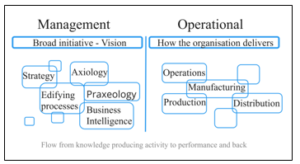
Figure 1. Two tiers of approach for organizational strategy (authors own 2021)
3. Research Question
This combined objective and subjective approach that design offers, applied holistically across an organization at management and operational levels, may result in transformational impacts. The research question is; How can the strategic design approach support the flow of knowledge (both tacit and explicit) across management and operational strategies resulting in transformational impacts?
4. Methodology
The research is approached in a ‘research through design’ methodology. This is a research approach that uses design practice to inform research [14]. This research was carried out in the Design + Technology Gateway which specializes in design research, design driven innovation and strategic design. The research design was to participate in the facilitation of the design strategy workshops with a series of small to medium enterprises (SMEs). Each SME owner/manager engaged in four workshops facilitated by two design strategists as laid out in Table 1.
Table 1. Research design
| Location | Design Studio & remote video workshops |
| Participants | Design strategists x2
SME manager x1 |
| Time | 2 hours x 4 weeks |
| Duration | 6-8 weeks per SME (x7 SMEs) |
| Methods | Visual drawing/text on white wall, post-it notes, colored pens. Use of design toolkit |
| Total Organization | 7 |
| Sectoral range | Corporate service, Brewing and distilling, IOT, Health care, Retail, Events, Technology sector |
The workshops were carried out in the design studio with large whiteboard walls which were used to capture the data as the participants engaged in the process. Colored markers, post it notes, print outs and digital images were used as a mixed media approach to capture data (Figure 4). Strategic design, as delivered by the Design+ team consists of a four-stage process (Figure 3). This process is derived from the underlying theoretical double diamond design process [2]. This is an approach which is internationally recognised by both industry and academic realms and is based on a series of divergent and convergent thinking (Figure 2).
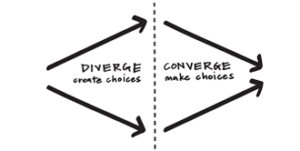
Figure 2. Divergent and convergent thinking [IDEO 2019]
The theoretical approach of convergent and divergent thinking has been translated by the design strategy team into the business landscape as an actionable four stage process for the development of innovation strategies.
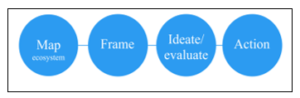
Figure 3. Design+ Technology Gateway, four stage strategic design process (authors own 2020)
The process is supported by a design strategy toolkit. The toolkit combines business tools, design tools and tools newly developed by the team which responded to an identified business need. Examples of these are user journey maps, role reviews, Ansoff matrix, leadership wheel, strategic roadmap. The tools are generally A3 infographic prompts to ensure the thinking is being challenged at each step of the way and that all things are being considered (Figure 5). The tools differ from templates in that they are flexibile and can be used in different ways unlike a template which is predefined .
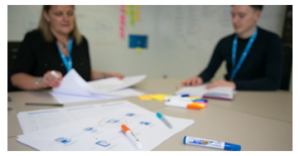
Figure 4. Mixed media approach to data capture (authors own 2021)
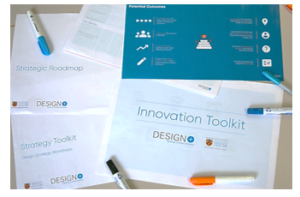
Figure 5. Strategic design toolkits (authors own 2021)
4.1. Data collection
The research began with three SMEs and was specifically looking at ways to measure the success factors of a strategic design engagement. The objective was to analyze the outcomes of the engagement which were captured in a strategic roadmap, to better understand the resulting values (Figure 5).
Table 2. SMEs 1-3 Background
| SME1 was as a legacy business on the point of handover to the next generation which incorporated three retail outlets. A new strategy was required based on a new vision by the next generation, considering challenges within today’s markets but also with a consideration for future proofing and creating a sustainable business model fit for purpose. As part of the future vision and in developing options for a new way of doing things, a specific scanning technology was identified around which there were many uncertainties which required evaluation. |
| SME2 was a start-up business with a specific offering in the technology sector that was not clearly linked to a specific target market. There was therefore no clear understanding of individual user needs. Their request on engaging with the team was to frame key market sectors and develop a strategy for responding to their needs. |
| SME3 was an established events-based company who was seeking a new growth strategy. The company required support with ideation and rationale building around diversification. They had also identified an opportunity to leverage the existing company data to improve business intelligence. |
The research captured data from each stage of the process through visual mapping on whiteboard walls and digital whiteboards. The background context to the engagement requirements was recorded in Table 2. The key area of data capture was in the culminating strategic roadmaps for each of the SMEs. The strategic roadmaps present the innovation or the new strategy through steps to implementation, resources required, participation scope, timeframes, key decision points and milestones. This provided the research with an insight into a variety of outcomes across the SMEs such as collaborate with new partner, run a pilot study, engage with data analytics, or apply for funding support. In addition, there were noted new approaches to strategy such as the introduction of new strategy meetings within the organization, who would be involved and what tools could be used to support those meetings. The research also recorded any identified new ways of doing things such as introduction of digital whiteboards and visual mapping techniques as an approach to dealing with complex data. Also considered was the introduction of new platforms for creating shared context and knowledge exchange utilizing tools from the toolkit. Material outputs were also recorded such as the digital whiteboards, infographics, the toolkit, the roadmap, and a presentation of the process. In building on the first three SMEs phase of research an additional four SMEs were engaged in a series of strategic design workshops. This brings a total of seven SMEs and a cumulative time of fifty-six hours of workshops from which data was collected. The objective of this additional research was to begin assessing the nuanced differences in approach to applying strategic design to a broad business strategy and to an operational level strategy. The data collected focused on the tools used when applying strategic design to both the broad business model and on an operational level. The tools represent the area of focus pertinent to the objective and were based on the Design+ strategic design toolkit which includes almost 40 tools.
4.2. Analysis
Analysis of the first three SMEs data collected was carried out through visual mapping. Visual mapping enables grouping of commonalities and differences and themes to emerge as visual ques. The workshops act as a process of co design therefore the roadmaps are developed and validated with the business owners. The actions identified in the roadmaps were listed and grouped into tacit and explicit responses and then further categorized into physical material outputs, tangible outcomes, and potential tacit impacts as presented in Figure 6. It was also possible to consider the transactional elements and the transformational elements of the resulting outcomes. The transactional elements are those which are task related and focused on planning and execution, as opposed to the transformational elements which influence change of the existing culture of the organization.
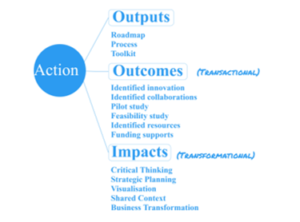
Figure 6. Analysis of roadmap conclusions as outputs, outcomes, and impacts (authors own 2021)
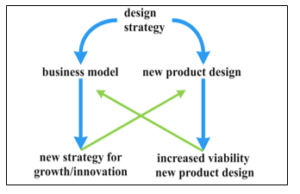
Figure 7. Garden gate model of flow between business and product strategies (authors own 2021)
The analysis of the additional four SMEs which was the extended research, was also carried out through visual mapping of all of the tools used throughout the process with the aim of detecting the nuanced differences in approach to business level and operational strategy development (Figure 9). Each of the tools highlighted in the state of play and action stages represent the questioning and data gathering activity. As noted in the literature review, strategic design is commonly associated with new product development. Considering the models from this context, and analyzing both approaches, it became apparent that the business strategy may result in a new product concept which then must undertake the operational strategy route to develop the product. Similarly, if a new product concept is developed, the new business model must go through the business strategy development, represented in the ‘Garden Gate’ model (Figure 7).
This is a potentially ongoing cycle of adaptability and innovation which reflects the flow between business and operations. By considering this in the broader context of business and operations, a model was created, the triple transverse model, (Figure 8) which provides a contextual representation of organizational strategy. In building on this, the activities that happen when applying the strategic design process across business and operational strategies were mapped. The author developed this with the addition of the knowledge creation and transfer points that occur between business and operations to produce the triple transverse framework (Figure 9). This is a key framework for the research and for our understanding of transformational impacts. It provides a contextual referece of how strategic design is applied and where the knowledge is acquired, distributed, and leveraged for ongoing adaptability to change and innovation within the organization.
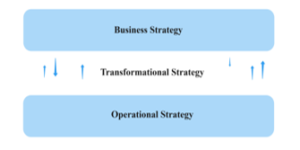
Figure 8. Triple transverse model of organizational strategy (authors own 2021)
5. Findings
The aim of the research is to contribute to the emergent field of strategic design as an approach to creating transformational impacts in organizations. The findings show that firstly, there are nuanced differences in the application of strategic design to develop business strategy or to develop an operational strategy. Capturing this through visual mapping and as the triple transverse framework will inform designers and managers of the approach and the specific tools to ensure all opportunities are presented when innovating. Secondly, innovation by its nature has unknown outcomes, having an indicative guide to outputs, potential outcomes and typical impacts will assist in communicating the type of results to expect from a strategic design engagement. Thirdly, there are specific points in the process which, if the appropriate structures and supports are in place, will produce an ongoing cycle of innovation and adaptability, a transformational impact for an organization.
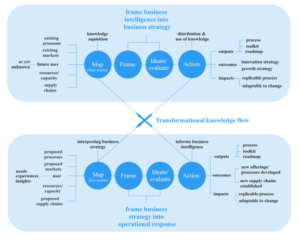
Figure 9. Triple transverse framework of strategic design applied to organizational strategy (authors own 2022)
The categorization of the results into outputs, outcomes and impacts was based on the physical material results classed as outputs, the tangible new direction as outcomes, and the tacit elements as impacts. Throughout the process SME1 framed the human factors and needs to assist in identifying the appropriate scanning technology. They were then introduced to the technical and financial resources within the research network to pursue a feasibility study which included a pilot of the technology. They also formulated a business strategy based on a framed vision for innovation and adaptability. The company introduced strategic meetings between management teams and identified the specific tools to use which could provide a neutral voice within family business management. SME2 identified a new application of a technology which was the most suitable in aligning with owner/managers skill sets. As part of the evaluation around viability, a growth plan was formulated and the steps to implementation added to the strategic roadmap. The company vision was framed and the strategy to achieve it was captured. A collaboration was initiated within in the newly identified market sector bringing together the technology and finance sector for a unique new offering. SME3 mapped out the user and business needs for improved interaction and engagement. A CRM system could then be identified appropriate to those needs. Improved business intelligence and decision making ability was framed into usable dashboards for the new system. The company introduced strategy sessions to continue working towards their operational goals with the use of the toolkit. All three SMEs who participated shared similar material outputs form the engagement such as; a four-stage process, toolkit, infographics, and roadmap. The outcomes varied pertaining to the nature of the innovation, but included results such as; an identified innovation, pilot study, feasibility study, identified collaboration, or new process introduced. The impacts are more difficult to communicate as they are of a tacit nature. However, based on the data collection and analysis we can gain insights to key elements such as: a developed understanding of human drivers and aspirations, the introduction of critical thinking, the use of visualization techniques, and the development of shared context.
In building on this, the triple transverse framework highlights that to measure the success factors of the transformational elements of strategic design engagements, we need to measure the structures within the organization that engage in strategy. The three approaches to strategy are identified as business strategy, operational strategy, and transformational strategy. The transformational strategy depends on the flow of knowledge exchange between management and operations. The research aimed to map the strategic design approach for business strategy development and operational strategy development. The objective was to identify the nuances of implementation from each other and from traditional business modelling. The findings from mapping the two processes across four SMEs, highlight that within a design strategy approach to operations, the eco system is mapped around the end user needs. This is to produce insights that can be translated into a meaningful product/service response. In a design strategy approach to business strategy development, the future user is unknown. If the process is restricted to existing users, it will limit the opportunities for transformational big system changes which may result in new ways of doing things, new market arenas or new product arenas to develop into. Therefore, the business eco system is mapped to identify areas of opportunity. The mapping includes the interplay between the business model, the existing user groups, the broad stakeholder needs, environments, processes, and experiences. This is a key insight to the nuanced difference in approaches. However, a cycle of interplay between business and operations is apparent. The strategic design approach to developing a business strategy reaches an ‘action’ stage, and a roadmap is produced. The roadmap provides the steps of implementation which forms the basis to develop the operational strategy. Equally when the operational strategy is developed and reaches the ‘action’ stage, the information and experiences of implementation are captured in the ‘state of play’ tools which informs the ongoing business strategy development. This is the ongoing cycle of knowledge within the organisation. The tools used by strategic designers support this process in a holistic way ensuring the capture of both tacit and explicit knowledge and the use of visual prompts and methods to easily exchange information and support the flow of knowledge. Critical thinking, for example, is supported using multiple dialectic tools which look at different perspectives of the same problem. Developing a shared context is supported with tools such as the roadmap tool which provides visual representation of complex data. The roadmap will mark the steps to implementation, participation scope, timelines, milestones, key decision points, resources required etc. This provides a shared context for all stakeholders when undertaking a new direction. It also enables quick changes to be made as everyone can see where the change is required and why and who it may impact. This cycle of innovation between business and operational strategy provides an adaptability and sustainability of a business model which is innovative, competitive, and responsive to change. This is the ongoing cycle of knowledge within the organization.
6. Conclusion
International strategies strive to promote sustainable business practices which are innovative and adaptive to change. The literature review highlights that understanding and leveraging the flow of knowledge within an organisation has a transformational impact. The gap in the knowledge is in understanding the structures that support this transformational dynamic. The research captured and analysed the specific nuances in the application of strategic design as an approach to developing innovation strategies, applied at both management and operational level. The findings have been developed into a triple transverse framework which demonstrates the application of the process and tools at both management and operational level. The framework also highlights where knowledge is acquired and disseminated forming an ongoing cycle of innovation and adaptability to change. This framework can be utilised in organisations globally, with design facilitation, across all sectors such as business, policy, education, and social applications. The framework contributes to the emergent strategic design sector providing a contextual reference for the application of strategic design for transformational impacts across an organization. The framework is currently being developed into a strategic design for innovation accredited training programme with an accompanying toolkit to supports the development of the transformational strategy of organizations.
Conflict of Interest
The authors declare no conflict of interest.
- Whelan, L., Kiernan, L., Morrissey, K., Deloughry, N., “Measuring the Success Factors of Strategic Design Implementation” IEEE Technology and Engineering Management Conference Europe 2021 https://doi.org/10.1109/TEMSCON-EUR52034.2021.9488632.
- Brown, T. “Change by Design” Journal of Product Innovation Managemnt 2019 https://doi.org/10.1111/j.1540-5885.2011.00806.x
- Grant R. Knowledge Management Theories. In: Augier M., Teece D.J. (eds) The Palgrave Encyclopedia of Strategic Management. Palgrave Macmillan, London.2018 https://doi.org/10.1057/978-1-137-00772-8_492
- GIPC Global Innovation Policy Centre , Chamber of Commerce. Washington DC 2021 URL: https://www.theglobalipcenter.com/
- Runde, D., “The OECD Faces a Decision Point in 2021” Centre for Strategic & International Studies. Washington DC 2020 URL: https://www.csis.org/analysis/oecd-faces-decision-point-2021
- EGFSN. Winning by Design. Dublin: Expert Group on Future Skills Needs. National Skills Council, Dublin 2017 URL: https://enterprise.gov.ie/en/Publications/Winning-by-Design.html
- Goddard J. Prof. Connecting Universities to Regional Growth. Brussels: European Commission. 2011 doi:10.1093/cje/bes005 http://ec.europa.eu/regional_policy/sources/docgener/presenta/universities2011/universities2011_en.pdf
- Verganti, R., Dell’Era. C., Design Driven Innovation. The Oxford Handbook of Innovation Management 2014 DOI: 10.1093/oxfordhb/9780199694945.013.006
- Calabretta, G., Gemser, G., Karpen, I., Strategic Design. Amsterdam: BIS Publishers 2018 ISBN 978 90 6369 445 6
- Wenger, E., McDermott R., Snyder W. Cultivating Communities of Practice. Harvard Business Review 2002. ISBN 1-57851-330-8
- Walsham, G., Interpreting Information Systems in Organization. Wiley New York. 1994 https://doi.org/10.1177/017084069401500614
- Mintzberg, Henry. The Rise and Fall of Strategic Planning. New York 1994 : Toronto :Free Press ; Maxwell Macmillan Canada
- Pankina, M., Axiology and Praxeology of Design Thinking. Knowledge E. Ural Federal University Russia 2020 DOI: 10.18502/kss.v4i11.7559
- Frayling, C. Research in Art and Design. London: Royal College of Art 1993. ISBN 1-874175-55-1