A Relational Database Model and Tools for Environmental Sound Recognition

Volume 2, Issue 6, Page No 145–150, 2017
Adv. Sci. Technol. Eng. Syst. J. 2(6), 145–150 (2017);
DOI: 10.25046/aj020618
Keywords: Database Design, Environmental Sound Recognition, Machine Learning
Environmental sound recognition (ESR) has become a hot topic in recent years. ESR is mainly based on machine learning (ML) and ML algorithms require first a training database. This database must comprise the sounds to be recognized and other related sounds. An ESR system needs the database during training, testing and in the production stage. In this paper, we present the design and pilot establishment of a database which will assists all researchers who want to establish an ESR system. This database employs relational database model which is not used for this task before. We explain in this paper design and implementation details of the database, data collection and load process. Besides we explain the tools and developed graphical user interface for a desktop application and for the WEB.
1. Introduction
This paper is an extension of work presented in 25th Signal Processing and Communications Applications Conference (SIU), 2017 [1]. The database design and implementation described in that paper was mainly for impulsive sound detection and the database was for a hazardous sound recognition application. Here the extended database is for all kinds of environmental sounds and it is aimed for all kinds of ESR applications.
Historically non-speech sound recognition has not received as much attention as automatic speech recognition (ASR). ASR has well established algorithms and databases while research has begun much earlier. Automatic ESR (AESR) is getting attraction since last two decades. We can list the following applications of AESR: In military, forensic and law enforcement domain there are studies on gunshot detection systems. In [2], a gunshot detection system is proposed. In [3], the gunshot blast is used to identify the caliber of the gun. In [4] and [5] ESR is used for robot navigation. ESR can be used for home monitoring. It can be used to assist elderly people living in their home alone [6], [7]. In [8], it is used for home automation. In [9] and [10], ESR is used for recognition of animal sounds. In the surveillance area, it is used for surveillance of road [11], public transport [12], elevator [13] and office corridor [14].designations. ESR system design is started with the training phase. How a sound database is used in training phase of an ESR system is explained in Figure 1.
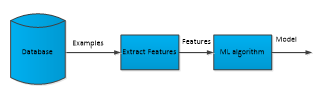
Figure 1: ESR system in training phase
During the development stage of an ESR system the desired ML algorithm must be trained with the sounds to be recognized. The database provides the sound clips to be recognized and other sound clips which are negative examples. After training, a model is developed and this model is used for testing. In Figure 1, the database provides positive and negative examples; features are inputs to the ML algorithm, ML algorithm using these features produce the model.
In Figure 2, testing phase of an ESR system is shown. In testing phase database provides the positive and negative examples, model produces the predictions about the examples provided and at last predictions are compared with the truth provided by the database and a performance rate is reached. According to this performance rate, ML algorithm or the feature set or other parameters of the ML algorithm may be needed to change. Then the whole training and testing phase start again. This process continues until an acceptable performance rate is reached.
After model creation and testing, this model is used in the production phase (Figure 3). In production phase, sounds come
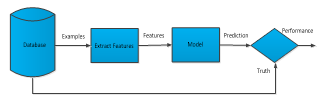
Figure 2: ESR system in testing phase
from the environment, model makes the predictions about the classes of sounds and we actually may not know the real truth. In production stage we may update sounds in database, update the model even we may change the ML algorithm. In each case we need the database.
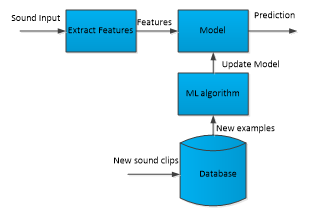
Figure 3: ESR system in production phase
This paper is organized as follows: In section II we will make a literature review of ESR databases. In section III a new relational database model for ESR systems will be explained. At the last, section IV, the contribution of this work and other planned activities will be explained.
2. Literature Review
In this section we will review the mostly referenced databases in ESR related papers. The structure of the databases will be explored; pros and cons of the structure will be argued if applicable.
One of the databases that have been mostly reverenced is Real World Computing Partnership’s (RWCP) non-speech database [15]. Using a standard single microphone, acoustic signals of about 100 types of sound sources were measured in an anechoic room as the dry source. By using the impulse response of three kinds of rooms, convolution with the 48 kHz sampling signal was carried out to reconstruct the sound signal in respective rooms. The database structure (structure of directories) and navigation to sounds is explained and provided by an HTML page as shown in Figure 4 for dry sources. As an ESR developer we must examine the structure of HTML file and find the desired sound clips. Maintenance of the data and usage is not so easy with this kind of structure.
Detection and Classification of Acoustic Scenes and Events (DCASE) is an official IEEE Audio and Acousti Acoustic Signal Processing challenge. For challenge a database is prepared and it is also a resource for ESR researchers. DCASE 2016 challenge consists of four tasks [16]. The goal of Task-2 is to detect sound events for example “bird singing”, “car passing by” that are present within an audio segment. To be prepared for the challenge two datasets, train and development are given. Train is used to create the model and development is to test the model.
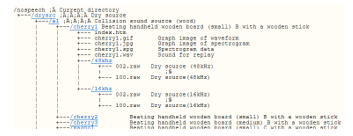
Figure 4: RWCP dry source sound clips structure
For training all sound files are in one directory and a readme file explains the details, such as sampling frequency, quantization bit depth, etc. For development dataset there is an annotation text file for each sound clip. Each .txt file contains information about the onset, offset, and event class for each event in the scene, separated by a tab.
DCASE 2017 Task-2 dataset contains “.yaml” files for annotations [17]. “.yaml” files (Figure 5) can be read by a Matlab command, so it is easy to work with these structured files.
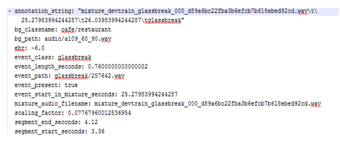
Figure 5 DCASE 2017 task-2 development dataset “yaml” file for glass break
Dataset for Environmental Sound Classification (ESC) contains two databases. There are 10 classes and each class has 40 clips in ESC-10 dataset. ESC-10 is subset of ESC-50 which contains 50 classes and each class has 40 clips. There is a readme file in which there is a line for each clip explaining the details of the clip for each dataset [18].
In [19], a dataset of annotated urban sound clips are recorded and taxonomy for urban sound sources is proposed. The dataset contains 10 sound classes with 18.5 hours of annotated sound event occurrences. The dataset contains a CSV file (Figure 6) explaining the details of each recording.
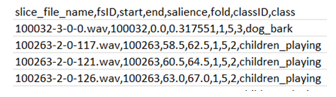
Figure 6: CSV file explaining Urbansound database
Another ESR database is http://www.desra.org. In [20], the aim of this database, details of the design and the sources used are explained. It is designed as multi-purpose database. The database contains variety of sounds from different events with thorough background information for each sound file. It is accessible from the Internet (The database is not fully functional at the moment). The database was designed considering for admin tasks and general user level tasks. Web front end provides the functionality for user level tasks.
http://www.auditorylab.org is [21] another database. This database was constructed by Carnegie Mellon University to examine the human ability to use sounds to understand what events are happening in the environment. All the sounds in the database are recorded in a controlled way. The laboratory and the recording media used are technically detailed. In the construction of database sounds are grouped by the event that makes the sound. Sounds of events like impact, rolling can be downloaded from this database.
3. Database Design
The databases reviewed in Section 2 are prepared for just resources for the development of ESR applications. Many of them provide the data and the files for correctly handling the data. In this context they are valuable resources for all ESR researchers. Desra [20], provides extra tools such as a web graphical user interface for searching and testing.
In the development process of an ESR system, some main functions training, testing and production explained in Section I. During this development process, many sound clips are used; new sound clips may be added or deleted. We deal with many features extracted from these sound clips; we create models using different ML algorithms. Then we compare the models; try to find best features and best ML algorithms. This loop continues. Our first goal in this database design is to help researchers as much as possible to ease the burden of handling data. The second goal is to help maintenance of the data. Our data is sound clips, features, algorithms and models. Addition, deletion, searching, annotation, backup and restore can be thought as the maintenance task.
3.1 Taxonomy of Environmental Sounds
We need a taxonomy to be able to store, search and retrieve the data from the database. During literature review we see two kinds of taxonomy. In the first taxonomy, the sounds can be grouped by the event that makes the sound. In Figure 7, grouping of sounds defined in [21] is seen.
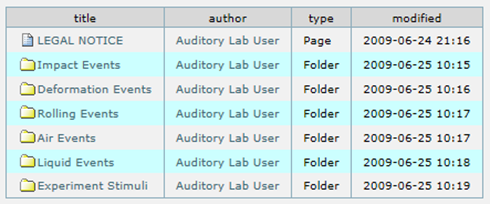
Figure 7: Grouping of sounds based on sound producing events [21]
Another hierarchical grouping is seen in Figure 8. This is also classified in the first taxonomy. This is the grouping defined in [22] based on sound producing events and the listeners’ description of the sound. Second taxonomy is based on the sound source [19][23]. The subset of the taxonomy defined in [23] is taken into consideration for urban sounds given in [19].
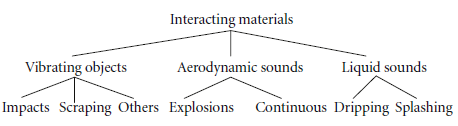
Figure 8: Grouping of sounds defined in [22]
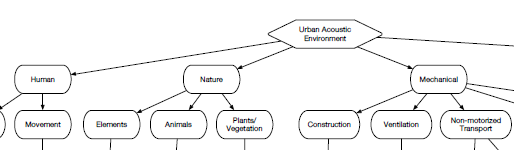
Figure 9 A part of the urban sound taxonomy defined in [19]
In our database design we decided to use taxonomy of the sounds like the one described in [19]. In [19] one of the aims is to go to as much detail as possible going down to low level sound sources. In our database design we don’t need the steeps between main branch and the leaves. For example instead of humanà movementàfootsteps, we use just as humanàfootsteps. In Figure 10, how the sounds are grouped in our database design is explained.
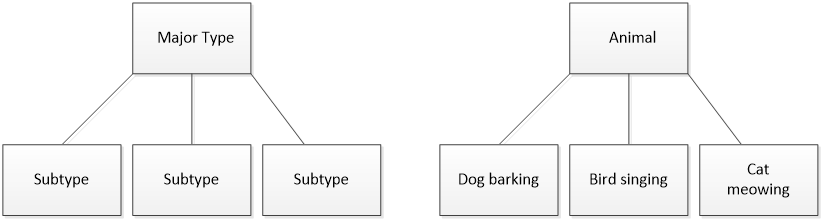
Figure 10: Environmental sounds grouping in the database
3.2 Non Functional Requirements of the Database
- There will be sound clips in the database. These sound clips will contain environmental sounds. Each sound clip can have more than one environmental sound. These environmental sound clips can belong to different major environmental sound types. Origin of these sound clips, such as own recording, from an internet site or from another database, should be entered to database. Recording details should be entered. Size, file type of sound clip and the path where the sound clips are recorded should be entered to the database.
- There should be major types, such as human, nature, animal, etc. There should be subtypes, such as dog bark, gunshot etc. and these must belong to major type. Start and end sample index or start/end time of these clips should be known.
- There will be environmental sound clips in the database. These clips should be extracted from sound clips defined in first paragraph. Each of these sound clips should have a subtype and it should be known from which sound clips it is extracted. Extraction method should be entered. If it is extracted by an algorithm the algorithm name otherwise as “manual” should be entered to database.
- Recording details should be entered to the database such as, sampling rate, quantization bit, channel size, etc.
- Background clips should be entered to the database. Each background clip should have a type. Each background clip should also have file type, file size, recording detail and the path where it is recorded.
3.3 Functional Requirements
- There should be scripts which will take algorithms as arguments and extract the environmental sounds from sound clips. These extracted clips should be entered to the database as explained in 2.
- There should be scripts which will embed environmental sound into noise clips at desired Signal to Noise Ratio (SNR) level.
- There should be scripts which will extract features from environmental sound clips and store to the database.
- The scripts, their help files, paths should be stored in the database.
3.4 Graphical User Interface (GUI) Requirements
- Administrators can use the GUI for meta data entrance, deletion and update such as major types, subtypes, recording details.
- Administrators can use the GUI for data load manually or using the data loader script.
- Researchers can use the GUI for searching and downloading the desired environmental sounds.
- Researchers can load their features and models to the database.
3.5 Database Implementation
The implemented database will include some data which can be stored by way of data types found in the standard database software and also sound files. These sound files will not be stored to database instead they will be stored in the operating system file structure and the path to this file is just recorded in the database.
Microsoft SQL 2008 Database Server is used to create tables. The tables and the relationships between them are shown in Figure 11. The scripts providing functionality are coded in Matlab 2011a. The files are stored in “mat” type when required.
For functional requirements the following scripts are coded using Matlab.
- Environmental Sound Detector: This script is an interface between algorithms that extracts environmental sounds from the sound clips. Different algorithms can be used here for extraction of the environmental sounds. The algorithms must conform to this script interface definition. This script takes the algorithm name that will be started and the environmental sound types which will be searched are given as arguments.
- Environmental Sound Embedder: This script takes the type of the environmental sound, noise type, SNR level and at last the number of required record count to be created. The script merges the environmental sound clip with the noise clip at the desired SNR level and records it to the database table.
- Feature Extractor: This script acts as an interface between feature extractors. It takes the path of the feature extractor from the features table, feature name and the environmental sound type from command line. After extracting features, it is saved as a mat file.
- Data Loader: To load data from other databases this script is used to interface with data loading scripts.
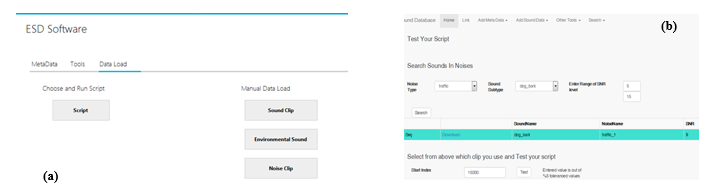
The GUI is developed using Microsoft Visual Studio with C# language. GUI has admin utilities and end user tools. In Figure 12(a), it is seen the part of GUI providing admin operations. These admin operations are additions and deletions of major types, subtypes and sampling information. Besides the GUI provides the administrators load data one by one or using a script to load as a batch.
The GUI provides the users some tools. The tools are for searching the database and testing their algorithms on the sound clips given by the database. Users can search the database to see the sound clips with desired type.
End users can search the database with noise clip type, sound clip type and with SNR interval then select a clip and copy it to their own computer. After finding the start index of the embedded environment sound clip, by writing the start index of this environmental sound to the edit box on the GUI and by clicking the test button, they can test their algorithm correctness. The WEB GUI for end user tools is seen in Figure 12(b).
After database and scripts implementation we loaded the data from Urbansound [19] database. Now many operations on the database can be done either using GUI or an SQL command line.
4. Conclusion
The lack of common database for environmental sound recognition is an important obstacle in front of the researchers. The development of and ESR system is a tough process during which someone have to deal with lots of sound clips with different types, algorithms and models. In this paper we explained a relational database model which will make the data handling easier. The database developed is different from other counterparts which are just providing the data. The relational database model described here provides easy maintenance as well as easy usage.
Although our goal of designing this database is for ESR, other areas that deal with environmental sounds can use it.
By improving the database by adding data from general databases mostly used and by adding more functionality we aim it to be a common database for research activities of ESR.
Conflict of Interest
The authors declare no conflict of interest.
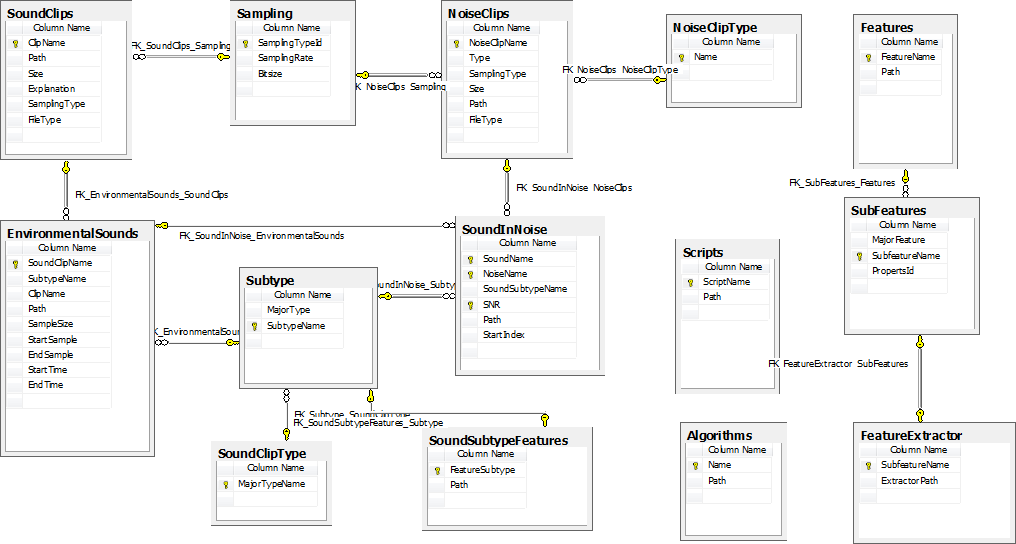
Figure 11 Database table diagram
Figure 12 (a) Desktop application GUI for administrators to data load (b) WEB GUI for end user tools
- Arslan and H. Canbolat, “A sound database development for environmental sound recognition”, Signal Processing and Communications Applications Conference (SIU), 25th, 2017.
- Ahmed, M. Uppal and A. Muhammad, “Improving Efficiency and Realibility of Gunshot Detection Systems”, IEEE, ICASSP 2013.
- Thumwarin, T. Matsuura and K. Yakoompai, “Audio forensics from gunshot for firearm identification”, Proc. IEEE 4th Joint International Conference on Information and Communication Technology Electronic and Electrical Engineering Tailand, pp. 1-4, 2014.
- Chu, S.;Narayanan, S.; Kuo, C.-C.J.;Mataric, M.J.:Where am I? Scene recognition for mobile robots using audio features, in 2006 IEEE Int.Conf. on Multimedia and Expo. IEEE, 885–888, 2006.
- Yamakawa, N.; Takahashi, T.; Kitahara, T.; Ogata, T.; Okuno,H.G.: Environmental sound recognition for robot audition using Matching-Pursuit, in Modern Approaches in Applied Intelligence, in K.G. Mehrotra, C.K. Mohan, J.C. Oh, P.K. Varshney & M. Ali (Eds), Springer Berlin Heidelberg, 1–10, 2011.
- Chen, J.; Kam, A.H., Zhang, J.; Liu, N.; Shue, L.: Bathroom activity monitoring based on sound, in Pervasive Computing, in H.W. Gellersen, R.Want, & A. Schmidt (Eds), Springer Berlin Heidelberg, 47–61, 2005.
- Vacher, M.; Portet, F.; Fleury, A.;Noury, N.: Challenges in the processing of audio channels for ambient assisted living, in 2010 12th IEEE Int. Conf. on e-Health Networking Applications and Services (Healthcom), IEEE, 330–337, 2010.
- Wang, J.-C.; Lee, H.-P.; Wang, J.-F.; Lin, C.-B.: Robust environmental sound recognition for home automation. Automation Science and Engineering, IEEE Transactions on, 5 (1) (2008), 25–31.
- Bardeli, R.;Wolff,D.; Kurth, F.; Koch,M.; Tauchert, K.-H.; Frommolt, K.-H.: Detecting bird sounds in a complex acoustic environment and application to bioacoustic monitoring. Pattern Recognit. Lett., 31 (12) (2010), 1524–1534.
- Weninger, F.; Schuller, B.; Audio recognition in the wild: static and dynamic classification on a real-world database of animal vocalizations. in 2011 IEEE Int.Conf. on Acoustics, Speech and Signal Processing (ICASSP), IEEE, 2011, 337–340.
- Foggia, A. Saggese, N. Strisciuglio, M. Vento, and N. Petkov. Car crashes detection by audio analysis in crowded roads. In Advanced Video and Signal Based Surveillance e (AVSS), 2015 12th IEEE International Conference on, pages 1-6, Aug 2015.
- Rouas, J. Louradour, and S. Ambellouis, “Audio Events Detection in Public Transport Vehicle,” Proc. of the 9th International IEEE Conference on Intelligent Transportation Systems, 2006.
- Radhakrishnan and A. Divakaran, “Systematic acquisition of audio classes for elevator surveillance,” in Image and Video Communications and Processing 2005, vol. 5685 of Proceedings of SPIE, pp. 64–71, March 2005.
- K. Atrey, N. C. Maddage, and M. S. Kankanhalli, “Audio based event detection for multimedia surveillance,” in Proceedings of the IEEE International Conference on Acoustics, Speech, and Signal Processing (ICASSP ’06), vol. 5, pp. 813–816, Toulouse, France, May 2006.
- Nakamura, S.; Hiyane, K.; Asano, F.; Nishiura, T.; Yamada, T.: Acoustical sound database in real environments for sound scene understanding and hands-free speech recognition, in LREC, 2000.
- DCASE 2016 WEB site available at: http://www.cs.tut.fi/sgn/arg/dcase2016/ (27.09.2017 last accessed)
- DCASE 2017 WEB site available at: http://www.cs.tut.fi/sgn/arg/dcase2017/ (27.09.2017 last accessed)
- J. Piczak, “ESC: Dataset for environmental sound classification”, Proceedings of the ACM International Conference on Multimedia, 2015.
- Justin Salamon , Christopher Jacoby , Juan Pablo Bello, A Dataset and Taxonomy for Urban Sound Research, Proceedings of the 22nd ACM international conference on Multimedia, November 03-07, 2014.
- Brian Gygi and Valeriy Shafiro, “Development of the Database for Environmental Sound Research and Aplication (DESRA):Design, Fuctionality and Retrieval Considerations”, EURASIP Journal on Audio, Speech, and Music Processing Volume 2010.
- http://www.auditorylab.org (28.09.2017 last accessed)
- W. Gaver, “What in the world do we hear? An ecological approach to auditory event perception,” Ecological Psychology, vol. 5, no. 1, pp. 1–29, 1993.
- L. Brown, J. Kang, and T. Gjestland. Towards standardization in soundscape preference assessment. Applied Acoustics, 72(6):387-392, 2011
- Vikas Thammanna Gowda, Landis Humphrey, Aiden Kadoch, YinBo Chen, Olivia Roberts, "Multi Attribute Stratified Sampling: An Automated Framework for Privacy-Preserving Healthcare Data Publishing with Multiple Sensitive Attributes", Advances in Science, Technology and Engineering Systems Journal, vol. 11, no. 1, pp. 51–68, 2026. doi: 10.25046/aj110106
- David Degbor, Haiping Xu, Pratiksha Singh, Shannon Gibbs, Donghui Yan, "StradNet: Automated Structural Adaptation for Efficient Deep Neural Network Design", Advances in Science, Technology and Engineering Systems Journal, vol. 10, no. 6, pp. 29–41, 2025. doi: 10.25046/aj100603
- Glender Brás, Samara Leal, Breno Sousa, Gabriel Paes, Cleberson Junior, João Souza, Rafael Assis, Tamires Marques, Thiago Teles Calazans Silva, "Machine Learning Methods for University Student Performance Prediction in Basic Skills based on Psychometric Profile", Advances in Science, Technology and Engineering Systems Journal, vol. 10, no. 4, pp. 1–13, 2025. doi: 10.25046/aj100401
- khawla Alhasan, "Predictive Analytics in Marketing: Evaluating its Effectiveness in Driving Customer Engagement", Advances in Science, Technology and Engineering Systems Journal, vol. 10, no. 3, pp. 45–51, 2025. doi: 10.25046/aj100306
- Khalifa Sylla, Birahim Babou, Mama Amar, Samuel Ouya, "Impact of Integrating Chatbots into Digital Universities Platforms on the Interactions between the Learner and the Educational Content", Advances in Science, Technology and Engineering Systems Journal, vol. 10, no. 1, pp. 13–19, 2025. doi: 10.25046/aj100103
- Ahmet Emin Ünal, Halit Boyar, Burcu Kuleli Pak, Vehbi Çağrı Güngör, "Utilizing 3D models for the Prediction of Work Man-Hour in Complex Industrial Products using Machine Learning", Advances in Science, Technology and Engineering Systems Journal, vol. 9, no. 6, pp. 01–11, 2024. doi: 10.25046/aj090601
- Haruki Murakami, Takuma Miwa, Kosuke Shima, Takanobu Otsuka, "Proposal and Implementation of Seawater Temperature Prediction Model using Transfer Learning Considering Water Depth Differences", Advances in Science, Technology and Engineering Systems Journal, vol. 9, no. 4, pp. 01–06, 2024. doi: 10.25046/aj090401
- Brandon Wetzel, Haiping Xu, "Deploying Trusted and Immutable Predictive Models on a Public Blockchain Network", Advances in Science, Technology and Engineering Systems Journal, vol. 9, no. 3, pp. 72–83, 2024. doi: 10.25046/aj090307
- Anirudh Mazumder, Kapil Panda, "Leveraging Machine Learning for a Comprehensive Assessment of PFAS Nephrotoxicity", Advances in Science, Technology and Engineering Systems Journal, vol. 9, no. 3, pp. 62–71, 2024. doi: 10.25046/aj090306
- Taichi Ito, Ken’ichi Minamino, Shintaro Umeki, "Visualization of the Effect of Additional Fertilization on Paddy Rice by Time-Series Analysis of Vegetation Indices using UAV and Minimizing the Number of Monitoring Days for its Workload Reduction", Advances in Science, Technology and Engineering Systems Journal, vol. 9, no. 3, pp. 29–40, 2024. doi: 10.25046/aj090303
- Henry Toal, Michelle Wilber, Getu Hailu, Arghya Kusum Das, "Evaluation of Various Deep Learning Models for Short-Term Solar Forecasting in the Arctic using a Distributed Sensor Network", Advances in Science, Technology and Engineering Systems Journal, vol. 9, no. 3, pp. 12–28, 2024. doi: 10.25046/aj090302
- Tinofirei Museba, Koenraad Vanhoof, "An Adaptive Heterogeneous Ensemble Learning Model for Credit Card Fraud Detection", Advances in Science, Technology and Engineering Systems Journal, vol. 9, no. 3, pp. 01–11, 2024. doi: 10.25046/aj090301
- Toya Acharya, Annamalai Annamalai, Mohamed F Chouikha, "Optimizing the Performance of Network Anomaly Detection Using Bidirectional Long Short-Term Memory (Bi-LSTM) and Over-sampling for Imbalance Network Traffic Data", Advances in Science, Technology and Engineering Systems Journal, vol. 8, no. 6, pp. 144–154, 2023. doi: 10.25046/aj080614
- Renhe Chi, "Comparative Study of J48 Decision Tree and CART Algorithm for Liver Cancer Symptom Analysis Using Data from Carnegie Mellon University", Advances in Science, Technology and Engineering Systems Journal, vol. 8, no. 6, pp. 57–64, 2023. doi: 10.25046/aj080607
- Ng Kah Kit, Hafeez Ullah Amin, Kher Hui Ng, Jessica Price, Ahmad Rauf Subhani, "EEG Feature Extraction based on Fast Fourier Transform and Wavelet Analysis for Classification of Mental Stress Levels using Machine Learning", Advances in Science, Technology and Engineering Systems Journal, vol. 8, no. 6, pp. 46–56, 2023. doi: 10.25046/aj080606
- Kitipoth Wasayangkool, Kanabadee Srisomboon, Chatree Mahatthanajatuphat, Wilaiporn Lee, "Accuracy Improvement-Based Wireless Sensor Estimation Technique with Machine Learning Algorithms for Volume Estimation on the Sealed Box", Advances in Science, Technology and Engineering Systems Journal, vol. 8, no. 3, pp. 108–117, 2023. doi: 10.25046/aj080313
- Chaiyaporn Khemapatapan, Thammanoon Thepsena, "Forecasting the Weather behind Pa Sak Jolasid Dam using Quantum Machine Learning", Advances in Science, Technology and Engineering Systems Journal, vol. 8, no. 3, pp. 54–62, 2023. doi: 10.25046/aj080307
- Der-Jiun Pang, "Hybrid Machine Learning Model Performance in IT Project Cost and Duration Prediction", Advances in Science, Technology and Engineering Systems Journal, vol. 8, no. 2, pp. 108–115, 2023. doi: 10.25046/aj080212
- Paulo Gustavo Quinan, Issa Traoré, Isaac Woungang, Ujwal Reddy Gondhi, Chenyang Nie, "Hybrid Intrusion Detection Using the AEN Graph Model", Advances in Science, Technology and Engineering Systems Journal, vol. 8, no. 2, pp. 44–63, 2023. doi: 10.25046/aj080206
- Ossama Embarak, "Multi-Layered Machine Learning Model For Mining Learners Academic Performance", Advances in Science, Technology and Engineering Systems Journal, vol. 6, no. 1, pp. 850–861, 2021. doi: 10.25046/aj060194
- Roy D Gregori Ayon, Md. Sanaullah Rabbi, Umme Habiba, Maoyejatun Hasana, "Bangla Speech Emotion Detection using Machine Learning Ensemble Methods", Advances in Science, Technology and Engineering Systems Journal, vol. 7, no. 6, pp. 70–76, 2022. doi: 10.25046/aj070608
- Deeptaanshu Kumar, Ajmal Thanikkal, Prithvi Krishnamurthy, Xinlei Chen, Pei Zhang, "Analysis of Different Supervised Machine Learning Methods for Accelerometer-Based Alcohol Consumption Detection from Physical Activity", Advances in Science, Technology and Engineering Systems Journal, vol. 7, no. 4, pp. 147–154, 2022. doi: 10.25046/aj070419
- Zhumakhan Nazir, Temirlan Zarymkanov, Jurn-Guy Park, "A Machine Learning Model Selection Considering Tradeoffs between Accuracy and Interpretability", Advances in Science, Technology and Engineering Systems Journal, vol. 7, no. 4, pp. 72–78, 2022. doi: 10.25046/aj070410
- Ayoub Benchabana, Mohamed-Khireddine Kholladi, Ramla Bensaci, Belal Khaldi, "A Supervised Building Detection Based on Shadow using Segmentation and Texture in High-Resolution Images", Advances in Science, Technology and Engineering Systems Journal, vol. 7, no. 3, pp. 166–173, 2022. doi: 10.25046/aj070319
- Osaretin Eboya, Julia Binti Juremi, "iDRP Framework: An Intelligent Malware Exploration Framework for Big Data and Internet of Things (IoT) Ecosystem", Advances in Science, Technology and Engineering Systems Journal, vol. 6, no. 5, pp. 185–202, 2021. doi: 10.25046/aj060521
- Arwa Alghamdi, Graham Healy, Hoda Abdelhafez, "Machine Learning Algorithms for Real Time Blind Audio Source Separation with Natural Language Detection", Advances in Science, Technology and Engineering Systems Journal, vol. 6, no. 5, pp. 125–140, 2021. doi: 10.25046/aj060515
- Baida Ouafae, Louzar Oumaima, Ramdi Mariam, Lyhyaoui Abdelouahid, "Survey on Novelty Detection using Machine Learning Techniques", Advances in Science, Technology and Engineering Systems Journal, vol. 6, no. 5, pp. 73–82, 2021. doi: 10.25046/aj060510
- Radwan Qasrawi, Stephanny VicunaPolo, Diala Abu Al-Halawa, Sameh Hallaq, Ziad Abdeen, "Predicting School Children Academic Performance Using Machine Learning Techniques", Advances in Science, Technology and Engineering Systems Journal, vol. 6, no. 5, pp. 08–15, 2021. doi: 10.25046/aj060502
- Zhiyuan Chen, Howe Seng Goh, Kai Ling Sin, Kelly Lim, Nicole Ka Hei Chung, Xin Yu Liew, "Automated Agriculture Commodity Price Prediction System with Machine Learning Techniques", Advances in Science, Technology and Engineering Systems Journal, vol. 6, no. 4, pp. 376–384, 2021. doi: 10.25046/aj060442
- Hathairat Ketmaneechairat, Maleerat Maliyaem, Chalermpong Intarat, "Kamphaeng Saen Beef Cattle Identification Approach using Muzzle Print Image", Advances in Science, Technology and Engineering Systems Journal, vol. 6, no. 4, pp. 110–122, 2021. doi: 10.25046/aj060413
- Md Mahmudul Hasan, Nafiul Hasan, Dil Afroz, Ferdaus Anam Jibon, Md. Arman Hossen, Md. Shahrier Parvage, Jakaria Sulaiman Aongkon, "Electroencephalogram Based Medical Biometrics using Machine Learning: Assessment of Different Color Stimuli", Advances in Science, Technology and Engineering Systems Journal, vol. 6, no. 3, pp. 27–34, 2021. doi: 10.25046/aj060304
- Dominik Štursa, Daniel Honc, Petr Doležel, "Efficient 2D Detection and Positioning of Complex Objects for Robotic Manipulation Using Fully Convolutional Neural Network", Advances in Science, Technology and Engineering Systems Journal, vol. 6, no. 2, pp. 915–920, 2021. doi: 10.25046/aj0602104
- Md Mahmudul Hasan, Nafiul Hasan, Mohammed Saud A Alsubaie, "Development of an EEG Controlled Wheelchair Using Color Stimuli: A Machine Learning Based Approach", Advances in Science, Technology and Engineering Systems Journal, vol. 6, no. 2, pp. 754–762, 2021. doi: 10.25046/aj060287
- Antoni Wibowo, Inten Yasmina, Antoni Wibowo, "Food Price Prediction Using Time Series Linear Ridge Regression with The Best Damping Factor", Advances in Science, Technology and Engineering Systems Journal, vol. 6, no. 2, pp. 694–698, 2021. doi: 10.25046/aj060280
- Javier E. Sánchez-Galán, Fatima Rangel Barranco, Jorge Serrano Reyes, Evelyn I. Quirós-McIntire, José Ulises Jiménez, José R. Fábrega, "Using Supervised Classification Methods for the Analysis of Multi-spectral Signatures of Rice Varieties in Panama", Advances in Science, Technology and Engineering Systems Journal, vol. 6, no. 2, pp. 552–558, 2021. doi: 10.25046/aj060262
- Phillip Blunt, Bertram Haskins, "A Model for the Application of Automatic Speech Recognition for Generating Lesson Summaries", Advances in Science, Technology and Engineering Systems Journal, vol. 6, no. 2, pp. 526–540, 2021. doi: 10.25046/aj060260
- Sebastianus Bara Primananda, Sani Muhamad Isa, "Forecasting Gold Price in Rupiah using Multivariate Analysis with LSTM and GRU Neural Networks", Advances in Science, Technology and Engineering Systems Journal, vol. 6, no. 2, pp. 245–253, 2021. doi: 10.25046/aj060227
- Byeongwoo Kim, Jongkyu Lee, "Fault Diagnosis and Noise Robustness Comparison of Rotating Machinery using CWT and CNN", Advances in Science, Technology and Engineering Systems Journal, vol. 6, no. 1, pp. 1279–1285, 2021. doi: 10.25046/aj0601146
- Md Mahmudul Hasan, Nafiul Hasan, Mohammed Saud A Alsubaie, Md Mostafizur Rahman Komol, "Diagnosis of Tobacco Addiction using Medical Signal: An EEG-based Time-Frequency Domain Analysis Using Machine Learning", Advances in Science, Technology and Engineering Systems Journal, vol. 6, no. 1, pp. 842–849, 2021. doi: 10.25046/aj060193
- Reem Bayari, Ameur Bensefia, "Text Mining Techniques for Cyberbullying Detection: State of the Art", Advances in Science, Technology and Engineering Systems Journal, vol. 6, no. 1, pp. 783–790, 2021. doi: 10.25046/aj060187
- Inna Valieva, Iurii Voitenko, Mats Björkman, Johan Åkerberg, Mikael Ekström, "Multiple Machine Learning Algorithms Comparison for Modulation Type Classification Based on Instantaneous Values of the Time Domain Signal and Time Series Statistics Derived from Wavelet Transform", Advances in Science, Technology and Engineering Systems Journal, vol. 6, no. 1, pp. 658–671, 2021. doi: 10.25046/aj060172
- Carlos López-Bermeo, Mauricio González-Palacio, Lina Sepúlveda-Cano, Rubén Montoya-Ramírez, César Hidalgo-Montoya, "Comparison of Machine Learning Parametric and Non-Parametric Techniques for Determining Soil Moisture: Case Study at Las Palmas Andean Basin", Advances in Science, Technology and Engineering Systems Journal, vol. 6, no. 1, pp. 636–650, 2021. doi: 10.25046/aj060170
- Ndiatenda Ndou, Ritesh Ajoodha, Ashwini Jadhav, "A Case Study to Enhance Student Support Initiatives Through Forecasting Student Success in Higher-Education", Advances in Science, Technology and Engineering Systems Journal, vol. 6, no. 1, pp. 230–241, 2021. doi: 10.25046/aj060126
- Lonia Masangu, Ashwini Jadhav, Ritesh Ajoodha, "Predicting Student Academic Performance Using Data Mining Techniques", Advances in Science, Technology and Engineering Systems Journal, vol. 6, no. 1, pp. 153–163, 2021. doi: 10.25046/aj060117
- Sara Ftaimi, Tomader Mazri, "Handling Priority Data in Smart Transportation System by using Support Vector Machine Algorithm", Advances in Science, Technology and Engineering Systems Journal, vol. 5, no. 6, pp. 1422–1427, 2020. doi: 10.25046/aj0506172
- Othmane Rahmaoui, Kamal Souali, Mohammed Ouzzif, "Towards a Documents Processing Tool using Traceability Information Retrieval and Content Recognition Through Machine Learning in a Big Data Context", Advances in Science, Technology and Engineering Systems Journal, vol. 5, no. 6, pp. 1267–1277, 2020. doi: 10.25046/aj0506151
- Puttakul Sakul-Ung, Amornvit Vatcharaphrueksadee, Pitiporn Ruchanawet, Kanin Kearpimy, Hathairat Ketmaneechairat, Maleerat Maliyaem, "Overmind: A Collaborative Decentralized Machine Learning Framework", Advances in Science, Technology and Engineering Systems Journal, vol. 5, no. 6, pp. 280–289, 2020. doi: 10.25046/aj050634
- Pamela Zontone, Antonio Affanni, Riccardo Bernardini, Leonida Del Linz, Alessandro Piras, Roberto Rinaldo, "Supervised Learning Techniques for Stress Detection in Car Drivers", Advances in Science, Technology and Engineering Systems Journal, vol. 5, no. 6, pp. 22–29, 2020. doi: 10.25046/aj050603
- Kodai Kitagawa, Koji Matsumoto, Kensuke Iwanaga, Siti Anom Ahmad, Takayuki Nagasaki, Sota Nakano, Mitsumasa Hida, Shogo Okamatsu, Chikamune Wada, "Posture Recognition Method for Caregivers during Postural Change of a Patient on a Bed using Wearable Sensors", Advances in Science, Technology and Engineering Systems Journal, vol. 5, no. 5, pp. 1093–1098, 2020. doi: 10.25046/aj0505133
- Khalid A. AlAfandy, Hicham Omara, Mohamed Lazaar, Mohammed Al Achhab, "Using Classic Networks for Classifying Remote Sensing Images: Comparative Study", Advances in Science, Technology and Engineering Systems Journal, vol. 5, no. 5, pp. 770–780, 2020. doi: 10.25046/aj050594
- Khalid A. AlAfandy, Hicham, Mohamed Lazaar, Mohammed Al Achhab, "Investment of Classic Deep CNNs and SVM for Classifying Remote Sensing Images", Advances in Science, Technology and Engineering Systems Journal, vol. 5, no. 5, pp. 652–659, 2020. doi: 10.25046/aj050580
- Rajesh Kumar, Geetha S, "Malware Classification Using XGboost-Gradient Boosted Decision Tree", Advances in Science, Technology and Engineering Systems Journal, vol. 5, no. 5, pp. 536–549, 2020. doi: 10.25046/aj050566
- Nghia Duong-Trung, Nga Quynh Thi Tang, Xuan Son Ha, "Interpretation of Machine Learning Models for Medical Diagnosis", Advances in Science, Technology and Engineering Systems Journal, vol. 5, no. 5, pp. 469–477, 2020. doi: 10.25046/aj050558
- Oumaima Terrada, Soufiane Hamida, Bouchaib Cherradi, Abdelhadi Raihani, Omar Bouattane, "Supervised Machine Learning Based Medical Diagnosis Support System for Prediction of Patients with Heart Disease", Advances in Science, Technology and Engineering Systems Journal, vol. 5, no. 5, pp. 269–277, 2020. doi: 10.25046/aj050533
- Haytham Azmi, "FPGA Acceleration of Tree-based Learning Algorithms", Advances in Science, Technology and Engineering Systems Journal, vol. 5, no. 5, pp. 237–244, 2020. doi: 10.25046/aj050529
- Hicham Moujahid, Bouchaib Cherradi, Oussama El Gannour, Lhoussain Bahatti, Oumaima Terrada, Soufiane Hamida, "Convolutional Neural Network Based Classification of Patients with Pneumonia using X-ray Lung Images", Advances in Science, Technology and Engineering Systems Journal, vol. 5, no. 5, pp. 167–175, 2020. doi: 10.25046/aj050522
- Young-Jin Park, Hui-Sup Cho, "A Method for Detecting Human Presence and Movement Using Impulse Radar", Advances in Science, Technology and Engineering Systems Journal, vol. 5, no. 4, pp. 770–775, 2020. doi: 10.25046/aj050491
- Anouar Bachar, Noureddine El Makhfi, Omar EL Bannay, "Machine Learning for Network Intrusion Detection Based on SVM Binary Classification Model", Advances in Science, Technology and Engineering Systems Journal, vol. 5, no. 4, pp. 638–644, 2020. doi: 10.25046/aj050476
- Adonis Santos, Patricia Angela Abu, Carlos Oppus, Rosula Reyes, "Real-Time Traffic Sign Detection and Recognition System for Assistive Driving", Advances in Science, Technology and Engineering Systems Journal, vol. 5, no. 4, pp. 600–611, 2020. doi: 10.25046/aj050471
- Amar Choudhary, Deependra Pandey, Saurabh Bhardwaj, "Overview of Solar Radiation Estimation Techniques with Development of Solar Radiation Model Using Artificial Neural Network", Advances in Science, Technology and Engineering Systems Journal, vol. 5, no. 4, pp. 589–593, 2020. doi: 10.25046/aj050469
- Maroua Abdellaoui, Dounia Daghouj, Mohammed Fattah, Younes Balboul, Said Mazer, Moulhime El Bekkali, "Artificial Intelligence Approach for Target Classification: A State of the Art", Advances in Science, Technology and Engineering Systems Journal, vol. 5, no. 4, pp. 445–456, 2020. doi: 10.25046/aj050453
- Shahab Pasha, Jan Lundgren, Christian Ritz, Yuexian Zou, "Distributed Microphone Arrays, Emerging Speech and Audio Signal Processing Platforms: A Review", Advances in Science, Technology and Engineering Systems Journal, vol. 5, no. 4, pp. 331–343, 2020. doi: 10.25046/aj050439
- Ilias Kalathas, Michail Papoutsidakis, Chistos Drosos, "Optimization of the Procedures for Checking the Functionality of the Greek Railways: Data Mining and Machine Learning Approach to Predict Passenger Train Immobilization", Advances in Science, Technology and Engineering Systems Journal, vol. 5, no. 4, pp. 287–295, 2020. doi: 10.25046/aj050435
- Yosaphat Catur Widiyono, Sani Muhamad Isa, "Utilization of Data Mining to Predict Non-Performing Loan", Advances in Science, Technology and Engineering Systems Journal, vol. 5, no. 4, pp. 252–256, 2020. doi: 10.25046/aj050431
- Hai Thanh Nguyen, Nhi Yen Kim Phan, Huong Hoang Luong, Trung Phuoc Le, Nghi Cong Tran, "Efficient Discretization Approaches for Machine Learning Techniques to Improve Disease Classification on Gut Microbiome Composition Data", Advances in Science, Technology and Engineering Systems Journal, vol. 5, no. 3, pp. 547–556, 2020. doi: 10.25046/aj050368
- Ruba Obiedat, "Risk Management: The Case of Intrusion Detection using Data Mining Techniques", Advances in Science, Technology and Engineering Systems Journal, vol. 5, no. 3, pp. 529–535, 2020. doi: 10.25046/aj050365
- Krina B. Gabani, Mayuri A. Mehta, Stephanie Noronha, "Racial Categorization Methods: A Survey", Advances in Science, Technology and Engineering Systems Journal, vol. 5, no. 3, pp. 388–401, 2020. doi: 10.25046/aj050350
- Dennis Luqman, Sani Muhamad Isa, "Machine Learning Model to Identify the Optimum Database Query Execution Platform on GPU Assisted Database", Advances in Science, Technology and Engineering Systems Journal, vol. 5, no. 3, pp. 214–225, 2020. doi: 10.25046/aj050328
- Gillala Rekha, Shaveta Malik, Amit Kumar Tyagi, Meghna Manoj Nair, "Intrusion Detection in Cyber Security: Role of Machine Learning and Data Mining in Cyber Security", Advances in Science, Technology and Engineering Systems Journal, vol. 5, no. 3, pp. 72–81, 2020. doi: 10.25046/aj050310
- Ahmed EL Orche, Mohamed Bahaj, "Approach to Combine an Ontology-Based on Payment System with Neural Network for Transaction Fraud Detection", Advances in Science, Technology and Engineering Systems Journal, vol. 5, no. 2, pp. 551–560, 2020. doi: 10.25046/aj050269
- Bokyoon Na, Geoffrey C Fox, "Object Classifications by Image Super-Resolution Preprocessing for Convolutional Neural Networks", Advances in Science, Technology and Engineering Systems Journal, vol. 5, no. 2, pp. 476–483, 2020. doi: 10.25046/aj050261
- Johannes Linden, Xutao Wang, Stefan Forsstrom, Tingting Zhang, "Productify News Article Classification Model with Sagemaker", Advances in Science, Technology and Engineering Systems Journal, vol. 5, no. 2, pp. 13–18, 2020. doi: 10.25046/aj050202
- Michael Wenceslaus Putong, Suharjito, "Classification Model of Contact Center Customers Emails Using Machine Learning", Advances in Science, Technology and Engineering Systems Journal, vol. 5, no. 1, pp. 174–182, 2020. doi: 10.25046/aj050123
- Evaristus Didik Madyatmadja, Chelsea Adora, "Designing and Using a MySQL Database for Human Resource Management", Advances in Science, Technology and Engineering Systems Journal, vol. 4, no. 6, pp. 285–290, 2019. doi: 10.25046/aj040636
- Rehan Ullah Khan, Ali Mustafa Qamar, Mohammed Hadwan, "Quranic Reciter Recognition: A Machine Learning Approach", Advances in Science, Technology and Engineering Systems Journal, vol. 4, no. 6, pp. 173–176, 2019. doi: 10.25046/aj040621
- Mehdi Guessous, Lahbib Zenkouar, "An ML-optimized dRRM Solution for IEEE 802.11 Enterprise Wlan Networks", Advances in Science, Technology and Engineering Systems Journal, vol. 4, no. 6, pp. 19–31, 2019. doi: 10.25046/aj040603
- Toshiyasu Kato, Yuki Terawaki, Yasushi Kodama, Teruhiko Unoki, Yasushi Kambayashi, "Estimating Academic results from Trainees’ Activities in Programming Exercises Using Four Types of Machine Learning", Advances in Science, Technology and Engineering Systems Journal, vol. 4, no. 5, pp. 321–326, 2019. doi: 10.25046/aj040541
- Nindhia Hutagaol, Suharjito, "Predictive Modelling of Student Dropout Using Ensemble Classifier Method in Higher Education", Advances in Science, Technology and Engineering Systems Journal, vol. 4, no. 4, pp. 206–211, 2019. doi: 10.25046/aj040425
- Fernando Hernández, Roberto Vega, Freddy Tapia, Derlin Morocho, Walter Fuertes, "Early Detection of Alzheimer’s Using Digital Image Processing Through Iridology, An Alternative Method", Advances in Science, Technology and Engineering Systems Journal, vol. 4, no. 3, pp. 126–137, 2019. doi: 10.25046/aj040317
- Abba Suganda Girsang, Andi Setiadi Manalu, Ko-Wei Huang, "Feature Selection for Musical Genre Classification Using a Genetic Algorithm", Advances in Science, Technology and Engineering Systems Journal, vol. 4, no. 2, pp. 162–169, 2019. doi: 10.25046/aj040221
- Konstantin Mironov, Ruslan Gayanov, Dmiriy Kurennov, "Observing and Forecasting the Trajectory of the Thrown Body with use of Genetic Programming", Advances in Science, Technology and Engineering Systems Journal, vol. 4, no. 1, pp. 248–257, 2019. doi: 10.25046/aj040124
- Bok Gyu Han, Hyeon Seok Yang, Ho Gyeong Lee, Young Shik Moon, "Low Contrast Image Enhancement Using Convolutional Neural Network with Simple Reflection Model", Advances in Science, Technology and Engineering Systems Journal, vol. 4, no. 1, pp. 159–164, 2019. doi: 10.25046/aj040115
- Zheng Xie, Chaitanya Gadepalli, Farideh Jalalinajafabadi, Barry M.G. Cheetham, Jarrod J. Homer, "Machine Learning Applied to GRBAS Voice Quality Assessment", Advances in Science, Technology and Engineering Systems Journal, vol. 3, no. 6, pp. 329–338, 2018. doi: 10.25046/aj030641
- Richard Osei Agjei, Emmanuel Awuni Kolog, Daniel Dei, Juliet Yayra Tengey, "Emotional Impact of Suicide on Active Witnesses: Predicting with Machine Learning", Advances in Science, Technology and Engineering Systems Journal, vol. 3, no. 5, pp. 501–509, 2018. doi: 10.25046/aj030557
- Sudipta Saha, Aninda Saha, Zubayr Khalid, Pritam Paul, Shuvam Biswas, "A Machine Learning Framework Using Distinctive Feature Extraction for Hand Gesture Recognition", Advances in Science, Technology and Engineering Systems Journal, vol. 3, no. 5, pp. 72–81, 2018. doi: 10.25046/aj030510
- Charles Frank, Asmail Habach, Raed Seetan, Abdullah Wahbeh, "Predicting Smoking Status Using Machine Learning Algorithms and Statistical Analysis", Advances in Science, Technology and Engineering Systems Journal, vol. 3, no. 2, pp. 184–189, 2018. doi: 10.25046/aj030221
- Sehla Loussaief, Afef Abdelkrim, "Machine Learning framework for image classification", Advances in Science, Technology and Engineering Systems Journal, vol. 3, no. 1, pp. 1–10, 2018. doi: 10.25046/aj030101
- Ruijian Zhang, Deren Li, "Applying Machine Learning and High Performance Computing to Water Quality Assessment and Prediction", Advances in Science, Technology and Engineering Systems Journal, vol. 2, no. 6, pp. 285–289, 2017. doi: 10.25046/aj020635
- Batoul Haidar, Maroun Chamoun, Ahmed Serhrouchni, "A Multilingual System for Cyberbullying Detection: Arabic Content Detection using Machine Learning", Advances in Science, Technology and Engineering Systems Journal, vol. 2, no. 6, pp. 275–284, 2017. doi: 10.25046/aj020634
- Loretta Henderson Cheeks, Ashraf Gaffar, Mable Johnson Moore, "Modeling Double Subjectivity for Gaining Programmable Insights: Framing the Case of Uber", Advances in Science, Technology and Engineering Systems Journal, vol. 2, no. 3, pp. 1677–1692, 2017. doi: 10.25046/aj0203209
- Moses Ekpenyong, Daniel Asuquo, Samuel Robinson, Imeh Umoren, Etebong Isong, "Soft Handoff Evaluation and Efficient Access Network Selection in Next Generation Cellular Systems", Advances in Science, Technology and Engineering Systems Journal, vol. 2, no. 3, pp. 1616–1625, 2017. doi: 10.25046/aj0203201
- Rogerio Gomes Lopes, Marcelo Ladeira, Rommel Novaes Carvalho, "Use of machine learning techniques in the prediction of credit recovery", Advances in Science, Technology and Engineering Systems Journal, vol. 2, no. 3, pp. 1432–1442, 2017. doi: 10.25046/aj0203179
- Daniel Fraunholz, Marc Zimmermann, Hans Dieter Schotten, "Towards Deployment Strategies for Deception Systems", Advances in Science, Technology and Engineering Systems Journal, vol. 2, no. 3, pp. 1272–1279, 2017. doi: 10.25046/aj0203161
- Arsim Susuri, Mentor Hamiti, Agni Dika, "Detection of Vandalism in Wikipedia using Metadata Features – Implementation in Simple English and Albanian sections", Advances in Science, Technology and Engineering Systems Journal, vol. 2, no. 4, pp. 1–7, 2017. doi: 10.25046/aj020401
- Adewale Opeoluwa Ogunde, Ajibola Rasaq Olanbo, "A Web-Based Decision Support System for Evaluating Soil Suitability for Cassava Cultivation", Advances in Science, Technology and Engineering Systems Journal, vol. 2, no. 1, pp. 42–50, 2017. doi: 10.25046/aj020105
- Arsim Susuri, Mentor Hamiti, Agni Dika, "The Class Imbalance Problem in the Machine Learning Based Detection of Vandalism in Wikipedia across Languages", Advances in Science, Technology and Engineering Systems Journal, vol. 2, no. 1, pp. 16–22, 2016. doi: 10.25046/aj020103