
Classification of Timber Load on Trucks

Volume 5, Issue 2, Page No 683–687, 2020
Adv. Sci. Technol. Eng. Syst. J. 5(2), 683–687 (2020);
DOI: 10.25046/aj050284
Keywords: Truck, Wood, Neural network, Classification, Image
All trucks heading into the paper mill MONDI, Slovakia, have to pass an automatic security check. It controls if storage of its wood load meets all standards of safety. Each truck is scanned by a group of 2D scanners. After that the inspection of timber load is done by a software with use of the data gained by these scanners. The security software is universal for all kinds of storage of timber loads. This article is dedicated to deal with a problem of classification a kind of wood storage on a semi-trailer. The classification is solved by training a convolutional neural network on datasets with recorded trucks of both kinds to learn patterns distinguishing them. The image classification is done with use of images recorded by a set of cameras. By determining a type of storage, it is possible to execute the safety check for a specific type of wood load with better result than the universal check.
1. Introduction
Deep learning as a promising field has been quickly involving during last years. Artificial neural networks, which are cornerstone of this field, have proven to achieve overwhelming results in many disciplines. Computer vision is one of such area, where deep learning techniques are being used for solving variety of tasks. Me and my colleagues were working on a particular computer vision task in the past. Back then, we solved the problem by analytic method with use of standard computer vision functions. Recently we decided to solve the same task by using deep learning techniques and compare the results. These objectives will be described in this paper, which is an extension of work originally presented in proceedings of the International Carpathian Control Conference 2019 [1].
Computer vision belongs to technologies in which deep learning techniques are widely used nowadays. Some of applications are for example image recognition, image processing [2], object detection [3], solving style transfer problem [4]. We cannot omit image classification problem [5], which is the issue of this paper.
Our classification problem is binary, i.e., the developed software must assign one of only two classes to the provided input data. In this particular case we are classifying kind of timber load stored on trucks. The classification should lead to a improve safety check of trucks heading into paper mill MONDI SPC, a.s. in Ruzomberok.
Similar problems of image classification have been solved in the past by applying supervised machine learning algorithms, which is the case of the article focused on classifying agricultural landscapes algorithms [6]. Next article solves the problem of cloud detection, that is binary classification problem, with use of large-scale gaussian processes classifier [7]. Next study shows a classification of heat emitting object with use of Convolutional Neural Network [8]. Network of such kind is also used in this work.
2. Recording Trucks
Before entering the paper mill MONDI SPC, each truck loaded with wood logs has to pass a safety check. For this purpose, a unique gate equipped with a set of 2D lidar scanners and a group of cameras has been developed and installed. Functionality and design of this gate are described in detail in the older article [9].
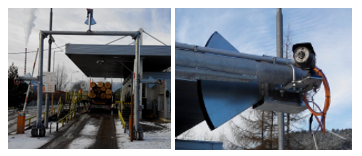
Figure 1: The scanning gate (left) with detail on a camera (right).
Software executing the safety inspection of trucks use point cloud that represent a surface of each truck. These point clouds are obtained by the set of scanners while trucks are passing through the gate. The algorithm for safety check is universal for all kinds of timber load. We have an idea that can lead to improve success rate of the inspection, if we use a specific algorithm for relevant kind of timber storage.
But for that, we need to classify kind of wood storage of each truck, before running one of specifics inspection algorithm. This classification is the main goal of both original and this article. For this purpose, we can use the installed cameras, which serves now only for recording and storing an evidence of incorrectly loaded trucks.
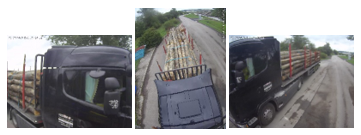
Figure 2: Pictures of a truck from all three cameras.
3. Classification with use of Computer Vision Technology
The original article describes how we solved this classification problem with use of analytic functions belonging to the computer vision technology. These functions are described in detail in the book [10]. A final classification result of individual truck was determined by mean results of two classification methods.
3.1. Top View Classification
First method works with images taken by a camera mounted on the top of the scanning gate. At the beginning of the recognition algorithm, the important area of taken image (highlighted by the blue quadrangular on the left part of Figure 3) is converted by perspective transformation into simulation of top view. Then the image is converted into grayscale one, on which the Canny algorithm for finding edges is applied.
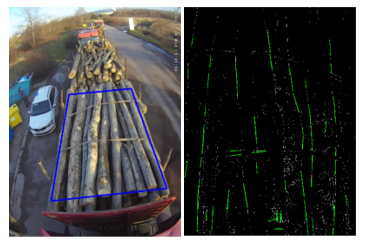
Figure 3: Important area of image (left) and final image with founded lines [1].
Then lines are detected by use of Hough algorithm (see right part of Figure 3). Direction of those lines shows a type of wood storage.
3.2. Side View Classification
This method uses images taken by cameras mounted on both sides of the scanning gate. Principle of this method is to find cross-sections of wood logs in truck’s images. When they appear in significant percentage of image’s area, then a truck is classified as transversely loaded one.
At first, via perspective transformation, an important part of an image is converted into a side view simulation. The perspective transformation is done due to easier wood logs’ cross-sections detection when they transform from shape of ellipses to more or less circular shape.
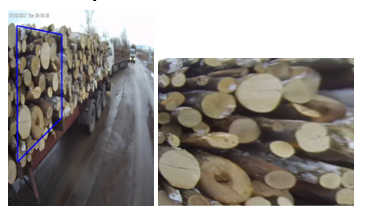
Figure 4: Important area of image (left) and its perspective transformation into simulation of side view [1].
Then threshold is applied to find cross-sections of wood logs. Pure wood (cross-sections of wood logs) occur in variations of yellow color, from light to dark yellow. Whereas, tree bark (cylindrical surface of wood logs) occur in shades of brown or gray color. This feature is used in image processing to detect cross-sections of wood logs. Pixels belonging to cross-sections of wood logs are detected by applying threshold that define if pixels are within the range of yellow colors in HSV color spectrum (see Figure 5).
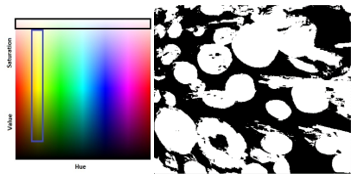
Figure 5: HSV color spectrum with marked ranges of yellow color (left) and threshold of both color ranges merged together on side view image (right)
At first, the algorithm looks for cross-sections of wood logs separately on both images of thresholds of yellow color, and later on merged one.
The erode function is called on the threshold images repeatedly with different number of iterations. At first, the erode function with relatively large amount of iterations is called to split and detect bigger blobs. Afterwards, the detected blobs are subtracted from the threshold original image, and the erode function with less amount of iterations is executed to find small blobs as well.
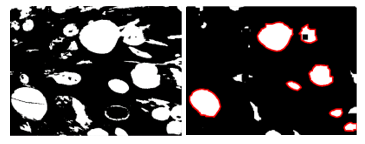
Figure 6: Threshold of one of yellow colour (left) and its blob detection (right)
Detected blobs found on all three threshold images are approximated to circles. Those circles are drawn, into the image of its original perspective transformation, for better visualization (see Figure 7).
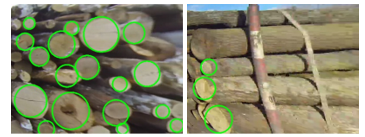
Figure 7: Founded cross-sections of wood logs on transversely loaded truck (left) and on longitudinally loaded one (right) [1].
As you can see, cross sections are also detected on images of trucks with longitudinal kind of timber load. But, to classify a truck as a transversely loaded one, areas of the cross-sections must occupy significant part of the image’s total area.
4. Classification with Use of Deep Learning Technology
Image classification is one of the problems where deep learning really excels. The high success of neural networks in the field of computer vision is achieved especially thanks to convolutional layers, which works similar as human cortex. [11].
Despite long training time, neural networks are very fast and effective when they are already deployed to solve a specific task. Our image classification problem belongs to family of supervised learning. Neural networks of this group can be very accurate if the training dataset is huge and heterogenous, because in that case they learn a more general pattern [12]. Unfortunately, our dataset is rather small due to the fact, that transversely loaded trucks are extremely rare.
We had pictures of only 412 transversely loaded trucks at disposal. On the other hand, a list with records of longitudinally loaded trucks was massive. Even though, we used only 724 of these to keep moreover balanced datasets of both classes. The input data were divided into three groups. First one was used for training a neural network, second one was dedicated for validating the neural network during training, and last group was reserved for final testing of trained network.
Table 1: Distribution of input data into datasets.
| train | validation | test | |
| longitudinal | 406 | 156 | 162 |
| transverse | 231 | 89 | 92 |
Speed of trucks moving through the scanning gate is between 5 and 10 km/h. The cameras have a frequency of only one record per a second. Each camera takes on average 8 pictures of a truck during its scanning. Since we are using 3 cameras, each truck is represented by 24 pictures on average. The images of trucks are taken with a relatively high resolution of 2048 x 1536 pixels by the left and the right camera. Resolution of the top camera is the same, but swapped in axes, so its value is 1536 x 2048 pixels. All input images are resized to 512 x 512 pixels before entering the neural network. This action makes both evaluation and especially training phase significantly faster. The input images that are fed into the neural network, have three channels, that represent RGB color format.
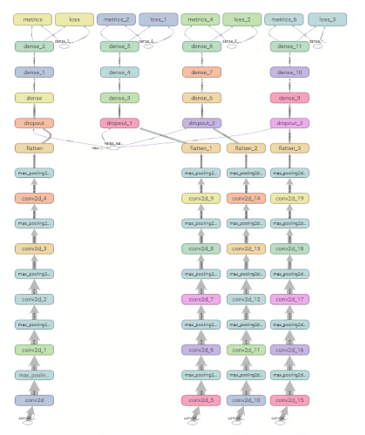
Figure 8: The graph of used architecture.
The architecture of used neural network is based on VGG-19 model [13]. After using this model architecture to our classification dataset, we have done some experiments with the model configuration and slightly change its architecture. Final model is sequential, rather deep and consist of five convolutional layers. Every convolutional layer use ReLU (Rectified Linear Unit) as an activation function [14], and their kernels have a shape of 3 x 3. The number of filters increases with the depth of the model. First convolutional layer has only 32 filters, second one is made up from 64 filters, third and fourth layer have the same amount of 128 filters, and the last convolutional layer consists of 256 filters. After each of these convolutional layers, a max pooling operation, with pooling size of 2 x 2, is executed.
Then the model is flattened, and dropout function with rate of 0.5 is activated. In the end of the model are three densely connected layers. The number of units per layer is decreasing with depth from 1024 via 512 to 1. First two of these densely connected layers use ReLU activation function, whereas the last layer rely on Sigmoid activation function.
The neural network was trained for 120 epochs. The training has been done with RMSprop optimizer with 0.0001 learning rate. Choosing the hyper-parameters of the network have been done based on papers [15, 16]. Accuracy of the network was verifying on the validation dataset during training. As we can see from Figure 8, the validation accuracy stopped to follow the growing tendency of the training accuracy around 100th epoch. After that point the network started to memorize input data rather than finding a better classification pattern.
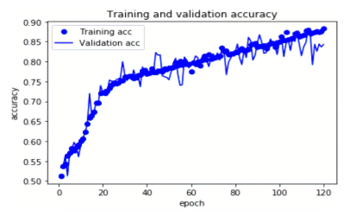
Figure 9: Training the network.
After initial training, a new neural network was trained with only a hundred epochs to avoid overfitting [17]. To combat overfitting, we used the techniques described in [18, 19], which help us to choose the best elements of model dealing with that problem, and set their parameters. These techniques were proven, via comprehensive experiments, to increase the model’s classification success rate on new data. This final network was later examined on the testing dataset. The final classification accuracy achieved a result of 84.926 %, which is a great outcome received from our limited training dataset. With use of larger training dataset, we could achieve even greater success rate.
Although we tried to solve this task by training many different neural networks architectures with convolutional layers, the one described in this chapter has the best result.
The classification accuracy of the original paper with analytic approach has only slightly better result, that reached to 85,086 %. While maintaining almost identical classification accuracy, the new method is few times faster and need less computing energy.
5. Conclusion
The classification accuracy achieved by the trained convolutional neural network is 84.92%. This number is accuracy of an individual truck’s image. When we classify a truck according to a mean result of all its images, we can reach up to 97.88% success rate.
This classification problem has already been solved in the original paper by analytic methods with use of computer vision technology. Back then we achieved similar result of 98% success rate.
Classification approach of this paper uses artificial neural network, and as such, it is more reliable in bad weather and light conditions. For example, snowing, raining, cloudy weather, or darkness at night, can lead to huge unreliability of analytic approach of the original paper, since it depends on finding yellow colour of wood log cross-sections. On the other hand, actual solution can be reliable even in those bad conditions, when the images of the training dataset include images with these situations.
Even though actual solution has not brought much better result, it is far faster and more energy efficient solution than the original one. The big future potential is by combining these two methods. The determining if a truck is longitudinally or transversely loaded will reach almost a hundred percent certainty by that. Then, we can upgrade the actual software for truck’s safety inspection to work for a specific kind of timber load, and by that the safety check will be more precise.
Conflict of Interest
The authors declare no conflict of interest.
Acknowledgment
This work was supported by the European Regional Development Fund in the Research Centre of Advanced Mechatronic Systems project, CZ.02.1.01/0.0/0.0/16_019/0000867 within the Operational Programme Research, Development and Education and the project SP2020/57 Research and Development of Advanced Methods in the Area of Machines and Process Control supported by the Ministry of Education, Youth and Sports.
- J. Sikora, D. Fojtík, J. Czebe and M. Mihola, “Storage kind recognition of truck’s timber load”, 2019 20th International Carpathian Control Conference (ICCC), Krakow-Wieliczka, Poland, 2019, pp. 1-4.
https://doi.org/10.1109/CarpathianCC.2019.8766049 - M. Jurek and R. Wagnerová, “Frequency Filtering of Source Images for LASER Engravers”, 2019 20th International Carpathian Control Conference (ICCC), Krakow-Wieliczka, Poland, 2019, pp. 1-5.
https://doi.org/10.1109/CarpathianCC.2019.8766050 - S. Kanimozhi, G. Gayathri and T. Mala, “Multiple Real-time object identification using Single shot Multi-Box detection”, 2019 International Conference on Computational Intelligence in Data Science (ICCIDS), Chennai, India, 2019, pp. 1-5.
https://doi.org/10.1109/ICCIDS.2019.8862041 - L. Gatys, A. Ecker and M. Bethge, “Image Style Transfer Using Convolutional Neural Network”, 2016 IEEE Conference on Computer Vision and Pattern Recognition (CVPR), Las Vegas, USA, 2016, pp. 2414-2423. https://doi.org/10.1109/CVPR.2016.265
- H. R. Roth et al., “Anatomy-specific classification of medical images using deep convolutional nets”, 2015 IEEE 12th International Symposium on Biomedical Imaging (ISBI), New York, NY, 2015, pp. 101-104.
https://doi.org/10.1109/ISBI.2015.7163826 - D. C. Duro, S. E. Franklin, M. G. Dubé, “A comparison of pixel-based and object-based image analysis with selected machine learning algorithms for the classification of agricultural landscapes using SPOT-5 HRG imagery”, 2012, Remote Sensing of Environment, vol. 118, pp. 259-272. https://doi.org/10.1016/j.rse.2011.11.020
- P. M. Álvarez, A. P. Suay, R. Molina and G. C. Valls, “Remote Sensing Image Classification With Large-Scale Gaussian Processes”, 2018, IEEE Transactions on Geoscience and Remote Sensing, vol. 56, pp. 1103-1114. https://doi.org/10.1109/TGRS.2017.2758922
- A. D. Algarni, “Efficient Object Detection and Classification of Heat Emitting Objects from Infrared Images Based on Deep Learning”, 2020, Multimedia Tools and Applications, pp. 1-24. https://doi.org/10.1007/s11042-020-08616-z
- F. David, P. Petr, M. Miroslav and M. Milan, “Scanning of trucks to produce 3D models for analysis of timber loads”, 2016 17th International Carpathian Control Conference (ICCC), Tatranska Lomnica, Slovakia, 2016, pp. 194-199. https://doi.org/10.1109/CarpathianCC.2016.7501092
- G. R. Bradski, Learning OpenCV, Sebastopol: O’Reilly, 2008.
- W. Rawat, Z. Wang, “Deep Convolutional Neural Networks for Image Classification: A Comprehensive Review”, Neural Computation, 29(9), 2352-2449, 2017. https://doi.org/10.1162/neco_a_00990
- F. Chollet, Deep learning with Python, Manning Publications Co., 2018.
- A. Koesdwiady, S. M. Bedawi, C. Ou and F. Karry, “End-to-End Deep Learning for Driver Distraction Recognition”, 2017, Image Analysis and Recognition, ICIAR 2017, Lecture Notes in Computer Science, vol. 10317, Springer, Cham. https://doi.org/10.1007/978-3-319-59876-5_2
- A. F. Agarap, “Deep Learning using Rectified Linear Units (ReLU)”, arxiv 2018, ArXiv: 1803.08375
- L. N. Smith, “A disciplined approach to neural network hyper-parameters: Part 1 — learning rate, batch size, momentum, and weight decay”, 2018, ArXiv: 1803.09820
- H. Wu, Q. Liu and X. Liu, “A Review on Deep Learning Approaches to Image Classification and Object Segmentation”, 2019, CMC-Computers, Materials & Continua, 60(2), 575–597. https://doi.org/10.32604/cmc.2019.03595
- H. Zhang, L. Zhang and Y. Jiang, “Overfitting and Underfitting Analysis for Deep Learning Based End-to-end Communication Systems”, 2019 11th International Conference on Wireless Communications and Signal Processing (WCSP), Xi’an, China, 2019, pp. 1-6. https://doi.org/10.1109/WCSP.2019.8927876
- A. F. Kamara, E. Chen, Q. Liu and Z. Pan, “Combining contextual neural networks for time series classification”, 2020, Neurocomputing, vol. 384. pp. 57-66. https://doi.org/10.1016/j.neucom.2019.10.113
- L. Pan, C. Li, S. Pouyanfar, R. Chen and Y. Zhou, “A Novel Combinational Convolutional Neural Network for Automatic Food-Ingredient Classification”, 2020, Computers, Materials & Continua, vol. 62, pp. 731-746. https://doi.org/10.32604/cmc.2020.06508
- Hanan Hassan Ali Adlan, Elsadig Ahmed Mohamed Babiker, "Efficient Pattern Recognition Resource Utilization Neural Network ", Advances in Science, Technology and Engineering Systems Journal, vol. 11, no. 1, pp. 44–50, 2026. doi: 10.25046/aj110105
- Kohinur Parvin, Eshat Ahmad Shuvo, Wali Ashraf Khan, Sakibul Alam Adib, Tahmina Akter Eiti, Mohammad Shovon, Shoeb Akter Nafiz, "Computationally Efficient Explainable AI Framework for Skin Cancer Detection", Advances in Science, Technology and Engineering Systems Journal, vol. 11, no. 1, pp. 11–24, 2026. doi: 10.25046/aj110102
- David Degbor, Haiping Xu, Pratiksha Singh, Shannon Gibbs, Donghui Yan, "StradNet: Automated Structural Adaptation for Efficient Deep Neural Network Design", Advances in Science, Technology and Engineering Systems Journal, vol. 10, no. 6, pp. 29–41, 2025. doi: 10.25046/aj100603
- Jenna Snead, Nisa Soltani, Mia Wang, Joe Carson, Bailey Williamson, Kevin Gainey, Stanley McAfee, Qian Zhang, "3D Facial Feature Tracking with Multimodal Depth Fusion", Advances in Science, Technology and Engineering Systems Journal, vol. 10, no. 5, pp. 11–19, 2025. doi: 10.25046/aj100502
- Surapol Vorapatratorn, Nontawat Thongsibsong, "AI-Based Photography Assessment System using Convolutional Neural Networks", Advances in Science, Technology and Engineering Systems Journal, vol. 10, no. 2, pp. 28–34, 2025. doi: 10.25046/aj100203
- Abhishek Shrestha, Jürgen Großmann, "On Adversarial Robustness of Quantized Neural Networks Against Direct Attacks", Advances in Science, Technology and Engineering Systems Journal, vol. 9, no. 6, pp. 30–46, 2024. doi: 10.25046/aj090604
- Win Pa Pa San, Myo Khaing, "Advanced Fall Analysis for Elderly Monitoring Using Feature Fusion and CNN-LSTM: A Multi-Camera Approach", Advances in Science, Technology and Engineering Systems Journal, vol. 9, no. 6, pp. 12–20, 2024. doi: 10.25046/aj090602
- Joshua Carberry, Haiping Xu, "GPT-Enhanced Hierarchical Deep Learning Model for Automated ICD Coding", Advances in Science, Technology and Engineering Systems Journal, vol. 9, no. 4, pp. 21–34, 2024. doi: 10.25046/aj090404
- Pui Ching Wong, Shahrum Shah Abdullah, Mohd Ibrahim Shapiai, "Double-Enhanced Convolutional Neural Network for Multi-Stage Classification of Alzheimer’s Disease", Advances in Science, Technology and Engineering Systems Journal, vol. 9, no. 2, pp. 09–16, 2024. doi: 10.25046/aj090202
- Toya Acharya, Annamalai Annamalai, Mohamed F Chouikha, "Enhancing the Network Anomaly Detection using CNN-Bidirectional LSTM Hybrid Model and Sampling Strategies for Imbalanced Network Traffic Data", Advances in Science, Technology and Engineering Systems Journal, vol. 9, no. 1, pp. 67–78, 2024. doi: 10.25046/aj090107
- Afrodite Papagiannopoulou, Chrissanthi Angeli, "Social Media Text Summarization: A Survey Towards a Transformer-based System Design", Advances in Science, Technology and Engineering Systems Journal, vol. 8, no. 6, pp. 26–36, 2023. doi: 10.25046/aj080604
- Elizabeth Dixon Hathaway, Richard Joseph Hathaway, "Colorized iVAT Images for Labeled Data", Advances in Science, Technology and Engineering Systems Journal, vol. 8, no. 4, pp. 111–121, 2023. doi: 10.25046/aj080413
- Kitipoth Wasayangkool, Kanabadee Srisomboon, Chatree Mahatthanajatuphat, Wilaiporn Lee, "Accuracy Improvement-Based Wireless Sensor Estimation Technique with Machine Learning Algorithms for Volume Estimation on the Sealed Box", Advances in Science, Technology and Engineering Systems Journal, vol. 8, no. 3, pp. 108–117, 2023. doi: 10.25046/aj080313
- Sutham Satthamsakul, Ari Kuswantori, Witsarut Sriratana, Worapong Tangsrirat, Taweepol Suesut, "Landmarking Technique for Improving YOLOv4 Fish Recognition in Various Background Conditions", Advances in Science, Technology and Engineering Systems Journal, vol. 8, no. 3, pp. 100–107, 2023. doi: 10.25046/aj080312
- Mario Cuomo, Federica Massimi, Francesco Benedetto, "Detecting CTC Attack in IoMT Communications using Deep Learning Approach", Advances in Science, Technology and Engineering Systems Journal, vol. 8, no. 2, pp. 130–138, 2023. doi: 10.25046/aj080215
- Temsamani Khallouk Yassine, Achchab Said, Laouami Lamia, Faridi Mohammed, "Hybrid Discriminant Neural Networks for Performance Job Prediction", Advances in Science, Technology and Engineering Systems Journal, vol. 8, no. 2, pp. 116–122, 2023. doi: 10.25046/aj080213
- Yung-Hsiang Chen, Chen-Chi Fan, Jin H. Huang, "Detecting the Movement of the Pilot’s Body During Flight Operations", Advances in Science, Technology and Engineering Systems Journal, vol. 8, no. 2, pp. 71–77, 2023. doi: 10.25046/aj080208
- Yung-Hsiang Chen, Jin H. Huang, "Omni-directional Multi-view Image Measurement System in the Co-sphere Framework", Advances in Science, Technology and Engineering Systems Journal, vol. 8, no. 2, pp. 64–70, 2023. doi: 10.25046/aj080207
- Paul Miracle Udah, Ayomide Ibrahim Suleiman, Jibril Abdullahi Bala, Ahmad Abubakar Sadiq, Taliha Abiodun Folorunso, Julia Eichie, Adeyinka Peace Adedigba, Abiodun Musa Aibinu, "Development of an Intelligent Road Anomaly Detection System for Autonomous Vehicles", Advances in Science, Technology and Engineering Systems Journal, vol. 8, no. 2, pp. 1–13, 2023. doi: 10.25046/aj080201
- Sathyabama Kaliyapillai, Saruladha Krishnamurthy, Thiagarajan Murugasamy, "An Ensemble of Voting- based Deep Learning Models with Regularization Functions for Sleep Stage Classification", Advances in Science, Technology and Engineering Systems Journal, vol. 8, no. 1, pp. 84–94, 2023. doi: 10.25046/aj080110
- Anh-Thu Mai, Duc-Huy Nguyen, Thanh-Tin Dang, "Transfer and Ensemble Learning in Real-time Accurate Age and Age-group Estimation", Advances in Science, Technology and Engineering Systems Journal, vol. 7, no. 6, pp. 262–268, 2022. doi: 10.25046/aj070630
- Fatima-Zahra Elbouni, Aziza EL Ouaazizi, "Birds Images Prediction with Watson Visual Recognition Services from IBM-Cloud and Conventional Neural Network", Advances in Science, Technology and Engineering Systems Journal, vol. 7, no. 6, pp. 181–188, 2022. doi: 10.25046/aj070619
- Tarek Nouioua, Ahmed Hafid Belbachir, "The Security of Information Systems and Image Processing Supported by the Quantum Computer: A review", Advances in Science, Technology and Engineering Systems Journal, vol. 7, no. 6, pp. 77–86, 2022. doi: 10.25046/aj070609
- Brahim Zraibi, Mohamed Mansouri, Salah Eddine Loukili, Said Ben Alla, "Hybrid Neural Network Method for Predicting the SOH and RUL of Lithium-Ion Batteries", Advances in Science, Technology and Engineering Systems Journal, vol. 7, no. 5, pp. 193–198, 2022. doi: 10.25046/aj070520
- Nosiri Onyebuchi Chikezie, Umanah Cyril Femi, Okechukwu Olivia Ozioma, Ajayi Emmanuel Oluwatomisin, Akwiwu-Uzoma Chukwuebuka, Njoku Elvis Onyekachi, Gbenga Christopher Kalejaiye, "BER Performance Evaluation Using Deep Learning Algorithm for Joint Source Channel Coding in Wireless Networks", Advances in Science, Technology and Engineering Systems Journal, vol. 7, no. 4, pp. 127–139, 2022. doi: 10.25046/aj070417
- Cosmas Ngozichukwu Anyanwu, Chinazom Janefrances Animoke, Bonaventure Ugo Agu, Izuchukwu Francis Okafor, Nneka Juliana Ogbuagu, Samuel Bentson, Onyekwere Ojike, "Physical and Emission Properties of Blended Bio-Coal Briquettes Derived from Agro-Wastes in Nigeria", Advances in Science, Technology and Engineering Systems Journal, vol. 7, no. 3, pp. 116–122, 2022. doi: 10.25046/aj070313
- Jayan Kant Duggal, Mohamed El-Sharkawy, "High Performance SqueezeNext: Real time deployment on Bluebox 2.0 by NXP", Advances in Science, Technology and Engineering Systems Journal, vol. 7, no. 3, pp. 70–81, 2022. doi: 10.25046/aj070308
- Hanae Naoum, Sidi Mohamed Benslimane, Mounir Boukadoum, "Encompassing Chaos in Brain-inspired Neural Network Models for Substance Identification and Breast Cancer Detection", Advances in Science, Technology and Engineering Systems Journal, vol. 7, no. 3, pp. 32–43, 2022. doi: 10.25046/aj070304
- Bougar Marieme, Ziyati El Houssaine, "Analysis Methods and Classification Algorithms with a Novel Sentiment Classification for Arabic Text using the Lexicon-Based Approach", Advances in Science, Technology and Engineering Systems Journal, vol. 7, no. 3, pp. 12–18, 2022. doi: 10.25046/aj070302
- Sreela Sreekumaran Pillai Remadevi Amma, Sumam Mary Idicula, "A Unified Visual Saliency Model for Automatic Image Description Generation for General and Medical Images", Advances in Science, Technology and Engineering Systems Journal, vol. 7, no. 2, pp. 119–126, 2022. doi: 10.25046/aj070211
- Idir Boulfrifi, Mohamed Lahraichi, Khalid Housni, "Video Risk Detection and Localization using Bidirectional LSTM Autoencoder and Faster R-CNN", Advances in Science, Technology and Engineering Systems Journal, vol. 6, no. 6, pp. 145–150, 2021. doi: 10.25046/aj060619
- Giuseppe Spampinato, Arcangelo Ranieri Bruna, Ivana Guarneri, Davide Giacalone, "Neural Network for 2D Range Scanner Navigation System", Advances in Science, Technology and Engineering Systems Journal, vol. 6, no. 5, pp. 348–355, 2021. doi: 10.25046/aj060539
- Mostafa Yacoub, Amira Rezk, Mohamed Senousy, "Enhancing Decision Trees for Data Stream Mining", Advances in Science, Technology and Engineering Systems Journal, vol. 6, no. 5, pp. 330–334, 2021. doi: 10.25046/aj060537
- Seok-Jun Bu, Hae-Jung Kim, "Ensemble Learning of Deep URL Features based on Convolutional Neural Network for Phishing Attack Detection", Advances in Science, Technology and Engineering Systems Journal, vol. 6, no. 5, pp. 291–296, 2021. doi: 10.25046/aj060532
- Osaretin Eboya, Julia Binti Juremi, "iDRP Framework: An Intelligent Malware Exploration Framework for Big Data and Internet of Things (IoT) Ecosystem", Advances in Science, Technology and Engineering Systems Journal, vol. 6, no. 5, pp. 185–202, 2021. doi: 10.25046/aj060521
- Wided Hechkel, Brahim Maaref, Néjib Hassen, "Coupled Apodization Functions Applied to Enhance Image Quality in Ultrasound Imaging using Phased Arrays", Advances in Science, Technology and Engineering Systems Journal, vol. 6, no. 5, pp. 149–157, 2021. doi: 10.25046/aj060517
- Radwan Qasrawi, Stephanny VicunaPolo, Diala Abu Al-Halawa, Sameh Hallaq, Ziad Abdeen, "Predicting School Children Academic Performance Using Machine Learning Techniques", Advances in Science, Technology and Engineering Systems Journal, vol. 6, no. 5, pp. 08–15, 2021. doi: 10.25046/aj060502
- Fatima-Ezzahra Lagrari, Youssfi Elkettani, "Traditional and Deep Learning Approaches for Sentiment Analysis: A Survey", Advances in Science, Technology and Engineering Systems Journal, vol. 6, no. 5, pp. 01–07, 2021. doi: 10.25046/aj060501
- Liang Chen, Mo-How Herman Shen, "A New Topology Optimization Approach by Physics-Informed Deep Learning Process", Advances in Science, Technology and Engineering Systems Journal, vol. 6, no. 4, pp. 233–240, 2021. doi: 10.25046/aj060427
- Saichon Sinsomboonthong, "Efficiency Comparison in Prediction of Normalization with Data Mining Classification", Advances in Science, Technology and Engineering Systems Journal, vol. 6, no. 4, pp. 130–137, 2021. doi: 10.25046/aj060415
- Hathairat Ketmaneechairat, Maleerat Maliyaem, Chalermpong Intarat, "Kamphaeng Saen Beef Cattle Identification Approach using Muzzle Print Image", Advances in Science, Technology and Engineering Systems Journal, vol. 6, no. 4, pp. 110–122, 2021. doi: 10.25046/aj060413
- Valerii Dmitrienko, Serhii Leonov, Aleksandr Zakovorotniy, "New Neural Networks for the Affinity Functions of Binary Images with Binary and Bipolar Components Determining", Advances in Science, Technology and Engineering Systems Journal, vol. 6, no. 4, pp. 91–99, 2021. doi: 10.25046/aj060411
- Anjali Banga, Pradeep Kumar Bhatia, "Optimized Component based Selection using LSTM Model by Integrating Hybrid MVO-PSO Soft Computing Technique", Advances in Science, Technology and Engineering Systems Journal, vol. 6, no. 4, pp. 62–71, 2021. doi: 10.25046/aj060408
- Kwun-Ping Lai, Jackie Chun-Sing Ho, Wai Lam, "Exploiting Domain-Aware Aspect Similarity for Multi-Source Cross-Domain Sentiment Classification", Advances in Science, Technology and Engineering Systems Journal, vol. 6, no. 4, pp. 01–12, 2021. doi: 10.25046/aj060401
- Svetlana Segarceanu, George Suciu, Inge Gavăt, "Environmental Acoustics Modelling Techniques for Forest Monitoring", Advances in Science, Technology and Engineering Systems Journal, vol. 6, no. 3, pp. 15–26, 2021. doi: 10.25046/aj060303
- Bakhtyar Ahmed Mohammed, Muzhir Shaban Al-Ani, "Follow-up and Diagnose COVID-19 Using Deep Learning Technique", Advances in Science, Technology and Engineering Systems Journal, vol. 6, no. 2, pp. 971–976, 2021. doi: 10.25046/aj0602111
- Showkat Ahmad Dar, S Palanivel, "Performance Evaluation of Convolutional Neural Networks (CNNs) And VGG on Real Time Face Recognition System", Advances in Science, Technology and Engineering Systems Journal, vol. 6, no. 2, pp. 956–964, 2021. doi: 10.25046/aj0602109
- Kenza Aitelkadi, Hicham Outmghoust, Salahddine laarab, Kaltoum Moumayiz, Imane Sebari, "Detection and Counting of Fruit Trees from RGB UAV Images by Convolutional Neural Networks Approach", Advances in Science, Technology and Engineering Systems Journal, vol. 6, no. 2, pp. 887–893, 2021. doi: 10.25046/aj0602101
- Binghan Li, Yindong Hua, Mi Lu, "Advanced Multiple Linear Regression Based Dark Channel Prior Applied on Dehazing Image and Generating Synthetic Haze", Advances in Science, Technology and Engineering Systems Journal, vol. 6, no. 2, pp. 790–800, 2021. doi: 10.25046/aj060291
- Susanto Kumar Ghosh, Mohammad Rafiqul Islam, "Convolutional Neural Network Based on HOG Feature for Bird Species Detection and Classification", Advances in Science, Technology and Engineering Systems Journal, vol. 6, no. 2, pp. 733–745, 2021. doi: 10.25046/aj060285
- Abraham Adiputra Wijaya, Inten Yasmina, Amalia Zahra, "Indonesian Music Emotion Recognition Based on Audio with Deep Learning Approach", Advances in Science, Technology and Engineering Systems Journal, vol. 6, no. 2, pp. 716–721, 2021. doi: 10.25046/aj060283
- Mochammad Haldi Widianto, Ari Purno Wahyu, Dadan Gusna, "Prototype Design Internet of Things Based Waste Management Using Image Processing", Advances in Science, Technology and Engineering Systems Journal, vol. 6, no. 2, pp. 709–715, 2021. doi: 10.25046/aj060282
- Shahnaj Parvin, Liton Jude Rozario, Md. Ezharul Islam, "Vehicle Number Plate Detection and Recognition Techniques: A Review", Advances in Science, Technology and Engineering Systems Journal, vol. 6, no. 2, pp. 423–438, 2021. doi: 10.25046/aj060249
- Nora Bouhaddour, Abdelkrim Moufakkir, Sara Belarouf, Abderrahim Samaouali, Hanane Sghiouri El Idrissi, Abdellah Elbouzidi, Salah El Alami, "Study of Thermo-Physical Characteristics and Drying of Araucaria Wood from the City of El Jadida, Morocco", Advances in Science, Technology and Engineering Systems Journal, vol. 6, no. 2, pp. 274–278, 2021. doi: 10.25046/aj060231
- Md. Ashfaqul Islam, Maisha Hasnin, Nayeem Iftakhar, Md. Mushfiqur Rahman, "Super Resolution Based Underwater Image Enhancement by Illumination Adjustment and Color Correction with Fusion Technique", Advances in Science, Technology and Engineering Systems Journal, vol. 6, no. 2, pp. 36–42, 2021. doi: 10.25046/aj060205
- Rajani Narayan, Anjanappa Sreenivasa Murthy, "Texture Based Image Retrieval Using Semivariogram and Various Distance Measures", Advances in Science, Technology and Engineering Systems Journal, vol. 6, no. 1, pp. 1369–1377, 2021. doi: 10.25046/aj0601156
- Byeongwoo Kim, Jongkyu Lee, "Fault Diagnosis and Noise Robustness Comparison of Rotating Machinery using CWT and CNN", Advances in Science, Technology and Engineering Systems Journal, vol. 6, no. 1, pp. 1279–1285, 2021. doi: 10.25046/aj0601146
- Bryan Huaytalla, Diego Humari, Guillermo Kemper, "An algorithm for Peruvian counterfeit Banknote Detection based on Digital Image Processing and SVM", Advances in Science, Technology and Engineering Systems Journal, vol. 6, no. 1, pp. 1171–1178, 2021. doi: 10.25046/aj0601132
- Basavaraj Madagouda, R. Sumathi, "Artificial Neural Network Approach using Mobile Agent for Localization in Wireless Sensor Networks", Advances in Science, Technology and Engineering Systems Journal, vol. 6, no. 1, pp. 1137–1144, 2021. doi: 10.25046/aj0601127
- Alisson Steffens Henrique, Anita Maria da Rocha Fernandes, Rodrigo Lyra, Valderi Reis Quietinho Leithardt, Sérgio D. Correia, Paul Crocker, Rudimar Luis Scaranto Dazzi, "Classifying Garments from Fashion-MNIST Dataset Through CNNs", Advances in Science, Technology and Engineering Systems Journal, vol. 6, no. 1, pp. 989–994, 2021. doi: 10.25046/aj0601109
- Mandlenkosi Shezi, Abejide Ade-Ibijola, "Deaf Chat: A Speech-to-Text Communication Aid for Hearing Deficiency", Advances in Science, Technology and Engineering Systems Journal, vol. 5, no. 5, pp. 826–833, 2020. doi: 10.25046/aj0505100
- Mohammed Hamim, Ismail El Moudden, Hicham Moutachaouik, Mustapha Hain, "Gene Selection for Cancer Classification: A New Hybrid Filter-C5.0 Approach for Breast Cancer Risk Prediction", Advances in Science, Technology and Engineering Systems Journal, vol. 6, no. 1, pp. 871–878, 2021. doi: 10.25046/aj060196
- Reem Bayari, Ameur Bensefia, "Text Mining Techniques for Cyberbullying Detection: State of the Art", Advances in Science, Technology and Engineering Systems Journal, vol. 6, no. 1, pp. 783–790, 2021. doi: 10.25046/aj060187
- Anass Barodi, Abderrahim Bajit, Taoufiq El Harrouti, Ahmed Tamtaoui, Mohammed Benbrahim, "An Enhanced Artificial Intelligence-Based Approach Applied to Vehicular Traffic Signs Detection and Road Safety Enhancement", Advances in Science, Technology and Engineering Systems Journal, vol. 6, no. 1, pp. 672–683, 2021. doi: 10.25046/aj060173
- Inna Valieva, Iurii Voitenko, Mats Björkman, Johan Åkerberg, Mikael Ekström, "Multiple Machine Learning Algorithms Comparison for Modulation Type Classification Based on Instantaneous Values of the Time Domain Signal and Time Series Statistics Derived from Wavelet Transform", Advances in Science, Technology and Engineering Systems Journal, vol. 6, no. 1, pp. 658–671, 2021. doi: 10.25046/aj060172
- Imane Jebli, Fatima-Zahra Belouadha, Mohammed Issam Kabbaj, Amine Tilioua, "Deep Learning based Models for Solar Energy Prediction", Advances in Science, Technology and Engineering Systems Journal, vol. 6, no. 1, pp. 349–355, 2021. doi: 10.25046/aj060140
- Anak Agung Putri Ratna, Frenzel Timothy Surya, Diyanatul Husna, I Ketut Eddy Purnama, Ingrid Nurtanio, Afif Nurul Hidayati, Mauridhi Hery Purnomo, Supeno Mardi Susiki Nugroho, Reza Fuad Rachmadi, "Chaos-Based Image Encryption Using Arnold’s Cat Map Confusion and Henon Map Diffusion", Advances in Science, Technology and Engineering Systems Journal, vol. 6, no. 1, pp. 316–326, 2021. doi: 10.25046/aj060136
- Hendro Arieyanto, Andry Chowanda, "Classification of Wing Chun Basic Hand Movement using Virtual Reality for Wing Chun Training Simulation System", Advances in Science, Technology and Engineering Systems Journal, vol. 6, no. 1, pp. 250–256, 2021. doi: 10.25046/aj060128
- Ndiatenda Ndou, Ritesh Ajoodha, Ashwini Jadhav, "A Case Study to Enhance Student Support Initiatives Through Forecasting Student Success in Higher-Education", Advances in Science, Technology and Engineering Systems Journal, vol. 6, no. 1, pp. 230–241, 2021. doi: 10.25046/aj060126
- Abdellatif Elouali, Smail Hafidi Alaoui, Noura Ettahir, Abderrazzak Khohmimidi, Nadia Motii, Keltoum Rahali, Mustapha Kouzer, "Touristic’s Destination Brand Image: Proposition of a Measurement Scale for Rabat City (Morocco)", Advances in Science, Technology and Engineering Systems Journal, vol. 5, no. 6, pp. 1750–1758, 2020. doi: 10.25046/aj0506209
- Yaswanthkumar S K, Keerthana M, Vishnu Prasath M S, "A Machine Vision Approach for Underwater Remote Operated Vehicle to Detect Drowning Humans", Advances in Science, Technology and Engineering Systems Journal, vol. 5, no. 6, pp. 1734–1740, 2020. doi: 10.25046/aj0506207
- Arwa Alshamsi, Reem Bayari, Said Salloum, "Sentiment Analysis in English Texts", Advances in Science, Technology and Engineering Systems Journal, vol. 5, no. 6, pp. 1683–1689, 2020. doi: 10.25046/aj0506200
- Karamath Ateeq, Manas Ranjan Pradhan, Beenu Mago, "Elasticity Based Med-Cloud Recommendation System for Diabetic Prediction in Cloud Computing Environment", Advances in Science, Technology and Engineering Systems Journal, vol. 5, no. 6, pp. 1618–1633, 2020. doi: 10.25046/aj0506193
- Revanna Sidamma Kavitha, Uppara Eranna, Mahendra Nanjappa Giriprasad, "A Computational Modelling and Algorithmic Design Approach of Digital Watermarking in Deep Neural Networks", Advances in Science, Technology and Engineering Systems Journal, vol. 5, no. 6, pp. 1560–1568, 2020. doi: 10.25046/aj0506187
- Yew Lek Chong, Renee Ka Yin Chin, "An Investigation of the Effect of Optimal Plane Spacing Between Electrode Planes for the EIT Industrial Applications", Advances in Science, Technology and Engineering Systems Journal, vol. 5, no. 6, pp. 1466–1473, 2020. doi: 10.25046/aj0506176
- Rewan Kumar Dahal, Ganesh Bhattarai, Dipendra Karki, "Determinants of Technological and Innovation Performance of the Nepalese Cellular Telecommunications Industry from the Customers’ Perspective", Advances in Science, Technology and Engineering Systems Journal, vol. 5, no. 6, pp. 1013–1020, 2020. doi: 10.25046/aj0506122
- Jinwon Cheon, Sunwoong Choi, "Hand Gesture Classification using Inaudible Sound with Ensemble Method", Advances in Science, Technology and Engineering Systems Journal, vol. 5, no. 6, pp. 967–971, 2020. doi: 10.25046/aj0506115
- Majdouline Meddad, Chouaib Moujahdi, Mounia Mikram, Mohammed Rziza, "Optimization of Multi-user Face Identification Systems in Big Data Environments", Advances in Science, Technology and Engineering Systems Journal, vol. 5, no. 6, pp. 762–767, 2020. doi: 10.25046/aj050691
- Yohei Yamauchi, Mitsuyuki Saito, "Adaptive Identification Method of Vehicle Model for Autonomous Driving Robust to Environmental Disturbances", Advances in Science, Technology and Engineering Systems Journal, vol. 5, no. 6, pp. 710–717, 2020. doi: 10.25046/aj050685
- Marcel Nicola, Marian Duță, Maria-Cristina Nițu, Ancuța-Mihaela Aciu, Claudiu-Ionel Nicola, "Improved System Based on ANFIS for Determining the Degree of Polymerization", Advances in Science, Technology and Engineering Systems Journal, vol. 5, no. 6, pp. 664–675, 2020. doi: 10.25046/aj050680
- Khalid Chennoufi, Mohammed Ferfra, "Fast and Efficient Maximum Power Point Tracking Controller for Photovoltaic Modules", Advances in Science, Technology and Engineering Systems Journal, vol. 5, no. 6, pp. 606–612, 2020. doi: 10.25046/aj050674
- Kin Yun Lum, Yeh Huann Goh, Yi Bin Lee, "American Sign Language Recognition Based on MobileNetV2", Advances in Science, Technology and Engineering Systems Journal, vol. 5, no. 6, pp. 481–488, 2020. doi: 10.25046/aj050657
- Miroslav Kratky, Vaclav Minarik, Michal Sustr, Jan Ivan, "Electronic Warfare Methods Combatting UAVs", Advances in Science, Technology and Engineering Systems Journal, vol. 5, no. 6, pp. 447–454, 2020. doi: 10.25046/aj050653
- Hao Tuan Huynh, Nghia Duong-Trung, Dinh Quoc Truong, Hiep Xuan Huynh, "Vietnamese Text Classification with TextRank and Jaccard Similarity Coefficient", Advances in Science, Technology and Engineering Systems Journal, vol. 5, no. 6, pp. 363–369, 2020. doi: 10.25046/aj050644
- Gede Putra Kusuma, Jonathan, Andreas Pangestu Lim, "Emotion Recognition on FER-2013 Face Images Using Fine-Tuned VGG-16", Advances in Science, Technology and Engineering Systems Journal, vol. 5, no. 6, pp. 315–322, 2020. doi: 10.25046/aj050638
- Lubna Abdelkareim Gabralla, "Dense Deep Neural Network Architecture for Keystroke Dynamics Authentication in Mobile Phone", Advances in Science, Technology and Engineering Systems Journal, vol. 5, no. 6, pp. 307–314, 2020. doi: 10.25046/aj050637
- Kailerk Treetipsounthorn, Thanisorn Sriudomporn, Gridsada Phanomchoeng, Christian Dengler, Setha Panngum, Sunhapos Chantranuwathana, Ali Zemouche, "Vehicle Rollover Detection in Tripped and Untripped Rollovers using Recurrent Neural Networks", Advances in Science, Technology and Engineering Systems Journal, vol. 5, no. 6, pp. 228–238, 2020. doi: 10.25046/aj050627
- Munaf Salim Najim Al-Din, "Real-Time Identification and Classification of Driving Maneuvers using Smartphone", Advances in Science, Technology and Engineering Systems Journal, vol. 5, no. 6, pp. 193–205, 2020. doi: 10.25046/aj050623
- Andrea Generosi, Silvia Ceccacci, Samuele Faggiano, Luca Giraldi, Maura Mengoni, "A Toolkit for the Automatic Analysis of Human Behavior in HCI Applications in the Wild", Advances in Science, Technology and Engineering Systems Journal, vol. 5, no. 6, pp. 185–192, 2020. doi: 10.25046/aj050622
- Fei Gao, Jiangjiang Liu, "Effective Segmented Face Recognition (SFR) for IoT", Advances in Science, Technology and Engineering Systems Journal, vol. 5, no. 6, pp. 36–44, 2020. doi: 10.25046/aj050605
- Redha Touati, Max Mignotte, Mohamed Dahmane, "A Circular Invariant Convolution Model-Based Mapping for Multimodal Change Detection", Advances in Science, Technology and Engineering Systems Journal, vol. 5, no. 5, pp. 1288–1298, 2020. doi: 10.25046/aj0505155
- Sherif H. ElGohary, Aya Lithy, Shefaa Khamis, Aya Ali, Aya Alaa el-din, Hager Abd El-Azim, "Interactive Virtual Rehabilitation for Aphasic Arabic-Speaking Patients", Advances in Science, Technology and Engineering Systems Journal, vol. 5, no. 5, pp. 1225–1232, 2020. doi: 10.25046/aj0505148
- Daniyar Nurseitov, Kairat Bostanbekov, Maksat Kanatov, Anel Alimova, Abdelrahman Abdallah, Galymzhan Abdimanap, "Classification of Handwritten Names of Cities and Handwritten Text Recognition using Various Deep Learning Models", Advances in Science, Technology and Engineering Systems Journal, vol. 5, no. 5, pp. 934–943, 2020. doi: 10.25046/aj0505114
- Zahra Jafari, Saman Rajebi, Siyamak Haghipour, "Using the Neural Network to Diagnose the Severity of Heart Disease in Patients Using General Specifications and ECG Signals Received from the Patients", Advances in Science, Technology and Engineering Systems Journal, vol. 5, no. 5, pp. 882–892, 2020. doi: 10.25046/aj0505108
- Adrian Florea, Valentin Fleaca, Simona Daniela Marcu, "Innovative Solution for Parking-Sharing of Private Institutions Using Various Occupancy Tracking Methods", Advances in Science, Technology and Engineering Systems Journal, vol. 5, no. 5, pp. 808–819, 2020. doi: 10.25046/aj050598
- Khalid A. AlAfandy, Hicham Omara, Mohamed Lazaar, Mohammed Al Achhab, "Using Classic Networks for Classifying Remote Sensing Images: Comparative Study", Advances in Science, Technology and Engineering Systems Journal, vol. 5, no. 5, pp. 770–780, 2020. doi: 10.25046/aj050594
- Gökalp Çınarer, Bülent Gürsel Emiroğlu, Recep Sinan Arslan, Ahmet Haşim Yurttakal, "Brain Tumor Classification Using Deep Neural Network", Advances in Science, Technology and Engineering Systems Journal, vol. 5, no. 5, pp. 765–769, 2020. doi: 10.25046/aj050593
- Khalid A. AlAfandy, Hicham, Mohamed Lazaar, Mohammed Al Achhab, "Investment of Classic Deep CNNs and SVM for Classifying Remote Sensing Images", Advances in Science, Technology and Engineering Systems Journal, vol. 5, no. 5, pp. 652–659, 2020. doi: 10.25046/aj050580
- Lana Abdulrazaq Abdullah, Muzhir Shaban Al-Ani, "CNN-LSTM Based Model for ECG Arrhythmias and Myocardial Infarction Classification", Advances in Science, Technology and Engineering Systems Journal, vol. 5, no. 5, pp. 601–606, 2020. doi: 10.25046/aj050573
- Chigozie Enyinna Nwankpa, "Advances in Optimisation Algorithms and Techniques for Deep Learning", Advances in Science, Technology and Engineering Systems Journal, vol. 5, no. 5, pp. 563–577, 2020. doi: 10.25046/aj050570