
Using Privacy Enhancing and Fine-Grained Access Controlled eKYC to implement Privacy Aware eSign

Adv. Sci. Technol. Eng. Syst. J. 4(4), 347–358 (2019);
 DOI: 10.25046/aj040443
eSign is an online electronic signature service which is recently gaining more prominence in India. eSign is based on two online services from UIDAI, viz. a viz., Aadhaar based authentication and retrieval of resident’s eKYC information after taking his/her consent. With increased adoption of Aadhaar based services, privacy of user data has become more and more important. Present method of taking boolean consent from resident through non-UIDAI entity may not be acceptable for two main reasons, first is that the consent does not include in itself a proof from resident that the consent is indeed taken from him/her and second is that the resident may wish to have better privacy and fine grained access control rules to access his/her eKYC data. Bakshi et.el have introduced a mechanism to improve amortized performance of eSign using a digital access token. In this work, the digital access token is enhanced to include Privacy Enhancing and Fine- Grained Access Control (PEaFGAC) Statements for facilitating Privacy Aware eSign. These tokens can be used by other entities to access eKYC data of the resident with better access controls enforced by the resident. This paper briefly describes the present model of eSign, the earlier proposed model of eSign followed by the proposed model of Privacy Aware eSign. The proposed model of Privacy Aware eSign is also analyzed using BAN logic assuming Dolev-Yao security environment.
1. Introduction
eSign is an online electronic signature service in India which is being promoted by Government of India as part of its Digital India Initiative. As opposed to traditional dongle based electronic signature, eSign provides benefits such as less cost, no manual authentication, no requirement of special hardware device and no requirement for the end user to keep any key secret. With the passage of Information Technology Act (ITA-2000), an electronically signed digital document is considered equivalent to a handwritten signed paper document. In India, eSign is being regulated by Controller of Certifying Authority (CCA) and is being operated by certain designated empaneled agencies known as eSign Service Providers (ESP). ESP provides its services to application specific agencies known as Application Service Providers (ASP). ASP provides eSign service to the end users. eSign is governed by Public Key Infrastructure (PKI) which is further governed in legal matters by the national legislature of the country.
To avail eSign service, a resident needs to enroll with of the enrollment process, resident needs to provide information about his/her identity and address to UIDAI such as Name, Date of Birth, Address, Phone number, Email-id, Biometric (fingerprint-scan, iris-scan) etc. The process of obtaining this information from the end user is known as Know Your Customer (KYC) and is initially introduced by Reserve Bank of India (RBI) for financial banks [3]. Traditionally, this process involves submission of a self-attested physical form along with necessary physical documents, followed by verification and approval by receiving organization. eKYC is an online service which facilitates completion of KYC process electronically. eKYC has some significant benefits over traditional KYC, eKYC eliminates submission of physical documents by customer, is faster and is less error prone. UIDAI’s eKYC service facilitates a third entity to retrieve resident’s identity, address and other details after taking explicit consent and authorization from the resident.
With increased adoption of Aadhaar based identification, many online services are now using Aadhaar based services and with its such wide adoption, privacy of user data has become even more important. Although Aadhaar based eKYC service provides access to eKYC data only after taking an explicit consent from the resident, this way of taking consent from resident has two shortcomings. First is that the consent is taken by non-UIDAI entity and does not encode in itself a proof from resident that the consent is indeed given by the resident. Second is that providing a boolean consent is too broad, either an unconditional access is given to the whole eKYC information or no access is given at all. A resident may wish to have a better privacy enhancing fine-grained access control to his/her eKYC data. Resident may wish to define a privacy and access control policy dictating the scope of information which can be provided, the purpose for which the information can be provided and recipients to whom the information can be provided. For example, a resident may wish to disclose only his/her name and address, only for electronic signature purpose and only to a specific eSign Service Provider.
In [4], the author explained two limitations of present eSign model. The first limitation is that the eKYC data access reflects a restrictive self-only, full-resource and unlimited access control. Author pointed out that a resident may wish to have a better access control mechanism which allows third entities to access part of a resource which is to be used for a specific purpose and for a limited time period. The second limitation is that for each eSign request, resident has to authenticate itself each time and to include the authentication proof in each such request. Author pointed out that if a resident needs to eSign multiple times, time taken by initial authentication phase will be a major bottleneck. The author proposed that amortized performance of eSign can be improved using digital access token which encodes in itself the authentication proof and other information such as how many eSign requests can be made using this token and the expiry time of the token.
This paper is an extension of [4] and the digital access token is enhanced to implement Privacy Aware eSign. Our main contribution in this paper is to introduce a method to implement Privacy Aware eSign using Privacy Enhancing and Fine-Grained Access Control (PEaFGAC) Statements. A resident can encode these statements in digital access token for better access to his/her eKYC data. This token can be provided to third entities so that they can present this token for claiming protected resource from UIDAI. This paper also presents security analysis of the proposed scheme using Burrows-Abadi-Needham (BAN) logic. The analysis shows that in the proposed scheme, even if the network is unreliable, the exchanged information is reliable and is secured against eavesdropping.
The remainder of this paper is organized as follows. Section 2 presents related work. Notations used in the paper are reported in figure 1. Section 3 presents Aadhaar based eKYC service. Section 4 presents eSign version 2.0 model. Section 5 presents eSign model proposed in [4] to improve amortized performance of eSign. Section 6 presents proposed Privacy Aware eSign model using privacy enhancing and fine-grained access controlled eKYC. Section 7 presents formal security analysis of the proposed model using BAN logic and finally section 8 concludes the paper.
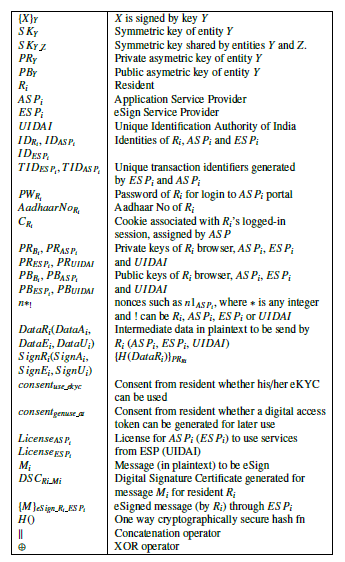 Figure 1: Notations used in this paper
2. Related Work
Digital tokens are increasingly being used in many cryptography related applications to achieve varied objectives.
U-Prove [5] is an identity management solution based on blind signatures [6] which uses digital tokens to achieve objectives of privacy and anonymity. U-Prove consists of two protocols, viz., issuance protocol and presentation protocol. In issuance protocol, identity provider issues digital token to the subscriber which (s)he can later present to the verifier in presentation protocol so that the service provider can grant resource access to the subscriber. A U-Prove token consists of a unique token identifier, a public key of the token which aggregates information in the token, a token information field which encodes token specific information, a prover information field which is opaque to the issuer, issuer signature on all the other token contents and a boolean value which indicates whether the token is protected by a device. U-Prove uses digital tokens effectively by encoding necessary information in it in cryptographically secure way to achieve objectives such as privacy and anonymity.
OAuth2 [7] is an authorization framework which allows delegation of access to protected resources to a third party by using digital tokens referred to as access tokens. Access tokens are issued to Clients by Authorization Server after taking permission from Resource Owner. An access token can be of two types, viz., a bearer token and a MAC token. A bearer token is an opaque string which can be used to claim access to a resource by any entity who presents the token. A MAC token is essentially a shared symmetric key which is used to sign a challenge by the client to prove its possession of the token to authorization server. OAuth2 uses digital tokens effectively for access delegation and is used by many organizations for data sharing.
Bitcoin [8] is a decentralized digital currency which can be transacted over peer-to-peer bitcoin network. A bitcoin network is composed of cryptographically secure linear chains of blocks with each block containing a header and a collection of transactions. A transaction is essentially a digital token that changes ownership of bitcoins from one entity to another. Each transaction in bitcoin network is broadly composed of three parts, viz., input, output and amount. Input refers to the previous owner of the bitcoins, output refers to the new owner of the bitcoins and amount refers to the amount of bitcoin that is transacted. Bitcoins uses cryptographically secure digital information containers (similar to digital tokens) effectively for the realization of digital currency.
Although Attribute Based Encryption (ABE) is also evolved to protect privacy of user data, it is based on Identity Based Encryption (IBE). An agency may not shift from PKI to IBE framework for a number of reasons.
3. Aadhaar based e-KYC service (v2.1)
Aadhaar based eKYC service is available to general citizens only through certain empaneled agencies such as eSign Service Provider (ESP) and the infrastructure network is secured by certain designated agencies known as Authentication Service Agency (ASA) and KYC User Agency (KUA). eKYC service is hosted as a stateless REST based web service over HTTPS and the details are sent as input data encoded in XML. Figure 2 depicts Aadhaar’s eKYC webservice as specified in eKYC v2.1 specification [9]. The specification provides following information about element rc which represents the resident consent.
“rc – (mandatory) Represents resident’s explicit consent for accessing the resident’s identity and address data from Aadhaar system. Only valid value is “Y”. Without explicit consent of the Aadhaar holder application should not call this API [9].”
As can be seen from the specification, rc is a boolean consent and assumes that it has been transferred from resident to UIDAI unaltered. Although intermediate communication channels between various entities from resident to UIDAI are well secured and access to eKYC data is provided only after receiving explicit consent from resident, this way of taking consent from resident has two shortcomings. First is that the consent is taken by a non-UIDAI entity and does not encode in itself a proof from resident that it is (s)he who provided the consent. This is because residents do not have any registered tamper proof crypto device which can be used to encrypt user consent using resident specific PIN or password. Second is that providing a boolean consent is too broad, either an unconditional access is given to the whole eKYC information or no access is given at all. A resident may wish to have a better privacy enhancing fine-grained access control to his/her eKYC data indicating details on scope, purpose and recipient.
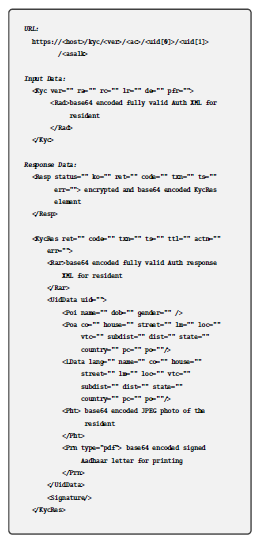 Figure 2: Aadhaar’s eKYC 2.1 API
4. Present model of eSign in India
In eSign version 2.0 [10], a resident first registers itself with a front end application specific agency viz. a viz., Application Service Provider (ASP). A resident can use either OTP based authentication or biometric based authentication. In case of OTP based authentication, OTP generation request is forwarded to UIDAI via ASP and ESP. UIDAI generates an OTP and sends it to resident’s registered mobile number. In case of biometric based authentication, resident gets his fingerprint/iris scanned through a registered device. After authentication phase, resident now initiates an eSign request through ASP by providing it the consent to use his/her eKYC, the document to be signed and his/her Aadhaar number. ASP calculates cryptographic hash of the document and sends it along with the resident’s consent and resident’s Aadhaar number to ESP. ESP takes authentication proof from resident, creates a random symmetric key S KESP UIDAI and a Personal Identity Data Object (PID). PID encodes in itself the resident’s authentication proof and the cryptographic hash of the PID object (S HA256(PID)). ESP first encrypts
PID with S KESP UIDAI, second encrypts cryptographic hash of PID (S HA256(PID)) with S KESP UIDAI and third encrypts S KESP UIDAI with public key of UIDAI (PBUIDAI). ESP now wraps them in a new object called “Auth” and sends it to UIDAI in eKYC request. UIDAI provides eKYC information to ESP. Using received eKYC information, ESP generates a Digital Signature Certificate (DSC) and provides it to ASP. ASP provides the digitally signed document to the resident.
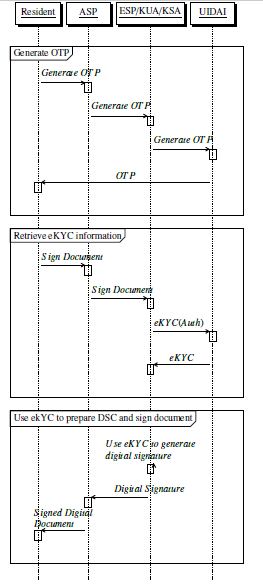 Figure 3: Sequence diagram of eSign 2.0
In practice, the initial authentication phase in eSign request is most time consuming since it involves either the manual text input (in case of OTP based authentication) or the physical scan of the fingerprint/iris (in case of biometric based authentication). Other than that, in some use cases such as Create Birth Certificate, Create Death Certificate, Student Enrollment, etc., the application is most heavily used during a certain time period (nearing the end of a deadline) which puts a sudden nationwide load on UIDAI services.
5. eSign model as proposed in [4]
In [4], author explained two limitations of present eSign model and proposed a mechanism to address the same. The first limitation is that in present model of eSign, eKYC data access reflects a restrictive self-only, full-resource and unlimited access control. Author pointed out that the resident may wish to have a better access control mechanism reflecting third-entity-also, partial resource, use-limited and time-limited.
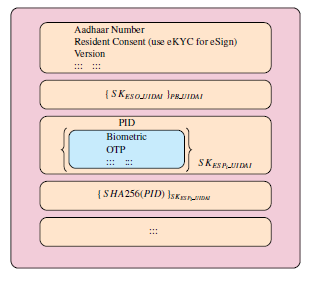 Figure 4: Auth Object (eSign 2.0)
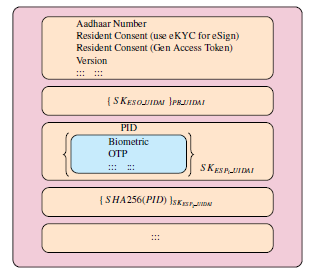 Figure 5: Auth Object as proposed in [4]
The second limitation is that a resident has to authenticate himself/herself for each eSign request and include the corresponding authentication proof in each eSign request.
If a resident wishes to eSign a large number of documents, the initial authentication phase will comprise most of the overall eSign time. After taking necessary consent from the resident, his/her authentication proof be stored with ESP in first request and is reused in rest of the requests.
A digital access token [figure 6] can be used to include claims from participating entities (ESP and UIDAI). A new service named GenerateAccessToken is proposed to be introduced by UIDAI.
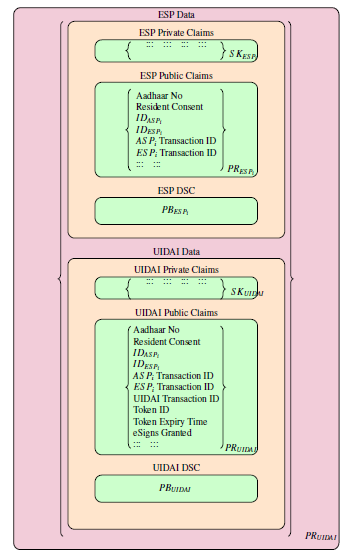 Figure 6: Access Token Structure as proposed in [4]
In this proposed model of eSign [figures 7, 8], resident first authenticates himself/herself using OTP or biometric based authentication and sends eSign request to ASP. ASP forwards this eSign request to ESP. ESP takes OTP and permission to generate access token from resident and creates an “Auth” object. This “Auth” object is created as before but additionally including ESP claims as well. ESP sends GenerateAccessToken request to UIDAI including “Auth” object. After receiving this request, UIDAI creates an access token including its own claims as well as claims received from ESP. UIDAI sends this access token back to the ESP. Now, ESP sends eKYC request to UIDAI including this access token instead of the “Auth” object. After receiving eKYC information from UIDAI, ESP generates Digital Signature Certificate (DSC) from it and provides the same to ASP. ASP embeds DSC in the document and sends the digitally signed document to the resident. For all rest of the eSign requests, ESP can reuse the same access token in eKYC requests and avoid the initial authentication phase.
The paper also presented two usability scenarios, based on whether the eKYC information can be cached by ESP or not. If ESP is permitted to reliably and securely store eKYC information of the resident, even the repeated eKYC requests from ESP to UIDAI can be avoided.
The paper also presented performance comparison analysis of proposed model with present model and found substantial improvement in amortized performance of eSign.
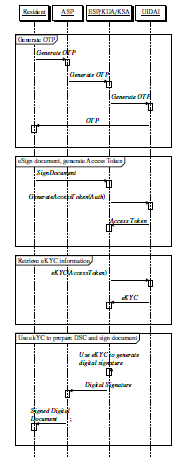 Figure 7: First call to eSign in eSign model proposed in [4]
6. Privacy Aware eSign model
In earlier proposed model [section 5] digital access token is used to increase amortized performance of eSign by storing necessary claims from UIDAI and ESP. The same token can be enhanced to include claims from resident as well. A resident can encode claims related to privacy and fine grained access control of his/her eKYC data. A stricter PEaFGAC statements may be enforced centrally at UIDAI level and an overriding less strict rule can be supplied with each eKYC request to grant access to the requesting entity.
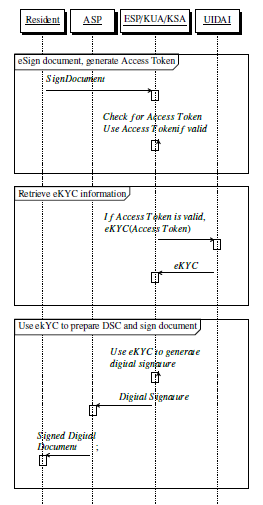 Figure 8: Second call to eSign in case eKYC needs to be fetched again
6.1. Privacy and Fine-Grained Access Control (PEaFGAC) Statements for eKYC data
A PEaFGAC statement encodes in itself the scope of information which can be provided, the purpose for which the information can be provided and attributes of recipients to whom the information can be provided. These statements are comprised of small sub-statements which are combined using relational operators. Each statement is identified by a numeric id and an alphanumeric tag.
An example of a PEaFGAC statement is presented in figure 10. This statement encodes in it that the purpose for seeking eKYC information should be eSign, seeking entity must either have the email in domain finance.iitg.ac.in, or must be working in finance department of Indian Institute of Technology, Guwahati (IITG), or must have a designation of director or above. The statement is uniquely identified by a statement identifier (ID) and has a small alphanumeric representational string (TAG). Other than these, the staement also encodes in it the purpose for which eKYC can be accessed (Purpose), required (eKYC) attributes of information seeker (AP) and eKYC information which can be provided to the requester (scope). If required, a user can have multiple privacy statements for his/her eKYC data represented by different tags.
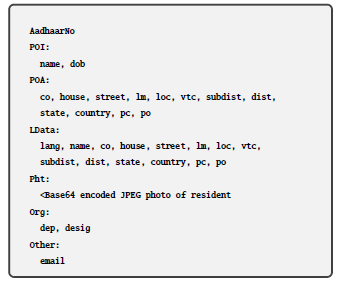 Figure 9: Least information assumed to be available from eKYC for this paper
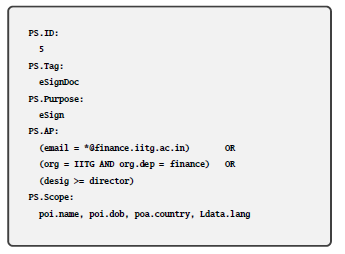 Figure 10: Example of a PEaFGAC statement
It is assumed that all entities which request eKYC data also have their eKYC information available with UIDAI. This include not just the users but the organizations such as ESPs as well. To better know an entity (both users and organizations), it is proposed that eKYC fields are expanded to include more details such as entity type (indicating whether the subject is a human or an organization), resident’s organization, resident’s department, resident’s designation, etc. When an entity attempts to access eKYC data of a resident, entity’s eKYC data and purpose for which the eKYC data is sought are verified against PEaFGAC statement protecting eKYC data to decide whether the requisite access can be granted or not. Only if the access can be granted, will the eKYC data be provided to the requesting entity. The eKYC data provided to the entity is limited in scope by PEaFGAC statement. For rest of this paper, eKYC data is assumed to consists of at least the information presented in figure 9.
6.2. PEaFGAC Token
The token structure introduced in [4] can be enhanced to include resident claims including PEaFGAC statement [figure 11]. Before sending an eSign request, resident creates a PEaFGAC token by sending a token generation request to UIDAI through ASP and ESP. During token generation process, resident is redirected to UIDAI web page where (s)he provides OTP value for authentication and PEaFGAC statement for privacy and fine-grained access to his/her eKYC data. Subsequently UIDAI verifies the OTP value and signs cryptographic hash of the statement with its private key and stores the signed hash in resident’s private claims and stores the statement in plaintext in resident’s public claims section of PEaFGAC digital access token.
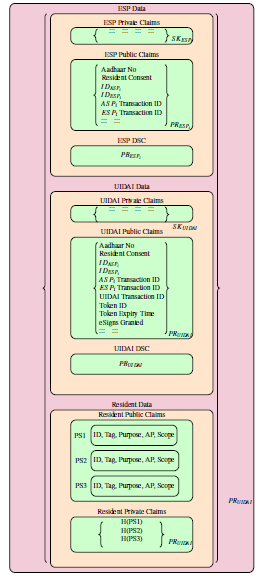 Figure 11: Proposed PEaFGAC Token Structure
Figure 12 depicts the sequence and details of communication messages among participating entities for generation of a token. First column indicates the message identifier, second column indicates the participating entities and the direction of communication and third column indicates what message is sent and how it is constructed.
6.3. Proposed Privacy Aware eSign model using PEaFGAC statement for eKYC data and PEaFGAC token
This section presents how PEaFGC statement for eKYC data and PEaFGAC token can be used to implement Privacy Aware eSign. It is assumed that PEaFGAC token has already been generated as explained in section 6.2. It is also assumed that the communication channel between resident and ASP is secured using SSL/TLS, between ASP and ESP is secured using SSL/TLS and between ESP and UIDAI is secured using dedicated secure leased lines.
Figure 13 depicts the sequence and details of communication messages transferred in eSign request in case eKYC needs to be fetched again.
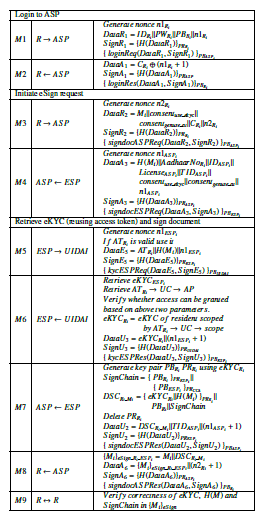 Figure 13: Proposed Privacy Aware eSign model
7. Formal Security Analysis of the proposed model using BAN Logic
This section presents formal security analysis of the proposed scheme using Burrows-Abadi-Needham (BAN) logic [11]. Because of space limitation, it is assumed that PEaFGAC token has already been generated securely.Analysis of the token generation request can be done similarly.BAN logic is a well-known model used to find beliefs of participants in a cryptographic protocol.
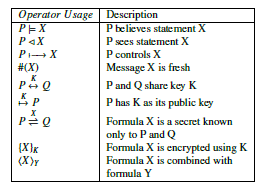 Figure 14: Fundamental BAN operators
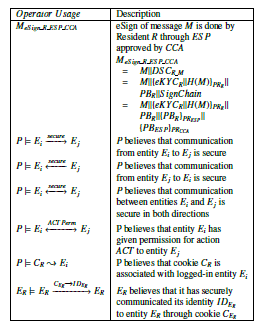 Figure 15: Extended BAN operators
The security environment is assumed to be based on
Delev-Yao model in which all messages are communicated over public channels and an attacker can see, modify, compose and replay messages but cannot break cryptographic principles. The security environment also assumes that an attacker can decipher messages if he has a valid decryption key. Some of the fundamental operators used in BAN logic are defined in figure 14. An extension to BAN logic, defined in figure 15 is required to analyse the proposed model.
Rules of Inference
[R1:] Message meaning rules concern the interpretation of messages. They all derive beliefs about the origin of messages.
For shared secrets, the inference rule is
P |= Q *) P, P C hXiY P |= Q B X
That is, if P believes that the secret Y is shared with Q and sees hXiY, then P believes that Q once said X.
[R2:] The nonce-verification rule expresses the check that a message is recent, and hence, that the sender still believes in it:
P |= #(X), P |= Q B X P |= Q |= X
That is, if P believes that X could have been uttered only recently and that Q once said X, then P believes that Q believes X.
[R3:] The jurisdiction rule states that if P believes that Q has jurisdiction over X, then P trusts Q on the truth of X:
P |= Q ⇒ X, P |= Q |= X P |= X
[R4:] The seeing rule states that if a principal sees a formula, then he also sees its components, provided he knows the necessary keys:
Note that if P sees X and P sees Y it does NOT follow that
P sees (X,Y) since that means that X and Y were uttered at the same time.
[R5:] The fresh rule states that if one part of the formula is
fresh, then the entire formula must be fresh.
P |= #(X) P |= #(X,Y)
[R6:] The belief rule states that if P believes one part of the
formula, then it also believe part of the formula.
P |= (X,Y) P |= (X)
Extended Rules of Inference
[R7:] If receiver entity ER believes that CR is a cookie associated with a unique session from resident R, PBB is public key with browser used by resident R, PBER is public key of receiver entity ER, nR is a fresh nonce generated by R, ER receives message of the form
{CommMsgReq(XkCRknR, {H(XkCRknR)}PRBi ) }PBER , then ER believes that X is sent by entity R and communication channel from R to ER is secure and no message is observed, modified or replayed by an intruder.
PBER
| ER | |= | 7−−−−→ ER, |
| ER | |= | CR { S, |
| ER | |= | #nR, |
| ER | |= | {{Y}PRR }PBR = Y |
| ER | C | { CommMsgReq (
XkCRknR, {H(XkCRknR)}PRRi ) }PBER |
| ER | |= | Secure R −−−−−→ ER, |
| ER | |= | R B X |
[R8:] If receiver entity ER believes that PBER is pub-
lic key of receiver entity ER, nER is a fresh nonce generated by ER, ER receives message of the form
{ CommMsgReq (XknER , {H(XknER )}PRER ) }PBER , then ER believes that X is sent by entity ER and communication channel from ER to ER is secure and no message is observed, modified or replayed by an intruder.
PBER
| ER | |= | 7−−−−→ ER, |
| ER | |= | {{Y}PRER }PBER = Y, |
| ER | |= | #nER |
| ER | C | { CommMsgReq (
XknER , {H(XknER )}PRER ) }PBER |
| ER | |= | Secure ER −−−−−→ ER |
| ER | |= | ER B X |
[R9:] If receiver entity ER believes that communication from all possible sender entities ERi to ER (∀i = 1…n) is secure, then ER believes that communication channel to ER is secure and no message is observed, modified or replayed by an intruder.
[R10:] If resident R believes that CR is a cookie associated with a unique session from resident R, PBER is public key of entity ER, nR was a fresh nonce generated by R and used in a previous request call from R to ER, R receives a message of the form {CommMsgRes(Xk(nR +1), {H(Xk(nR +
1)}PRER )}PBER , then ER believes that X is sent by entity R and communication channel from R to ER is secure and no message is observed, modified or replayed by an intruder.
[R11:] If sender entity ER believes that PRER is private key of sender entity ER, PBER is public key of receiver entity ER, nER was a fresh nonce generated by R and used in a previous request call from ER to ER, ER receives message of the form
{CommMsgRes (Xk(nER +1), {H(Xk(nER +1)}PRER )}PBER , then ER believes that X is sent by entity ER and communication channel from ER to ER is secure and no message is observed, modified or replayed by an intruder.
[R12:] If sender entity ER believes that communication
from all possible receiver entities ERi (∀i = 1…n) is secure, then ER believes that communication channel to ER is secure and no message is observed, modified or replayed by an intruder.
[R13:] An electronic signature (MieSign) is a valid signature only when resident verifies that three main parts in signature, viz., eKYC, H(M) and SignChain are as expected.
Assumptions
The protocol makes several assumptions. The assumptions relevant for the discussion of this paper are listed below.
[A1:] It is assumed that all sessions from all residents Ri
keeps their cookie CRi secret.
[A2-A6:] The scheme makes several assumptions about public keys. For example, Ri believes that PBASPi is public key of AS Pi. Similar to this, other entities also make similar assumptions. These assumptions are listed below.
| Ri | |= | PBASPi 7−−−−−→ | ASPi | …(A2) |
| ESPi | |= | PBASPi 7−−−−−→ | ASPi | …(A3) |
| ASPi | |= | PBESPi 7−−−−−→ | ESPi | …(A4) |
| UIDAI | |= | PBESPi 7−−−−−→ | ESPi | …(A5) |
| ESPi | |= | PBUIDAI 7−−−−−−→ | UIDAI | …(A6) |
[A7:] AS Pi assumes that all valid cookies CRi are associated with a valid ongoing session from a unique valid user Ri already logged in to AS Pi portal.
[A8-A15:] Ri and AS Pi assumes that all nonce n∗Ri (where ∗ is any integer used in the scheme) are fresh. Similar to this, other entities also make similar assumptions. These assumptions are listed below.
| Ri | |= | #n∗Ri | …(A8) |
| AS Pi | |= | #n∗Ri | …(A9) |
| AS Pi | |= | #n∗ASPi | …(A10) |
| ES Pi | |= | #n∗ASPi | …(A11) |
| ES Pi | |= | #n∗ESPi | …(A12) |
| UIDAi | |= | #n∗ESPi | …(A13) |
| UIDAI | |= | #n∗UIDAI | …(A14) |
| ES Pi | |= | #n∗UIDAI | …(A15) |
[A16:] It is assumed that when AS Pi receives message of the form CommMsg(DataAj,SignAj)PBASPi from ES Pi, it has verified the validity of data, i.e., {SignAj}PBESPj = H(DataAj). The same assumption is made for all entities receiving messages of this form.
Goals to be achieved.
Following are the goals which are envisaged to be achieved by the proposed model.
[G1-G6:] Sender entity must be sure that the data received by receiver entity is same as what was sent by it and is not modified, observed or replayed by an intruder after it was sent by the sender entity. Similarly, receiver entity must be sure that the data received by it is same as what was sent by sender entity and is not modified, observed or replayed by an intruder after it was sent by the sender entity.
| AS Pi | |= | Ri | secure
←−−−→ |
AS Pi |
| Ri | |= | Ri | secure
←−−−→ |
AS Pi |
| AS Pi | |= | AS Pi | secure
←−−−→ |
ES Pi |
| ES Pi | |= | AS Pi | secure
←−−−→ |
ES Pi |
| ES Pi | |= | ES Pi | secure
←−−−→ |
UIDAI |
| UIDAI | |= | ES Pi | secure
←−−−→ |
UIDAI |
[G7:] Resident Ri must be sure that at the end what he receives is indeed a digital signature on message Mi, signed by resident’s private key and generated by the genuine ES Pi.
Ri |= MieSign = MeSign Ri ESPi CCA
Idealization
BAN idealization of communication messages in communication phase is shown in table 1
Table 1: BAN Idealization of Proposed Protocol (Part I: M1-3) and (Part II:M4-8)
| M1 | ASPi | C | {login (
IDRi kPWRi kPBBi kn1Ri {H(IDRi kPWRi kPBBi k n1Ri )}PRBi ) }PBASPi |
|||||
| M2 | Ri | C | {loginRes (
CRi ⊕(n1Ri +1) {H(CRi ⊕ (n1Ri +1))}PRASPi ) }PBBi |
|||||
| M3 | ASPi | C | {signdocASPReq (
Mikconsentuse ekyck consentgenuse atkCRi kn2Ri ), {H(Mikconsentuse ekyck consentgenuse atkCRi k n2Ri )}PRBi ) }PBASPi |
|||||
| M4 | ESPi | C | {signdocESPReq (
H(Mi)kAadhaarNoRi k IDASPi kLicenseASPi k TIDASPi kconsentuse ekyck consentgenuse atkn1ASPi , { H(H(Mi)kAadhaarNoRi k IDASPi kLicenseASPi k TIDASPi k consentuse ekyck consentgenuse atk n1ASPi ) }PRASPi ) }PBESPi |
|||||
| M5 | UIDAI | C | {kycESPReq (
ATRi kH(Mi)kn1ESPi , {H(ATRi kH(Mi)k n1ESPi )}PRESPi ) }PBUIDAI |
|||||
| M6 | ESPi | C | {kycESPRes ( eKYCRi k(n1ESPi +1) {H(eKYCRi k
(n1ESPi +1))}PRUIDAI }PBESPi |
|||||
| M7 | ASPi | C | {signdocESPRes ( {eKYCRi kH(Mi)}PRRi k
PBRi k{PBRi }PRESPi k {PBESPi }PRCCA k TIDASPi k(n1ASPi +1), {H(eKYCRi kH(Mi)}PRRi k PBRi k{PBRi }PRESPi k {PBESPi }PRCCA k TIDASPi k (n1ASPi +1))}PRESPi ) }PBASPi |
|||||
| M8 | Ri | C | {signdocASPRes ( Mik{eKYCRi kH(Mi)}PRRi kPBRi k{PBRi }PRESPi k
{PBESPi }PRCCA k(n2Ri +1) {H(Mik{eKYCRi kH(Mi)}PRRi kPBRi k{PBRi }PRESPi k {PBESPi }PRCCA k (n2Ri +1))}ASPi ) }PBBi |
|||||
Analysis
[P1-P6:] Using messages M1, M3 and rule R7, it can be deduced that AS Pi believes that communication from Ri to AS Pi is secure. Using messages M2, M8 and rule R11, it can be deduced that AS Pi believes that communication from AS Pi to Ri is secure. From these two deductions, it can further be deduced that AS Pi believes that communication between Ri and [P7:] Using message M9 and rule R13, it can be deduced that Ri believes that {Mi}eSign is a valid electronic signature.
8. Conclusion
This work is an extension of the work [4] on enhancing amortized performance of eSign by using digital access tokens including claims from ESP and UIDAI. In this work, the digital access token introduced in [4] is extended to include privacy and fine-grained access control statements for access to resident’s eKYC data. This enhanced token can be used by third entities to access the protected eKYC data with better privacy and fine-grained access control rules enforced by the resident. A formal security analysis of the proposed model using BAN logic is also presented.
- UIDAI, “Unique Identification Authority of India”, [Online]. Available: https://uidai.gov.in (2017).
- Wikipedia, “Aadhaar”, [Online]. Available: https://en.wikipedia.org/wiki/Aadhaar (2017).
- Reserve Bank of India, “Master Direction – Know Your Customer (KYC) Direction, 2016”, [Online]. Available: https://rbidocs.rbi.org.in/rdocs/notification/PDFs/18MDKYCD8E68EB1 3629A4A82BE8E06E606C57E57.PDF,
2018. - Bakshi, Puneet, Neelakantan Subramanian, and Sukumar Nandi. “Us-ing digital tokens to improve amortized performance of eSign.” 2018 IEEE 16th Intl Conf on Dependable, Autonomic and Secure Comput-ing, 16th Intl Conf on Pervasive Intelligence and Computing, 4th Intl Conf on Big Data Intelligence and Computing and Cyber Science and Technology Congress (DASC/PiCom/DataCom/CyberSciTech). IEEE, 2018.
- Paquin, Christian, and Greg Zaverucha. “U-prove cryptographic spec-ification v1. 1.” Technical Report, Microsoft Corporation (2011).
- Chaum, David. “Blind signatures for untraceable payments.” Ad-vances in cryptology. Springer, Boston, MA, 1983.
- Hardt, Dick. The OAuth 2.0 authorization framework. No. RFC 6749. 2012.
- Nakamoto, Satoshi. “Bitcoin: A peer-to-peer electronic cash system.” (2008).
- UIDAI, “Aadhaar e-KYC API Specification – Version 2.1”, [Online]. Available: http://www.cca.gov.in/cca/sites/default/files/files/eSign-APIv2.1.pdf, 2017
- CCA, “eSign Service”, [Online]. http://cca.gov.in/cca/?q=eSign.html (2017).
- Burrows, Michael, Martin Abadi, and Roger Michael Needham. “A logic of authentication.” Proceedings of the Royal Society of London. A. Mathematical and Physical Sciences 426.1871 (1989): 233-271.
- Rivest, Ronald L., Adi Shamir, and Leonard Adleman. “A method for obtaining digital signatures and public-key cryptosystems.” Com-munications of the ACM 21.2 (1978): 120-126.
- Merkle, Ralph C. “A digital signature based on a conventional en-cryption function.” Conference on the theory and application of cryptographic techniques. Springer, Berlin, Heidelberg, 1987.
- Paquin, Christian, and Greg Zaverucha. “U-prove cryptographic spec-ification v1. 1.” Technical Report, Microsoft Corporation (2011).
- Chaum, David. “Blind signatures for untraceable payments.” Ad-vances in cryptology. Springer, Boston, MA, 1983.
- Hardt, Dick. The OAuth 2.0 authorization framework. No. RFC 6749. 2012.
- Nakamoto, Satoshi. “Bitcoin: A peer-to-peer electronic cash system.” (2008).
- PKIA2017, “Development of Smart Authentication and Identifica-tion in Asia”, [Online]. Available: http://pkiindia.in/pkia/#preceding, 2017.
- CCA, “Pki framework in India”, [Online]. Available: http://www.cca.gov.in/cca/?q=pkiframe work.html (2015).
- CCA, “Public key certificate classes”, [Online]. Available: http://www.cca.gov.in/cca/?q=node/45 (2017).
- CCA, “Empanelled eSign Service Providers”, [Online]. Available: http://www.cca.gov.in/cca/?q=service-providers.html (2017).
- Jones, Michael, John Bradley, and Nat Sakimura. Json web token (jwt). No. RFC 7519. 2015.
- Jones, Mike, et al. Cbor web token (cwt). No. RFC 8392. 2018.