
Use of machine learning techniques in the prediction of credit recovery

Volume 2, Issue 3, Page No 1432–1442, 2017
Adv. Sci. Technol. Eng. Syst. J. 2(3), 1432–1442 (2017);
DOI: 10.25046/aj0203179
Keywords: machine learning, data mining, credit recovery, h2o.ai
This paper is an extended version of the paper originally presented at the International Conference on Machine Learning and Applications (ICMLA 2016), which proposes the construction of classifiers, based on the application of machine learning techniques, to identify defaulting clients with credit recovery potential. The study was carried out in 3 segments of a Bank’s operations and achieved excellent results. Generalized linear modeling algorithms (GLM), distributed random forest algorithms (DRF), deep learning (DL) and gradient expansion algorithms (GBM) implemented on the H2O.ai platform were used.
1 Introduction
This paper is an extension of the work originally presented at the International Conference on Machine Learning and Application (ICMLA 2016) [1], which presented the first results of a Brazilian bank research to reduce its losses with defaulting clients. That study covered only a sample of 22.764 transactions, representing a homogeneous group of bank customers. We extend our previous work by adding all operations from individual costumers which were in arrears in July 2016.
The Figure 1 shows that there was a slight decrease in the number of debtors in June 2016, but increased again in the following months.
The Bank had nearly 54 million active credit agreements with individuals at the end of July 2016. Of this amount, approximately 8.6 million were delayed for 15 days or more, accounting for 15.9% of the contracts. These delinquent contracts amounted to more than R$20.8 billion (US$6.4 billion in July 2016), accounting for approximately 5.8% of the Bank’s individuals loan portfolio, an increase of 1.2 percentage points over December 2014. That is, in 21 months the financial volume of overdue loans contracted by individuals increased by 26%.
The Brazilian Central Bank (BACEN) regulation requires financial institutions to classify their credit operations and perform a Provision for Doubtful Accounts (PDA), according to a risk classification. The main criteria for the classification is the number of days in arrears of each individual credit agreement.
The Table 1 shows the days-in-delay ranges considered to determine a risk classification and therefore the minimum percentage PDA that financial institutions must reserve. As an operation increases the number of days in arrears, there is a non-linear increase of PDA, which may allocate 100% of the outstanding balance of the contract. For example, an operation with a debit balance of R$ 1,000, with 15 days in arrears, must reserve a minimum provision of R$ 10. The amount of the provision may reach R$ 1,000 if the arrear reach 180 days.
Table 1: Days in arrears x Provision
| Days in arrears | Minimum Risk | PDA % |
| 15-30 | B | 1 |
| 31-60 | C | 3 |
| 61-90 | D | 10 |
| 91-120 | E | 30 |
| 121-150 | F | 50 |
| 151-180 | G | 70 |
| over 180 | H | 100 |
At the time of the credit granting, financial institutions assume the credit risk and make the corresponding provisions in accordance with the current Central Bank regulation. Acting in this way, in a possible default of the customer, the financial institution and the stability of the financial system will be protected. However, as a customer delays its operations, the natural reaction of financial institutions is to restrict credit to them, increasing the chances of these
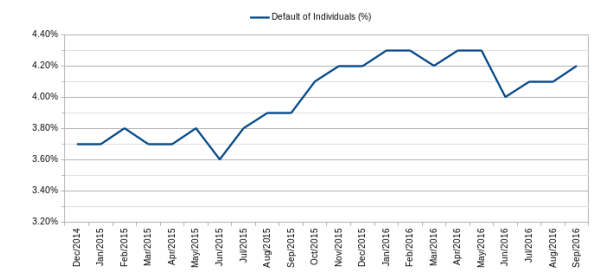
Figure 1: Default of individuals.
customer’s evasion to other institutions, since they will not be able to carry out new credit operations with the original institution.
With the increase in delinquency, a mobilization of account managers of the bank began in order to mitigate the evasion of its clients by approaching the customer in arrear and proposing alternatives that could fix the delayed payments. Hence, solving the default situation and the possible loss of the customer of its portfolio, as well as reducing the financial amount allocated to (PDA).
Provided that the selection of the clients is a time and resource consuming task, the main objective of this study was to apply machine learning techniques to predict the recovery probability of credit transactions, providing a list of delinquent clients with the greatest potential for regularization of their operations.
Models were developed using Generalized Linear Models (GLM), Gradient Boosted Methods (GBM), Distributed Random Forest (DRF) and Deep Learning (DL)[1] . The models were compared using the recall indicator, which will be explained on section 3. The models were developed using the R language and H2O machine learning platform, considering its parallel processing capabilities. Further details on section 3. 2
This paper is organized as follows: Section 2 presents the credit scoring state of the art. Section 3 presents the methodology used in this study. Section 4 presents the modeling and evaluation of the generated models for each method. Section 5 presents the conclusion and future works.
2 State of the Art
The default numbers observed in Brazil, from December 2014 to September 2016, indicate that financial institutions need a tool to support their credit granting decisions. Although there are several studies to identify the customer credit risk, qualifying them as good or bad payers, helping to make a decision to grant credit, there is few research studying the credit recovery, when the delinquency occurs. [2]
In [3], the author conducted a study evaluating 41 publications on the award of credit since 2006, all of them using classifiers to categorize customers as good or bad payers. Those works were organized into three categories of classifiers: individuals; homogeneous ensemble; and heterogeneous ensemble classifiers. Most of the algorithms used were implemented through logistic regression and decision trees, with their use of boosting, bagging and forest variants.
The Table 2 lists the eight datasets that were used in [3] to verify the performance of each of the 41 models proposed, evaluating them from the standpoint of 6 indicators: Area Under the Receiver Operating Curve (AUC), percentage correctly classified (PCC), partial Gini index, H-measure, Brier Score (BS) and Kolmogorov-Smirnov (KS).
Table 2: Datasets used in [3].
| Name | Samples | Features | Debtors % |
| AC | 690 | 14 | 44.5 |
| GC | 1000 | 20 | 30.0 |
| Th02 | 1225 | 17 | 26.4 |
| Bene 1 | 3123 | 27 | 66.7 |
| Bene 2 | 7190 | 28 | 30.0 |
| UK | 30000 | 14 | 4.0 |
| PAK | 50000 | 37 | 26.1 |
| GMC | 150000 | 12 | 6.7 |
In [4], the author presents AUC as an indicator that represent how well classified were the data, independent of its distribution or misclassification costs. PCC is an overall accuracy measure that indicates the percentage of outcomes that were correctly classified.[5]
A score was assigned to each algorithm, referring to the classification received in the comparison between them within the same performance measure . For example, the algorithm K-means was in 12th place considering the AUC indicator, while the KNN was in 29th place. Thus, the scores attributed to them were 12 and 29, respectively. Then, the algorithms were ordered by the average of all metrics, where the 1st place were the algorithm that obtained the lowest score.
The heterogeneous multi-classifiers presented a better performance, although the performance between the three categories was very similar.
The Table 3 presents the results of the benchmark, indicating that the HCES-Bag algorithm obtained the highest AUC result, while the AVG-W and Gasen algorithms reached 80.7% of the PCC.
| Algorithm | AUC | PCC | |
| HCES-Bag | 0.932 | 80.2 | |
| Heterogeneous Ensemble | AVG W | 0.931 | 80.7 |
| GASEN | 0.931 | 80.7 | |
| RF | 0.931 | 78.9 | |
| Homogeneous Ensemble | BagNN | 0.927 | 80.2 |
| Boost | 0.93 | 77.2 | |
| LR | 0.931 | 70.84 | |
| Individual | LDA | 0.929 | 78.4 |
| SVM-Rbf | 0.925 | 79.9 |
Table 3: State of Art – Models Comparison – Adapted from [3]
3 Methodology and Infrastructure Setup
This section presents the methodology used in this study, which was segmented in stages according to the phases proposed by CRISP-DM [6]. The result of each phase is described in the next Section.
Training model environment – The models were trained on the H2O.ai platform, in a cluster formed by 5 virtual machines on the same subnet and with the same configuration. Their operating system was Red Hat Enterprise Linux 6.8 64 bits, with 34 cores and 80
GB of RAM. It were used H2O.ai version 3.10.4.5 and R version 3.3.0. It were allocated 44 GB of RAM and all cores of each machine, reaching a total of 170 cores and 220 GB of RAM.
The training dataset consisted of about 40 million copies, requiring a robust platform to be made available for the processing of this data.
The Figure 2 shows the CPU meter of the H2O.ai cluster in action at the moment of the training models. It shows the percentage of use of the processors of each machine, identified by the final number of its IP address (174 to 178) and the port number where the service was running (54321). The intensive use of the 170 available cores shown in the Figure 2 reinforces the need for a robust platform.
Each vertical bar represents 1 core and the colors represent the type of process executed: idle time (blue), user time (green) and system time (red).
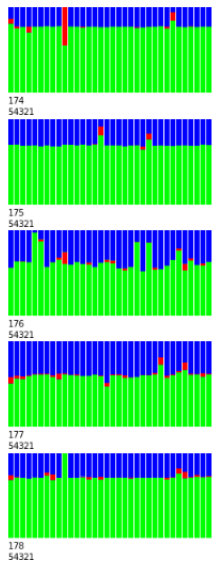
Figure 2: Cluster H2O in action
4 Results
In this sections, the results of the CRISP-DM phases are detailed: Data Understanding, Data preparation, Modeling, Evaluation and Implementation.
4.1 Data Understanding
The dataset was obtained by the extraction of information from legacy systems and customers relationship data marts. It has information about customers accounting,demographic and financial data. The dataset had 28 features and 1 label that indicates the recovery of the respective credit operation. The
Tables 4 and 5 present these 28 characteristics organized by categorical and numerical features.
Table 4: Numeric features
| Features | Description |
| V1 | Number of days of delinquency. |
| V2 | Number of days remaining for the end of the contract. |
| V3 | Contract value. |
| V4 | Amount of the outstanding balance. |
| V5 | Amount PDA provisioned for the contract. |
| V6 | Percentage loss expected for the contract. |
| V7 | Quantity of products owned by the customer. |
| V8 | Time of customer relationship with the Bank. |
| V9 | Customer age. |
| V10 | Customer income. |
| V11 | Customer total contribution margin amount. |
| V12 | Value of Gross Domestic Product per capita |
Table 5: Categorical features
| Features | Description |
| VC1 | Customer portfolio type. |
| VC2 | Customer behavioral segment. |
| VC3 | Product. |
| VC4 | Product modality. |
| VC5 | Structured operation indicator. |
| VC6 | Management level that approved the operation. |
| VC7 | Transaction risk credit. |
| VC8 | Range of past delays. |
| VC9 | PDA lock indicator. |
| VC10 | Customer relationship with the bank. |
| VC11 | Client instruction level. |
| VC12 | Customer gender. |
| VC13 | Nature of customer occupation. |
| VC14 | Customer registration status. |
| VC15 | Customer’s age group. |
| VC16 | Age group of relationship time. |
For the data understanding, the analysis began in July 2016 containing all credit operations contracts, regardless of the contracted product, with more than 14 days in arrears. In addition, transactions with the highest risk were considered as already lost contracts by our business specialists and removed from our dataset.
For definition of the label, the delay reduction indicator, the following operation was performed, considering that the data of the delayed operations were used in July 2016:
- Delay Reduction Indicator = 1, for all transactions that showed a reduction in the number of days overdue in the subsequent month, that is, in August 2016, or that their debit balances have been reduced.
- Delay Reduction Indicator = 0, otherwise, that is, presenting a delay or debit balance in August 2016 equivalent to or greater than that observed in July 2016.
The Table 6 presents the summary of transactions in the month of July 2016, which resulted in a base with 4,514,029 contracts. Of this total, only 271,193 (6.01%) were recovered.
Table 6: Dataset July 2016
| Not recovered | Recovered |
| 4,242,836 | 271,193 |
| 93.99% | 6.01% |
| Samples | 4,514,029 |
The bank has several strategies for credit recovery, according to the customer profile and the category of the credit operation, grouping them with distinct trading rules. Existing segments are divided into massive and individual strategies. Massive strategies are implemented for segments that have a known behavior pattern, whereas individual strategies cover operations that have atypical or special characteristics which require a case-by-case analysis to perform a collection and recovery.
Based on this information, the dataset was splitted into segments compatible with the institution’s recovery strategies, grouping similar products and customer segments with characteristics in common removing from the study the segments that have an individualized trading strategy. The Table 7 lists the 11 segments that will be worked on in this study, in addition to the Individualized Strategy segment, which was removed from the study.
4.2 Data Preparation
In this study, the analysis were performed only in the first 3 segments, Mortgage Loan I, II and III. The remaining segments are in the final analysis phase and will be presented at a later time.
Then, the data preparation was started, analyzing each one of the segments, preparing the data sets for the modeling phase.
The Tables 8, 10 and 12 present the summary of descriptive analysis of the numerical features of segments Mortgage Loan I, II and III, respectively. In these tables the data of quartiles and Kendall’s Tau [7] of each feature are presented.
The Tables 9, 11 and 13 present the summary of the descriptive analysis of the categorical variables, listing the Kendall’s Tau and the number of levels of each feature.
Table 7: Credit Operations Segments
.. Table 8: Mortgage Loan I – Numerical Features
|
||||||||||||||||||||||||||||||||||||||||||||||||||||||||||||||||||||||||||||||||||||||||||||||||||||||||||||||||||||||||||||||||||||||||||||||||||||||||||||||||||||||||||||||||||||||||||||||
4.3 Modeling
For each dataset, 4 predictive models were elaborated, using the H2O platform integrated to the R, using the algorithms Generalized Linear Models (GLM), Gradient Boosting Method (GBM), Random Forest (DRF) and Deep Learning (DL). The first three algorithms were chosen because they represent the techniques most used in the calculation of credit risk, which performs a classification task very similar in [8]. The algorithm DL was used to verify its behavior in a knowledge area not yet explored, but with expectation of good suitability due to the use of a great amount of
variables. [9]
The datasets of the Mortgage Loan I and III segments were splitted into 3 parts: 70% for training, 20% for validation and 10% for testing. Due to the small number of observations in the Mortgage Loan II, this dataset was splitted only in training and validation in a proportion of 80% and 20%, respectively. The next subsections present the evaluation results for each segment.
4.3.1 Mortgage Loan I
- GLM – This algorithm obtained an AUC = 0.7774755 and a PCC of 66.53%, as shown in the Figure 3 and in the Table 14
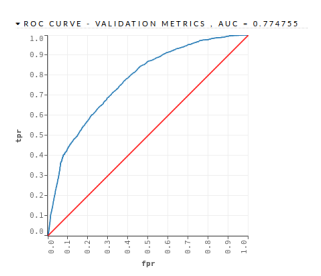
Figure 3: Mortgage Loan I – GLM – Validation Dataset
Table 9: Mortgage Loan I – Categorical Features
Table 10: Mortgage Loan II – Numerical Features
|
- DRF – This algorithm was implemented with 500 trees and a maximum depth of 7. The DRF algorithm obtained an AUC = 0.880589 and a PCC = 75.85%, as shown in the Figure 4 and in the Table 14
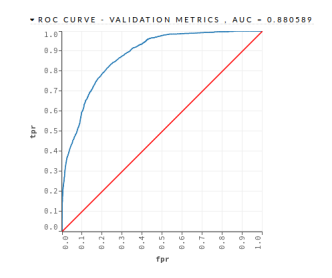
Figure 4: Mortgage Loan I – DRF – Validation Dataset
AUC
- DL – Deep Learning This algorithm was implemented with 2 hidden layers with 200 neurons each one. The DRF algorithm obtained an AUC = 0.898203 and a PCC = 79.22%, as shown in the Figure 5 and in the Table 14.
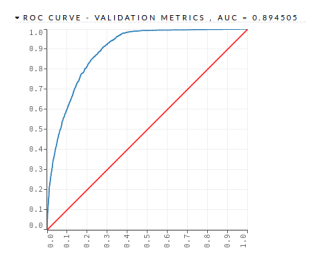
Figure 5: Mortgage Loan I – DL – Validation Dataset
Table 11: Mortgage Loan II – Categorical Features
Table 12: Mortgage Loan III – Numerical Features
|
- GBM – This algorithm was implemented with 500 trees and a maximum depth of 7. The GBM algorithm obtained an AUC = 0.988574 and a PCC = 93.90%, as shown in the Figure 6 and in the Table 14
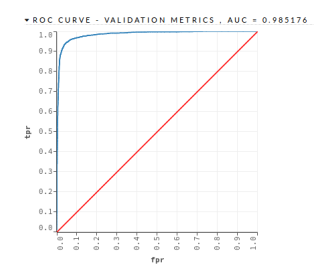
Figure 6: Mortgage Loan I – GBM – Validation Base
AUC
4.3.2 Mortgage Loan II
Because of the small number of records, this dataset was splitted only in training and testing, in the ratio of 80:20, and validation was performed through cross validation with 10 folds.
- GLM – This algorithm obtained an AUC = 0.848474 and a PCC = 65.51%, as shown in the Figure 7 and in the Table 15.
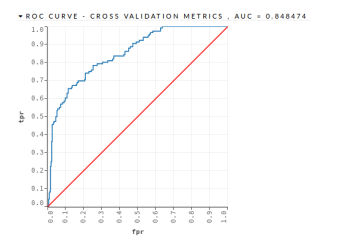
Figure 7: Mortgage Loan II – GLM – Validation Dataset
Table 13: Mortgage Loan III – Categorical Features
| Feature | Kendall’s Tau | Number of levels |
| VC1 | 0.16 | 6 |
| VC2 | 0.00 | 4 |
| VC3 | -0.24 | 2 |
| VC4 | -0.21 | 33 |
| VC5 | -0.06 | 12 |
| VC6 | -0.02 | 7 |
| VC7 | -0.03 | 2 |
| VC8 | 0.00 | 5 |
| VC9 | -0.02 | 16 |
| VC10 | -0.10 | 5 |
| VC11 | 0.03 | 7 |
| VC12 | 0.00 | 2 |
| VC13 | -0.21 | 9 |
| VC14 | 0.00 | 5 |
| VC15 | -0.04 | 17 |
| VC16 | 0.17 | 2 |
Table 14: Mortgage Loan I – Confusion Matrix
| Algorithm | 0 | 1 | Err % | PCC | |
| GLM | 0 | 5003 | 3050 | 37.87 | |
| 1 | 776 | 2603 | 22.96 | ||
| Total | 5779 | 5653 | 33.46 | 66.52 | |
| DRF | 0 | 6638 | 1415 | 17.57 | |
| 1 | 816 | 2563 | 24.14 | ||
| Total | 7454 | 3978 | 19.51 | 75.85 | |
| DL | 0 | 6290 | 1763 | 21.89 | |
| 1 | 517 | 2862 | 15.39 | ||
| Total | 6897 | 4625 | 19.94 | 79.22 | |
| GBM | 0 | 7770 | 283 | 3.51 | |
| 1 | 238 | 3141 | 7.04 | ||
| Total | 8008 | 3424 | 4.55 | 93.90 |
| Algorithm | 0 | 1 | Err % | PCC | |
| GLM | 0 | 270 | 35 | 11.47 | |
| 1 | 40 | 76 | 34.48 | ||
| Total | 310 | 111 | 17.81 | 65.51 | |
| DRF | 0 | 302 | 3 | 0.98 | |
| 1 | 17 | 99 | 14.65 | ||
| Total | 319 | 102 | 4.75 | 85.34 | |
| DL | 0 | 297 | 8 | 2.62 | |
| 1 | 10 | 106 | 8.62 | ||
| Total | 307 | 114 | 4.27 | 91.37 | |
| GBM | 0 | 301 | 4 | 1.31 | |
| 1 | 16 | 100 | 13.79 | ||
| Total | 317 | 104 | 4.75 | 86.20 |
Table 15: Mortgage II – Confusion Matrix
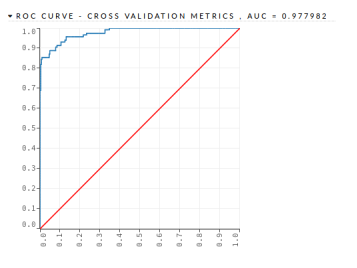
Figure 8: Mortgage Loan II – DRF – Validation Dataset
AUC
- DRF – This algorithm was implemented with 500 trees and a maximum depth of 7. The DRF algorithm obtained an AUC = 0.977982 and a • DL – This algorithm was implemented with 2 PCC = 93.10%, as shown in the Figure 8 and in hidden layers with 200 neurons each one. The the Table 15 DRF algorithm obtained an AUC = 0.956868
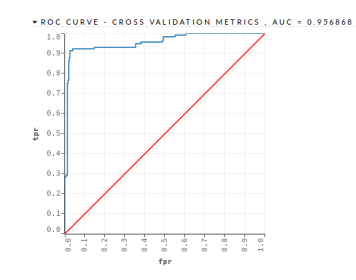
Figure 9: Mortgage Loan II – DL – Validation Dataset AUC
- GBM – This algorithm was implemented with 500 trees and a maximum depth of 7. The GBM algorithm obtained an AUC = 0.972640 and a PCC = 86.20%, as shown in the Figure 10 and in the Table 15
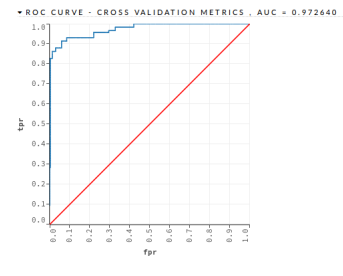
Figure 10: Mortgage Loan II – GBM – Validation
Dataset AUC
4.3.3 Mortgage Loan III
- DRF – This algorithm was implemented with 500 trees and a maximum depth of 7. The DRF algorithm obtained an AUC = 0.950718 and a PCC = 83.51%, as shown in the Figure 11 and in the Table 16
- DL – This algorithm was implemented with 2 hidden layers with 200 neurons each one. The DRF algorithm obtained an AUC = 0.939082 and a PCC = 78.20%, as shown in the Figure 12 and in the Table 16.
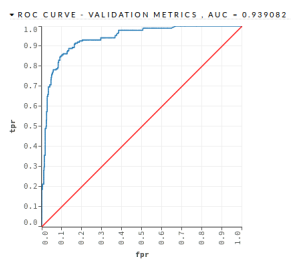
Figure 12: Mortgage Loan III – DL – Validation Dataset
AUC
- GBM – This algorithm was implemented with 500 trees and a maximum depth of 7. The GBM algorithm obtained an AUC = 0.955728 and a PCC = 98.93%, as shown in the Figure 13 and in the Table 16
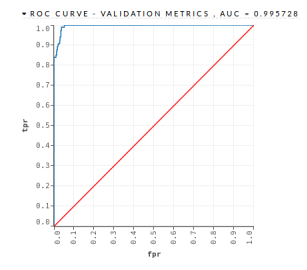
Figure 13: Mortgage Loan III – GBM – Validation Dataset AUC
- GLM – This algorithm obtained an AUC =
0.814560 and a PCC = 60.10%, as shown in the Figure 14 and in the Table 16
Table 16: Mortgage Loan III – Confusion Matrix
| Algorithm | 0 | 1 | Err % | PCC |
| GLM | 601 | 95 | 13.64 | |
| 75 | 113 | 39.89 | ||
| 676 | 208 | 19.23 | 60.10 | |
| DRF | 640 | 56 | 8.04 | |
| 31 | 157 | 16.48 | ||
| 671 | 213 | 9.84 | 83.51 | |
| DL | 656 | 40 | 5.74 | |
| 41 | 147 | 21.80 | ||
| 697 | 187 | 9.16 | 78.20 | |
| GBM | 670 | 26 | 3.73 | |
| 2 | 186 | 1.06 | ||
| 672 | 212 | 3.16 | 98.93 |
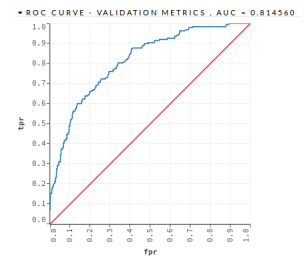
Figure 14: Mortgage Loan III – GLM – Validation
Dataset AUC
5 Conclusion
The main objective of this study was to apply machine learning techniques to predict the probability of recovery of credit transactions, providing a list of defaulting clients with greater potential for regularization of their operations.
Studies were carried out on 3 segments of credit operations, which have different recovery strategies, the Mortgage Loan segments I, II and III. With the machine learning, it was possible to elaborate predictive models with great contribution to assist the Managers in the approach to their clients with operations in arrears.
Mortgage Loan I – The model with the highest recall was obtained with the GBM algorithm. In a total of 11,342 contracts in default, there were 3,424 contracts recovered. The model was able to correctly predict 3,141 contracts, reaching a recall of 92.86%. Using the prioritization list generated by the model, the work of Bank Managers would be more assertive. In addition, the model correctly predicted 7,770 (97.02%) contracts, out of 8,008 contracts that would not be recovered.
Mortgage Loan II – The model with the highest recall was obtained with the DL algorithm. In a total of 421 delinquent contracts, there were 116 contracts recovered. The model was able to correctly predict 106 contracts, reaching a recall of 94.38%. In addition, the model correctly predicted 297 (96.74%) contracts out of 307 contracts that would not be recovered.
Mortgage Loan III – The model with the highest recall was obtained with the GBM algorithm. In a total of 884 delinquent contracts, there were 212 contracts recovered. The model was able to accurately predict 186 contracts, reaching a recall of 98.94%. In addition, the model correctly predicted 670 (99.70%) contracts out of 672 contracts that would not be recovered.
The predictive models obtained from the analysis of the first three segments, out of a total of 11, have already shown a potential great benefit to the bank, effectively assisting its customers with delayed operations and avoiding unnecessary efforts in attempts in attempts of negotiation in contracts with low probability of recovering.
5.1 Future Works
The results obtained so far strengthen initiatives for the development of predictive models using machine learning techniques in the Bank studied.
With the increase in the efficiency of credit recovery, the Bank will benefit from the reduction in Allowance for Loan Losses (PDA), directly promoting positive results, with the reversal of provisions already made.
Thus, the study will be expanded to the 8 segments that have not yet been modeled, increasing the use of models obtained through machine learning techniques in credit recovery. In addition, the models al-
- Rogerio G. Lopes, Rommel N. Carvalho, Marcelo Ladeira, and Ricardo S. Carvalho. Predicting Recovery of Credit Operations on a Brazilian Bank. pages 780–784. IEEE, December 2016.
- Sung Ho Ha. Behavioral assessment of recoverable credit of retailer’s customers. Inf. Sci., 180(19):3703–3717, October 2010.
- Stefan Lessmann, Bart Baesens, Hsin-Vonn Seow, and Lyn C. Thomas. Benchmarking state-of-the-art classification algorithms for credit scoring: An update of research. European Journal of Operational Research, 247(1):124–136, 2015.
- Wouter Verbeke, Karel Dejaeger, David Martens, Joon Hur, and Bart Baesens. New insights into churn prediction in the telecommunication sector: A profit driven data mining approach. European Journal of Operational Research, 218(1):211 – 229, 2012.
- Karel Dejaeger, Frank Goethals, Antonio Giangreco, Lapo Mola, and Bart Baesens. Gaining insight into student satisfaction using comprehensible data mining techniques. European Journal of Operational Research, 218(2):548 – 562, 2012.
- Pete Chapman, Julian Clinton, Randy Kerber, Thomas Khabaza, Thomas Reinartz, Colin Shearer, and Rudiger Wirth. Crisp-dm 1.0 step-by-step data mining guide. Technical report, The CRISP-DM consortium, August 2000.
- Stephan Arndt, Carolyn Turvey, and Nancy C Andreasen. Cor-relating and predicting psychiatric symptom ratings: Spearmans r versus kendalls tau correlation. Journal of psychiatric research, 33(2):97–104, 1999.
- Bart Baesens, Tony Van Gestel, Stijn Viaene, Maria Stepanova, Johan Suykens, and Jan Vanthienen. Benchmarking state-of-the-art classification algorithms for credit scoring. Journal of the operational research society, 54(6):627–635, 2003.
- Yann LeCun, Yoshua Bengio, and Geoffrey Hinton. Deep learning. Nature, 521(7553):436–444, 2015.
- Vikas Thammanna Gowda, Landis Humphrey, Aiden Kadoch, YinBo Chen, Olivia Roberts, "Multi Attribute Stratified Sampling: An Automated Framework for Privacy-Preserving Healthcare Data Publishing with Multiple Sensitive Attributes", Advances in Science, Technology and Engineering Systems Journal, vol. 11, no. 1, pp. 51–68, 2026. doi: 10.25046/aj110106
- David Degbor, Haiping Xu, Pratiksha Singh, Shannon Gibbs, Donghui Yan, "StradNet: Automated Structural Adaptation for Efficient Deep Neural Network Design", Advances in Science, Technology and Engineering Systems Journal, vol. 10, no. 6, pp. 29–41, 2025. doi: 10.25046/aj100603
- Glender Brás, Samara Leal, Breno Sousa, Gabriel Paes, Cleberson Junior, João Souza, Rafael Assis, Tamires Marques, Thiago Teles Calazans Silva, "Machine Learning Methods for University Student Performance Prediction in Basic Skills based on Psychometric Profile", Advances in Science, Technology and Engineering Systems Journal, vol. 10, no. 4, pp. 1–13, 2025. doi: 10.25046/aj100401
- khawla Alhasan, "Predictive Analytics in Marketing: Evaluating its Effectiveness in Driving Customer Engagement", Advances in Science, Technology and Engineering Systems Journal, vol. 10, no. 3, pp. 45–51, 2025. doi: 10.25046/aj100306
- Khalifa Sylla, Birahim Babou, Mama Amar, Samuel Ouya, "Impact of Integrating Chatbots into Digital Universities Platforms on the Interactions between the Learner and the Educational Content", Advances in Science, Technology and Engineering Systems Journal, vol. 10, no. 1, pp. 13–19, 2025. doi: 10.25046/aj100103
- Ahmet Emin Ünal, Halit Boyar, Burcu Kuleli Pak, Vehbi Çağrı Güngör, "Utilizing 3D models for the Prediction of Work Man-Hour in Complex Industrial Products using Machine Learning", Advances in Science, Technology and Engineering Systems Journal, vol. 9, no. 6, pp. 01–11, 2024. doi: 10.25046/aj090601
- Yangjun Chen, Bobin Chen, "On Mining Most Popular Packages", Advances in Science, Technology and Engineering Systems Journal, vol. 9, no. 4, pp. 60–72, 2024. doi: 10.25046/aj090407
- Haruki Murakami, Takuma Miwa, Kosuke Shima, Takanobu Otsuka, "Proposal and Implementation of Seawater Temperature Prediction Model using Transfer Learning Considering Water Depth Differences", Advances in Science, Technology and Engineering Systems Journal, vol. 9, no. 4, pp. 01–06, 2024. doi: 10.25046/aj090401
- Brandon Wetzel, Haiping Xu, "Deploying Trusted and Immutable Predictive Models on a Public Blockchain Network", Advances in Science, Technology and Engineering Systems Journal, vol. 9, no. 3, pp. 72–83, 2024. doi: 10.25046/aj090307
- Anirudh Mazumder, Kapil Panda, "Leveraging Machine Learning for a Comprehensive Assessment of PFAS Nephrotoxicity", Advances in Science, Technology and Engineering Systems Journal, vol. 9, no. 3, pp. 62–71, 2024. doi: 10.25046/aj090306
- Taichi Ito, Ken’ichi Minamino, Shintaro Umeki, "Visualization of the Effect of Additional Fertilization on Paddy Rice by Time-Series Analysis of Vegetation Indices using UAV and Minimizing the Number of Monitoring Days for its Workload Reduction", Advances in Science, Technology and Engineering Systems Journal, vol. 9, no. 3, pp. 29–40, 2024. doi: 10.25046/aj090303
- Henry Toal, Michelle Wilber, Getu Hailu, Arghya Kusum Das, "Evaluation of Various Deep Learning Models for Short-Term Solar Forecasting in the Arctic using a Distributed Sensor Network", Advances in Science, Technology and Engineering Systems Journal, vol. 9, no. 3, pp. 12–28, 2024. doi: 10.25046/aj090302
- Tinofirei Museba, Koenraad Vanhoof, "An Adaptive Heterogeneous Ensemble Learning Model for Credit Card Fraud Detection", Advances in Science, Technology and Engineering Systems Journal, vol. 9, no. 3, pp. 01–11, 2024. doi: 10.25046/aj090301
- Toya Acharya, Annamalai Annamalai, Mohamed F Chouikha, "Optimizing the Performance of Network Anomaly Detection Using Bidirectional Long Short-Term Memory (Bi-LSTM) and Over-sampling for Imbalance Network Traffic Data", Advances in Science, Technology and Engineering Systems Journal, vol. 8, no. 6, pp. 144–154, 2023. doi: 10.25046/aj080614
- Renhe Chi, "Comparative Study of J48 Decision Tree and CART Algorithm for Liver Cancer Symptom Analysis Using Data from Carnegie Mellon University", Advances in Science, Technology and Engineering Systems Journal, vol. 8, no. 6, pp. 57–64, 2023. doi: 10.25046/aj080607
- Ng Kah Kit, Hafeez Ullah Amin, Kher Hui Ng, Jessica Price, Ahmad Rauf Subhani, "EEG Feature Extraction based on Fast Fourier Transform and Wavelet Analysis for Classification of Mental Stress Levels using Machine Learning", Advances in Science, Technology and Engineering Systems Journal, vol. 8, no. 6, pp. 46–56, 2023. doi: 10.25046/aj080606
- Kitipoth Wasayangkool, Kanabadee Srisomboon, Chatree Mahatthanajatuphat, Wilaiporn Lee, "Accuracy Improvement-Based Wireless Sensor Estimation Technique with Machine Learning Algorithms for Volume Estimation on the Sealed Box", Advances in Science, Technology and Engineering Systems Journal, vol. 8, no. 3, pp. 108–117, 2023. doi: 10.25046/aj080313
- Chaiyaporn Khemapatapan, Thammanoon Thepsena, "Forecasting the Weather behind Pa Sak Jolasid Dam using Quantum Machine Learning", Advances in Science, Technology and Engineering Systems Journal, vol. 8, no. 3, pp. 54–62, 2023. doi: 10.25046/aj080307
- Der-Jiun Pang, "Hybrid Machine Learning Model Performance in IT Project Cost and Duration Prediction", Advances in Science, Technology and Engineering Systems Journal, vol. 8, no. 2, pp. 108–115, 2023. doi: 10.25046/aj080212
- Paulo Gustavo Quinan, Issa Traoré, Isaac Woungang, Ujwal Reddy Gondhi, Chenyang Nie, "Hybrid Intrusion Detection Using the AEN Graph Model", Advances in Science, Technology and Engineering Systems Journal, vol. 8, no. 2, pp. 44–63, 2023. doi: 10.25046/aj080206
- Ossama Embarak, "Multi-Layered Machine Learning Model For Mining Learners Academic Performance", Advances in Science, Technology and Engineering Systems Journal, vol. 6, no. 1, pp. 850–861, 2021. doi: 10.25046/aj060194
- Roy D Gregori Ayon, Md. Sanaullah Rabbi, Umme Habiba, Maoyejatun Hasana, "Bangla Speech Emotion Detection using Machine Learning Ensemble Methods", Advances in Science, Technology and Engineering Systems Journal, vol. 7, no. 6, pp. 70–76, 2022. doi: 10.25046/aj070608
- Deeptaanshu Kumar, Ajmal Thanikkal, Prithvi Krishnamurthy, Xinlei Chen, Pei Zhang, "Analysis of Different Supervised Machine Learning Methods for Accelerometer-Based Alcohol Consumption Detection from Physical Activity", Advances in Science, Technology and Engineering Systems Journal, vol. 7, no. 4, pp. 147–154, 2022. doi: 10.25046/aj070419
- Zhumakhan Nazir, Temirlan Zarymkanov, Jurn-Guy Park, "A Machine Learning Model Selection Considering Tradeoffs between Accuracy and Interpretability", Advances in Science, Technology and Engineering Systems Journal, vol. 7, no. 4, pp. 72–78, 2022. doi: 10.25046/aj070410
- Ayoub Benchabana, Mohamed-Khireddine Kholladi, Ramla Bensaci, Belal Khaldi, "A Supervised Building Detection Based on Shadow using Segmentation and Texture in High-Resolution Images", Advances in Science, Technology and Engineering Systems Journal, vol. 7, no. 3, pp. 166–173, 2022. doi: 10.25046/aj070319
- Osaretin Eboya, Julia Binti Juremi, "iDRP Framework: An Intelligent Malware Exploration Framework for Big Data and Internet of Things (IoT) Ecosystem", Advances in Science, Technology and Engineering Systems Journal, vol. 6, no. 5, pp. 185–202, 2021. doi: 10.25046/aj060521
- Arwa Alghamdi, Graham Healy, Hoda Abdelhafez, "Machine Learning Algorithms for Real Time Blind Audio Source Separation with Natural Language Detection", Advances in Science, Technology and Engineering Systems Journal, vol. 6, no. 5, pp. 125–140, 2021. doi: 10.25046/aj060515
- Baida Ouafae, Louzar Oumaima, Ramdi Mariam, Lyhyaoui Abdelouahid, "Survey on Novelty Detection using Machine Learning Techniques", Advances in Science, Technology and Engineering Systems Journal, vol. 6, no. 5, pp. 73–82, 2021. doi: 10.25046/aj060510
- Radwan Qasrawi, Stephanny VicunaPolo, Diala Abu Al-Halawa, Sameh Hallaq, Ziad Abdeen, "Predicting School Children Academic Performance Using Machine Learning Techniques", Advances in Science, Technology and Engineering Systems Journal, vol. 6, no. 5, pp. 08–15, 2021. doi: 10.25046/aj060502
- Zhiyuan Chen, Howe Seng Goh, Kai Ling Sin, Kelly Lim, Nicole Ka Hei Chung, Xin Yu Liew, "Automated Agriculture Commodity Price Prediction System with Machine Learning Techniques", Advances in Science, Technology and Engineering Systems Journal, vol. 6, no. 4, pp. 376–384, 2021. doi: 10.25046/aj060442
- Banir Rimbawansyah Hasanuddin, Sani Muhammad Isa, "Business Intelligence Budget Implementation in Ministry of Finance (As Chief Operating Officer)", Advances in Science, Technology and Engineering Systems Journal, vol. 6, no. 4, pp. 123–129, 2021. doi: 10.25046/aj060414
- Hathairat Ketmaneechairat, Maleerat Maliyaem, Chalermpong Intarat, "Kamphaeng Saen Beef Cattle Identification Approach using Muzzle Print Image", Advances in Science, Technology and Engineering Systems Journal, vol. 6, no. 4, pp. 110–122, 2021. doi: 10.25046/aj060413
- Carla Blank, Matthew McBurney, Maria Morgan, Raed Seetan, "A Survey of Big Data Techniques for Extracting Information from Social Media Data", Advances in Science, Technology and Engineering Systems Journal, vol. 6, no. 3, pp. 189–204, 2021. doi: 10.25046/aj060322
- Md Mahmudul Hasan, Nafiul Hasan, Dil Afroz, Ferdaus Anam Jibon, Md. Arman Hossen, Md. Shahrier Parvage, Jakaria Sulaiman Aongkon, "Electroencephalogram Based Medical Biometrics using Machine Learning: Assessment of Different Color Stimuli", Advances in Science, Technology and Engineering Systems Journal, vol. 6, no. 3, pp. 27–34, 2021. doi: 10.25046/aj060304
- Marlene Ofelia Sanchez-Escobar, Julieta Noguez, Jose Martin Molina-Espinosa, Rafael Lozano-Espinosa, "Supporting the Management of Predictive Analytics Projects in a Decision-Making Center using Process Mining", Advances in Science, Technology and Engineering Systems Journal, vol. 6, no. 2, pp. 1084–1090, 2021. doi: 10.25046/aj0602123
- Dominik Štursa, Daniel Honc, Petr Doležel, "Efficient 2D Detection and Positioning of Complex Objects for Robotic Manipulation Using Fully Convolutional Neural Network", Advances in Science, Technology and Engineering Systems Journal, vol. 6, no. 2, pp. 915–920, 2021. doi: 10.25046/aj0602104
- Md Mahmudul Hasan, Nafiul Hasan, Mohammed Saud A Alsubaie, "Development of an EEG Controlled Wheelchair Using Color Stimuli: A Machine Learning Based Approach", Advances in Science, Technology and Engineering Systems Journal, vol. 6, no. 2, pp. 754–762, 2021. doi: 10.25046/aj060287
- Antoni Wibowo, Inten Yasmina, Antoni Wibowo, "Food Price Prediction Using Time Series Linear Ridge Regression with The Best Damping Factor", Advances in Science, Technology and Engineering Systems Journal, vol. 6, no. 2, pp. 694–698, 2021. doi: 10.25046/aj060280
- Javier E. Sánchez-Galán, Fatima Rangel Barranco, Jorge Serrano Reyes, Evelyn I. Quirós-McIntire, José Ulises Jiménez, José R. Fábrega, "Using Supervised Classification Methods for the Analysis of Multi-spectral Signatures of Rice Varieties in Panama", Advances in Science, Technology and Engineering Systems Journal, vol. 6, no. 2, pp. 552–558, 2021. doi: 10.25046/aj060262
- Phillip Blunt, Bertram Haskins, "A Model for the Application of Automatic Speech Recognition for Generating Lesson Summaries", Advances in Science, Technology and Engineering Systems Journal, vol. 6, no. 2, pp. 526–540, 2021. doi: 10.25046/aj060260
- Sebastianus Bara Primananda, Sani Muhamad Isa, "Forecasting Gold Price in Rupiah using Multivariate Analysis with LSTM and GRU Neural Networks", Advances in Science, Technology and Engineering Systems Journal, vol. 6, no. 2, pp. 245–253, 2021. doi: 10.25046/aj060227
- Byeongwoo Kim, Jongkyu Lee, "Fault Diagnosis and Noise Robustness Comparison of Rotating Machinery using CWT and CNN", Advances in Science, Technology and Engineering Systems Journal, vol. 6, no. 1, pp. 1279–1285, 2021. doi: 10.25046/aj0601146
- Md Mahmudul Hasan, Nafiul Hasan, Mohammed Saud A Alsubaie, Md Mostafizur Rahman Komol, "Diagnosis of Tobacco Addiction using Medical Signal: An EEG-based Time-Frequency Domain Analysis Using Machine Learning", Advances in Science, Technology and Engineering Systems Journal, vol. 6, no. 1, pp. 842–849, 2021. doi: 10.25046/aj060193
- Reem Bayari, Ameur Bensefia, "Text Mining Techniques for Cyberbullying Detection: State of the Art", Advances in Science, Technology and Engineering Systems Journal, vol. 6, no. 1, pp. 783–790, 2021. doi: 10.25046/aj060187
- Inna Valieva, Iurii Voitenko, Mats Björkman, Johan Åkerberg, Mikael Ekström, "Multiple Machine Learning Algorithms Comparison for Modulation Type Classification Based on Instantaneous Values of the Time Domain Signal and Time Series Statistics Derived from Wavelet Transform", Advances in Science, Technology and Engineering Systems Journal, vol. 6, no. 1, pp. 658–671, 2021. doi: 10.25046/aj060172
- Carlos López-Bermeo, Mauricio González-Palacio, Lina Sepúlveda-Cano, Rubén Montoya-Ramírez, César Hidalgo-Montoya, "Comparison of Machine Learning Parametric and Non-Parametric Techniques for Determining Soil Moisture: Case Study at Las Palmas Andean Basin", Advances in Science, Technology and Engineering Systems Journal, vol. 6, no. 1, pp. 636–650, 2021. doi: 10.25046/aj060170
- Ndiatenda Ndou, Ritesh Ajoodha, Ashwini Jadhav, "A Case Study to Enhance Student Support Initiatives Through Forecasting Student Success in Higher-Education", Advances in Science, Technology and Engineering Systems Journal, vol. 6, no. 1, pp. 230–241, 2021. doi: 10.25046/aj060126
- Lonia Masangu, Ashwini Jadhav, Ritesh Ajoodha, "Predicting Student Academic Performance Using Data Mining Techniques", Advances in Science, Technology and Engineering Systems Journal, vol. 6, no. 1, pp. 153–163, 2021. doi: 10.25046/aj060117
- Karamath Ateeq, Manas Ranjan Pradhan, Beenu Mago, "Elasticity Based Med-Cloud Recommendation System for Diabetic Prediction in Cloud Computing Environment", Advances in Science, Technology and Engineering Systems Journal, vol. 5, no. 6, pp. 1618–1633, 2020. doi: 10.25046/aj0506193
- Sara Ftaimi, Tomader Mazri, "Handling Priority Data in Smart Transportation System by using Support Vector Machine Algorithm", Advances in Science, Technology and Engineering Systems Journal, vol. 5, no. 6, pp. 1422–1427, 2020. doi: 10.25046/aj0506172
- Othmane Rahmaoui, Kamal Souali, Mohammed Ouzzif, "Towards a Documents Processing Tool using Traceability Information Retrieval and Content Recognition Through Machine Learning in a Big Data Context", Advances in Science, Technology and Engineering Systems Journal, vol. 5, no. 6, pp. 1267–1277, 2020. doi: 10.25046/aj0506151
- Puttakul Sakul-Ung, Amornvit Vatcharaphrueksadee, Pitiporn Ruchanawet, Kanin Kearpimy, Hathairat Ketmaneechairat, Maleerat Maliyaem, "Overmind: A Collaborative Decentralized Machine Learning Framework", Advances in Science, Technology and Engineering Systems Journal, vol. 5, no. 6, pp. 280–289, 2020. doi: 10.25046/aj050634
- Khalid Ait Hadi, Rafik Lasri, Abdellatif El Abderrahmani, "Inferring Topics within Social Networking Big Data, Towards an Alternative for Socio-Political Measurement", Advances in Science, Technology and Engineering Systems Journal, vol. 5, no. 6, pp. 155–159, 2020. doi: 10.25046/aj050618
- Pamela Zontone, Antonio Affanni, Riccardo Bernardini, Leonida Del Linz, Alessandro Piras, Roberto Rinaldo, "Supervised Learning Techniques for Stress Detection in Car Drivers", Advances in Science, Technology and Engineering Systems Journal, vol. 5, no. 6, pp. 22–29, 2020. doi: 10.25046/aj050603
- Wongpanya Nuankaew, Pratya Nuankaew, "Tolerance of Characteristics and Attributes in Developing Student’s Academic Achievements", Advances in Science, Technology and Engineering Systems Journal, vol. 5, no. 5, pp. 1126–1136, 2020. doi: 10.25046/aj0505137
- Kodai Kitagawa, Koji Matsumoto, Kensuke Iwanaga, Siti Anom Ahmad, Takayuki Nagasaki, Sota Nakano, Mitsumasa Hida, Shogo Okamatsu, Chikamune Wada, "Posture Recognition Method for Caregivers during Postural Change of a Patient on a Bed using Wearable Sensors", Advances in Science, Technology and Engineering Systems Journal, vol. 5, no. 5, pp. 1093–1098, 2020. doi: 10.25046/aj0505133
- Khalid A. AlAfandy, Hicham Omara, Mohamed Lazaar, Mohammed Al Achhab, "Using Classic Networks for Classifying Remote Sensing Images: Comparative Study", Advances in Science, Technology and Engineering Systems Journal, vol. 5, no. 5, pp. 770–780, 2020. doi: 10.25046/aj050594
- Khalid A. AlAfandy, Hicham, Mohamed Lazaar, Mohammed Al Achhab, "Investment of Classic Deep CNNs and SVM for Classifying Remote Sensing Images", Advances in Science, Technology and Engineering Systems Journal, vol. 5, no. 5, pp. 652–659, 2020. doi: 10.25046/aj050580
- Rajesh Kumar, Geetha S, "Malware Classification Using XGboost-Gradient Boosted Decision Tree", Advances in Science, Technology and Engineering Systems Journal, vol. 5, no. 5, pp. 536–549, 2020. doi: 10.25046/aj050566
- Nghia Duong-Trung, Nga Quynh Thi Tang, Xuan Son Ha, "Interpretation of Machine Learning Models for Medical Diagnosis", Advances in Science, Technology and Engineering Systems Journal, vol. 5, no. 5, pp. 469–477, 2020. doi: 10.25046/aj050558
- Chalinee Partanapat, Chuleerat Jaruskulchai, Chanankorn Jandaeng, "A Hybrid Mod", Advances in Science, Technology and Engineering Systems Journal, vol. 5, no. 5, pp. 414–425, 2020. doi: 10.25046/aj050552
- Ladislav Burita, Ales Novak, "ISR Data Processing in Military Operations", Advances in Science, Technology and Engineering Systems Journal, vol. 5, no. 5, pp. 314–331, 2020. doi: 10.25046/aj050540
- Oumaima Terrada, Soufiane Hamida, Bouchaib Cherradi, Abdelhadi Raihani, Omar Bouattane, "Supervised Machine Learning Based Medical Diagnosis Support System for Prediction of Patients with Heart Disease", Advances in Science, Technology and Engineering Systems Journal, vol. 5, no. 5, pp. 269–277, 2020. doi: 10.25046/aj050533
- Haytham Azmi, "FPGA Acceleration of Tree-based Learning Algorithms", Advances in Science, Technology and Engineering Systems Journal, vol. 5, no. 5, pp. 237–244, 2020. doi: 10.25046/aj050529
- Hicham Moujahid, Bouchaib Cherradi, Oussama El Gannour, Lhoussain Bahatti, Oumaima Terrada, Soufiane Hamida, "Convolutional Neural Network Based Classification of Patients with Pneumonia using X-ray Lung Images", Advances in Science, Technology and Engineering Systems Journal, vol. 5, no. 5, pp. 167–175, 2020. doi: 10.25046/aj050522
- Wongpanya Nuankaew, Kanakarn Phanniphong, Sittichai Bussaman, Direk Teeraputon, Pratya Nuankaew, "Mentoring Model in an Active Learning Culture for Undergraduate Projects", Advances in Science, Technology and Engineering Systems Journal, vol. 5, no. 4, pp. 805–815, 2020. doi: 10.25046/aj050495
- Young-Jin Park, Hui-Sup Cho, "A Method for Detecting Human Presence and Movement Using Impulse Radar", Advances in Science, Technology and Engineering Systems Journal, vol. 5, no. 4, pp. 770–775, 2020. doi: 10.25046/aj050491
- Pratya Nuankaew, "Clustering of Mindset towards Self-Regulated Learning of Undergraduate Students at the University of Phayao", Advances in Science, Technology and Engineering Systems Journal, vol. 5, no. 4, pp. 676–685, 2020. doi: 10.25046/aj050481
- Anouar Bachar, Noureddine El Makhfi, Omar EL Bannay, "Machine Learning for Network Intrusion Detection Based on SVM Binary Classification Model", Advances in Science, Technology and Engineering Systems Journal, vol. 5, no. 4, pp. 638–644, 2020. doi: 10.25046/aj050476
- Adonis Santos, Patricia Angela Abu, Carlos Oppus, Rosula Reyes, "Real-Time Traffic Sign Detection and Recognition System for Assistive Driving", Advances in Science, Technology and Engineering Systems Journal, vol. 5, no. 4, pp. 600–611, 2020. doi: 10.25046/aj050471
- Amar Choudhary, Deependra Pandey, Saurabh Bhardwaj, "Overview of Solar Radiation Estimation Techniques with Development of Solar Radiation Model Using Artificial Neural Network", Advances in Science, Technology and Engineering Systems Journal, vol. 5, no. 4, pp. 589–593, 2020. doi: 10.25046/aj050469
- Maroua Abdellaoui, Dounia Daghouj, Mohammed Fattah, Younes Balboul, Said Mazer, Moulhime El Bekkali, "Artificial Intelligence Approach for Target Classification: A State of the Art", Advances in Science, Technology and Engineering Systems Journal, vol. 5, no. 4, pp. 445–456, 2020. doi: 10.25046/aj050453
- Shahab Pasha, Jan Lundgren, Christian Ritz, Yuexian Zou, "Distributed Microphone Arrays, Emerging Speech and Audio Signal Processing Platforms: A Review", Advances in Science, Technology and Engineering Systems Journal, vol. 5, no. 4, pp. 331–343, 2020. doi: 10.25046/aj050439
- Ilias Kalathas, Michail Papoutsidakis, Chistos Drosos, "Optimization of the Procedures for Checking the Functionality of the Greek Railways: Data Mining and Machine Learning Approach to Predict Passenger Train Immobilization", Advances in Science, Technology and Engineering Systems Journal, vol. 5, no. 4, pp. 287–295, 2020. doi: 10.25046/aj050435
- Yosaphat Catur Widiyono, Sani Muhamad Isa, "Utilization of Data Mining to Predict Non-Performing Loan", Advances in Science, Technology and Engineering Systems Journal, vol. 5, no. 4, pp. 252–256, 2020. doi: 10.25046/aj050431
- Hai Thanh Nguyen, Nhi Yen Kim Phan, Huong Hoang Luong, Trung Phuoc Le, Nghi Cong Tran, "Efficient Discretization Approaches for Machine Learning Techniques to Improve Disease Classification on Gut Microbiome Composition Data", Advances in Science, Technology and Engineering Systems Journal, vol. 5, no. 3, pp. 547–556, 2020. doi: 10.25046/aj050368
- Ruba Obiedat, "Risk Management: The Case of Intrusion Detection using Data Mining Techniques", Advances in Science, Technology and Engineering Systems Journal, vol. 5, no. 3, pp. 529–535, 2020. doi: 10.25046/aj050365
- Krina B. Gabani, Mayuri A. Mehta, Stephanie Noronha, "Racial Categorization Methods: A Survey", Advances in Science, Technology and Engineering Systems Journal, vol. 5, no. 3, pp. 388–401, 2020. doi: 10.25046/aj050350
- Dennis Luqman, Sani Muhamad Isa, "Machine Learning Model to Identify the Optimum Database Query Execution Platform on GPU Assisted Database", Advances in Science, Technology and Engineering Systems Journal, vol. 5, no. 3, pp. 214–225, 2020. doi: 10.25046/aj050328
- Md. Imdadul Hoque, Abul kalam Azad, Mohammad Abu Hurayra Tuhin, Zayed Us Salehin, "University Students Result Analysis and Prediction System by Decision Tree Algorithm", Advances in Science, Technology and Engineering Systems Journal, vol. 5, no. 3, pp. 115–122, 2020. doi: 10.25046/aj050315
- Gillala Rekha, Shaveta Malik, Amit Kumar Tyagi, Meghna Manoj Nair, "Intrusion Detection in Cyber Security: Role of Machine Learning and Data Mining in Cyber Security", Advances in Science, Technology and Engineering Systems Journal, vol. 5, no. 3, pp. 72–81, 2020. doi: 10.25046/aj050310
- Ahmed EL Orche, Mohamed Bahaj, "Approach to Combine an Ontology-Based on Payment System with Neural Network for Transaction Fraud Detection", Advances in Science, Technology and Engineering Systems Journal, vol. 5, no. 2, pp. 551–560, 2020. doi: 10.25046/aj050269
- Bokyoon Na, Geoffrey C Fox, "Object Classifications by Image Super-Resolution Preprocessing for Convolutional Neural Networks", Advances in Science, Technology and Engineering Systems Journal, vol. 5, no. 2, pp. 476–483, 2020. doi: 10.25046/aj050261
- Johannes Linden, Xutao Wang, Stefan Forsstrom, Tingting Zhang, "Productify News Article Classification Model with Sagemaker", Advances in Science, Technology and Engineering Systems Journal, vol. 5, no. 2, pp. 13–18, 2020. doi: 10.25046/aj050202
- Michael Wenceslaus Putong, Suharjito, "Classification Model of Contact Center Customers Emails Using Machine Learning", Advances in Science, Technology and Engineering Systems Journal, vol. 5, no. 1, pp. 174–182, 2020. doi: 10.25046/aj050123
- Rehan Ullah Khan, Ali Mustafa Qamar, Mohammed Hadwan, "Quranic Reciter Recognition: A Machine Learning Approach", Advances in Science, Technology and Engineering Systems Journal, vol. 4, no. 6, pp. 173–176, 2019. doi: 10.25046/aj040621
- Mehdi Guessous, Lahbib Zenkouar, "An ML-optimized dRRM Solution for IEEE 802.11 Enterprise Wlan Networks", Advances in Science, Technology and Engineering Systems Journal, vol. 4, no. 6, pp. 19–31, 2019. doi: 10.25046/aj040603
- Toshiyasu Kato, Yuki Terawaki, Yasushi Kodama, Teruhiko Unoki, Yasushi Kambayashi, "Estimating Academic results from Trainees’ Activities in Programming Exercises Using Four Types of Machine Learning", Advances in Science, Technology and Engineering Systems Journal, vol. 4, no. 5, pp. 321–326, 2019. doi: 10.25046/aj040541
- Ammar Al-Dallal, Amina Al-Moosa, "Prediction of Non-Communicable Diseases Using Class Comparison Data Mining", Advances in Science, Technology and Engineering Systems Journal, vol. 4, no. 5, pp. 193–206, 2019. doi: 10.25046/aj040525
- Nindhia Hutagaol, Suharjito, "Predictive Modelling of Student Dropout Using Ensemble Classifier Method in Higher Education", Advances in Science, Technology and Engineering Systems Journal, vol. 4, no. 4, pp. 206–211, 2019. doi: 10.25046/aj040425
- Fernando Hernández, Roberto Vega, Freddy Tapia, Derlin Morocho, Walter Fuertes, "Early Detection of Alzheimer’s Using Digital Image Processing Through Iridology, An Alternative Method", Advances in Science, Technology and Engineering Systems Journal, vol. 4, no. 3, pp. 126–137, 2019. doi: 10.25046/aj040317
- Abba Suganda Girsang, Andi Setiadi Manalu, Ko-Wei Huang, "Feature Selection for Musical Genre Classification Using a Genetic Algorithm", Advances in Science, Technology and Engineering Systems Journal, vol. 4, no. 2, pp. 162–169, 2019. doi: 10.25046/aj040221
- Konstantin Mironov, Ruslan Gayanov, Dmiriy Kurennov, "Observing and Forecasting the Trajectory of the Thrown Body with use of Genetic Programming", Advances in Science, Technology and Engineering Systems Journal, vol. 4, no. 1, pp. 248–257, 2019. doi: 10.25046/aj040124
- Bok Gyu Han, Hyeon Seok Yang, Ho Gyeong Lee, Young Shik Moon, "Low Contrast Image Enhancement Using Convolutional Neural Network with Simple Reflection Model", Advances in Science, Technology and Engineering Systems Journal, vol. 4, no. 1, pp. 159–164, 2019. doi: 10.25046/aj040115
- Nong Ye, Ting Yan Fok, Oswald Chong, "Modeling an Energy Consumption System with Partial-Value Data Associations", Advances in Science, Technology and Engineering Systems Journal, vol. 3, no. 6, pp. 372–379, 2018. doi: 10.25046/aj030645
- Zheng Xie, Chaitanya Gadepalli, Farideh Jalalinajafabadi, Barry M.G. Cheetham, Jarrod J. Homer, "Machine Learning Applied to GRBAS Voice Quality Assessment", Advances in Science, Technology and Engineering Systems Journal, vol. 3, no. 6, pp. 329–338, 2018. doi: 10.25046/aj030641
- Procheta Nag, Saikat Mondal, Arun More, "A Holistic User Centric Acute Myocardial Infarction Prediction System With Model Evaluation Using Data Mining Techniques", Advances in Science, Technology and Engineering Systems Journal, vol. 3, no. 6, pp. 56–66, 2018. doi: 10.25046/aj030605
- Richard Osei Agjei, Emmanuel Awuni Kolog, Daniel Dei, Juliet Yayra Tengey, "Emotional Impact of Suicide on Active Witnesses: Predicting with Machine Learning", Advances in Science, Technology and Engineering Systems Journal, vol. 3, no. 5, pp. 501–509, 2018. doi: 10.25046/aj030557
- Sudipta Saha, Aninda Saha, Zubayr Khalid, Pritam Paul, Shuvam Biswas, "A Machine Learning Framework Using Distinctive Feature Extraction for Hand Gesture Recognition", Advances in Science, Technology and Engineering Systems Journal, vol. 3, no. 5, pp. 72–81, 2018. doi: 10.25046/aj030510
- Charles Frank, Asmail Habach, Raed Seetan, Abdullah Wahbeh, "Predicting Smoking Status Using Machine Learning Algorithms and Statistical Analysis", Advances in Science, Technology and Engineering Systems Journal, vol. 3, no. 2, pp. 184–189, 2018. doi: 10.25046/aj030221