
Digitization Impact Assessment Model for Secondary Schools: Case of Nairobi County in Kenya

Volume 4, Issue 3, Page No 194–197, 2019
Adv. Sci. Technol. Eng. Syst. J. 4(3), 194–197 (2019);
DOI: 10.25046/aj040326
Keywords: Digitization impact index, Secondary school, Model
Digitization is viewed as the capability to utilize digital technologies for generating processing, sharing and transacting information. Studies show that digitization has now become ubiquitous. In almost all the sectors, we routinely interact with digital technologies. As a result, the impact of digitization is being observed in such sectors. For instance, the positive impact of digitization in education sector includes more efficient administration, reduction in workload, better accessibility to information, better management of school resources and enhanced quality of reports. However, in the context of secondary schools, the literature is conspicuously silent on the formal way of assessing the impact of digitization on both the academic performance and service delivery. As an attempt to address the gap, this paper describes a model that can evaluate the impact of digitization in such schools. Python programming tools were used to demonstrate implementation of the model. The model can help governments to formulate policies related digitization of secondary schools and can also be used by funding organization to demonstrate accountability when making investment decisions.
1. Introduction
According to [1] digitization refers to the capability to utilize digital technologies for generating, processing, sharing and transacting information. Previous studies show that digitization in secondary schools is realized by integrating information communication technology(ICT) tools like School Management information systems (MIS) to enhance efficiency of providing administration services. Examples of such services are formulating strategic plans, evaluating staff performance, communication and distribution of resources [1, 2].
Integration of ICT tools in education calls for the development of indicators to monitor the impact of such tools. Both funding sources and the public can use the indicators assess accountability. In addition, there is a need for tools for indicating how use of technology in education is promoting empowerment, creativity, equality, efficiency among learners. Many academic researchers have attempted to address these needs at theoretical and empirical levels but have encountered two difficulties. First, student performance is hard to measure and still there is no common understanding about its definition. Second, ICT is characterized by changing or evolving technologies and their impacts are difficult to separate from their setting. Therefore, the association between the use of ICT and educational performance is not clear, and inconsistent findings are presented in the literature [3]. To address some of these difficulties our study aims at establishing an appropriate model for assessing the digitization level and its impact on education institutions including secondary schools.
2. Related Work
2.1. Digitization
Education is one of the important mechanisms that provide the necessary skills, competencies and knowledge among people. Consequently, research on factors influencing the academic performance of students in education institutions has become a topic of increasing interest. Previous studies have reported that digitization and the integration of ICT tools is one of the factors that are attributed to improvement of academic performance in secondary schools [5]. A recent report from the Education Council of the Netherlands has revealed that the education sector is still looking for the suitable level and appropriate methods of digitization [6]. This observation has created the need for establishing an appropriate index for measuring digitization level and its impact on education. Examples of existing models of indices include digitization index [7] and digitization impact index.
- Digitization Index (DiGiX)
According to [7], Digitization Index (DiGiX) can be described as a composite index for measuring the impact of digitization in societies such as learning institutions. This is a tool assessing the extent to which ICT is integrated in institutions[8]. Previous research work has been focused on developing indices that can assess digitization in a country. An example is Digitization Index proposed by [9] as tool for assessing the level digitization. This level can be measured using six main attributes. That is, (i) Ubiquity, which refers to the level of accessing universally digital applications and services by consumers and enterprises, (ii) affordability, which is described as the degree to which digital services are valued in a range that makes them available to a large population, (iii) reliability that is viewed as the quality of available digital services, (iv) speed, which is described as the extent to the degree to which digital services can be available in real time, (v) usability that is described as the simplicity of using digital services and the capacity of local ecosystems to improve utilization of these services and, (vi) skill that is viewed as the ability of users to incorporate digital services into their daily lives and businesses. Figure 1, illustrates how each of the metrics are related in digitization index.
- c) Digitization Impact Index
Digitization Impact Index can be described as the effect of digitization of a society such as a school or a country. In the context of a school, Digitization Impact index can be studied as an impact of digitization of a school in a user satisfaction model. In this case, the user is the staff or student who is directly impacted by the utilization of digital services in the school. Key indicators to compute their level of satisfaction are derived from the rating of the efficiency of services offered in the school which would be influenced by the level of digitization. According to [10] people are used to the concept of rating things with numerical scores and these can work well in surveys. Once the respondent has been given the anchors of the scale, they can readily give a number to express their level of satisfaction. Typically, scales of 1- 5 are used where the lowest figure indicates extreme dissatisfaction and the highest shows extreme satisfaction.
Several studies have observed that digitizing schools has an impact on education that can be measured using the following indicators:
- Improvement of students’ academic performance that is generally evaluated by the mark or grade attained by the student in an examination [5]
- Increase of enthusiasm, interest and creativity [5].
- Ease of system use like explaining concepts when cast on screen [5].
- The speed of information access increase as a result of internet infrastructure that support pervasive, simultaneous utilization of devices for instruction, evaluation, and school operations [12].
- The number of decisions to make increases. These include device acquisition, content options, the role of technology in supporting classroom management, security and privacy, and data management [12].
However, policy makers are confronted with two main challenges that are related to application of digital index. First, there are no standard performance indicators to measure the level at which ICT is incorporated in societies. The second challenge is that there is lack of instruments for measuring the impact of adopting mass connected digital technologies and applications in societies and economies [8]. Consequently, there is lack of a standard index for assessing the impact of digitization in secondary schools.
3. Proposed Model
As an attempt to address these challenges, we propose a model that can be used to assess the level and impact of digitization in a typical secondary school. The model was derived by combining a composite digitization index proposed by [9] with indicators of digitization impact stated by [5, 12]. This is shown in Figure1.
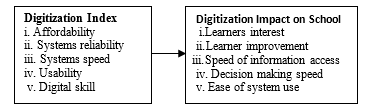
Figure1: Digitization impact conceptual model
As illustrated in Figure1, digitization index is representing independent variable for describing the level of digitization in a typical a secondary school. On the other hand, digitization impact on the school index represents the dependent variable. The proposed model can also be illustrated using simple regression equation of the form, Y= a + b1X1, where Y is the digitization impact index on the school , a is the constant parameter, b1 is the parameter to be estimated and variable X1 is the digitization index, an independent variable.
4. Significance of the Study
There are three main benefits that are associated with the proposed model. First, it can be used by the government to formulate policies related digitization of secondary schools, particularly in the African contexts like Kenya. The second benefit is that it can be used by funding organization to demonstrate accountability when making investment decisions [3]. The third benefit is that it can be used by school managers to assess the impact of integrating ICTs in a typical secondary school.
5. Study Method
According to [13] as cited in [14], at least thirty (30) subjects required for correlational research to investigate relationship between variables and at least 10% of the accessible population is required for descriptive research. Based on this argument, the researcher collected data from 35 teachers in 11 (>50%) schools of Makadara Sub- County in Kenya.
The study sought the teachers input in assessing the reliability and speed of computer systems, adequacy of infrastructure and the impact that this had on both their students’ interest and improved academic performance. The input from teachers was solicited through questionnaires and converted into numeric values by use of Likert scale.
For each of the seven (7) schools visited, individual responses obtained through questionnaires were used to generate both Digitization index and Digitization impact index. This was done by computing the percentage of arithmetic mean obtained from 5-point Likert scale. Based on the scale, the maximum rating for each indicator was five (5) and the lowest rating was one (1). Therefore, the maximum possible sum of the five identified indicators was 5X5=25. The sum of the levels was then expressed as a percentage to the maximum possible sum (25) to obtain an index for each school. For instance, if an individual respondent rated Learner interest = 3, Learner improvement =3, Speed of information access = 4, Ease of system use =3 and Decision making speed =2, then the ICT Integration index can be computed as follows:
During data analysis, digitization index was treated as independent variable while academic performance was treated as a dependent variable. The internal consistency of the questionnaire was tested by use of Cronbach Alpha measure and found to have the acceptable value of 0.735. Correlation analysis was then carried out to assess the strength and the direction of association between variables [15] while linear regression analysis were used to develop the proposed model.
6. Results
Table1 presents shows results from the seven (7) schools, where variables X1, represents Country’s’ Digitization index, and Y represents digitization impact on learners behavior.
Table1: Digitization index (X1) and Digitization Impact index (Y)
| Digitization index (X1) | Digitization Impact index (Y) |
| 64 | 44 |
| 80 | 80 |
| 80 | 76 |
| 72 | 92 |
| 92 | 60 |
| 68 | 72 |
| 52 | 52 |
Pearson correlation results from the seven (7) schools’ sample showed that Digitization index was positively related to digitization impact with a correlation coefficient of 0.38. This is shown in Figure 2.

Figure 2: Correlation between digitization index and digitization impact
Findings from Sklearn library that is implemented in python programming language revealed that academic slope coefficient (b1) was approximately 0.49 while the intercept coefficient was 32.20. The two computed coefficients were then substituted in the regression equation to formulate the empirical model that is shown in Figure 3. The model means that for every 0.49 increase in the digitization index there is one unit increase in the academic slope.

Figure 3: The developed empirical model
For the purpose of enhancing understanding Seaborn and Matplotlib packages were used to visualize the developed model from the seven schools sample. The results are shown as shown in Figure 4.
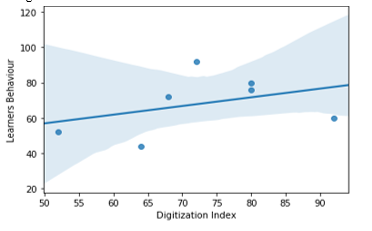
Figure 4: Visualization of the developed empirical model
7. Conclusion and Future Work
Findings from this study reveal that Digitization index of secondary schools can be measured using five indicators. That is, (i) affordability, (ii) systems reliability, (iii) systems speed, (iv) usability and (v) digital skill. In addition, linear regression equation can be used as an index for measuring the impact of digitization on both the academic performance and service delivery. Metrics for measuring such an impact include (i) Learners interest, (ii) learner improvement, (iii) speed of information access, (iv) decision making speed, and (v) ease of system use
From the reviewed literature it was observed that digitization has a positive impact on academic performance, interest and enthusiasm, ease of system use, and decision making process [5, 12]. On the other hand, the evaluation results of the proposed model showed that there is positive correlation between digitization and academic the effect on same indicators. Therefore, it can be concluded that the proposed model is consistent with findings of [5, 12].
Further research can be conducted to explore other measures for assessing digitization impact. The generalization of the proposed model can be evaluated by testing it in other education contexts like colleges and universities.
Conflict of interest
The authors declare that there is no conflict of interests in relation to the publication of this paper.
- R. Bisaso and A. Visscher, “Computerised School Information Systems Usage in an Emerging Country – Uganda,” in Information and Educational Management in the Knowledge Society, New York,USA: Springer, 2005, pp. 81–98.
- M. Shah, “Impact of management information systems (MIS) on school administration: What the literature says,” in 5th World Conference on Educational Sciences – WCES 2013, Rome,Italy, 2013, pp. 2799 – 2804.
- A. B. Youssef and M. Dahmani, “The Impact of ICT on Student Performance in Higher Education: Direct Effects, Indirect Effects and Organisational Change,” Univ. Knowl. Soc. J. RUSC,vol.5,no1, 2008.
- R. Katz, P. Koutroumpis, and F. M. Callorda, “Using a digitization index to measure the economic and social impact of digital agendas,” emeraldinsight, vol. 6, no. 1, pp. 32–44, 2014.
- F. K. Kisirkoi, “Integration of ICT in Education in a Secondary School in Kenya: A Case Study,” Lit. Inf. Comput. Educ. J. LICEJ, vol. 6, no. 2, 2015.
- VSNU, “Digitisation in academic education.” VSNU Association of Universities,the Netherlands, 2017.
- N. Camara and D. Tuesta, “DiGiX: the Digitization Index.” BBVA Research, 2016.
- R. Katz, K. Pantelis, and M. C. Fernando, “Using a digitization index to measure the economic and social impact of digital agendas,” Emeraldinsight, vol. 16, no. 1, pp. 32–44, 2014.
- K. Sabbagh, B. El-Darwiche, R. Friedrich, and M. Singh, “Maximizing the impact of digitization,” Booz&Company, 2012.
- P. Hague and N. Hague, “Customer Satisfaction Surveys & Research: How to Measure CSAT.” B2B International, n.d.
- N. Bitner and J. Bitner, “Integrating Technology into the Classroom: Eight Keys to Success,” Jl Technol. Teach. Educ., vol. 10, no. 1, pp. 95–100, 2002.
- K. Khemani, C. Hagen, B. Ross, and A. K. Jamjourm, “Digital School.” ATKearney, 2013.
- L. . Gay and P. . Diehl, Research Methods for Business and Management. Macmillan, 1992.
- R. Hill, “What Sample Size is ‘Enough’ in Internet Survey Research?,” vol. 6, no. 3–4, 1998.
- O. Mugenda and A. Mugenda, Research methods. Quantitative and Qualitative approaches. Nairobi. Nairobi: Africa Centre for technology studies, 2003.
- Li Weiguo, Chen Yanhong, Yang Libing, Yang Liyan, "Integration and Innovation of a Micro-Topic-Pedagogy Teaching Model under the New Engineering Education Paradigm", Advances in Science, Technology and Engineering Systems Journal, vol. 10, no. 4, pp. 32–40, 2025. doi: 10.25046/aj100404
- Chukwuemeka Alexander. Osueke, Obiageli Josphine Ugonabo, Tafon Williams Sivla, Akor John Yakubu, Eucheria Chidinma Okoro, "The First Study on Ionospheric Peak Variability over Equatorial Africa (COSMIC-2)", Advances in Science, Technology and Engineering Systems Journal, vol. 10, no. 4, pp. 14–19, 2025. doi: 10.25046/aj100402
- Maikel Leon, "Generative Artificial Intelligence and Prompt Engineering: A Comprehensive Guide to Models, Methods, and Best Practices", Advances in Science, Technology and Engineering Systems Journal, vol. 10, no. 2, pp. 01–11, 2025. doi: 10.25046/aj100201
- Brandon Wetzel, Haiping Xu, "Deploying Trusted and Immutable Predictive Models on a Public Blockchain Network", Advances in Science, Technology and Engineering Systems Journal, vol. 9, no. 3, pp. 72–83, 2024. doi: 10.25046/aj090307
- John Tsiligaridis, "Tree-Based Ensemble Models, Algorithms and Performance Measures for Classification", Advances in Science, Technology and Engineering Systems Journal, vol. 8, no. 6, pp. 19–25, 2023. doi: 10.25046/aj080603
- Mauricio Flores-Nicolás, Magally Martínez-Reyes, Felipe de Jesús Matías-Torres, "The Graded Multidisciplinary Model: Fostering Instructional Design for Activity Development in STEM/STEAM Education", Advances in Science, Technology and Engineering Systems Journal, vol. 8, no. 5, pp. 55–61, 2023. doi: 10.25046/aj080506
- Yangshichi, Hayoung Oh, HyunJong Kim, "The Influence Analysis of Internet Finance on China’s Banking Industry Development", Advances in Science, Technology and Engineering Systems Journal, vol. 8, no. 3, pp. 250–261, 2023. doi: 10.25046/aj080328
- Hermagasantos Zein, Ahmad Deni Mulyadi, Achmad Mudawari, "Minimum Static VAR Compensation Capacity for Bad Voltage Drop Buses in Power Systems", Advances in Science, Technology and Engineering Systems Journal, vol. 8, no. 3, pp. 212–217, 2023. doi: 10.25046/aj080324
- Mohammadali Hayerikhiyavi, Aleksandar Dimitrovski, "Three-phase Continuously Variable Series Reactor – Realistic Modeling and Analysis", Advances in Science, Technology and Engineering Systems Journal, vol. 8, no. 3, pp. 202–211, 2023. doi: 10.25046/aj080323
- Evgeniy Kostyrin, Evgeniy Sokolov, "Social Financial Technologies for the Development of Enterprises and the Russian Economy", Advances in Science, Technology and Engineering Systems Journal, vol. 8, no. 3, pp. 118–135, 2023. doi: 10.25046/aj080314
- Zhanna Dedovets, Mikhail Rodionov, Anna Novichkova, "A Model for Teaching Mathematics to Gifted Students Based on an Effective Combination of Various Approaches for their Preparation", Advances in Science, Technology and Engineering Systems Journal, vol. 8, no. 1, pp. 138–148, 2023. doi: 10.25046/aj080117
- Ossama Embarak, "Multi-Layered Machine Learning Model For Mining Learners Academic Performance", Advances in Science, Technology and Engineering Systems Journal, vol. 6, no. 1, pp. 850–861, 2021. doi: 10.25046/aj060194
- Richard Romero Izurieta, Segundo Moisés Toapanta Toapanta, Luis Jhony Caucha Morales, María Mercedes Baño Hifóng, Eriannys Zharayth Gómez Díaz, Oscar Marcelo Zambrano Vizuete, Luis Enrique Mafla Gallegos, José Antonio Orizaga Trejo, "Prototype to Identify the Capacity in Cybersecurity Management for a Public Organization", Advances in Science, Technology and Engineering Systems Journal, vol. 8, no. 1, pp. 108–115, 2023. doi: 10.25046/aj080113
- Sathyabama Kaliyapillai, Saruladha Krishnamurthy, Thiagarajan Murugasamy, "An Ensemble of Voting- based Deep Learning Models with Regularization Functions for Sleep Stage Classification", Advances in Science, Technology and Engineering Systems Journal, vol. 8, no. 1, pp. 84–94, 2023. doi: 10.25046/aj080110
- Mikhail Lavrentiev, Andrey Marchuk, Konstantin Oblaukhov, Mikhail Shadrin, "Natural Tsunami Wave Amplitude Reduction by Straits – Seto Inland Sea", Advances in Science, Technology and Engineering Systems Journal, vol. 7, no. 6, pp. 161–166, 2022. doi: 10.25046/aj070616
- Fabrizio Striani, Chiara Colucci, Angelo Corallo, Roberto Paiano, Claudio Pascarelli, "Process Mining in Healthcare: A Systematic Literature Review and A Case Study", Advances in Science, Technology and Engineering Systems Journal, vol. 7, no. 6, pp. 151–160, 2022. doi: 10.25046/aj070615
- Segundo Moisés Toapanta Toapanta, Rodrigo Humberto Del Pozo Durango, Luis Enrique Mafla Gallegos, Eriannys Zharayth Gómez Díaz, Yngrid Josefina Melo Quintana, Joan Noheli Miranda Jimenez, Ma. Roció Maciel Arellano, José Antonio Orizaga Trejo, "Prototype to Mitigate the Risks, Vulnerabilities and Threats of Information to Ensure Data Integrity", Advances in Science, Technology and Engineering Systems Journal, vol. 7, no. 6, pp. 139–150, 2022. doi: 10.25046/aj070614
- Angela Pearce, "The Perceptions of Students and Teachers When using ICTs for Educational Practices Matter: A Systematic Review", Advances in Science, Technology and Engineering Systems Journal, vol. 7, no. 6, pp. 1–12, 2022. doi: 10.25046/aj070601
- Ferdinand Friedrich, Christoph Ament, "Model Order Reduction and Distribution for Efficient State Estimation in Sensor and Actuator Networks", Advances in Science, Technology and Engineering Systems Journal, vol. 7, no. 5, pp. 146–156, 2022. doi: 10.25046/aj070516
- Jabrane Slimani, Abdeslam Kadrani, Imad EL Harraki, El hadj Ezzahid, "Long-term Bottom-up Modeling of Renewable Energy Development in Morocco", Advances in Science, Technology and Engineering Systems Journal, vol. 7, no. 5, pp. 129–145, 2022. doi: 10.25046/aj070515
- Javier Calle, Itziar Sagastiberri, Mikel Aramburu, Santiago Cerezo, Jorge García, "Automatic Counting Passenger System using Online Visual Appearance Multi-Object Tracking", Advances in Science, Technology and Engineering Systems Journal, vol. 7, no. 5, pp. 113–128, 2022. doi: 10.25046/aj070514
- Bouassale Nasr-Eddine, Sallaou Mohamed, Aittaleb Abdelmajid, Benaissa Elfahim, "DEM models Calibration and Application to Simulate the Phosphate Ore Clogging", Advances in Science, Technology and Engineering Systems Journal, vol. 7, no. 5, pp. 79–90, 2022. doi: 10.25046/aj070511
- Kelebaone Tsamaase, Japhet Sakala, Kagiso Motshidisi, Edward Rakgati, Ishmael Zibani, Edwin Matlotse, "Performance Adjustment Factor for Fixed Solar PV Module", Advances in Science, Technology and Engineering Systems Journal, vol. 7, no. 4, pp. 98–104, 2022. doi: 10.25046/aj070413
- Zhumakhan Nazir, Temirlan Zarymkanov, Jurn-Guy Park, "A Machine Learning Model Selection Considering Tradeoffs between Accuracy and Interpretability", Advances in Science, Technology and Engineering Systems Journal, vol. 7, no. 4, pp. 72–78, 2022. doi: 10.25046/aj070410
- Lu Xiong, Spendylove Duncan-Williams, "Generalized Linear Model for Predicting the Credit Card Default Payment Risk", Advances in Science, Technology and Engineering Systems Journal, vol. 7, no. 3, pp. 51–61, 2022. doi: 10.25046/aj070306
- Haruka Motohashi, Hayato Ohwada, "Interpretable Rules Using Inductive Logic Programming Explaining Machine Learning Models: Case Study of Subclinical Mastitis Detection for Dairy Cows", Advances in Science, Technology and Engineering Systems Journal, vol. 7, no. 2, pp. 143–148, 2022. doi: 10.25046/aj070214
- Nils Finke, Ralf Möller, "On the Construction of Symmetries and Retaining Lifted Representations in Dynamic Probabilistic Relational Models", Advances in Science, Technology and Engineering Systems Journal, vol. 7, no. 2, pp. 73–93, 2022. doi: 10.25046/aj070207
- Rachida Hassani, Younès El Bouzekri El Idrissi, "IT Project Management Models in an Era of Digital Transformation: A Study by Practice", Advances in Science, Technology and Engineering Systems Journal, vol. 7, no. 2, pp. 53–62, 2022. doi: 10.25046/aj070205
- Alexander Núñez, Fernando Solares, Alejandro Crisanto, "Estimation of Non-homogeneous Thermal Conductivity using Fourier Heat Equation Considering Uncertainty and Error Propagation", Advances in Science, Technology and Engineering Systems Journal, vol. 7, no. 1, pp. 90–99, 2022. doi: 10.25046/aj070109
- Nganyang Paul Bayendang, Mohamed Tariq Khan, Vipin Balyan, "Thermoelectric Generators (TEGs) and Thermoelectric Coolers (TECs) Modeling and Optimal Operation Points Investigation", Advances in Science, Technology and Engineering Systems Journal, vol. 7, no. 1, pp. 60–78, 2022. doi: 10.25046/aj070107
- Lucie Böhmová, Antonín Pavlíček, "Innovations in Recruitment—Social Media", Advances in Science, Technology and Engineering Systems Journal, vol. 6, no. 6, pp. 88–97, 2021. doi: 10.25046/aj060613
- Toshiki Watanabe, Hiroyuki Kameda, "Designing a Model of Consciousness Based on the Findings of Jungian Psychology", Advances in Science, Technology and Engineering Systems Journal, vol. 6, no. 5, pp. 356–361, 2021. doi: 10.25046/aj060540
- Mikhail Rodionov, Zhanna Dedovets, Irina Akimov, "A Task-based Paradigm for Promoting an Alternative Thinking Style in Teaching Mathematics", Advances in Science, Technology and Engineering Systems Journal, vol. 6, no. 5, pp. 249–259, 2021. doi: 10.25046/aj060527
- Ibnu Daqiqil Id, Masanobu Abe, Sunao Hara, "Acoustic Scene Classifier Based on Gaussian Mixture Model in the Concept Drift Situation", Advances in Science, Technology and Engineering Systems Journal, vol. 6, no. 5, pp. 167–176, 2021. doi: 10.25046/aj060519
- Rim Mrani Alaoui, Abderrahim El-Amrani, Ismail Boumhidi, "Model Reduction H? Finite Frequency of Takagi-Sugeno Fuzzy Systems", Advances in Science, Technology and Engineering Systems Journal, vol. 6, no. 5, pp. 53–58, 2021. doi: 10.25046/aj060507
- Olena Nosovets, Vitalii Babenko, Ilya Davydovych, Olena Petrunina, Olga Averianova, Le Dai Zyonh, "Personalized Clinical Treatment Selection Using Genetic Algorithm and Analytic Hierarchy Process", Advances in Science, Technology and Engineering Systems Journal, vol. 6, no. 4, pp. 406–413, 2021. doi: 10.25046/aj060446
- Zhiyuan Chen, Howe Seng Goh, Kai Ling Sin, Kelly Lim, Nicole Ka Hei Chung, Xin Yu Liew, "Automated Agriculture Commodity Price Prediction System with Machine Learning Techniques", Advances in Science, Technology and Engineering Systems Journal, vol. 6, no. 4, pp. 376–384, 2021. doi: 10.25046/aj060442
- Ahmed R. Sadik, Christian Goerick, "Multi-Robot System Architecture Design in SysML and BPMN", Advances in Science, Technology and Engineering Systems Journal, vol. 6, no. 4, pp. 176–183, 2021. doi: 10.25046/aj060421
- Montaño-Arango Oscar, Ortega-Reyes Antonio Oswaldo, Corona-Armenta José Ramón, Rivera-Gómez Héctor, Martínez-Muñoz Enrique, Robles-Acosta Carlos, "Multidisciplinary Systemic Methodology, for the Development of Middle-sized Cities. Case: Metropolitan Zone of Pachuca, Mexico", Advances in Science, Technology and Engineering Systems Journal, vol. 6, no. 4, pp. 80–90, 2021. doi: 10.25046/aj060410
- Kwun-Ping Lai, Jackie Chun-Sing Ho, Wai Lam, "Exploiting Domain-Aware Aspect Similarity for Multi-Source Cross-Domain Sentiment Classification", Advances in Science, Technology and Engineering Systems Journal, vol. 6, no. 4, pp. 01–12, 2021. doi: 10.25046/aj060401
- Mark Gourary, Sergey Rusakov, "Technique to Simulate an Oscillator Ensemble Represented by the Kuramoto Model", Advances in Science, Technology and Engineering Systems Journal, vol. 6, no. 3, pp. 311–318, 2021. doi: 10.25046/aj060335
- Svetlana Segarceanu, George Suciu, Inge Gavăt, "Environmental Acoustics Modelling Techniques for Forest Monitoring", Advances in Science, Technology and Engineering Systems Journal, vol. 6, no. 3, pp. 15–26, 2021. doi: 10.25046/aj060303
- Marlene Ofelia Sanchez-Escobar, Julieta Noguez, Jose Martin Molina-Espinosa, Rafael Lozano-Espinosa, "Supporting the Management of Predictive Analytics Projects in a Decision-Making Center using Process Mining", Advances in Science, Technology and Engineering Systems Journal, vol. 6, no. 2, pp. 1084–1090, 2021. doi: 10.25046/aj0602123
- Mamudu Hamidu, Jerry John Kponyo, "Closed Loop Capacitive Accelerometer Model using Simple Regression Test for Linearity", Advances in Science, Technology and Engineering Systems Journal, vol. 6, no. 2, pp. 1038–1045, 2021. doi: 10.25046/aj0602118
- Natalia Yevtushenko, Nataliia Kuzminska, Tetiana Kovalova, "Dependence of the Knowledge Structure of the Company Employees on a Set of the Competencies", Advances in Science, Technology and Engineering Systems Journal, vol. 6, no. 2, pp. 699–708, 2021. doi: 10.25046/aj060281
- Antoni Wibowo, Inten Yasmina, Antoni Wibowo, "Food Price Prediction Using Time Series Linear Ridge Regression with The Best Damping Factor", Advances in Science, Technology and Engineering Systems Journal, vol. 6, no. 2, pp. 694–698, 2021. doi: 10.25046/aj060280
- Marion Olubunmi Adebiyi, Oludayo Olufolorunsho Olugbara, "Homology Modeling of CYP6Z3 Protein of Anopheles Mosquito", Advances in Science, Technology and Engineering Systems Journal, vol. 6, no. 2, pp. 580–585, 2021. doi: 10.25046/aj060266
- Pritesh Shah, Ravi Sekhar, Iswanto Iswanto, Margi Shah, "Complex Order PI\(^{a+jb}\)D\(^{c+jd}\) Controller Design for a Fractional Order DC Motor System", Advances in Science, Technology and Engineering Systems Journal, vol. 6, no. 2, pp. 541–551, 2021. doi: 10.25046/aj060261
- Abdulla M. Alsharhan, "Survey of Agent-Based Simulations for Modelling COVID-19 Pandemic", Advances in Science, Technology and Engineering Systems Journal, vol. 6, no. 2, pp. 439–447, 2021. doi: 10.25046/aj060250
- Amany Khalil, Osama Tolba, Sherif Ezzeldin, "Design Optimization of Open Office Building Form for Thermal Energy Performance using Genetic Algorithm", Advances in Science, Technology and Engineering Systems Journal, vol. 6, no. 2, pp. 254–261, 2021. doi: 10.25046/aj060228
- Amine Mounaam, Ridouane Oulhiq, Ahmed Souissi, Mohamed Salouhi, Khalid Benjelloun, Ahmed Bichri, "A Model-Driven Digital Twin Framework Development for Sulfur Dioxide Conversion Units Simulation", Advances in Science, Technology and Engineering Systems Journal, vol. 6, no. 2, pp. 122–131, 2021. doi: 10.25046/aj060215
- Yousra Karim, Abdelghani Cherkaoui, "Fuzzy Analytical Hierarchy Process and Fuzzy Comprehensive Evaluation Method Applied to Assess and Improve Human and Organizational Factors Maturity in Mining Industry", Advances in Science, Technology and Engineering Systems Journal, vol. 6, no. 2, pp. 75–84, 2021. doi: 10.25046/aj060210
- Futra Zamsyah Md Fadzil, Alireza Mousavi, Morad Danishvar, "Event Modeller Data Analytic for Harmonic Failures", Advances in Science, Technology and Engineering Systems Journal, vol. 6, no. 1, pp. 1343–1359, 2021. doi: 10.25046/aj0601154
- Naeem Ahmed Haq Nawaz, Musab Bassam Al-Zghoul, Hamid Raza Malik, Omar Radhi Aqeel Al-Zabi, Bilal Radi Ageel Al-Zabi, "Wireless Sensor Networks Simulation Model to Compute Verification Time in Terms of Groups for Massive Crowd", Advances in Science, Technology and Engineering Systems Journal, vol. 6, no. 1, pp. 1229–1240, 2021. doi: 10.25046/aj0601140
- Thinh Dang Cong, Toi Le Thanh, Phuc Ton That Bao, Trang Hoang, "A Novel Approach to Design a Process Design Kit Digital for CMOS 180nm Technology", Advances in Science, Technology and Engineering Systems Journal, vol. 6, no. 1, pp. 1191–1198, 2021. doi: 10.25046/aj0601135
- Laurent Nana, François Monin, Sophie Gire, "Formal Proof of Properties of a Syntax-Oriented Editor of Robotic Missions Plans", Advances in Science, Technology and Engineering Systems Journal, vol. 6, no. 1, pp. 1049–1057, 2021. doi: 10.25046/aj0601116
- Shahrinaz Ismail, Faes Tumin, "Simulating Get-Understand-Share-Connect Model using Process Mining", Advances in Science, Technology and Engineering Systems Journal, vol. 6, no. 1, pp. 1040–1048, 2021. doi: 10.25046/aj0601115
- Syeda Nadiah Fatima Nahri, Shengzhi Du, Barend Jacobus van Wyk, "Active Disturbance Rejection Control Design for a Haptic Machine Interface Platform", Advances in Science, Technology and Engineering Systems Journal, vol. 6, no. 1, pp. 898–911, 2021. doi: 10.25046/aj060199
- Sana Elhidaoui, Khalid Benhida, Said Elfezazi, Yassine Azougagh, Abdellatif Benabdelhafid, "Model of Fish Cannery Supply Chain Integrating Environmental Constraints (AHP and TOPSIS)", Advances in Science, Technology and Engineering Systems Journal, vol. 6, no. 1, pp. 798–809, 2021. doi: 10.25046/aj060189
- Abdulla M. Alsharhan, "Simulating COVID-19 Trajectory in the UAE and the Impact of Possible Intervention Scenarios", Advances in Science, Technology and Engineering Systems Journal, vol. 6, no. 1, pp. 791–797, 2021. doi: 10.25046/aj060188
- Deddy Kurniawan, Ditdit Nugeraha Utama, "Decision Support Model using FIM Sugeno for Assessing the Academic Performance", Advances in Science, Technology and Engineering Systems Journal, vol. 6, no. 1, pp. 605–611, 2021. doi: 10.25046/aj060165
- Arman Mirmanov, Aidar Alimbayev, Sanat Baiguanysh, Nabi Nabiev, Askar Sharipov, Azamat Kokcholokov, Diego Caratelli, "Development of an IoT Platform for Stress-Free Monitoring of Cattle Productivity in Precision Animal Husbandry", Advances in Science, Technology and Engineering Systems Journal, vol. 6, no. 1, pp. 501–508, 2021. doi: 10.25046/aj060155
- Mochammad Haldi Widianto, "Analysis of Pharmaceutical Company Websites using Innovation Diffusion Theory and Technology Acceptance Model", Advances in Science, Technology and Engineering Systems Journal, vol. 6, no. 1, pp. 464–471, 2021. doi: 10.25046/aj060150
- Eugeny Smirnov, Svetlana Dvoryatkina, Sergey Shcherbatykh, "Technological Stages of Schwartz Cylinder’s Computer and Mathematics Design using Intelligent System Support", Advances in Science, Technology and Engineering Systems Journal, vol. 6, no. 1, pp. 447–456, 2021. doi: 10.25046/aj060148
- Lixin Wang, Jianhua Yang, Sean Gill, Xiaohua Xu, "Data Aggregation, Gathering and Gossiping in Duty-Cycled Multihop Wireless Sensor Networks subject to Physical Interference", Advances in Science, Technology and Engineering Systems Journal, vol. 6, no. 1, pp. 369–377, 2021. doi: 10.25046/aj060142
- Najat Messaoudi, Jaafar Khalid Naciri, Bahloul Bensassi, "Mathematical Modelling of Output Responses and Performance Variations of an Education System due to Changes in Input Parameters", Advances in Science, Technology and Engineering Systems Journal, vol. 6, no. 1, pp. 327–335, 2021. doi: 10.25046/aj060137
- Eva Rolia, Dwita Sutjiningsih, Yasman, Titin Siswantining, "Modeling Watershed Health Assessment for Five Watersheds in Lampung Province, Indonesia", Advances in Science, Technology and Engineering Systems Journal, vol. 6, no. 1, pp. 99–111, 2021. doi: 10.25046/aj060111
- Murtada Khalafallah Elbashir, Saleh N. Almuayqil, "Time-to-Event Analysis for Recovery from Coronavirus Disease (COVID-19): A Case Study on Wuhan and Elsewhere in China from Jan 1 to Feb 11, 2020", Advances in Science, Technology and Engineering Systems Journal, vol. 5, no. 6, pp. 1609–1617, 2020. doi: 10.25046/aj0506192
- Hakimjon Zaynidinov, Sayfiddin Bakhromov, Bunyod Azimov, Sarvar Makhmudjanov, "Comparative Analysis Spline Methods in Digital Processing of Signals", Advances in Science, Technology and Engineering Systems Journal, vol. 5, no. 6, pp. 1499–1510, 2020. doi: 10.25046/aj0506180
- Abubakar Umar, Zhanqun Shi, Lin Zheng, Alhadi Khlil, Zulfiqar Ibrahim Bibi Farouk, "Parameter Estimation for Industrial Robot Manipulators Using an Improved Particle Swarm Optimization Algorithm with Gaussian Mutation and Archived Elite Learning", Advances in Science, Technology and Engineering Systems Journal, vol. 5, no. 6, pp. 1436–1457, 2020. doi: 10.25046/aj0506174
- Nicolò Speciale, Rossella Brunetti, Massimo Rudan, "Solution of the Semiconductor-Device Equations by the Numerov Process", Advances in Science, Technology and Engineering Systems Journal, vol. 5, no. 6, pp. 1414–1421, 2020. doi: 10.25046/aj0506171
- Marcin Kuropatwi´nski, Leonard Sikorski, "Empirical Probability Distributions with Unknown Number of Components", Advances in Science, Technology and Engineering Systems Journal, vol. 5, no. 6, pp. 1293–1305, 2020. doi: 10.25046/aj0506154
- Aaron Don M. Africa, Emmanuel T. Trinidad, Lawrence Materum, "Projection of Wireless Multipath Clusters Using Multi-Dimensional Visualization Techniques", Advances in Science, Technology and Engineering Systems Journal, vol. 5, no. 6, pp. 1064–1070, 2020. doi: 10.25046/aj0506129
- Aarthi Ramachandran, Amudha Joseph, Shunmuga Velayutham, "Feature Gate Computational Top-Down Model for Target Detection", Advances in Science, Technology and Engineering Systems Journal, vol. 5, no. 6, pp. 1001–1006, 2020. doi: 10.25046/aj0506120
- Gehad Ali Alsayed, Zahraa Ismail, Sameh O. Abdellatif, "Investigating the Optical Behavior of Single/Multi-Dimensional Photonic Crystal Structures for Photovoltaic Applications", Advances in Science, Technology and Engineering Systems Journal, vol. 5, no. 6, pp. 951–958, 2020. doi: 10.25046/aj0506113
- Ismail Ktata, Naoufel Kharroubi, "A Model-Driven Approach for Reconfigurable Systems Development", Advances in Science, Technology and Engineering Systems Journal, vol. 5, no. 6, pp. 801–810, 2020. doi: 10.25046/aj050695
- Luisella Balbis, "Optimal Irrigation Strategy using Economic Model Predictive Control", Advances in Science, Technology and Engineering Systems Journal, vol. 5, no. 6, pp. 781–787, 2020. doi: 10.25046/aj050693
- Yohei Yamauchi, Mitsuyuki Saito, "Adaptive Identification Method of Vehicle Model for Autonomous Driving Robust to Environmental Disturbances", Advances in Science, Technology and Engineering Systems Journal, vol. 5, no. 6, pp. 710–717, 2020. doi: 10.25046/aj050685
- Khalid Chennoufi, Mohammed Ferfra, "Fast and Efficient Maximum Power Point Tracking Controller for Photovoltaic Modules", Advances in Science, Technology and Engineering Systems Journal, vol. 5, no. 6, pp. 606–612, 2020. doi: 10.25046/aj050674
- Jojo Blanza, Lawrence Materum, "Interface for Visualization of Wireless Propagation Multipath Clustering Outcomes", Advances in Science, Technology and Engineering Systems Journal, vol. 5, no. 6, pp. 544–549, 2020. doi: 10.25046/aj050665
- Jojo Blanza, Lawrence Materum, "Variation Between DDC and SCAMSMA for Clustering of Wireless MultipathWaves in Indoor and Semi-Urban Channel Scenarios", Advances in Science, Technology and Engineering Systems Journal, vol. 5, no. 6, pp. 538–543, 2020. doi: 10.25046/aj050664
- Alexander Raikov, "Accelerating Decision-Making in Transport Emergency with Artificial Intelligence", Advances in Science, Technology and Engineering Systems Journal, vol. 5, no. 6, pp. 520–530, 2020. doi: 10.25046/aj050662
- Mokhlis Salah-eddine, Said Sadki, Bahloul Bensassi, "Microcontroller Based Data Acquisition and System Identification of a DC Servo Motor Using ARX, ARMAX, OE, and BJ Models", Advances in Science, Technology and Engineering Systems Journal, vol. 5, no. 6, pp. 507–513, 2020. doi: 10.25046/aj050660
- Robert Antonio Romero-Flores, "An Economic Theory Perspective for the Fight Against Poverty in the Peruvian Andes", Advances in Science, Technology and Engineering Systems Journal, vol. 5, no. 6, pp. 497–506, 2020. doi: 10.25046/aj050659
- Gede Putra Kusuma, Jonathan, Andreas Pangestu Lim, "Emotion Recognition on FER-2013 Face Images Using Fine-Tuned VGG-16", Advances in Science, Technology and Engineering Systems Journal, vol. 5, no. 6, pp. 315–322, 2020. doi: 10.25046/aj050638
- Ravi Sekhar, Tejinder Paul Singh, Pritesh Shah, "Complex Order PI\(^{\alpha + j\beta} \)D\(^{\gamma+j\theta}\) Design for Surface Roughness Control in Machining CNT Al-Mg Hybrid Composites", Advances in Science, Technology and Engineering Systems Journal, vol. 5, no. 6, pp. 299–306, 2020. doi: 10.25046/aj050636
- Eugen Harinda, Hadi Larijani, Ryan M. Gibson, "Trace-Driven Simulation of LoRaWAN Air Channel Propagation in an Urban Scenario", Advances in Science, Technology and Engineering Systems Journal, vol. 5, no. 6, pp. 211–220, 2020. doi: 10.25046/aj050625
- Sergiy Kostrikov, Rostyslav Pudlo, Dmytro Bubnov, Vladimir Vasiliev, Yury Fedyay, "Automated Extraction of Heavyweight and Lightweight Models of Urban Features from LiDAR Point Clouds by Specialized Web-Software", Advances in Science, Technology and Engineering Systems Journal, vol. 5, no. 6, pp. 72–95, 2020. doi: 10.25046/aj050609
- Fadhillah Moulita Andiani, Faizal Abid, Hendri, Abba Suganda Girsang, "Business Intelligence for Generating Comprehensive Report in Electronic Completion and Handover", Advances in Science, Technology and Engineering Systems Journal, vol. 5, no. 6, pp. 45–51, 2020. doi: 10.25046/aj050606
- Redha Touati, Max Mignotte, Mohamed Dahmane, "A Circular Invariant Convolution Model-Based Mapping for Multimodal Change Detection", Advances in Science, Technology and Engineering Systems Journal, vol. 5, no. 5, pp. 1288–1298, 2020. doi: 10.25046/aj0505155
- Nhu-Tung Nguyen, Dung Hoang Tien, Do Duc Trung, "Development of the Surface Roughness Model in the Grinding Processes", Advances in Science, Technology and Engineering Systems Journal, vol. 5, no. 5, pp. 1184–1188, 2020. doi: 10.25046/aj0505143
- Emad Kareem Mutar, "Matrix-based Minimal Cut Method and Applications to System Reliability", Advances in Science, Technology and Engineering Systems Journal, vol. 5, no. 5, pp. 991–996, 2020. doi: 10.25046/aj0505121
- Gcobisile Matafeni, Ritesh Ajoodha, "Using Big Data Analytics to Predict Learner Attrition based on First Year Marks at a South African University", Advances in Science, Technology and Engineering Systems Journal, vol. 5, no. 5, pp. 920–926, 2020. doi: 10.25046/aj0505112
- Gene Patrick Rible, Nicolette Ann Arriola, Manuel Ramos Jr., "Modeling and Implementation of Quadcopter Autonomous Flight Based on Alternative Methods to Determine Propeller Parameters", Advances in Science, Technology and Engineering Systems Journal, vol. 5, no. 5, pp. 727–741, 2020. doi: 10.25046/aj050589
- Abdelghani Lakhdar, Aziz Moumen, Laidi Zahiri, Mustapha Jammoukh, Khalifa Mansouri, "Experimental and Numerical Study of the Mechanical Behavior of Bio-Loaded PVC Subjected to Aging", Advances in Science, Technology and Engineering Systems Journal, vol. 5, no. 5, pp. 607–612, 2020. doi: 10.25046/aj050574
- Kerin Augustin, Natasia, Ditdit Nugeraha Utama, "Butterfly Life Cycle Algorithm for Measuring Company’s Growth Performance Based on BSC and SWOT Perspectives", Advances in Science, Technology and Engineering Systems Journal, vol. 5, no. 5, pp. 554–558, 2020. doi: 10.25046/aj050568
- Józef Pawelec, "The Newtonian Model of the Smolensk Catastrophe", Advances in Science, Technology and Engineering Systems Journal, vol. 5, no. 5, pp. 550–553, 2020. doi: 10.25046/aj050567
- Abdi Sukmono, Arief Laila Nugraha, Arsyad Nur Ariwahid, Nida Shabrina, "Growth Models and Age Estimation of Rice using Multitemporal Vegetation Index on Landsat 8 Imagery", Advances in Science, Technology and Engineering Systems Journal, vol. 5, no. 5, pp. 506–511, 2020. doi: 10.25046/aj050563
- Nghia Duong-Trung, Nga Quynh Thi Tang, Xuan Son Ha, "Interpretation of Machine Learning Models for Medical Diagnosis", Advances in Science, Technology and Engineering Systems Journal, vol. 5, no. 5, pp. 469–477, 2020. doi: 10.25046/aj050558
- Vikas Anand Vatul, Arputha Aravinth, Narayanan K, Gulshan Sharma, Tomonobu Senjyu, "A Novel Demand Side Management by Minimizing Cost Deviation", Advances in Science, Technology and Engineering Systems Journal, vol. 5, no. 5, pp. 262–268, 2020. doi: 10.25046/aj050532