
Improvement opportunities of a Simulation/Expert System Approach for Manufacturing System Sizing: A review and proposal

Adv. Sci. Technol. Eng. Syst. J. 4(5), 213–223 (2019);
 DOI: 10.25046/aj040527
Manufacturing System (MS) sizing is a crucial task to complete in order to obtain the desired MS performance and efficiency. It involves selecting the required number of resources from each used type in a given planning horizon. In fact, different approaches coupling simulation/optimization tools have been developed to solve this issue and evaluate the MS performance. One of these approaches is the Simulation Expert System Approach (SESA). Unfortunately, the application domain of this approach is limited in sizing only the production resources (machines and labor) but neglects the material handling system (MHS) components. Moreover, omitting the transferring problem is not viable in the real world due to its importance in each shop floor. Thus, the aim of this paper is to describe the evolution of SESA, then, to check if the simulation optimization tools used in SESA are still relevant. This paper also investigates the importance of incorporating MHS in this approach and finally proposes some improvement opportunities for SESA including the tackling of the MHS fleet sizing problem. In fact, the wide literature review performed in this research indicates that SESA is still a pertinent approach but it must be improved. Therefore, it is expected that SESA improvement opportunities proposed in this work will greatly assist industrialists in enhancing the overall MS performance, providing a significant productivity increase and a minimization of the total production costs.
1. Introduction
This paper is an extension of a work presented in the 6th IEEE International Conference on Advanced Logistics and Transport (ICALT) [1].
Due to intense competitivity in the industrial sector and to demand fluctuation, companies need to ensure better performance of their Manufacturing Systems (MS). An appropriately selected number of resources can improve the overall system performance. On the other hand, too much chosen resources means needless investment, whereas an insufficient number of chosen resources can make the system unable to produce the required quantities in the desired due date, which constitutes a financial loss (ie. penalties, loss of customers, etc.). Therefore, MS sizing is an important issue that must be considered to obtain the desired system performance. In fact, this issue has attracted the attention of several researchers. Hence, many types of approaches have been used to solve machines, labor and MHS fleet sizing problems. The Simulation/Expert System Approach (SESA), is one of these approaches used to solve MS sizing. It was proposed by [2] and enhanced by other researchers either by considering other resources or by altering the used tools. However, SESA still needs improvements to be applicable in real cases. However, one of its shortcomings is the lack of consideration for the material handling system (MHS). In fact, appropriate MHS choice and sizing is crucial for the MS design task [3]. Its main role is transferring parts between the various components of a MS in the most economical way, to ensure an efficient material flow. The interest of configuring and sizing the MHS is continually increasing in manufacturing facilities. Therefore, this research proposes some opportunities to improve SESA framework considering the MHS fleet sizing problem to make this approach more pertinent and applicable in real-world cases.
The remainder of this paper is as follows: Section 2 presents a brief literature review on the MS sizing problems. The originality of SESA and its evolution are presented in Section 3. Section 4 presents a survey of recent research studies to show the promising potential of SESA tools. Before concluding, section 5 suggests an improvement proposal for SESA.
2. MS Sizing problem
MS sizing problem is defined as the selection of the required number of resources from each type to be used in a manufacturing process for a given horizon.
2.1 Resources studied in literature
Several research studies dealt with the MS sizing problem, more precisely with the main manufacturing resources used in MS, such as (1) machines, (2) labor and (3) material handling system (MHS).
2.2 Machine selection problem
Machines represent a fundamental industrial equipment that allocates a part, for a period, to generate changes by performing certain tasks (generating the Added Value). Finding the required number of machines is an important task in the MS to achieve the target performances. Among the first research studies discussing the machine selection problem, we can cite [4] who developed neural networks to minimize the number of machines in each work center in a flexible manufacturing system. In addition, [5] proposed a mathematical formulation and a heuristic algorithm to find out the required number of types of machines in a group technology system that reduce the manufacturing cost. More recently, [6] developed a new modelling approach combining simulation/optimization methods to find the minimum number of machines required in each MS type. Besides,[7] used an artificial neural network approach coupled with a simulation tool to estimate the minimum number and the best scheduling of machines that enhance the mean tardiness and the mean flow time. In fact, [8] used two analytical methods to firstly, determine the optimal number of machines and the quantities produced in each period and secondly, determine the production plan and the periodic preventive maintenance scheduling to reduce the failures and minimize the total costs. Moreover, [9] used Discrete-Event Simulation (DES) and OptQuest to find out the optimal machine number. Two objective functions were used: maximizing the machine utilization rate and minimizing the waiting time in the queue.
The continuous dealing with the machine selection problem proves the importance of this issue in the MS improvement.
2.3 Labor selection problem
The human factor plays a crucial role in the creation, the responsiveness, the flexibility and the performance of industrial processes. The determination of the optimal number and quality of labor to be allocated is necessary in each MS. In fact, this issue has been the object of numerous research studies. For instance, [10] used Fuzzy AHP, TOPSIS and Simulation tools to determine the optimal number and assignment of labor in the system. Many performance measures have been used to achieve some objectives such as the average lead-time, the average labor utilization and the average waiting time. [11] used simulation and genetic algorithm to determine the optimum number and allocation of labor and the measure of the efficiency of their operation in an assembly shop. His aim is to maximize the throughput system. Similarly, [12]developed a simulation /optimization approach based on the genetic algorithm (NSGAII) to determine the required number of labor. [13] used CPLEX optimization software and DES (ARENA software) to determine the required number of operators in automobile chassis manufacturer while considering the labor fatigue in their attempt to satisfy the customer demand.
2.4 MHS fleet sizing
MHSs are used to transport goods and materials between workstations of a manufacturing system. Therefore, the number of vehicles greatly influences the performance of the MS. MHS are usually expensive, thus determining the appropriate number of vehicles is very a very important task. Hence, due to the importance of this problem, many recent research works dealt with this problem using different approaches. For instance, [3] developed an analytical model to estimate the minimum number of automated vehicles required by a flexible MS. The results of the regression analysis were compared with simulation results to show that the regression technique is a promising approach to resolve the fleet sizing problem. [14] used a simulation tool to determine the optimal vehicle number and material flow rate in a semiconductor manufacturing systems. [15] applied a queuing model to determine the required number of automated vehicles in a flexible MS containing multiple pickup and delivery points. The objective was to minimize the waiting times. As for, [16] applied the queuing theory to specify the required number of MHSs in a MS in order to maximize their utilization rate and minimize the investment costs. Besides, [17] used the bees algorithm to estimate the optimal number of MHS operated at the MS to maximize the profit. This algorithm is inspired by the foraging behavior of honeybees. On the other hand, [18] used multi-class Closed Queuing Networks (CQN) based on a linear programming to model the movement of MHS in a MS and determine the minimum MHS number. More recently, [19] has developed two analytical methods to determine the AGV fleet size in different layouts of flexible MS. In fact, different factors, such as the processing time, job sequence, job mix, loading/unloading stations and the number of work centers, are included in the model.
2.5 Synthesis
Table 1 presents a literature survey on the MS sizing problem the detailed analysis of which shows that the number of studies about the production resources selection area has grown considerably in recent years. In fact, the growing interest in this subject shows the importance of the resolution of the resource selection problem in improving MS performance. However, one of the gaps in these studies is the absence of a correlation between the three types problems related to the selection of machines, of labor (operators) and of MHS components, which affect one another.
Table 1.Literature review on MS sizing
| Types of resources | Research studies |
| Machine | [4-9] |
| Employees | [10-13] |
| MHS | [14-19] |
| Machine and employees | [20, 21] |
Recently, some studies have combined machine and labor selection problems but without considering the MHS fleet sizing problem. For example, [20] used a simulation tool to size an effective automobile manufacturing process. The aim is to enhance the system throughput by determining the required number of repair stations, labor, machines and the best plan configuration. More recently, [21] has sized a functional MS to determine the required number of machines and employees that enhance the overall system performances for the purpose of respecting the Due Date (DD).
2.6 Used methods
Due to the variety of resources used in the production systems and the influence of one over the other, the search for the optimal size becomes more and more difficult. To overcome this difficulty, many methods are employed in the literature to tackle the sizing issue, which are classified into two main categories:
- Analytical methods;
- Simulation-based methods.
The first category can be classified into two main types: exact and approximate methods.
In fact, the exact methods like Branch-and-Bound, linear programming and others provide an optimal solution, which is suitable only for small sized problems. Therefore, the major weaknesses of these methods are their static and deterministic character, their mis-consideration of the dynamic and stochastic aspects of the system and their inconsistency with the MS sizing problem. Since the number of feasible solutions rises exponentially when changing the total number of resources, it is impossible to use complete enumeration for large-sized problems. As a consequence, heuristic and meta-heuristic methods are widely approved by the researchers to efficiency deal with the MS sizing problems.
Approximate methods, which are heuristic and artificial intelligence methods, as the expert system, artificial neural networks, genetic algorithm, Tabu search, particle swarm optimization, simulated annealing and others do not always guarantee the optimal solution.
On the other hand, the simulation-based methods, which fall into the second category, are widely used to solve MS sizing problems. In fact, simulation can provide a detailed analysis of the system performance and help managers to take the right decision.
Moreover, some studies developed approaches combining simulation and analytical methods to find out satisfying results (not optimal ones). Due to the effectiveness of this combination, [21] used an expert system simulation approach called “SESA” to look for the optimal number of two types of resources simultaneously: machines and labor. In fact, this work considers the stochastic and dynamic aspects. However, the major gap in this work is the neglect of transfer problem when sizing MS.
In the next section, the evolution of SESA and its originality are presented.
3. SESA Evolution
3.1. Originality of SESA
SESA is a prescriptive simulated approach developed by [2] to solve the MS sizing problem and more precisely, to identify the optimal number of machines in a simple static and deterministic MS. The framework of SESA is presented in Figure 1. The two principal tools used in SESA method are the simulation and the expert system, which work in a closed loop and exchange data and results.
 Figure 1.The framework of SESA [2]
The data of the studied MS and the typical order to be manufactured are the required inputs for the simulation step in order to establish the simulation procedure according to which the command type will be executed. This first step provides performance indicators such as the total operation time. For each scenario, the simulation model is run and the system performance measures are recorded. Then, the second step, it involves the expert system, which has as inputs the performance measures (provided by simulation) and the performance limits. The main role of this step is to analyze the results provided by the simulator and establish one of these two cases:
- The system performance, which is optimized according to the actual context, or;
- The system performance, which needs to be improved according to the actual context. In fact, the expert system offers a problem diagnosis, according to the MS resources, in order to check if there is a lack or an excess of resources. Then, the ES provides a set of recommendations to adjust the resource number, which improves the system performance.
The simulator used in this original version is a deterministic tool named “SICOP”. It is a simple program developed by “C language”, which provides statistical results (performance measures). The expert system is “SEORAM”, which is intended to minimize the Mean Flow Time (MFT). The results of this study indicate that combining the simulation and optimization tool is quite competitive, in terms of precision, when compared to the simulation itself. This approach helps to avoid the “try-error” aspect. Enhancement of the system performance proves the efficiency of this approach. Accordingly, other researches were encouraged to extend the application of this approach to be more applicable in real MS.
The weaknesses of this study are as follows:
- Misconsideration of the stochastic and dynamic aspects;
- Used tools and the total indices of performance chosen in this initiated approach are not used any more in research since they do not reflect any more the current tendencies of the industrialists;
- Misconsideration of the labor and MHS selection problems.
3.2. SESA improvement
Improvement of the Expert System used tool “ESMRS”
In the follow-up research work, [22] developed an improved version of SESA and applied it for Job Shop machine selection problem. The studied MS grouped the same machine type on departments and supposed that the requirement of labor and material handling system are neglected. The main focus was on the development of a new ES prototype named expert system for manufacturing resource sizing (ESMRS developed by Kappa. PC) (see Figure 2). A set of generic diagnosis production rules is developed. The main objectives were to improve the structure of research mechanism, recommend resource modification according to performance indicators provided by the simulation and overcome the “try-error” aspect. The results provide significant insights into the effective application of the enhanced ES.
Improvement of the simulation used tool
After that, [23]enhanced the framework of SESA, previously described, by using the simulation software “ARENA”. This tool considered the stochastic and dynamic aspects, governs Manufacturing Orders launching (MO) as well as machine operating parameters. Thus, all entities of the same product type enter the MS according to a stochastic inter-arrival time (random distribution). Then, the entities stay on the machine queue until the machine becomes available. After that, the entity will be treated in a randomly chosen processing time (see Figure 3). The same optimization loop presented previously is used in [23] but the differences are:
- Use of a stochastic simulator tool;
- Use of more relevant performance indicators and;
- Considering the stochastic and dynamic aspect.
 Figure 2.Enhanced ES interface [22]
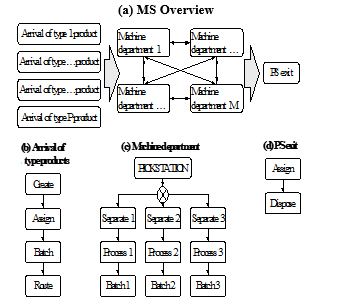 Figure 3.MS “ARENA” simulation model[23]
Despite improvements provided by [22, 23] to enhance the efficiency of SESA tools, this approach still limited in its application domain. It resolve only the machine selection problem.
3.3. Enlargement of SESA application domain
In an earlier work, [21] extended the application domain of SESA to select the optimal number of both machines and labor in a functional manufacturing system. This extension has already involved changes both in simulation model (see Figure 4) and ES interface (see Figure 5).
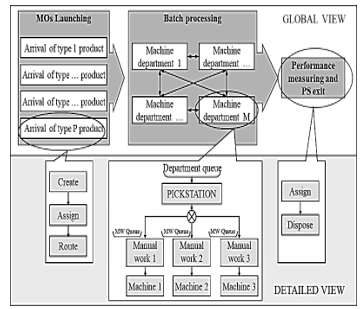 Figure 4.MS “ARENA” simulation model [21]
To build the simulation model, two inputs are required:
The MS data which represents the number of work center, Processing Time (PT) and Setup Time (ST) and;
The demand patterns, which represent the inter-arrival times, product type, load size and sequence.
Different performance indicators have been used to enhance the applicability of SESA. These indicators are: the rate of resource utilization, the average waiting time and waiting number of batches in resource queues, throughput, mean tardiness and mean earliness.
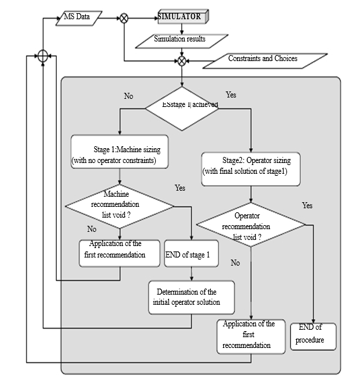 Figure 5.Enhanced ES interface [21]
The main target is to respect the DD in order to minimize the delay penalties and the storage costs. The DD indicator is more adequate for functional manufacturing context than MFT. The first objective is to minimize the Mean Tardiness (MT) and then minimize the Mean Earliness (ME), which is considered as the second objective. Besides, in order to avoid superfluous investment costs, all the resources should be fully utilized. The experiments with different levels of DD closeness indicate the important benefits of the approach improvements through the new performance measures and the enhanced ES interface.
The enhanced ES interface is divided into two main stages. The first stage is the machine selection problem without labor constraints and the second is the labor selection problem.
In the first stage, the ES starts with the study of the MS machine situation (without labor constraints). Thus, this stage supposes that the number of employees is equal to that of machines (assigning a worker to each machine). If the simulated system performance needs to be improved, the ES will recommend modifications regarding machine number. These changes overcome the problem and enhance the system performance. Thus, a new cycle is run with the modified machine number until the ES can not suggest other modifications. This situation presents the end of this stage. In the second stage, the ES resolves the labor selection problem with a machine balanced MS (according to the first stage results). The same optimization cycles will be run until they reach a non-improvable MS.
The confines of SESA developed by [21] is the neglect of the transfer network and MHS constraints when sizing MS component resources. In fact, MHS is significant in MS that has an effect on the system performance [24]. It can account for 30 –75% of the total cost, and efficient material handling can be primarily responsible for reducing a plant operating cost by 15–30% [25]. Therefore, MHS is very important in reducing the total manufacturing costs and increasing profits. Consequently, it is necessary to extend the application domain of SESA by incorporating material handling system constraints when sizing production resources. However, it is necessary to demonstrate the relevance of SESA tools. Therefore, the next section will provide a detailed survey of recent research studies using simulation and/or expert system for solving resource selection problem.
4. Is SESA a promising approach?
4.1. Is simulation always promising?
Simulation has been developing for a long time to became an essential tool for many disciplines. Its application fields may go from industry [26] healthcare [27, 28], urban design [29] military [30], among others. It has been widely proven by the scientific community and practitioners as a flexible technique by allowing modelling, testing and analyzing complex dynamic systems, namely for models where structure and behavior change over time. The simulation model is a representation of the real system. It may reduce the risks related to the implementation of new system design, production cost, production time, etc. It is used to analyze and process huge quantities of data. As shown in Figure 6, simulation is a solid approach with many years of application and is a rapidly evolving research field [31].
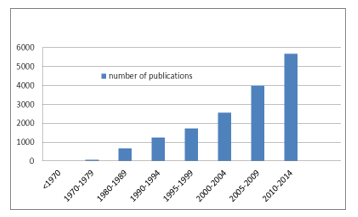 Figure 6.Evolution of simulation application
Discrete-event-simulation (DES) is mostly used to solve MS problems. Numerous benefits to use DES defined by [32]include: simulate a real system in a short time, study the interaction between different components, reduce cost and risk, monitor and control the system and others.
This approach has tackled different problems. A brief summary of DES applications to solve manufacturing systems is presented in Table 2. [33] revealed abundant references in more details about the simulation utilisation on other MS problems.
Table 2.Publications related to simulation approach
| Authors | Years | Simulation application |
| [34] | 2008 | System and facility design |
| [35, 36] | 2015, 2017 | Planning and scheduling |
| [37] | 2016 | Production planning and control |
| [38] | 2019 | Supply chain design |
| [39] | 2016 | Inventory management |
| [40, 41] | 2019, 2018 | Maintenance |
| [42] | 2016 | Controlling and analyzing energy and power consumption |
| [43] | 2018 | Resource allocation |
In all the above discussed studies, DES models have been proven as powerful decision support tools, which enables practitioners to accurately test, model, analyze and plan complex systems. Moreover, it is an efficient tool to search for optimal solution and evaluate the obtained results. Different DES tools have been used in literature.in this context, [44] compared these tools to identify the most popular and used ones. In fact, the ARENA commercial software has been the most popular and used tool for modeling and analyzing various complex MSs.
Nevertheless, the simulation tool may not be the first preferred in solving real-life system due to the “trial-and-error” nature of the development process and its lengthy computational requirements. This issue is particularly remarked when the solution space is mostly large and the time available to make decision and analysis is too limited. Thus, it is necessary to add an analytical method to the simulation tool to do an optimal decision-making. Therefore, the simulation tool has been coupled with an expert system approach.
4.2. Is the Expert system still promising?
The ES is an Artificial intelligence (AI) software application that attempts to simulate the knowledge and experience of human experts in a specific domain and make such expertise accessible on demand to the program user. This application was introduced by [45]for the first time in the 1980s. A growing interest in the use of ES has been seen for solving optimization problems in many domains such as Healthcare [46, 47], supply chain [48],transport [49], risk management [50] and others.
According to [51], the expert system includes three principal parts (Figure 7):
- User’s interface that enables the user to ask questions and provide advice corresponding to it;
- Knowledge base that consists of facts and rules, which are created from information which are provided to it;
- Inference engine that helps to match the user’s query with knowledge base and provides the result.
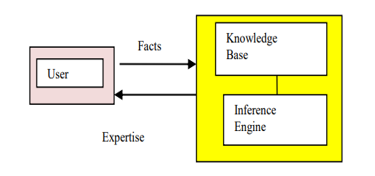 Figure 7.An Expert system environment
Table 3.Recent research studies used ES
| Authors | Years | ES applications |
| [52] | 2016 | Evaluation of the performance of sustainable manufacturing |
| [53] | 2016 | Material handling equipment selection |
| [54] | 2019 | |
| [55] | 2019 | Layout designs |
| [56] | 2018 | Optimization of Design and Manufacturing Process |
| [57] | 2019 | Shift work |
| [58] | 2015 | Machine tool selection |
| [59] | 2015 |
Material Selection |
| [53] | 2016 | |
| [60] | 2017 | |
| [61] | 2018 | Risk management |
The main advantages of ES consist in reducing human error, always available, providing expertise at a minimum cost, which is used in any risky environment to solve complex decision problems in different specific fields, obtain flexible and practical solutions, and respond at great speed, etc.
The capability of ESs to acquire performance similar to the human ones makes current researchers used it to solve various types of problem in MS (see Table 3).
4.3. Is coupling Simulation/Expert System promising?
Simulator systems generate large and a high variety of data that make decision making so difficult. Therefore, novel approaches combined simulation and optimization have been developed in literature to eliminate this gap. In fact, simulation based optimization approaches have received considerable attention from many recent researchers to solve MS problems. [62] proposed an improvement framework using genetic algorithm and DES to investigate the buffer size and job sequencing optimization problems. [63] combined the DES models and artificial neural network models of the production system. This combination was realized through an ES in order to evaluate the stability of a production system and implement production plans. [64] developed a practical approach using bee colony to improve throughput while minimizing waste energy and environmental impact. [65] proposed a novel methodology using ant colony and DES to select better facility allocations that minimize fixed and transportation costs.
Recent research studies applied the DES with ES in different application including industrial systems [66], food process [67], supply chain management [68], healthcare systems [69], risk management [70]and others.
The main advantage of this combination is that the DES can integrate compound system dynamics and uncertainties. Then, ES helps in efficiently getting optimal parameter values. The methodology is that the ES accesses the output of a simulation cycle and, depending on the user’s objective, selects and retrieves the pertinent data and provides a mechanism for exception reporting. A greater degree of integration would be for the ES to explain the recommendations. Thus, the incorporation of DES with ES improves the decision-making process.
The research studies, cited in the previous three sub-sections, have been conducted to assess the trends of SESA approach and its capability to solve highly complex systems with stochastic variables. We can conclude that SESA is still promising but can be improved.
4.4. Limits of SESA
The application domain of SESA is limited in finding the optimal number of machines and employees without taking into account the MHS, despite its importance. A MHS can be defined as a vehicle that moves work-parts at short distances and usually inside the building. [71] affirms that the MHS represents a major portion of the total manufactured product cost. An efficient MHS can have a main impact on the operating cost, which reduces and increases the total throughput and department utilization. Moreover, a well selection of the required number of MHS is very important to significantly improve the efficiency of the MS. In fact, if the chosen number of MHS is less than the required number, the work-parts will saturate the storage areas between departments and their waiting time increases. Moreover, if the chosen number is higher than the required one, the MHS waiting time increases. This will cause an accumulation of vehicles, a saturation of the traffic lines and a system blockage. Besides, the MHS purchase cost is very high, so an accurate determination of their optimum number is required.
Consequently, considering MHS when selecting machines and labor, it is very important to significantly improve the efficiency of MS.
5. SESA improvement proposal
From previous sections, it is clear that SESA is always promising seen simulation and ES benefits. Nevertheless, it is a priority to take into consideration the MHS. Our contribution in this section is to highlight the opportunities of SESA improvements.
5.1. Proposal to enlarge the application domain
To enlarge the application domain of SESA, we will propose some improvement opportunities and develop a new strategy of SESA by considering the MHS fleet sizing problem (see Figure 8).
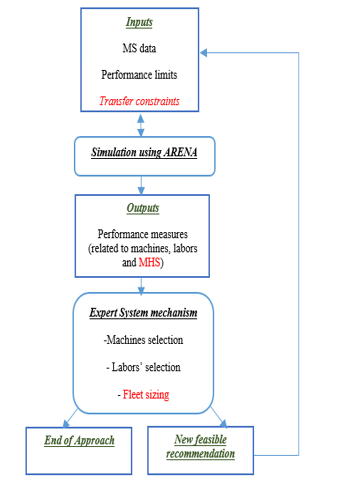 Figure 8.The new SESA framework
In the beginning, different characteristics related to the MHS will be integrated in simulation inputs. Then, new performance indicators related to the MHS will be considered to analyze system performance (see section 5.4). Finally, a new stage related to the MHS fleet sizing will be added to extend the expert system mechanism.
5.2. Improvement proposal of simulation model
To improve the simulation model developed by [21] and make the first investigation of taking into account the MHS when sizing MS, it is necessary to add different data related to the MHS within the MS data, which represent the simulation input. A representation of the improved model is presented in Figure 9.
The MHS data requirements can be:
- Type of material handling;
- Direction of movement (orientation);
- Transport distance;
- Load size;
- Loading and unloading time;
- Speed of material handling;
- Dispatching rule.
The components of this proposed model are as follows:
- Materials warehouse;
- Five departments (each one group the machinery with the same process capability) ;
- Parking (group the MHS);
- Finished Pieces (FP) warehouse.
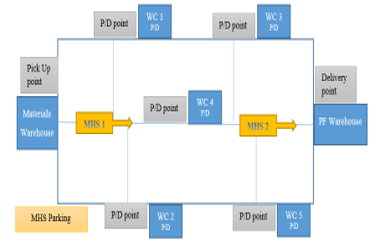 Figure 9.MS model including MHS
The MHS process, in this system, consist of four main steps:
- The unloaded MHS starts from the parking and moves to the pickup point to pick the load and goes to its destination (P/D point) related to the work center;
- The MHS stops to deliver the parts, picks up the new load if it exists;
- The loaded MHS moves to the next point whatever its storage area or work center, then the same operations will be repeated until the end of the procedure;
- MH returns to the parking.
The traveling time depends on: (1) the type of transporter (speed, loading time, unloading time, etc.); (2) the transfer network constraints like dispatching rule, orientation, distance between the departments etc.
5.3. Use of better Performance indicators
The performance indicators used by [21] are divided in two types:
- The main performance indicators are used to evaluate the global MS performance, in terms of tardiness, earliness and DD;
- Diagnostic performance indicators: they are used to resolve resource lack/surplus problems in each work center, which are represented as follows (Table 4):
- Indicators used by [21]
| Indicators | Definition | Objective |
| Machine utilization rate (RUm) | Machine availability within a period of time | Maximize machine utilization |
| Labor utilization rate (RUop) | Labor availability within a period of time | Maximize labor utilization |
| Number of units in queue (WIP) | Total number of parts in queue and under process | Minimize WIP Parts in queue and parts in machine |
| Waiting time of units in queue | Total waiting time of parts in queue and under process | Minimize the waiting time of Parts in queue and parts in machines |
| Tardiness (Tr) | Time at which the task is completed after its date. | Minimize tardiness |
| Earliness (Er) | Time at which the task is completed before its date. | Minimize earliness |
We can say that the performance indicators used by[21] are relevant but not sufficient to evaluate the performance of a MS including the MHS. The major shortcoming consists in neglecting the performance measure related to the MHS.
On the other hand, to improve SESA, it is necessary to measure the efficiency of the MHS, which can be characterized by several performance indicators.
In fact, previous research studies, in the field of fleet size, used different performance measures to analyze and evaluate the system performance. [18, 72-77].
Most of the indicators, related to MHS performance are:
- Vehicle utilization rate;
- Throughput rate;
- Vehicle waiting time;
- Vehicle blockage time;
- Empty vehicle traveling time;
- Total number of delivered loads;
- Number of units waiting to be transported;
- Waiting time of units to be transported;
- Availability/ unavailability of MHS.
5.4. Improvement proposal of the ES reasoning mechanism
The ES reasoning mechanism used by SESA is divided into two stages. The first stage aims at resolving machine selection problem without labor constraints (with a number of workers equal to the number of machines in each department). Then, the labor requirement problem resolution starts with a machine balanced MS.
According to our literature review, there has not been yet any expert system developed to select machines, labor and MHS simultaneously. In this work, we try to improve further ES reasoning mechanism in order to select not only the production resources (machines and labor), but also the material handling resources (trucks, pallets, etc.).To attain this objective, it is important to add another stage, in SESA, to resolve MHS fleet sizing problem (see Figure 10).
 Figure 10.ES reasoning mechanism
The resolution of MHS fleet sizing problem requires new knowledge based rules related to the MHS in order to make the right decision of adding or deleting a MHS. The new stage must be in coherence with the other stages. We can take the example of the Lack and surplus of MHS resources. In fact, If the MHS utilization rate (ur) is less than the lower performance limits (supposed urmin=40%) there is a surplus of vehicles (the number of units waiting to be transported decreases but the MHS cost increases). In addition, If the MHS utilization rate (ur) is more than the higher performance limits (urmax=90%) there is lack of vehicles (the number of units waiting to be transported increases).
Example of the generic diagnosis production rule related to the lack of resources (ur>urmax):
MSS: Manufacturing system state.
If [GlobalPerformance: MSS= = OK] AND [D: ur>= D: urmax] Then D: problem=lack
The ES is a promising tool, as proved in previous section. It can be useful to various types of resource sizing problems. However, integrating an additional stage and finding an optimal order of three stages in the strategy structure is not an easy task. The feasible way to enhance SESA is to start with one problem, by giving a fixed number of resources for the others, then, using the solution of the first stage by solving the next problem, then, using the new information obtained from the second for solving the third problem. Each stage may have several iterations until satisfying results are obtained. In fact, it is necessary to identify the right ordering of selection problems because different ordering can provide different solutions. Unfortunately, the chained stages can address the complexity of the problem when dealing with a high-size problem. This approach becomes challenging to be applied.
Note that it is possible to combine other useful optimization approaches with simulation, such as the Artificial Neural Networks (ANN) Tabu algorithm, Genetic Algorithm, Data Envelopment Analysis (DEA), Regression Metamodeling etc. to identify the required number of resources.
6. Conclusion and Future Work
This paper discusses the originality and the evolution of SESA for sizing MS. The original version was created using static and deterministic tools to solve only the machine selection problems. Later research studies enhanced it by developing new stochastic and dynamic tools and enlarging its application domain by incorporating the labor selection problem. However, SESA is still limited, it neglects the MHS fleet sizing problem despite its influence on the machines and labor quantities. The provided literature survey indicates firstly that the MS sizing problem is continuously relevant due to its importance in ensuring the desired system performance. Secondly, the survey indicates that SESA is a promising approach for the MS sizing problem. The purpose of this study was to extend the application domain of SESA by integrating the MHS fleet sizing problem in the overall MS sizing task. The new SESA framework is thoroughly explained and its application and validation on actual case are proposed as future research.
Conflict of Interest
The authors declare no conflict of interest.
Acknowledgement
The authors gratefully appreciate the reviewers for their valuable remarks and suggestions, which have led to enhance this paper.
- I. Lajmi, W. Masmoudi, and M. Elleuch, “Importance of Handling Resources’ Incorporation Into Simulation Expert System Approach,” in 6th IEEE International Conference on Advanced Logistics and Transport (ICALT), pp. 139–143, 2017.
- Chtourou Hedi and Guillot Michel, “Une approche prescriptive simulée utilisant un système expert pour l’optimisation des ressources de systèmes manufacturiers,” Actes du 4éme congrés international de génie industriel, pp. 217–26, 1993.
- R. Arifin and P. J. Egbelu, “Determination of vehicle requirements in automated guided vehicle systems: A statistical approach,” Production Planning & Control, vol. 11, no. 3, pp. 258–270, Jan. 2000.
- Chryssolouris, G, Lee, M, Pierce, J, and Domroese, M, “Use of neural networks for the design of manufacturing systems,” Manufacturing Review, pp. 187–194, 1990.
- R. G. Askin and K. S. Chiu, “A graph partitioning procedure for machine assignment and cell formation in group technology” International Journal of Production Research, vol. 28, no. 8, pp. 1555–1572, Aug. 1990.
- F. O., H. Pierreval *, and D. Deflandre, “A simulation-based optimization approach to size manufacturing systems,” International Journal of Production Research, vol. 43, no. 2, pp. 247–266, Jan. 2005.
- M. B. Yildirim, T. Cakar, U. Doguc, and J. C. Meza, “Machine number, priority rule, and due date determination in flexible manufacturing systems using artificial neural networks,” Computers & Industrial Engineering, vol. 50, no. 1–2, pp. 185–194, May 2006.
- Z. Hajej, N. Rezg, and T. Askri, “Joint optimization of capacity, production and maintenance planning of leased machines,” Journal of Intelligent Manufacturing, Oct. 2018.
- A. Rahman, S. Sarker, and M. T. Islam, “Simulating Cutting Line of a Furniture Industry,” in 2018 International Conference on Production and Operations Management Society (POMS), pp. 1–7, 2018.
- A. Azadeh, S. Nazari-Shirkouhi, L. Hatami-Shirkouhi, and A. Ansarinejad, “A unique fuzzy multi-criteria decision making: computer simulation approach for productive operators’ assignment in cellular manufacturing systems with uncertainty and vagueness,” The International Journal of Advanced Manufacturing Technology, vol. 56, no. 1–4, pp. 329–343, Sep. 2011.
- A. Azadeh, S. M. Asadzadeh, and S. Tadayoun, “Optimization of operator allocation in a large multi product assembly shop through unique integration of simulation and genetic algorithm,” The International Journal of Advanced Manufacturing Technology, vol. 76, no. 1–4, pp. 471–486, Jan. 2015.
- A. Ammar, H. Pierreval, and S. Elkosantini, “A multiobjective simulation optimization approach to define teams of workers in stochastic production systems,” in 2015 International Conference on Industrial Engineering and Systems Management (IESM), Seville, pp. 977–986, Spain, 2015.
- S. Samant, V. K. Mittal, and R. Prakash, “Resource optimisation for an automobile chassis manufacturer through value stream mapping enhanced with simulation technique and constraint programming,” International Journal of Industrial and Systems Engineering, vol. 28, no. 3, pp. 379–401, Jan. 2018.
- J. T. Lin, F.-K. Wang, and P.-Y. Yen, “Simulation analysis of dispatching rules for an automated interbay material handling system in wafer fab,” International Journal of Production Research, vol. 39, no. 6, pp. 1221–1238, Jan. 2001.
- P.-H. Koo, J. Jang, and J. Suh, “Estimation of Part Waiting Time and Fleet Sizing in AGV Systems,” International Journal of Flexible Manufacturing Systems, vol. 16, no. 3, pp. 211–228, Jul. 2004.
- D. Raman, S. V. Nagalingam, B. W. Gurd, and G. C. I. Lin, “Quantity of material handling equipment—A queuing theory based approach,” Robotics and Computer-Integrated Manufacturing, vol. 25, no. 2, pp. 348–357, Apr. 2009.
- H. R. Sayarshad, “Using bees algorithm for material handling equipment planning in manufacturing systems,” Int J Adv Manuf Technol, vol. 48, no. 9, pp. 1009–1018, Jun. 2010.
- F. F. Choobineh, A. Asef-Vaziri, and X. Huang, “Fleet sizing of automated guided vehicles: a linear programming approach based on closed queuing networks,” International Journal of Production Research, vol. 50, no. 12, pp. 3222–3235, Jun. 2012.
- V. K. Chawla, A. K. Chanda, and S. Angra, “Automatic guided vehicles fleet size optimization for flexible manufacturing system by grey wolf optimization algorithm,” Management Science Letters, pp. 79–90, 2018.
- V. Patel, J. Ashby, and J. Ma, “Discrete event simulation in automotive final process system,” in Proceedings of the Winter Simulation Conference, vol. 1, pp. 1030–1034 vol.1, 2002.
- W. Masmoudi, H. Chtourou, and A. Y. Maalej, “Labor and machine sizing through a Simulation-Expert-System-based Approach,” Simulation Modelling Practice and Theory, vol. 15, no. 1, pp. 98–110, Jan. 2007.
- H. Chtourou, W. Masmoudi, and A. Maalej, “An expert system for manufacturing systems machine selection,” Expert Systems with Applications, vol. 28, no. 3, pp. 461–467, Apr. 2005.
- Wassim Masmoudi, H. Chtourou, and Aref Y. Maalej, “A simulation-expert-system-based approach for machine sizing of production systems,” Jnl of Manu Tech Mnagmnt, vol. 17, no. 2, pp. 187–198, Feb. 2006.
- AshkanNegahban and Jeffrey S.Smith, “Simulation for manufacturing system design and operation: Literature review and analysis – ScienceDirect,” Journal of Manufacturing Systems, vol. Volume 33, no. 2, pp. 241-261, Apr. 2014.
- D. R. Sule, Manufacturing Facilities: Location, Planning, and Design, Third Edition. CRC Press, 2008.
- S. M. Boorla, K. Bjarklev, T. Eifler, T. J. Howard, and C. A. McMahon, “Industry 4.0 – A challenge for variation simulation tools for mechanical assemblies,” Advances in Computational Design, vol. 4, no 1, pp. 43-52, Apr. 2019.
- C. M. DeRienzo, R. J. Shaw, P. Meanor, E. Lada, J. Ferranti, and D. Tanaka, “A discrete event simulation tool to support and predict hospital and clinic staffing,” Health Informatics J, vol. 23, no. 2, pp. 124–133, Jun. 2017.
- S. Almagooshi, “Simulation Modelling in Healthcare: Challenges and Trends,” Procedia Manufacturing, vol. 3, pp. 301–307, Jan. 2015.
- L. Alonso et al., “CityScope: A Data-Driven Interactive Simulation Tool for Urban Design. Use Case Volpe,” in Unifying Themes in Complex Systems IX, pp. 253–261, 2018.
- X. Song, Y. Wu, Y. Ma, Y. Cui, and G. Gong, “Military Simulation Big Data: Background, State of the Art, and Challenges,” Mathematical Problems in Engineering, 2015.
- D. Mourtzis, M. Doukas, and D. Bernidaki, “Simulation in Manufacturing: Review and Challenges,” Procedia CIRP, vol. 25, pp. 213–229, Jan. 2014.
- G. Popovics, A. Pfeiffer, and L. Monostori, “Generic data structure and validation methodology for simulation of manufacturing systems,” International Journal of Computer Integrated Manufacturing, vol. 29, no. 12, pp. 1272–1286, Dec. 2016.
- A. Polenghi, L. Fumagalli, and I. Roda, “Role of simulation in industrial engineering: focus on manufacturing systems,” IFAC-PapersOnLine, vol. 51, no. 11, pp. 496–501, Jan. 2018.
- A. Greasley, “Using simulation for facility design: A case study,” Simulation Modelling Practice and Theory, vol. 16, no. 6, pp. 670–677, Jul. 2008.
- R. Zhang, S. K. Ong, and A. Y. C. Nee, “A simulation-based genetic algorithm approach for remanufacturing process planning and scheduling,” Applied Soft Computing, vol. 37, pp. 521–532, Dec. 2015.
- D. Krenczyk, W. M. Kempa, K. Kalinowski, C. Grabowik, and I. Paprocka, “Production planning and scheduling with material handling using modelling and simulation,” MATEC Web Conf., vol. 112, p. 09015, 2017.
- S. Yang, T. Arndt, and G. Lanza, “A Flexible Simulation Support for Production Planning and Control in Small and Medium Enterprises,” Procedia CIRP, vol. 56, pp. 389–394, Jan. 2016.
- D. Ivanov, “Disruption tails and revival policies: A simulation analysis of supply chain design and production-ordering systems in the recovery and post-disruption periods,” Computers & Industrial Engineering, vol. 127, pp. 558–570, Jan. 2019.
- W. Ye and F. You, “A computationally efficient simulation-based optimization method with region-wise surrogate modeling for stochastic inventory management of supply chains with general network structures,” Computers & Chemical Engineering, vol. 87, pp. 164–179, Apr. 2016.
- Sławomir Kłos and Justyna Patalas-Maliszewska, “The Use of the Simulation Method in Analysing the Performance of a Predictive Maintenance System,” in Distributed Computing and Artificial Intelligence, Special Sessions, 15th International Conference, pp. 42–49, 2019.
- S. Gallego García and M. García García, “Design and Simulation of Production and Maintenance Management Applying the Viable System Model: The Case of an OEM Plant,” Materials, vol. 11, no. 8, p. 1346, Aug. 2018.
- J. Stoldt, A. Schlegel, and M. Putz, “Enhanced integration of energy-related considerations in discrete event simulation for manufacturing applications,” Journal of Simulation, vol. 10, no. 2, pp. 113–122, May 2016.
- E. Romano and D. Iuliano, “A simulation/optimization approach to support resource allocation in a service firms,” International Journal of Procurement Management, vol. 11, no. 1, p. 1, 2018.
- L. M. S. Dias, A. A. C. Vieira, G. A. B. Pereira, and J. A. Oliveira, “Discrete Simulation Software Ranking: A Top List of the Worldwide Most Popular and Used Tools,” in Proceedings of the 2016 Winter Simulation Conference, Piscataway, NJ, USA, pp. 1060–1071, 2016.
- F. Hayes-Roth, D. Waterman, and D. Lenat, Building expert systems. 1984.
- M. H. Fazel Zarandi, S. Soltanzadeh, A. Mohammadi, and O. Castillo, “Designing a general type-2 fuzzy expert system for diagnosis of depression,” Applied Soft Computing, Apr. 2019.
- O. T. Nkamgang, D. Tchiotsop, H. B. Fotsin, P. K. Talla, V. Louis Dorr, and D. Wolf, “Automating the clinical stools exam using image processing integrated in an expert system,” Informatics in Medicine Unlocked, vol. 15, p. 100165, Jan. 2019.
- E. K. Tekez, “Development of an expert system for demand management process,” International Journal of Computer Integrated Manufacturing, vol. 31, no. 10, pp. 970–977, Oct. 2018.
- Ali Ahmed Mohammed, K. Ambak, A. M. Mosa, and D. Syamsunur, “EXPERT SYSTEM IN ENGINEERING TRANSPORTATION: A REVIEW,” vol. 14, p. 25, 2019.
- G. Baryannis, S. Dani, S. Validi, and G. Antoniou, “Decision Support Systems and Artificial Intelligence in Supply Chain Risk Management,” in Revisiting Supply Chain Risk, G. A. Zsidisin and M. Henke, Eds. Cham: Springer International Publishing, pp. 53–71, 2019.
- Jaskiranjit Kaur and Anjali Walia, “Dimensions of Expert System in Manufacturing Industry,” International Journal of Scientific Research in Computer Science, Engineering and Information Technology, vol. Volume 3, p. 7, 2018.
- S. Singh, E. U. Olugu, and S. N. Musa, “Development of Sustainable Manufacturing Performance Evaluation Expert System for Small and Medium Enterprises,” Procedia CIRP, vol. 40, pp. 608–613, Jan. 2016.
- K. Prasad, S. R. Maity, and S. Chakraborty, “Quality Function Deployment-based Expert System for Materials Selection,” 2016.
- W. Hellmann, D. Marino, M. Megahed, M. Suggs, J. Borowski, and A. Negahban, “Human, AGV or AIV? An integrated framework for material handling system selection with real-world application in an injection molding facility,” Int J Adv Manuf Technol, vol. 101, no. 1, pp. 815–824, Mar. 2019.
- R. Carreño, V. Aguilar, D. Pacheco, M. A. Acevedo, W. Yu, and M. E. Acevedo, “An IoT Expert System Shell in Block-Chain Technology with ELM as Inference Engine,” International Journal of Information Technology & Decision Making, Jan. 2019.
- M. S. Amalnik, “Expert System Approach for Optimization of Design and Manufacturing Process for Rotary Ultrasonic Machining,” vol. 11, no. 1, p. 13, 2018.
- H. Esen, T. Hatipoğlu, A. Cihan, and N. Fiğlali, “Expert system application for prioritizing preventive actions for shift work: shift expert,” International Journal of Occupational Safety and Ergonomics, vol. 25, no. 1, pp. 123–137, Jan. 2019.
- C. F. Tan, S. N. Khalil, J. Karjanto, L. S. Wahidin, W. Chen, and G. W. M. Rauterberg, “An Expert Machine Tools Selection System for Turning Operation,” IOP Conf. Ser.: Mater. Sci. Eng., vol. 88, p. 012044, Sep. 2015.
- C. Urrea, G. Henríquez, and M. Jamett, “Development of an expert system to select materials for the main structure of a transfer crane designed for disabled people,” Expert Systems with Applications, vol. 42, no. 1, pp. 691–697, Jan. 2015.
- M. Ristić, M. Manić, D. Mišić, M. Kosanović, and M. Mitković, “IMPLANT MATERIAL SELECTION USING EXPERT SYSTEM,” Facta Universitatis, Series: Mechanical Engineering, vol. 15, no. 1, pp. 133–144, Apr. 2017.
- M. Soleymani and M. O. Nejad, “Supply Chain Risk Management using Expert Systems,” International Journal of Current Engineering and echnology, vol. 8, no. 04, 2018.
- P. S. Kang and R. S. Bhatti, “Continuous process improvement implementation framework using multi-objective genetic algorithms and discrete event simulation,” Business Process Mgmt Journal, Sep. 2018.
- A. Burduk, K. Grzybowska, and G. Kovács, “Hybrid model of an expert system for assessing the stability of a production system,” LogForum, vol. Vol. 14, no. 4, 2018.
- A. Singh, D. Philip, J. Ramkumar, and M. Das, “A simulation based approach to realize green factory from unit green manufacturing processes,” Journal of Cleaner Production, vol. 182, pp. 67–81, May 2018.
- J.-P. Arnaout, G. Arnaout, and J. E. Khoury, “Simulation and Optimization Of Ant Colony Optimization Algorithm For The Stochiastic Uncapacitated Location-Allocation Problem,” Journal of Industrial and Management Optimization, pp. 1215–1225, Oct. 2016.
- K. Nagadi, L. Rabelo, M. Basingab, A. T. Sarmiento, A. Jones, and A. Rahal, “A hybrid simulation-based assessment framework of smart manufacturing systems,” International Journal of Computer Integrated Manufacturing, vol. 31, no. 2, pp. 115–128, Feb. 2018.
- D. Stefanovic, N. Stefanovic, and B. Radenkovic, “Supply network modelling and simulation methodology,” Simulation Modelling Practice and Theory, vol. 17, no. 4, pp. 743–766, Apr. 2009.
- B. Hernández‐Vera, A. A. A. Lasserre, M. G. Cedillo‐Campos, L. E. Herrera‐Franco, and J. Ochoa‐Robles, “Expert System Based on Fuzzy Logic to Define the Production Process in the Coffee Industry,” Journal of Food Process Engineering, vol. 40, no. 2, p. e12389, 2017.
- A. Azadeh, H. Tohidi, M. Zarrin, S. Pashapour, and M. Moghaddam, “An integrated algorithm for performance optimization of neurosurgical ICUs,” Expert Systems with Applications, vol. 43, pp. 142–153, Jan. 2016.
- H. Behret, B. Öztayşi, and C. Kahraman, “A Fuzzy Inference System for Supply Chain Risk Management,” in Practical Applications of Intelligent Systems, pp. 429–438, 2012.
- A. Hadi-Vencheh and A. Mohamadghasemi, “A new hybrid fuzzy multi-criteria decision making model for solving the material handling equipment selection problem,” International Journal of Computer Integrated Manufacturing, vol. 28, no. 5, pp. 534–550, May 2015.
- B. Mahadevan and T. T. Narendran, “A hybrid modelling approach to the design of an AGV-based material handling system for an FMS,” International Journal of Production Research, vol. 32, no. 9, pp. 2015–2030, Sep. 1994.
- B. M. Beamon and V. C. P. Chen, “Performability-based fleet sizing in a material handling system,” The International Journal of Advanced Manufacturing Technology, vol. 14, no. 6, pp. 441–449, Jun. 1998.
- Hung, P. C. and Liu, F. H, “Estimation of the fleet size for a multi-load automated guided vehicle system,” Proceedings of the National Science Council, Part A: Physical Science and Engineering, pp. 244–253, 2001.
- S. Rajotia, K. Shanker, and J. L. Batra, “Determination of optimal AGV fleet size for an FMS,” International Journal of Production Research, vol. 36, no. 5, pp. 1177–1198, May 1998.
- K.-H. Chang, A.-L. Chang, and C.-Y. Kuo, “A simulation-based framework for multi-objective vehicle fleet sizing of automated material handling systems: an empirical study,” Journal of Simulation, vol. 8, no. 4, pp. 271–280, Nov. 2014.
- R. Wibisono, T. J. Ai, and D. R. Yuniartha, “Fleet Sizing of Automated Material Handling Using Simulation Approach,” IOP Conf. Ser.: Mater. Sci. Eng., vol. 319, p. 012030, Mar. 2018.