
Innovations in Recruitment—Social Media

Adv. Sci. Technol. Eng. Syst. J. 6(6), 88–97 (2021);
 DOI: 10.25046/aj060613
The main objective and contribution of the paper is to describe the creation of a model to support recruitment using social media information and its deployment in practice. The model includes the design of an automated solution for downloading social media data and a proposal for the subsequent analysis and creation of a predictive model based on the evaluation of user behavior on a social network. A final assessment of the effectiveness of the proposed model was made through formal validation and a case study. For the case study validation, the proposed model was implemented through use of the recruitment application called Prace Na Miru (PM; Tailored Work) for Facebook data extraction. A Myers Briggs Type Indicator (MBTI) personality test was used to determine the predictors of user social network behavior. Using cluster analysis and machine learning (or decision trees), a stochastic predictive model was developed to determine the personality type of candidates—the accuracy of MBTI personality category prediction ranges between 68% and 84% for individual cases, with a confirmation rate ranging between 43% and 81%. The case study confirmed the model’s usefulness for supporting recruitment in a real-life deployment of the PM model.
1. Introduction
At the beginning of the twenty-first century, communication platforms that allow users to interact with each other have proliferated globally. These platforms gradually began to replicate the social structures of the real world. Within barely five years (2001–2005), social networks as we understand them today took on an established form.
These networks are no longer mere communication channels but are permeating more and more areas and blurring the boundaries between private and professional life. Social networks have also shown their potential in human resources management (HRM), especially in recruitment. Research [1] has found that 43% of organizations use social media sites to research candidates, and approximately 50% of employers report rejecting job applicants because of social media content. [2]
The current state of the labor market is not very favorable for recruitment from the point of view of organizations struggling to find suitable employees. Low unemployment and high demand for employees are forcing organizations to look for new and more effective recruitment solutions. In this respect, the use of social networks brings an advantage in two ways: they are economically advantageous, and they are an innovative solution [3]-[5].
Social media such as Facebook, Twitter, and LinkedIn are used by recruiters to attract talent by sharing the company culture and information related to career opportunities. For example, Microsoft has developed a specific website for recruitment, using job blogs and life at work videos to provide relevant information to both active and passive job seekers. Similarly, Deloitte places employee testimonials on social media (e.g., YouTube videos) to allow potential job applicants to learn more directly from the insiders. A shortcoming is the question of whether these job messages can reach the target audiences [6].
The results of research [7] confirmed that recruiters intended to use social media as it provides pre-hire benefits. Similarly, results showed social media recruitment is more compatible and less complex, and it ensures better trialability and observability. The study proved that social media recruitment was cost-effective while attracting and retaining better talent [8].
The combination of HRM and social networks in the context of recruitment issues expects an interdisciplinary approach based on applied informatics (as it is primarily based on the use of ICT), but its implications extend to the fields of management and human resources (HR) [4].
In the field of applied informatics, our research primarily uses data analysis of social networks through our own designed application called Prace Na Miru (abbreviation PM; literal translation into English—Tailored Work), which allows for automated data acquisition. It is further related to applied informatics by the selected research design, called “design science research” [9], and the resulting artifact, which is a model verified not only by meeting the theoretical assumptions but, largely, by its application in practice [10].
1.1. Research problem
The generally defined research problem is the support of recruitment in modern HRM through the use of social networks.
The authors propose a solution in the form of a recruitment support model—the PM model.
1.2. Objectives and research questions
The main objective was to create and verify the effectiveness of a model for supporting recruitment through social networks which would be generally valid and applicable to any type of organization and job position.
In order to achieve the main objective, sub-objectives (SOs) and sub-research questions (SRQs) were identified as follows:
- SO 1: Create and deploy the PM model to support recruitment using a specific social network within a selected problem context and validate its effectiveness.
- SRQ 1: What is the design of the PM model and the process of its deployment in practice?
- SO 1.1: Create a custom application to extract data from a specific social network.
- SRQ 1.1: How can we create an application to mine data from social networks?
- SO 1.2: Identify appropriate parameters to evaluate user behavior on social networks.
- SRQ 1.2: What are the appropriate parameters to evaluate user behavior on social networks?
- SO 1.3: Identify predictors of user behavior on social networks using appropriate analytical methods.
- SRQ 1.3: What are the predictors of user behavior on social networks? And what are the appropriate analytical methods to determine them?
1.3. Methods used
In this paper, the authors used methods according to [10] and [11] in the publication Design Science Research, which consists of five phases:
- Phase 1—problem awareness: This is based on an analysis of the current state of knowledge on the issue, especially best practices and literature research. The output is the basis for the design of the artefact.
- Phase 2—design/theme: the result is a general tentative design of the artefact in Figure 1.
- Phase 3—development: the development of the indicative design of the artefact from phase 2 into the final form of the artefact, the result of this phase.
In terms of conceptual development, the development and design/idea phases are intertwined—the case here.
- Phase 4—evaluation: the artifact is evaluated in order to obtain information indicative of the artifact’s behavior and quality and useful to the artifact’s future development. Scientific methods are used in the evaluation of the artefact —formal verification—by creating an instance in the form of the PM model. These scientific methods are of three types:
- data analysis;
- cluster analysis;
- predictive modelling using decision trees (or machine learning).
Validation is done through quantitative research in the form of a questionnaire survey among experts in practice.
Evaluation is done through qualitative research in the form of a case study and subsequent practical deployment.
- Phase 5—Conclusion: the last phase summarizes the research’s conclusions.
This paper is primarily concerned with description of the fourth phase.
Phase 1—Problem Awareness (Background)
The main starting point for the development of the model is a recruitment application for extracting user data from a social network (or custom work).
Another important starting point for model construction is the parameters for evaluating user behavior on the social network. In the context of recruitment, the most appropriate parameters are those based on a personality test.
Therefore, it was necessary to specify requirements for selecting an appropriate test according to the purpose of the PM model, which are [2, 12] as follows:
- assessment of personality characteristics;
- assessment of interpersonal characteristics;
- evaluation of work characteristics;
- relevance for recruitment;
- speed;
- transparency;
- the ability to complete the online test from anywhere;
- immediate evaluation without the need for multiple specialist (e.g., psychologist) costs.
There are several psychological models and personality tests for assessing jobseekers that can serve as parameters to evaluate behavior [13]-[16]. Classic tests include the Eysenck’s Personality Inventory (EPI), which is primarily aimed at identifying temperament based on measures of introversion (or extroversion) and stability (or lability); the Achievement Motivation Inventory (AMI), used to measure various dimensions of performance motivation in a professional context and useful in the selection of employees, team creation, or sport psychology; the Personal Competence Profile, which takes into account findings on emotional intelligence and social competence; and the Myers-Briggs Type Indicator (MBTI) model of personality types, which is widespread among organizations and is mainly used by HRM in recruitment, by health professions, and by educational programs to address the diversity of personalities that exist [2], [17].
Based on the analysis of the abovementioned characteristics, the MBTI personality test was chosen as the most suitable and was therefore used in the PM model [17]-[19]. The MBTI personality test meets all the above requirements—this is explored in more detail in section 1.6 “Predictors for user behavior evaluation on social media.”
This implies the need to identify predictors using appropriate analytical methods to assess user behavior on the social network. The most suitable predictors in this work were found to be areas of interest, such as favorite book, TV series, film, or sports personality.
The PM model development procedure is based on a model abstraction technique which allows the projection of alternatives through a model experiment. This, in effect, helps to track changes in individual parameters and their relationships at the desired level of simplification. The model is then used to explore, in particular, relationships, causes, and analogies. The methodological framework for the development of the recruitment support model is based on the CRISP-DM methodology [20].
The fundamental constraints in the creation of the model are mainly based on legislation. Organizations must comply with the General Data Protection Legislation (GDPR) and other employment legislation when identifying and verifying candidate information on social media. At the same time, it must not engage in discriminatory behavior. Therefore, such sensitive information about candidates is omitted from the model, even though it can be obtained from social networks relatively easily.
1.4. Validity and reliability of MBTI
We know from discussions of psychological and personality tests that critics have pointed out these tests may not be universally valid, and the results may not be reliable. For example, the popular-science journal Scientific American has published articles in recent years (e.g., “How Accurate Are Personality Tests?” [21] and “Personality Tests with Deep-Sounding Questions Provide Shallow Answers about the True You” [22]) that question the validity of personality tests.
However, peer-reviewed scientific journals, most recently the Journal of Best Practices in Health Professions Diversity: Education, Research and Policy, have published systematic (meta-analysis) reviews of the literature concerning its validity and reliability. The article “Validity and Reliability of the Myers-Briggs Personality Type Indicator: A Systematic Review and Meta-analysis,” on the contrary, confirms the validity of MBTI tests on a large sample of 221 studies [23], [24].
Authors agree that the MBTI instrument has reasonable construct validity. Their results indicate that the extravert-introvert, sensing-intuition, and judging-perceiving subscales have satisfactory reliabilities of .75 or higher and that the thinking-feeling subscale has a reliability of 61 [23].
The only mentioned problem is that the majority of studies are usually conducted on college-age students; thus, the evidence to support the tool’s utility applies more to this group, and careful thought should be given when applying it to other individuals.
This limitation is not a problem in our research since the respondents in our case were also primarily students and young alumni.
Phases 2 and 3: Design and Development
The authors’ application Prace Na Miru is the essential component in developing the PM model. Running on the website prace-na-miru.eu/en/, the application harvests user data.
The collected data is saved in JSON format within the MongoDB database. Heroku is used to host both the page and the database. JavaScript and Node.js frameworks were used to write the code. Candidates use the Facebook login button to access the website and to approve the download/export of his data into our database.
The sample selection is derived through self-selection among students and graduates of the Prague University of Economics and Business. Information about the application Prace Na Miru was distributed through an email newsletter to the target student and alumni groups. The application was also published on social media in suitable groups, during a university job fair called Šance, and on the web page of the college career center. There were 960 unique candidates who registered with and logged in to the application from October 2016 to January 2017. 624 of them responded to the subsequent email invitation to complete the MBTI test and 484 completed the questionnaire in full. This data has been used for further analysis.
1.5. Data analysis
The data collected by the Prace Na Miru application was processed in the SW called Knime [25]. The spectrum of publicly available data was organized into categories. Gender, log-in device, list of friends, date and year of birth, and other details were provided by users. Some of this data, such as favorites, are important for recruitment (or, more accurately, for the construction of the model), for example, favorite TV series, favorite athletes, and so forth. Some basic demographic data about users, such as gender, age, and education, was also available.
Table 1: Correlation of Publicly Accessible User Information to Categories
| Categories of publicly available data |
Friend lists | TV series | Athletes | Books | Events | Games | Music | Likes | Films |
| Friend lists | 1 | 0.09 | 0.11 | 0.09 | 0.31 | -0.06 | 0.16 | 0.29 | 0.04 |
| TV series | 0.09 | 1 | 0.17 | 0.32 | 0.11 | 0.23 | 0.57 | 0.09 | 0.57 |
| Athletes | 0.11 | 0.17 | 1 | 0.15 | 0.07 | 0.25 | 0.16 | 0.03 | 0.12 |
| Books | 0.09 | 0.32 | 0.15 | 1 | -0.09 | 0.32 | 0.27 | 0.07 | 0.52 |
| Events | 0.31 | 0.11 | 0.07 | -0.09 | 1 | -0.01 | 0.14 | 0.47 | 0.03 |
| Games | -0.06 | 0.23 | 0.25 | 0.32 | -0.01 | 1 | 0.11 | 0.04 | 0.31 |
| Music | 0.16 | 0.57 | 0.16 | 0.27 | 0.14 | 0.11 | 1 | 0.22 | 0.49 |
| Likes | 0.29 | 0.09 | 0.03 | 0.07 | 0.47 | 0.04 | 0.22 | 1 | 0.12 |
| Films | 0.04 | 0.57 | 0.12 | 0.52 | 0.03 | 0.31 | 0.49 | 0.12 | 1 |
Spearman’s correlation coefficient was used to detect correlations within the collected data (Table 1). The existence of low bond tightness for the categories “favorite book” and “series” (0.32) and “favorite game” and “book” (0.32) was proven. Medium-bond tightness was found in the categories “likes” and “events” (0.47) and “favorite movie” and “book” (0.52). Significant-bond tightness was in the categories “favorite music” and “series” (0.57) and “favorite music” and “movie” (0.57). It turns out that users sharing information about their favorite series also share information about their favorite music and movies.
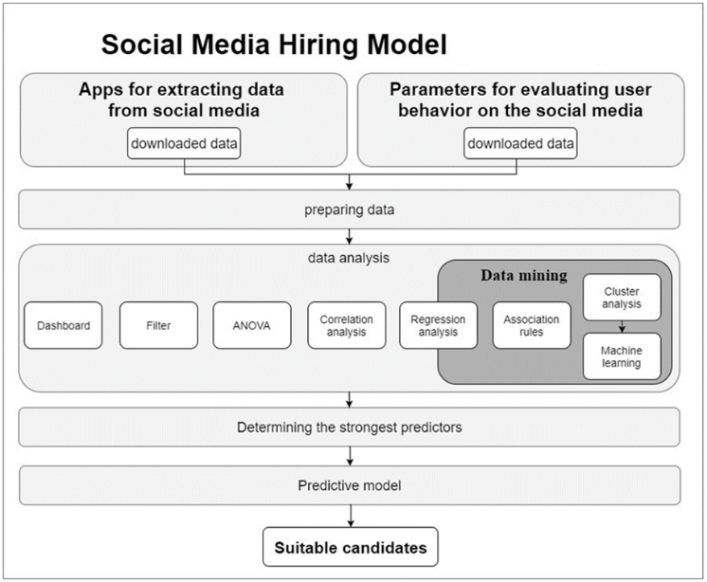 Figure 1: Social media hiring model
1.6. Predictors for user behavior evaluation on social media
An important part of the specification for the construction of a functional PM model is identifying predictors to evaluate user behavior within the social media environment. The MBTI personality test [12], [26], [27] was used in the PM model. The MBTI personality test combines four criteria:
- approach to the surrounding environment—introversion (I) or extroversion (E);
- way of obtaining information—intuition (N) or sense (S);
- way of evaluating information—feeling (F) or thinking (T);
- lifestyle—perception (P) or judging (J).
Merging the four criteria mentioned above results in 16 personality types. Figure 2 shows the number of persons represented by MBTI type. The most represented type is ENTJ, for whom employment in leadership positions such as leader or manager is suitable. This is followed by INTJ (scientist, builder), ENFJ (teacher), and INFJ (writer, creator).
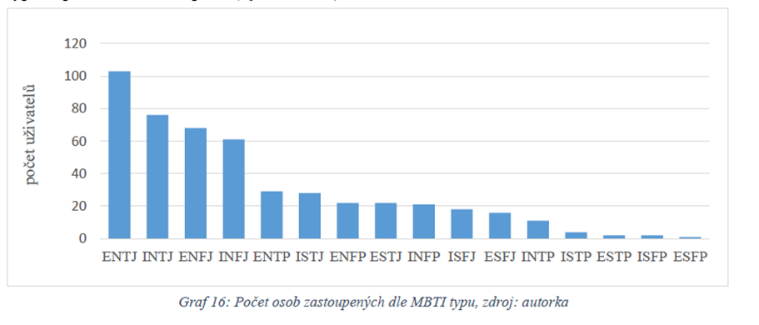 Figure 2: Number of persons represented by MBTI type
1.7. MBTI test and its evaluation
All users logged into Prace Na Miru were tested by the MBTI test. The response rate at this point was 50.4%. This fact helped to determine personality types and characteristic features of the questioned users and compared them with their online approach to social media. The sample size was 484 unique respondents.
1.8. PM model creation
For the creation of the PM model, the authors used training data (N=960) upon which the model learned how to decide the personality types of the candidates. The result of the modeling phase—Model PM—is shown in Figure 3.
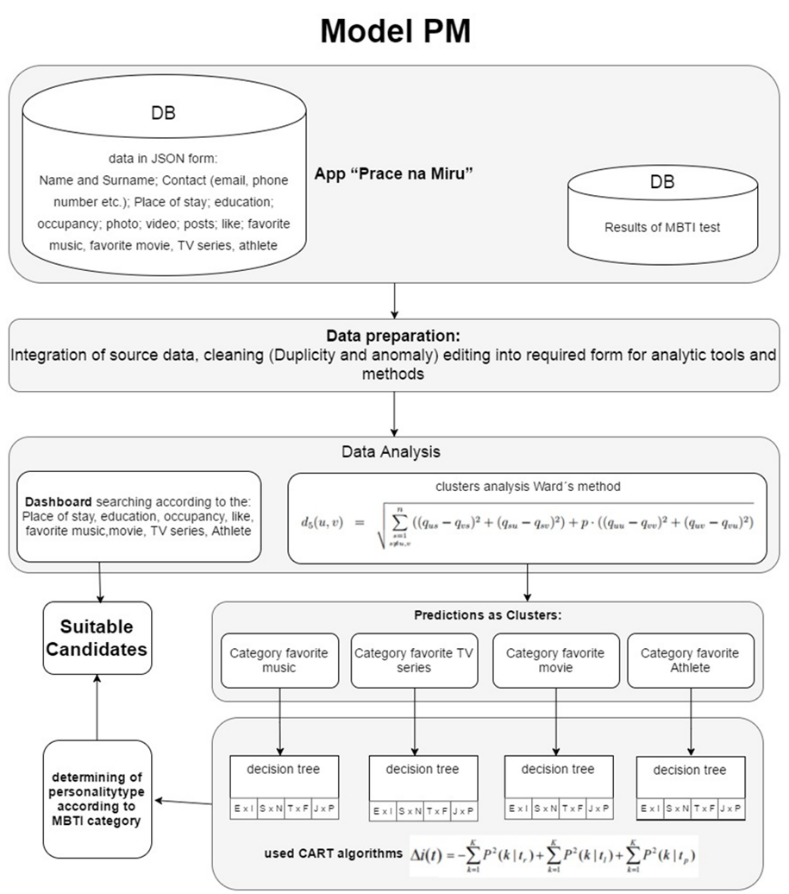 Figure 3: PM model
Phase 4: Model PM Evaluation
The model validation is realized by its implementation in a specific problem context: the recruitment of suitable candidates for positions at the University Development and Counselling Centre and internship programs at the University xPORT Business Accelerator. The target user group upon which the model is validated are students and recent university graduates.
The evaluation is performed by obtaining valuable and reliable information proving the quality of the PM model.
1.9. Formal verification
The formal verification is based on the construction of the PM model. Scientific methods included are as follows:
- data analysis and cluster analysis;
- predictive modelling using decision trees (or machine learning).
In developing the PM model, the authors used the MBTI personality test to determine predictors of user behavior on the social network, which helps to diagnose candidate characteristics such as perception of the environment or the way they acquire and process information. In addition, the PM model includes instructions for an automated solution for downloading user data from Facebook using a customized recruitment application called Jobs. Also included is a proposal for data analytics. Specifically, the PM model describes cluster analysis, decision trees, and predictive model(s) for determining personality type (which is based on the MBTI test).
After preprocessing the data, the authors segmented users into clusters, which are used in the PM model as predictors of behavior according to MBTI categories. Due to the large amount of data, it was necessary to select only some clusters that have predictive power. Out of 28 possible attributes, the author identified four with the highest predictive power as predictors:
- favorite music;
- favorite TV series;
- favorite movie; and
- favorite athlete.
For each attribute, the author created decision trees using the BigML [28] software tool, which allowed for their categorization according to the MBTI personality categories.
For each decision tree, the author includes a graphic illustration of the main tree branch that is the strongest and a ray graph that shows the overall decision tree with the relative representation of number of persons (according to the circle plot) and the confidences for the given personality category. The individual circles represent the path of the tree through the number of occurrences in the clusters. The color represents the amount of confidence of the decision tree. The darker, more saturated the color in the ray graph, the more confident is the decision tree. If confidence is 0%, the result is equivalent to random selection [29], [30].
PM model for the Attribute “Favorite Music”
For the creation of decision trees, clusters were created for individual attributes using the software tool Pajek [31]. As an example, the author presents in Table 2 the first five most frequently occurring items in each cluster.
Table 2: Cluster Overview for the Attribute “Favorite Music”
| Cluster A | Cluster B | Cluster C | Cluster D | Cluster E | Cluster F | Cluster G | Cluster H | Cluster I |
| AC/DC | Bruno Mars | Snoop Dogg | Ed Sheeran | Electro Swing | Walk Off The Earth | Linkin Park | The Beatles | Ben Cristovao |
| Calvin Harris | Wiz Khalifa | Britney Spears | Fedde Le Grand | OneRepublic | Universal Music CZ | Tomáš Klus | Radiohead | Taylor Swift |
| Yellow card | Monika Bagárová | Fergie | INNA | Philip Glass | George Ezra | Nightwish | Kings Of Leon | Rihanna |
| The Prodigy | Adam Levine | T-Pain | Johny Machette | Coldplay | Lindsey Stirling | Apocalyptica | Queens of the Stone Age | Beyoncé |
| Christina Perri | Tyrese Gibson | Sean Paul | Ellie Goulding | River
Hollywood Undead |
Thirty Seconds to Mars | Avril Lavigne | The Black Keys | Kryštof |
1.10. Decision tree for category “extroverted (E) or introverted (I) perception of the environment”
Below is the text notation of the predictive model for the category “extroverted (E) or introverted (I) perception of the environment”:
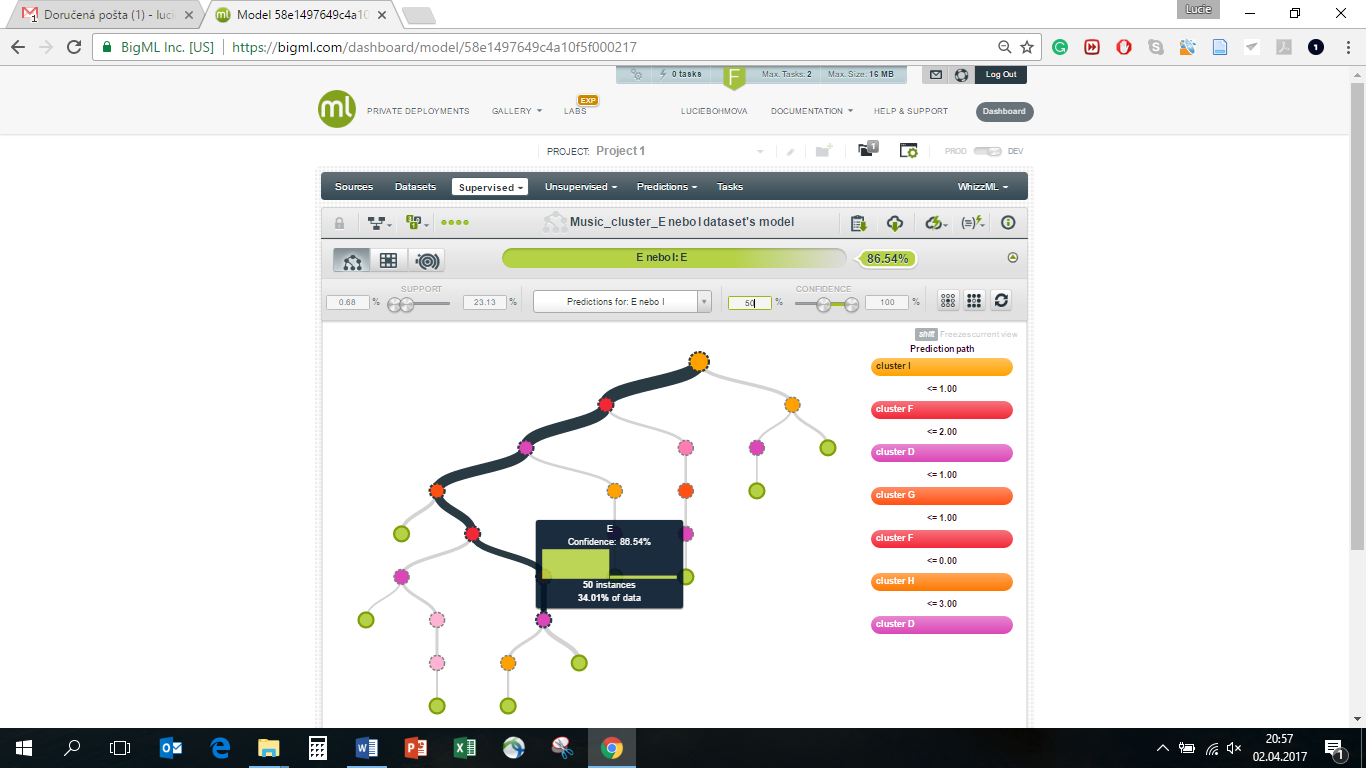 Figure 4: PM model for the attribute “favorite music”—decision tree for category “extroverted (E) or introverted (I) perception of the environment”
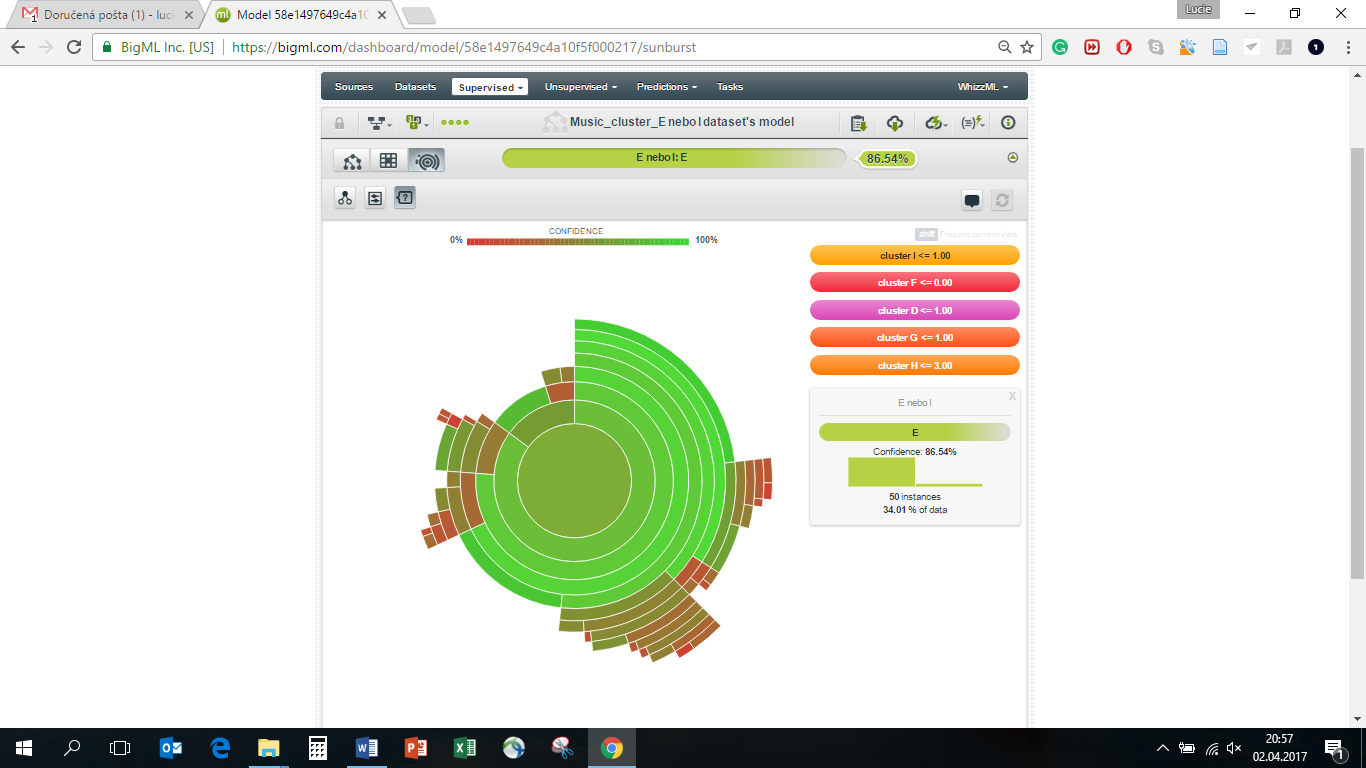 Figure 5: PM model for the attribute “favorite music”—decision tree bar graph for category “Perception of the environment extroverted (E) or introverted (I)”
- Data distribution
E: 70.75% (104 instances)
I: 29.25% (43 instances)
- Predicted distribution
E: 73.47% (108 instances)
I: 26.53% (39 instances)
- Field importance
- cluster I: 28.47%
- cluster F: 23.07%
- cluster D: 19.41%
- cluster G: 11.36%
- cluster C: 5.59%
- cluster E: 5.16%
- cluster H: 4.48%
- cluster B: 2.45%
1.11. Decision tree for category “sensory (S) or intuition (N) information acquisition”
Below is the text notation of the predictive model for the category “sensory (S) or intuition (N) information acquisition”:
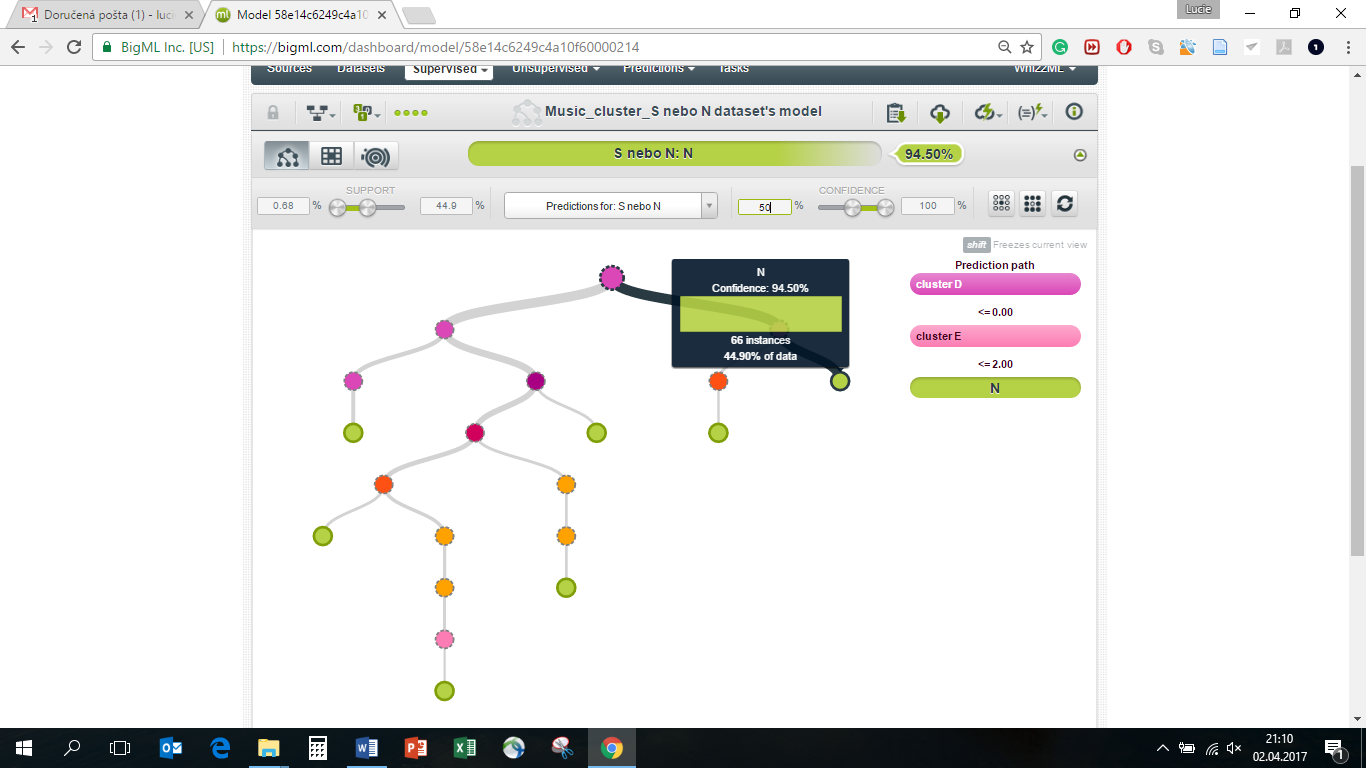 Figure 6: PM model for the attribute “favorite music”—decision tree for category “sensory (S) or intuition (N) information acquisition”
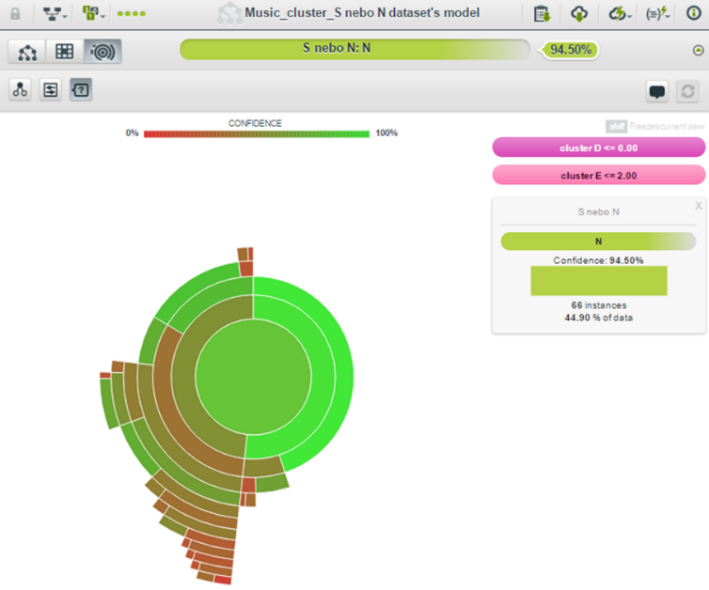 Figure 7: PM model for the attribute “favorite music”—decision tree bar chart for category “Sensory (S) or intuition (N) information acquisition”
- Data distribution
N: 82.31% (121 instances)
S: 17.69% (26 instances)
- Predicted distribution
N: 82.99% (122 instances)
S: 17.01% (25 instances)
- Field importance
- cluster D: 47.21%
- cluster A: 12.80%
- cluster I: 11.08%
- cluster B: 9.43%
- cluster E: 7.05%
- cluster G: 6.97%
- cluster C: 2.82%
- cluster F: 1.88%
- cluster H: 0.75%
1.12. Decision tree for category “thinking (T) or feeling (F) information processing”
Below is the text notation of the predictive model for the category “thinking (T) or feeling (F) information processing”:
- Data distribution
F: 49.66% (73 instances)
T: 50.34% (74 instances)
- Predicted distribution
F: 48.30% (71 instances)
T: 51.70% (76 instances)
- Field importance
- cluster F: 18.69%
- cluster E: 16.51%
- cluster C: 15.07%
- cluster G: 14.95%
- cluster H: 8.88%
- cluster D: 8.50%
- cluster I: 6.85%
- cluster B: 6.21%
- cluster A: 4.32%
1.13. Decision tree for category “inference (J) or perception (P) lifestyle”
What follows is the textual notation of the predictive model for the category “inference (J) or perception (P) lifestyle”
- Data distribution
J: 76.87% (113 instances)
P: 23.13% (34 instances)
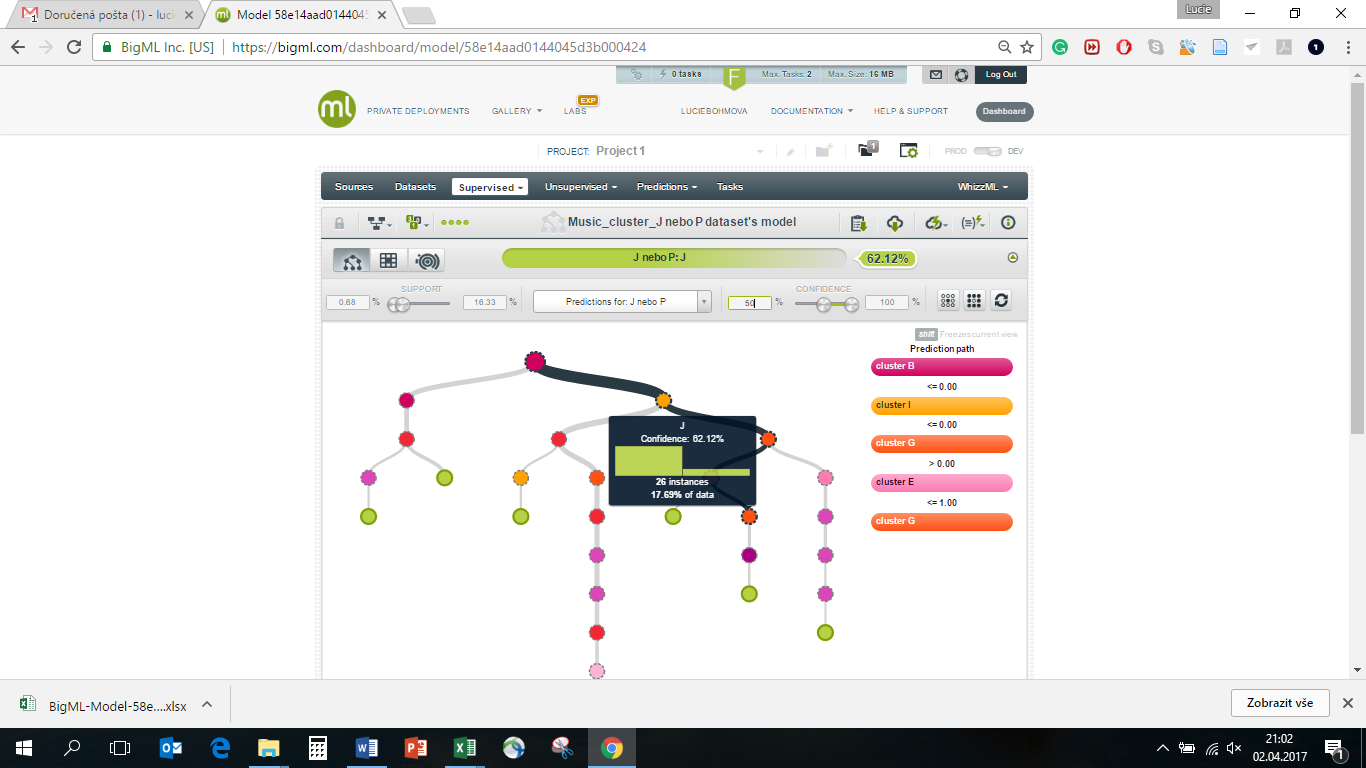 Figure 10: PM model for the attribute “favorite music”—decision tree for category “inference (J) or perception (P) lifestyle”
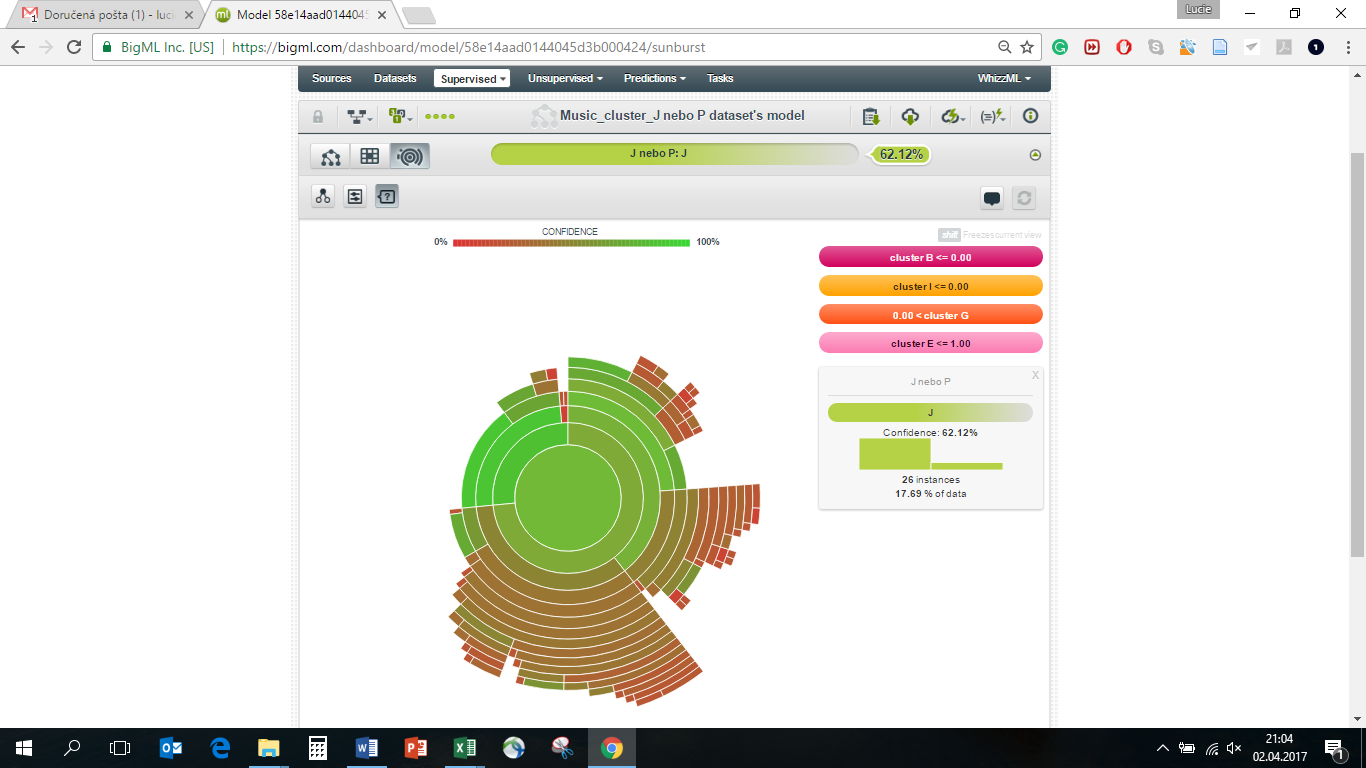 Figure 11: PM model for the attribute “favorite music”—decision tree bar chart for category “inference (J) or perception (P) lifestyle”
- Predicted distribution
J: 76.87% (113 instances)
P: 23.13% (34 instances)
- Field importance
- Cluster D: 17.31%
- Cluster F: 16.94%
- Cluster I: 16.50%
- Cluster B: 14.91%
- Cluster G: 13.03%
- Cluster E: 9.45%
- Cluster C: 7.37%
- Cluster H: 3.43%
- Cluster A: 1.06%
- PM model Validation
The validation of the PM model was carried out on 198 people from the target group.
The results of the individual predictive models are specified below in terms of the percentage of cases confirming the accuracy of the PM model and the average confidence of each predictive model.
2.1. Predictive PM model for attribute “favorite music”:
- Category “extroverted (E) or introverted (I) perception of the environment”
The model confirmed the correct result 83% of the time. The average confidence of the model is 66%.
- Category “sense (S) or intuition (N) information acquisition”
The model confirmed the correct result in 82% of cases. The average confidence of the model is 81%.
- Category “thinking (T) or feeling (F) information processing”
The model confirmed the correct result in 77% of cases. The average confidence of the model is 63%.
- Category “inference (J) or perception (P) lifestyle”
The model confirmed the correct result in 80% of cases. The average confidence of the model is 51%.
2.2. Predictive model PM for attribute “favorite TV series”:
- Category “extroverted (E) or introverted (I) perception of the environment”
- The model confirmed the correct result in 80% of cases. The average confidence of the model is 56%.
- Category “sense (S) or intuition (N) information acquisition”
- The model confirmed the correct result in 70% of cases. The average confidence of the model is 57%.
- Category “thinking (T) or feeling (F) information processing”
- The model confirmed the correct result 74% of the time. The average model confidence is 43%.
- Category “inference (J) or perception (P) lifestyle”
- The model confirmed the correct result in 81% of cases. The average confidence of the model is 49%.
2.3. Predictive model PM for attribute “favorite movie”:
- Category “extroverted (E) or introverted (I) perception of the environment”
The model confirmed the correct result in 79% of cases. The average confidence of the model is 56%.
- Category “sense (S) or intuition (N) information acquisition”
The model confirmed the correct result in 84% of cases. The average model confidence is 49%.
- Category “thinking (T) or feeling (F) information processing”
The model confirmed the correct result in 78% of cases. The average confidence of the model is 51%.
- Category “inference (J) or perception (P) lifestyle”
The model confirmed the correct result in 75% of cases. The average confidence of the model is 59%.
2.4. Predictive model PM for attribute “favorite athlete”:
- Category “extroverted (E) or introverted (I) perception of the environment”
The model confirmed the correct result in 71% of cases. The average confidence of the model is 53%.
- Category “sense (S) or intuition (N) information acquisition”
The model confirmed the correct result in 80% of cases. The average confidence of the model is 44%.
- Category “thinking (T) or feeling (F) information processing”
The model confirmed the correct result in 79% of cases. The average confidence of the model is 53%.
- Category “inference (J) or perception (p) lifestyle”
The model confirmed the correct result in 68% of cases. The average confidence of the model is 44%.
Using cluster analysis and machine learning (or decision trees), a stochastic predictive model (see Figure 12) was developed to determine the personality type of the candidates—the accuracy of the MBTI personality category prediction ranges from 68% to 84% for individual cases, with a confirmation rate ranging from 43% to 81%. The case study confirmed the model’s usefulness for supporting recruitment, and it has been put into practice.
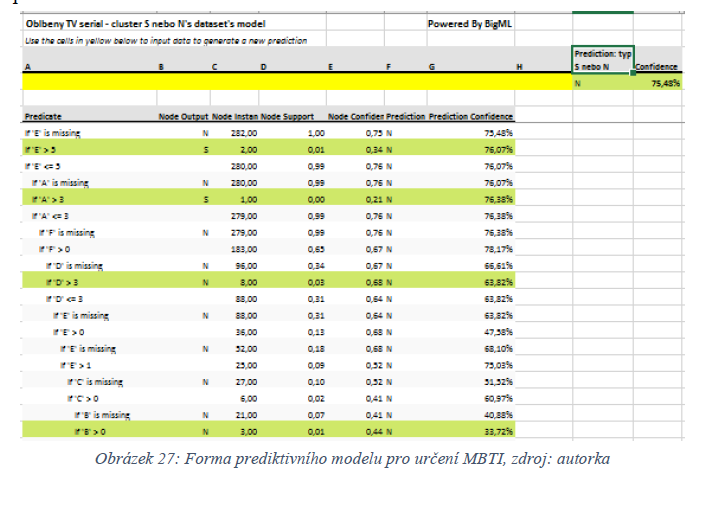 Figure 12: Decision tree bar chart for category “inference (J) or perception (P) lifestyle”
2.5. Validation and evaluation
Validation and evaluation are an important part of the PM model deployment for actual use at the University Counselling Centre (CC UEP) and the Universtity xPORT Business Accelerator (xPORT) as described in the case study below. In so doing, we used the processing method described in [32] to create the case study. The proposal and case study preparation process were separated into four steps:
- At the March 2017 employment fair Šance, we reached out to employers on behalf of CC UEP with an offer to use the PM model to assist in the recruitment of
- Companies sent out job descriptions and completed surveys for each vacancy. There was a link in the survey to a dashboard that searched the app (Prace Na Miru) data for certain qualities that are available on Facebook.
- The PM model was tested and verified on an agreed-upon employment position from Šance and the internship program. According to the survey’s specifications, the authors contacted chosen users from the application Prace Na Miru and offered them a job. Users interested in the opportunity submitted their CV to the perspective employers.
- Feedback from employers about the quality of the proposed candidates was collected via an online survey containing 11 questions. The feedback response rate was 54%.
Implementation of steps one through four occurred between March and May 2017. In total, 95 companies were involved.
The survey provided feedback from professional HR recruiters on the PM model. 88% of respondents were positive/liked the PM model.
For recruiters the primarily relevant demographic information from social media was, for example, birth date and place, education, and social media network behavior, such as wall posts, photos, and videos.
Other information (favorite series, movie, music, athlete) which we use in the PM model as predictors were perceived by respondents as less important. Therefore, the PM model has an additional value in the user’s behavior evaluation.
3. Discussion
The article has shown how the PM model can be successfully deployed in practice. The case study has proven that the PM model is generally valid and feasible for various companies and job positions.
It has been shown that the use of PM model requires extensive technical and analytical knowledge, especially in the data analysis phase. Therefore recruiters (specifically HR departments) should receive a functional version of the PM model, matching the needs of their particular segment, job position, and candidate target group.
Theoretically, the recruiting app Prace na Miru (Tailored Work) can gather data from any social media network with an open API. Different personality tests or other typological evaluation tests can be chosen as well.
Practically any reasonable test can be used to set parameters to evaluate predictors, providing the authors select the correct analytical method as well.
This article has shown the same results as [33].
Benefits of the Model
The PM model predicts the inclusion of a candidate within a personality type according to the MBTI categorization based on the candidate’s behavior on Facebook. The PM model is assembled upon the sophisticated creation of clusters that are based on data categorization automatically obtained via a custom-created Facebook app, Prace Na Miru; its data analysis; and MBTI test evaluation.
The establishment of predictors is a major benefit of this research. Employers will be able to choose and target more accurate applicants on social media. Another advantage of the research is the model’s usage in practice. The authors have verified this within the case study and also deployed it in the recruiting solution for CC UEP and the xPORT internship program.
Finally, this proposed solution has the benefit of being adaptable to multiple target groups depending on the needs of the organization.
Research limitations:
- Because social media is a rapidly changing and continually evolving medium, the major problem is the application’s long-term viability.
- Only applicants with social media profiles can be evaluated by the PM model.
- The focus is limited to the Czech/Slovak labor market and its legal framework [34].
- Despite testing the model on real data, the authors are aware of possible model distortions [33].
Possible further research and activity:
- Involve students and alumni from additional Czech universities, as well as from other countries.
- Include other social media such as Instagram or Twitter.
- Conclusion
The main output of the thesis is an artefact in the form of a model for recruitment support, its validation, and a practical application (the PM model).
The article primarily describes the fourth phase of verification, which consists of two stages: formal verification and case study. In the formal verification, a concrete instance of the artifact (in the form of a recruitment support model) is created based on the artifact—the PM model.
The stochastic predictive model confirmed the accuracy of the MBTI personality category prediction as ranging between 68% and 84% for individual cases, with confounding ranging between 43% and 81%. The case study confirmed the effectiveness of the model at supporting recruitment and the real-life deployment of the model.
Conflict of Interest
The authors declare no conflict of interest.
Acknowledgment
This paper was processed with a contribution from the Prague University of Economics and Business, IG Agency, OP VVV IGA/A, CZ.02.2.69/0.0/0.0/19_073/0016936, grant number 05/2021 and grant IGS 13/2021.
- J. B. Becton, H. J. Walker, J. B. Gilstrap, P. H. Schwager, Social media snooping on job applicants: The effects of unprofessional social media information on recruiter perceptions. Personnel Review, 48(5), 1261-1280, 2019, doi:http://dx.doi.org/10.1108/PR-09-2017-0278.
- N. Ahmed, S. Khan, K. Latif. Job description ontology, Paper presented at the Proceedings – 14th International Conference on Frontiers of Information Technology, FIT 2016, 217-222.
- M. Armstrong. ?ízení lidských zdroj?: nejnov?jší trendy a postupy. Praha: Grada Publishing, 2015, ISBN 9788024752587.
- L. Gelinas, R. Pierce, S. Winkler, I. G. Cohen, H. F. Lynch, B. E. Bierer, Using social media as a research recruitment tool: Ethical issues and recommendations, American Journal of Bioethics, 17(3), 3-14, 2017.
- LinkedIn, TALENT TRENDS 2014. LinkedIn Talent Solutions, 2014, available: https://business.linkedin.com/content/dam/business/talent-solutions/global/en_US/c/pdfs/linkedin-talent-trends-2014-en-us.pdf.
- D. Smith, Research shows role of pre-hire and post-hire outcomes in effectiveness of social media recruitment, Human Resource Management International Digest, 29(5), 17-19, 2021, doi:http://dx.doi.org/10.1108/HRMID-02-2021-0033.
- A. Muduli, J. J. Trivedi, Social media recruitment: The role of credibility and satisfaction. Evidence – Based HRM, 8(2), 237-251, 2020, doi:http://dx.doi.org/10.1108/EBHRM-08-2019-0069.
- J. L. Bender, A. B. Cyr, L. Arbuckle, L. E. Ferris, Ethics and privacy implications of using the internet and social media to recruit participants for health research: A privacy-by-design framework for online recruitment. Journal of Medical Internet Research, 19(4), 2017.
- A. Dresch, D. P. Lacerda, Jr. Antunes, Design Science Research: A Method for Science and Technology Advancement, New York: Springer, 2015, ISBN 978-3-319-07373-6.
- V. K. Vaishnavi, W. Kuechler, Design Science Research Methods and Patterns, CRC Press, Boca Raton, FL, 2015.
- Z. Molnár, S. Mildeová, H. ?ezanková, R, Brixí, J. Kalina, Pokro?ilé metody v?decké práce, Zelene?: Profess Consulting, V?da pro praxi (Profess Consulting), 2012, ISBN 978-80-7259-064-3.
- Y. Melanthiou, F. Pavlou, E. Constantinou, The use of social network sites as an E-recruitment tool, Journal of Transnational Management, 20(1), 31-49, 2015.
- C. Khatri, J. S. Chapman, J. Glasbey, M. Kelly, D. Nepogodiev, A. Bhangu, J. E. Fitzgerald, Social media and internet driven study recruitment: Evaluating a new model for promoting collaborator engagement and participation. PLoS ONE, 10(3), 2015.
- D. Muntinga, M. Moorman, E. Smit, ‘Introducing COBRAs’, International Journal of Advertising, 30(1), 13-46, Business Source Ultimate, EBSCOhost, 2011, ISSN: 0265-0487.
- Oracle, Social Recruiting Guide: How to Effectively Use Social Networks, 2012, available: http://www.oracle.com/us/media1/effectively-use-social-networks-1720586.pdf.
- H. Yin, B. Cui, L. Chen, Z. Hu, X. Zhou, Dynamic user modeling in social media systems, ACM Transactions on Information Systems, 33(3), 2015.
- M. Miller, Face-to-face with the digital folk: The ethics of fieldwork on facebook, Folk culture in the digital age: The emergent dynamics of human interaction (pp. 212-232), 2012.
- A. Ladkin, D. Buhalis, Online and social media recruitment: Hospitality employer and prospective employee considerations. International Journal of Contemporary Hospitality Management, 28(2), 327-345, 2016.
- M. Mattare, Revisiting Understanding Entrepreneurs Using the Myers-Briggs Type Indicator®, Journal of Marketing Development and Competitiveness, 9(2), 114-119, 2015, ISSN: 21552843.
- P. Chapman, J. C. Clinton, R. Kerber, T. Khabaza, T. Reinartz, C, Shearer, R. Wirth, CRISP-DM 1.0, Step-by-step data mining guide, 2020, Available: ftp://ftp.software.ibm.com/software/analytics/spss/support/Modeler/Documentation/14/UserManual/CRISP-DM.pdf.
- A. Chen, How Accurate Are Personality Tests?, Scientific American, Oct. 10, 2018, accessed: Sep. 14, 2021, available: https://www.scientificamerican.com/article/how-accurate-are-personality-tests/.
- R. Stein, Personality Tests with Deep-Sounding Questions Provide Shallow Answers about the True You, Scientific American, 2018, accessed: Sep. 14, 2021, available: https://www.scientificamerican.com/article/personality-tests-with-deep-sounding-questions-provide-shallow-answers-about-the-true-you/.
- K. Randall , M. Isaacson, C. Ciro, Validity and Reliability of the Myers-Briggs Personality Type Indicator: A Systematic Review and Meta-analysis, Journal of Best Practices in Health Professions Diversity: Education, Research & Policy, vol. 10, no. 1, pp. 1–27, Spring 2017.
- Jobvite, Social Recruiting Survey, 2014, available: https://www.jobvite.com/wp-content/uploads/2014/10/Jobvite_SocialRecruiting_Survey2014.pdf.
- Knime, 2017, available: https://www.knime.com/.
- I. B. Myers, M. H. Mccaulley, R. Most, Manual: A Guide to the Development and Use of the Myers-Briggs Type Indicator, Palo Alto, Ca.: Consulting Psychologists Press, 1985, ISBN 08-910-6027-8.
- CH. E. Fretwell, C. C. Lewis, M. Hannay, Myers-Briggs Type Indicator, A/B Personality Types, and Locus of Control: Where Do They Intersect?, American Journal of Management, 13(3), 57-66, 2013, ISSN: 21657998.
- BigML, 2017, available: https://bigml.com/.
- M. N. Manu, K. R. Anandakumar, A current trends in big data landscape. Paper presented at the 2015 IEEE International Conference on Computational Intelligence and Computing Research, ICCIC 2015.
- Q. Tran, Using ANOVA to analyze modified gini index decision tree classification, Paper presented at the Proceedings of the 2008 International Conference on Data Mining, DMIN 2008, 164-170, 2008.
- Pajek, Analysis and visualization of large networks, 2017, available: http://mrvar.fdv.uni-lj.si/pajek/.
- R. K. Yin, Case study research: design and methods, 5. Edice, Los Angeles, Calif. [u.a.]: Sage Publ, 2014, ISBN 14-522-4256-9.
- L. Böhmová, A. Pavlí?ek, ‘How the Modern Human Resources Management Can Take Advantage of Information From Social Media while Recruiting’, in 2020 International Conference on Engineering Management of Communication and Technology (EMCTECH), Oct. 2020, pp. 1–6. doi: 10.1109/EMCTECH49634.2020.9261522.
- Official Journal of the European Union, Ec.europa, 2016, available: http://ec.europa.eu/justice/data-protection/reform/files/regulation_oj_en.pdf