
Simulation and FPGA Implementation of a Ring Oscillator Sensor for Complex System Design

Volume 3, Issue 1, Page No 317–321, 2018
Adv. Sci. Technol. Eng. Syst. J. 3(1), 317–321 (2018);
DOI: 10.25046/aj030138
Keywords: RO, FPGA, VHDL, Complex System Design, DE1
This paper, presents the design of a temperature sensor based on RO (Ring Oscillator) in order to make a thermal study for the detection and localization of thermal peaks in a complex system. In this work, a simulation and FPGA implementation of a fully digital temperature sensor features a number of exact inverters that can be dynamically inserted. Before the transition to the implementation in FPGA board, the use of VHDL code is necessary to describe the exact number of inverters that form a single ring oscillator, in order to verify and validate the results obtained. This paper offers a solution to thermally induced stress and local overheating in complex system design which has been a major concern for the designers during the design of integrated circuit. In this paper a DE1 FPGA board cyclone V family 5CSEMA5F31C6 is used for the implementation.
1. Introduction
Decreasing feature sizes and increasing power and package contact densities are making thermal issues extremely important in complex system design. The main purpose of using a temperature sensor is to provide thermal monitoring for predicting local overheating or thermally induced stress. In this article, an intelligent sensor is used for thermal monitoring which is almost an ideal sensor due to its low power consumption. The main idea of this work is to simulate and implement a fully digital temperature sensor that can be dynamically inserted, operated and eliminated from the circuit once the test is done.
The intelligent sensor used in the design is actually based on ring oscillator. One of the important questions in the field of thermal issues of VLSI systems and micro-systems is how to perform the thermal monitoring, in order to indicate the overheating situations, without complicated control circuits.
Traditional approach consists of placement of many sensors everywhere on the chip, and then their output can be read simultaneously and compared with the reference voltage recognized as the overheating level. These techniques, though helpful to reduce the overall power consumption, may cause significant on-chip thermal gradients and local hot spots due to different clock/power gating activities and varying voltage scaling. It has been reported in [1] that temperature variations of 30 °C can occur in a high-performance microprocessor design.
The magnitude of thermal gradients and associated thermo-mechanical stress is expected to increase further as VLSI complex designs move into nanometer processes and multi-GHz frequencies. After the actual temperature is read, the value will be returned through the configuration ports of the FPGA. Then, the sensor will be removed from the chip. This type of oscillator used here is based on the switching time of an inverter. By connecting an odd number of inverters, a naturally oscillating signal is obtained at the output of each inverter of the chain. The oscillation frequency is directly related to the number of inverters. The more inverters there are, the lower the frequency is. To control the oscillation, an inverter can be replaced by a NAND gate, in order to stop or activate the oscillating system. Reference [2], [3], [4], [5] and [6] presents various techniques for varying the frequency of oscillation of the structure. These suggestions based on the voltage control of the delay generated by each cell, on the current control of the rise and falling time of each cell or on the controlled variation of the number of cells.
The advantage of this structure lies in the fact that it can be implemented both with an even number and an odd number of cells. This offers a greater tolerance on the constellation in phase of the signals available at output, but in the case of an implementation with an odd number of cells gives a sinusoidal signal in the output which makes the ring oscillator the perfect solution used ever to give more information during the thermal monitoring. In fact, a ring oscillator consists of a feedback loop that includes a necessary odd number of inverters to produce the displacement of the phase which maintains the oscillation the total period is twice the sum of the delays of all the elements that make up the loop. Reversals can be made using the LUT (look-up table) of the configurable logic blocks (CLBs) or the programmable inverters included in the FPGA blocks. In any case, it is useful to insert an external signal to open the loop, as well as an output register to prevent variations in the frequency due to different loads. Thus, the sensor can give instantaneous temperatures.
The future of detectors based on the ring oscillator method is to help designers of more complex integrated circuits to optimize the management of thermal dynamics on the chip [7], [8] and [9]. In this paper in particular, the sensor used allows the detection of thermal peaks. The interests of a sensor based on this method are multiple [10] and [11]. Among the interests of the use of this sensor based on ring oscillator method, is that it can be easily integrated on a chip and can be dynamically inserted or removed from the design at any time due to its small size.
The rest of our work is organized as follows. Section 2, gives a description of the methodology used. Section 3, shows the implementation of the ring oscillator on the FPGA board to verify and validate the results.
2. Description of the methodology used
The new methodology adopted is to validate the control temperature of complex microsystems on a chip based of five inverters forming a ring oscillator [12]. This methodology has given very encouraging results for thermal monitoring in more complex integrated circuits. These simulations and FPGA implementation will then be generalized in high density microsystems, for the development of an integrated thermo mechanical stress control unit using our proposal described in this paper. The proposed ring oscillator depends on the temperature and its frequency changes accordingly. At a given temperature, the oscillator will exhibit a fixed frequency of oscillation.
2.1. Material and geometry of the complex design in COMSOL
We have made the simulation in COMSOL tool appointment with different materials and hardware layers and well on their ranking on the semiconductor. In this figure, we clearly see the reconciliation of our complex circuit layers. The complex model contains 36 Radial Board (RB) in which each RB contains 12 adapter board detector module (ABDM) and each ABDM contains 2 ASICs. Power of 0.6 W is dissipated in a complex circuit of the ASIC (4.68 mm x 5.97 mm) [13]. This amount of power is applied for 9 seconds to visualize the evolution and distribution of heat around the ASIC. Figure 1 shows the ASIC and its support modeled in COMSOL, the ASIC transmits event data through low voltage differential signaling links. To solve the thermal diffusion equations, the Dirichlet boundary conditions (DBC) at 298.15 °K are applied around the daughter board.
Figure 1 The ASIC modeled by the COMSOL tool.
This structure thus represents a continuous domain, by the method of finite elements consists first of a geometric discretization. The structure is subdivided into sub domains of the simple geometric form called finite element and defined not on the whole of the structure, but for each of its elements.
2.2. Thermal distribution of the complex design in COMSOL
It is very interesting to have a simulation environment that includes the ability to add different physical phenomena to the model studied. In this part, we will present the simulation results from heat sources represented the ASIC complex module in COMSOL tool. As you can see in Figure 2 shows the thermal behavior of our model complex design.
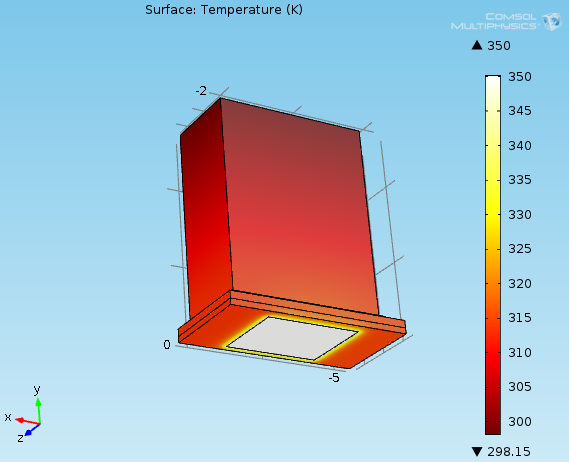
Figure 2 Thermal distribution of the ASIC in COMSOL tool.
This simulation of the ASIC complex module in COMSOL gives a good idea of the behavior and the thermal diffusion of heat sources in our complex system and shows the temperature up to 350 °K. The use of COMSOL tool gives us an idea about the thermal diffusion around the ASIC. According to another study done by [14] and the following Figure 3 presents the values of the temperature as a function of the frequencies of a ring oscillator.
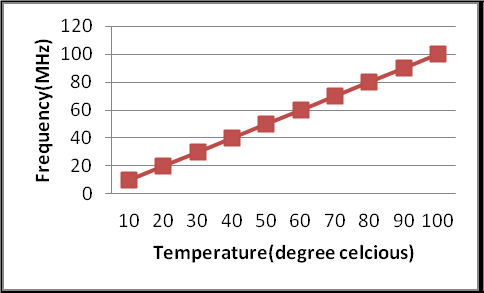
Figure 3 Température of (RO) ring oscillator showing frequency of oscillation linear to temperature.
this research which is done by [14] and the presentation of the results in ghraph form of integrated thermal sensors to monitor the temperature between 10 C to 100 C, according to our simulation under the tool COMSOL Fig. 3 and the study which is done by [12], we can deduce that temperature 77 ° C has our complex module corresponds to approximately 78 MHz (see Fig. 3). This perfectly corresponds to our simulation which is made for the ring oscillator with 5 inverters.
Now we need to validate these theoretical findings find by implementing a 5-inverter based sensor on an FPGA board that allows for different simulations, in [2] explains that more information can be found on the location of the thermal peak at the same frequency and the same temperature of the ring oscillators knowing that this type of ring oscillator sensor can only determine the necessary information if it receives sinusoidal signals, therefore a sinusoidal signal as an input.
3. Experimental implementation and results
The main purpose of this section is the implementation and validation of a single ring oscillator composed of five inverters. VHDL code is used to describe the RO module to facilitate the development of its architecture for its implementation in complex system design. This architecture is modeled in high-level language and simulated to assess its performance and finally implemented on FPGA. The simulation results are validated by using the software Modelsim under Quartus Prime, which allows simulating the behavior of the system in time. Our design flow will be divided into three main parts: simulation, synthesis, and implementation of the VHDL code on FPGA. A description of each part will be presented in the next paragraphs.
3.1. Creation and simulation of the VHDL code
This part, presents the description of the single ring oscillator based of five inverters using a VHDL code editor. The code editor used is Modelsim. Figure 4 shows the top-level module of a single ring oscillator.
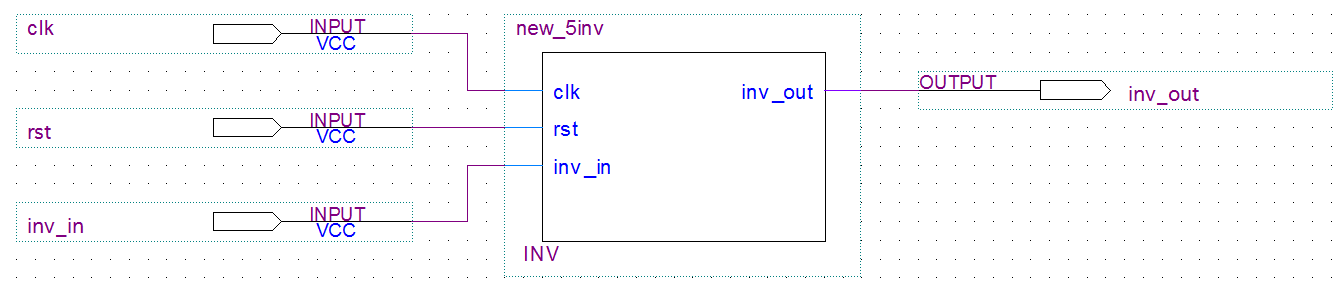
Figure 4 Top level of the ring oscillator composed of five inverters.
This structure in Figure 4 shows the top level of the ring oscillator composed of five inverters, this facilitates the simulation of the logic circuits thereafter. After having followed it, the modelization of a logic scheme of a ring oscillator based on five inverters with Quartus Prime and comes as the next step then the simulation step using ModelSim.
After generating the two .vhd files (the primary file system and the “Test Bench” file) with the “System Generator” the role of the Quartus Prime Navigator comes in order to synthesize the design and generate the RTL files as shown in Figure 5.
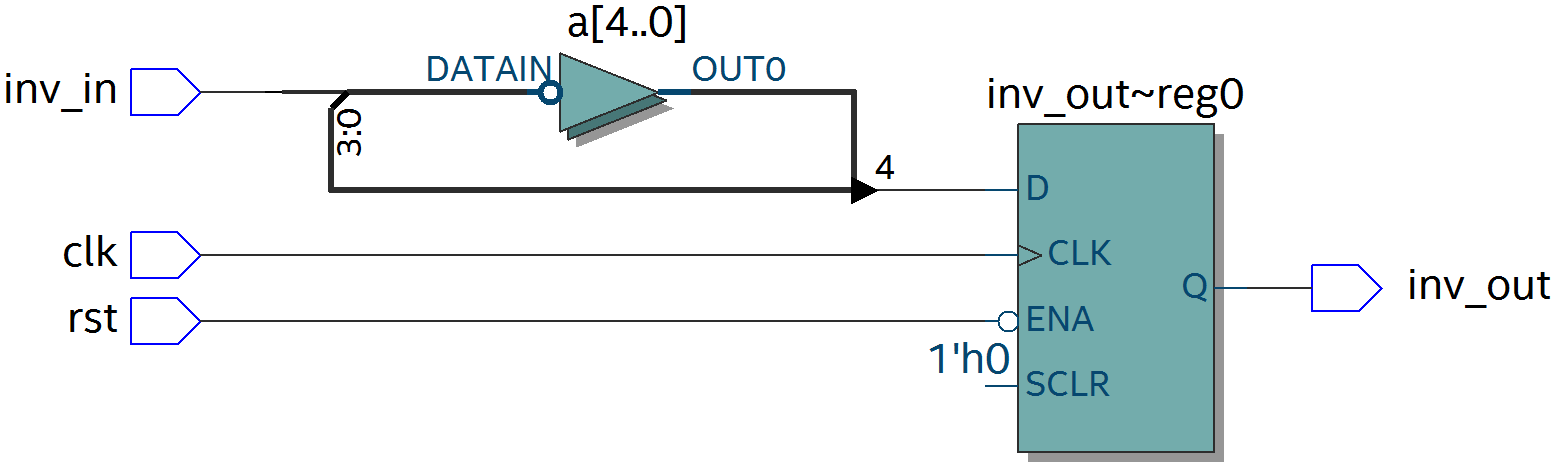
Figure 5 Structure of ring oscillator based five inverters in Quartus Prime tool.
The structure of the single ring oscillator based of five inverters, after synthesis with Quartus Prime from Altera is shown in (Figure 5). The VHDL code implemented was validated. In this part the simulation will be run with the same conditions used in [11], [12] and [14], to validate the experimental results. This Figure 6 shows the results found by the simulation using the Modelsim tool.
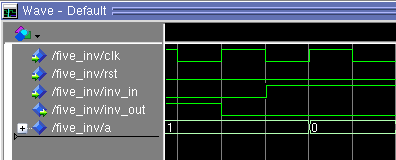
Figure 6 Display résulte of simulation the VHDL code.
As you can see in Figure 6, the signals of simulations are explaining the role of inverters for example for the logical value zero the output is the logical value 1 and the same thing for the second case. The results found validate the VHDL code since it is the correct operation of a single ring oscillator based on five inverters. In this paper, the GDS (gradient Direction Sensor) method for thermal peak detection is used, simulated and verified with a VHDL code and a ‘test bench’ at the laboratory LIMA the results found meet the initial specifications.
3.2. Implementation and downloading of the VHDL code
Once compiled after the assignment of the pins, the program is ready to be downloaded on the card DE1 cyclone V family and 5CSEMA5F31C6 as a device. This Figure 7 shows that the VHDL code is downloaded successfully on the card.
Figure 7 Downloading the code of DE1 Altera cyclone V.
After the download, the program was running and then the outputs were shown on the display of the card. The clock is at 50 MHz, so the outputs should change with a frequency of 50 MHz and the following Figure 8 shows the two values (1 and 0) after implementation on the LCD.
Figure 8 Validation of simulation results on the LCD after the implementation of DE1 Altera cyclone V.
This validation of the simulation results in Figure 8 shows that the value displayed on the LCD matches the results found before. The simulation and implementation on FPGA board DE1 can be applied in any kind of environment to get improved performance to control temperature of complex system design on a chip based of five inverters that will form a single ring oscillator with respect to the conventional schematic; it is also able to keep the temperature constant at the desired value regardless of changes in the load or environment. Thus, the overshooting problem can be solved up to great extent. One of the important issues in the field of electronics is overheating problems especially when it comes to integrated and complex systems and microsystems, but the mean question is how to perform thermal monitoring, to indicate overheating situations, without control.
This type of sensors all over the chip, and then their output can be shown simultaneously and be compared to the reference voltage recognized as the level of overheating. The idea of the proposed method is to validate the results predict the local temperature and gradient along the given distance in some places only on the monitored surface and evaluates obtained several real-time information in a short area in order to predict the temperature of the heat source. These peaks found are essential when monitoring the thermal matrix to avoid a critical induced thermo-mechanical stress. In addition, in most cases, overheating occurs in only one location.
4. Conclusion
The main objective of this paper is to simulate and implement a temperature sensor based on ring oscillator to make a thermal study at the junction. For this paper, we presented an experimental study for the implementation of a fully digital temperature to be dynamically inserted, operated and removed from the circuit after the test. Thus, the main advantage of this type of sensor is the analysis of the temperature during operation of the different blocks of a complex circuit implemented on FPGA. This will be useful for the integrated circuit designer because it offers a solution to thermally induced stress and local overheating in complex system design which has been a major concern for the designers during the design of integrated circuits.
- Gronowski et al., “High performance microprocessor design,” IEEE J. Solid-State Circuits, vol. 33, pp. 676– 686, 1998.
- Oukaira, A, Ettahri, O and Lakhssassi, A “Modeling and FPGA implementation of a thermal peak detection unit for complex system design”, (IJACSA) International Journal of Advanced Computer Science and Applications, vol.8, no.6, pp.307-312, 2017.
- Slattery, D. O’ Mahoney, E. Sheehan, and F. Waldron, “Sources of Variation in Piezoresistive Stress Sensor Measurements,” IEEE transactions on components and packaging technologies, vol.27, no.1, pp.81-86, 2004.
- Banu, “100 khz – 1 ghz Nmos Variable-frequency Oscillator With Analog and Digital control,” ISSCC, Solid-State Circuits Conference. Digest of Technical Papers, vol.31, pp.20-21, 1998.
- Retdian, , S. Takagi, and N. Fujii, “Voltage controlled ring oscillator with wide tuning range and fast voltage swing,” IEEE Asia-Pacific Conference, ASIC Proceedings, pp.201-204, 2002.
- Oukaira, A, Pal, N, Ettahri, O, Kengne, E and Lakhssassi, A “Simulation and FPGA Implementation of Thermal Convection Equation for Complex System Design”, (IREA) International Journal on Engineering Applications, vol.2, no.6, pp.307-312, 2016.
- Pinel, Stephane, et al, “Thermal modeling and management in ultrathin chip stack technology”, IEEE Transactions on Components and Packaging Technologies, vol.25, no.2, pp.244–253, 2002.
- Oukaira, A, Lakhssassi, A, Fontaine, R, & Lecomte, R, “Thermal Model Development for LabPET II Scanner Adapter Board Detector Module”, Proceedings of the COMSOL Conference, pp. 1-5, 2015.
- Oukaira, A, Fontaine, R, Lecomte, R, & Lakhssassi, A, “Thermal cooling system development for LabPET II scanners by forced convection flow”, In New Circuits and Systems Conference (NEWCAS), 15th IEEE International, pp. 289-292, 2017.
- Rahmanikia, Navid, et al, “Performance evaluation metrics for ring-oscillator-based temperature sensors on FPGAs: A quality factor”, Integration, the VLSI Journal, vol.57, pp.81–100, 2017.
- Rahmanikia, Navid, et al, “Exploring Efficiency of Ring Oscillator-Based Temperature Sensor Networks on FPGAs”, Proceedings of ACM/SIGDA International Symposium on Field-Programmable Gate Arrays, pp.264–264, 2015.
- Oukaira, A, Mellal, I, Ettahri, O, Kengne, E and Lakhssassi, A “Thermal Management and Monitoring Based on Embedded Ring Oscillator Network Sensors for Complex System Design”, (IJCEIT) International Journal of Computer Engineering and Information Technology, vol.9, no.7, 2017.
- Oukaira, A, Taheri, S, Nour, M, & Lakhssassi, A, “Simulation and Validation of Thermal Stability for Complex System Design High Power Dissipation”, In the 5th IEEE International Conference on Smart Energy Grid Engineering (SEGE), pp. 229-233, 2017.
- Suman, S, & Singh, B. P. “Ring oscillator-based CMOS temperature sensor design”, International Journal of Scientific & Technology Research, vol.1, no.4, pp.76–81, 2012.
- Hanan Hassan Ali Adlan, Elsadig Ahmed Mohamed Babiker, "Efficient Pattern Recognition Resource Utilization Neural Network ", Advances in Science, Technology and Engineering Systems Journal, vol. 11, no. 1, pp. 44–50, 2026. doi: 10.25046/aj110105
- Kazuki Iehira, Hiroyuki Inooue, "Detection Method and Mitigation of Server-Spoofing Attacks on SOME/IP at the Service Discovery Phase", Advances in Science, Technology and Engineering Systems Journal, vol. 11, no. 1, pp. 25–32, 2026. doi: 10.25046/aj110103
- Nikolai Dimech, Ivan Grech, Russell Farrugia, Owen Casha, Barnaby Portelli, Joseph Micallef, "Design and Electronic Interfacing of FR4 and Polyimide PCB-based Electromagnetic Resonating Micro-mirrors ", Advances in Science, Technology and Engineering Systems Journal, vol. 11, no. 1, pp. 1–10, 2026. doi: 10.25046/aj110101
- Mia Yaqin Wang, Mackenzie Linn, Andrew Patrick Berg, Qian Zhang, "A Multi-class Acoustic Dataset and Interactive Tool for Analyzing Drone Signatures in Real-World Environments", Advances in Science, Technology and Engineering Systems Journal, vol. 10, no. 6, pp. 88–96, 2025. doi: 10.25046/aj100608
- Marlene Böhmer, Thorsten Herfet, "PerfVis+: From Timestamps to Insight through Integration of Visual and Statistical Analysis", Advances in Science, Technology and Engineering Systems Journal, vol. 10, no. 6, pp. 77–87, 2025. doi: 10.25046/aj100607
- Robinson Lawrance, Nishith Kumar Reddy Gorla, "System-Level Test Case Design for Field Reliability Alignment in Complex Products", Advances in Science, Technology and Engineering Systems Journal, vol. 10, no. 6, pp. 55–64, 2025. doi: 10.25046/aj100605
- Kento Yasuda, Hiromitsu Shimakawa, Fumiko Harada, "Identifying Comprehension Faults Through Word Embedding and Multimodal Analysis", Advances in Science, Technology and Engineering Systems Journal, vol. 10, no. 6, pp. 42–54, 2025. doi: 10.25046/aj100604
- David Degbor, Haiping Xu, Pratiksha Singh, Shannon Gibbs, Donghui Yan, "StradNet: Automated Structural Adaptation for Efficient Deep Neural Network Design", Advances in Science, Technology and Engineering Systems Journal, vol. 10, no. 6, pp. 29–41, 2025. doi: 10.25046/aj100603
- Hiroshi Ito, Hideki Ohno, Hikaru Kitano, Shuichi Matsumoto, "Private 5G MIMO for Cable TV IP Broadcasting", Advances in Science, Technology and Engineering Systems Journal, vol. 10, no. 6, pp. 23–28, 2025. doi: 10.25046/aj100602
- Vinton Morris, Kevin Kornegay, Joy Falaye, Sean Richardson, Marcial Tienteu, Loic Jephson Djomo Tchuenkou, "TIMeFoRCE: An Identity and Access Management Framework for IoT Devices in A Zero Trust Architecture", Advances in Science, Technology and Engineering Systems Journal, vol. 10, no. 6, pp. 1–22, 2025. doi: 10.25046/aj100601
- Austin Ikechukwu Gbasouzor, Nnamdi Chimaobi Ezenwegbu, Ogochukwu Clementina Okeke, Augustine Azabaze Akaho, Chebet Evaline Langat, "Optimization of Investment in Decision – Making in Engineering Economy", Advances in Science, Technology and Engineering Systems Journal, vol. 10, no. 5, pp. 33–39, 2025. doi: 10.25046/aj100504
- Jenna Snead, Nisa Soltani, Mia Wang, Joe Carson, Bailey Williamson, Kevin Gainey, Stanley McAfee, Qian Zhang, "3D Facial Feature Tracking with Multimodal Depth Fusion", Advances in Science, Technology and Engineering Systems Journal, vol. 10, no. 5, pp. 11–19, 2025. doi: 10.25046/aj100502
- Li Weiguo, Chen Yanhong, Yang Libing, Yang Liyan, "Integration and Innovation of a Micro-Topic-Pedagogy Teaching Model under the New Engineering Education Paradigm", Advances in Science, Technology and Engineering Systems Journal, vol. 10, no. 4, pp. 32–40, 2025. doi: 10.25046/aj100404
- Chukwuemeka Alexander. Osueke, Obiageli Josphine Ugonabo, Tafon Williams Sivla, Akor John Yakubu, Eucheria Chidinma Okoro, "The First Study on Ionospheric Peak Variability over Equatorial Africa (COSMIC-2)", Advances in Science, Technology and Engineering Systems Journal, vol. 10, no. 4, pp. 14–19, 2025. doi: 10.25046/aj100402
- Glender Brás, Samara Leal, Breno Sousa, Gabriel Paes, Cleberson Junior, João Souza, Rafael Assis, Tamires Marques, Thiago Teles Calazans Silva, "Machine Learning Methods for University Student Performance Prediction in Basic Skills based on Psychometric Profile", Advances in Science, Technology and Engineering Systems Journal, vol. 10, no. 4, pp. 1–13, 2025. doi: 10.25046/aj100401
- François Dieudonné Mengue, Verlaine Rostand Nwokam, Alain Soup Tewa Kammogne, René Yamapi, Moskolai Ngossaha Justin, Bowong Tsakou Samuel, Bernard Kamsu Fogue, "Explainable AI and Active Learning for Photovoltaic System Fault Detection: A Bibliometric Study and Future Directions", Advances in Science, Technology and Engineering Systems Journal, vol. 10, no. 3, pp. 29–44, 2025. doi: 10.25046/aj100305
- Andi Kristanto, Utari Dewi, Dina Fitria Murad, Yumiati, Santi Dewiki, Tiara Sevi Nurmania, "Utilization of Generative Artificial Intelligence to Improve Students’ Visual Literacy Skills", Advances in Science, Technology and Engineering Systems Journal, vol. 10, no. 3, pp. 1–8, 2025. doi: 10.25046/aj100301
- Stephen Obare, Kennedy Ogada, "A Review of Natural Language Processing Techniques in Under-Resourced Languages", Advances in Science, Technology and Engineering Systems Journal, vol. 10, no. 2, pp. 35–41, 2025. doi: 10.25046/aj100204
- Maikel Leon, "Generative Artificial Intelligence and Prompt Engineering: A Comprehensive Guide to Models, Methods, and Best Practices", Advances in Science, Technology and Engineering Systems Journal, vol. 10, no. 2, pp. 01–11, 2025. doi: 10.25046/aj100201
- Gábor Kovács, "Selection of Rotor Slot Number in 3-phase and 5-phase Squirrel Cage Induction Motor; Analytic Calculation", Advances in Science, Technology and Engineering Systems Journal, vol. 10, no. 1, pp. 60–74, 2025. doi: 10.25046/aj100107
- Mahdi Madani, El-Bay Bourennane, Safwan El Assad, "Hardware and Secure Implementation of Enhanced ZUC Steam Cipher Based on Chaotic Dynamic S-Box", Advances in Science, Technology and Engineering Systems Journal, vol. 10, no. 1, pp. 37–47, 2025. doi: 10.25046/aj100105
- Gábor Kovács, "Analytical Study on the Effect of Rotor Slot Skewing on the Parasitic Torques of the Squirrel Cage Induction Machine", Advances in Science, Technology and Engineering Systems Journal, vol. 10, no. 1, pp. 20–36, 2025. doi: 10.25046/aj100104
- Sarawuth Pramualsingha, Kazuo Yamamoto, RikutoTanaka, "Lightning Detection System for Wind Turbines Using a Large-Diameter Rogowski Coil", Advances in Science, Technology and Engineering Systems Journal, vol. 10, no. 1, pp. 1–6, 2025. doi: 10.25046/aj100101
- Tanay Patni, Abhijit Pethe, "True Random Number Generator Implemented in ReRAM Crossbar Based on Static Stochasticity of ReRAMs", Advances in Science, Technology and Engineering Systems Journal, vol. 9, no. 5, pp. 30–36, 2024. doi: 10.25046/aj090504
- Ahmet Emin Ünal, Halit Boyar, Burcu Kuleli Pak, Vehbi Çağrı Güngör, "Utilizing 3D models for the Prediction of Work Man-Hour in Complex Industrial Products using Machine Learning", Advances in Science, Technology and Engineering Systems Journal, vol. 9, no. 6, pp. 01–11, 2024. doi: 10.25046/aj090601
- Koji Oda, Toshiyasu Kato, Yasushi Kambayashi, "Evaluation of a Classroom Support System for Programming Education Using Tangible Materials", Advances in Science, Technology and Engineering Systems Journal, vol. 9, no. 5, pp. 21–29, 2024. doi: 10.25046/aj090503
- Diego Costa, Gabriel Matos, Anderson Lins, Leon Barroso, Carlos Aguiar, Erick Bezerra, "Web Application Interface Data Collector for Issue Reporting", Advances in Science, Technology and Engineering Systems Journal, vol. 9, no. 5, pp. 01–08, 2024. doi: 10.25046/aj090501
- Woratida Sawangnamwong, Siam Charoenseang, "Assistive System for Collaborative Assembly Task using Augmented Reality", Advances in Science, Technology and Engineering Systems Journal, vol. 9, no. 4, pp. 110–118, 2024. doi: 10.25046/aj090412
- Amalia Rodriguez Espinoza de los Monteros, Maximo Giovani Tandazo Espinoza, Byron Ivan Punina Cordova, Ronald Eduardo Tandazo Vanegas, "IoT and Business Intelligence Based Model Design for Liquefied Petroleum Gas (LPG) Distribution Monitoring", Advances in Science, Technology and Engineering Systems Journal, vol. 9, no. 4, pp. 79–92, 2024. doi: 10.25046/aj090409
- Le Truong Vinh Phuc, Mituteru Nakamura, Masakazu Higuchi, Shinichi Tokuno, "Effectiveness of a voice analysis technique in the assessment of depression status of individuals from Ho Chi Minh City, Viet Nam: A cross-sectional study", Advances in Science, Technology and Engineering Systems Journal, vol. 9, no. 4, pp. 73–78, 2024. doi: 10.25046/aj090408
- Shuvo Kumar Paul, Mircea Nicolescu, Monica Nicolescu, "Integrating Speech and Gesture for Generating Reliable Robotic Task Configuration", Advances in Science, Technology and Engineering Systems Journal, vol. 9, no. 4, pp. 51–59, 2024. doi: 10.25046/aj090406
- Declan Mallamo, Michael Azarian, Michael Pecht, "Early Detection of SMPS Electromagnetic Interference Failures Using Fuzzy Multi-Task Functional Fusion Prediction", Advances in Science, Technology and Engineering Systems Journal, vol. 9, no. 4, pp. 35–50, 2024. doi: 10.25046/aj090405
- Joshua Carberry, Haiping Xu, "GPT-Enhanced Hierarchical Deep Learning Model for Automated ICD Coding", Advances in Science, Technology and Engineering Systems Journal, vol. 9, no. 4, pp. 21–34, 2024. doi: 10.25046/aj090404
- Anirudh Mazumder, Kapil Panda, "Leveraging Machine Learning for a Comprehensive Assessment of PFAS Nephrotoxicity", Advances in Science, Technology and Engineering Systems Journal, vol. 9, no. 3, pp. 62–71, 2024. doi: 10.25046/aj090306
- Sigit Pranowo Hadiwardoyo, Riana Herlina Lumingkewas, Tommy Iduwin, Silvanus Nohan Rudrokasworo, Darren Matthew, "Buton Rock Asphalt Paving Block Innovation using Waste Engine Oil and Recycled Concrete Aggregate", Advances in Science, Technology and Engineering Systems Journal, vol. 9, no. 2, pp. 55–66, 2024. doi: 10.25046/aj090207
- Marco I. Bonelli, Jiahao Liu, "Revolutionizing Robo-Advisors: Unveiling Global Financial Markets, AI-Driven Innovations, and Technological Landscapes for Enhanced Investment Decisions", Advances in Science, Technology and Engineering Systems Journal, vol. 9, no. 2, pp. 33–44, 2024. doi: 10.25046/aj090205
- Viktor Denkovski, Irena Stojmenovska, Goce Gavrilov, Vladimir Radevski, Vladimir Trajkovik, "Exploring Current Challenges on Security and Privacy in an Operational eHealth Information System", Advances in Science, Technology and Engineering Systems Journal, vol. 9, no. 2, pp. 45–54, 2024. doi: 10.25046/aj090206
- Puntip Jongkroy, Ponthip Limlahapun, "Spatial Distribution Patterns of the Royal Development Projects Initiated by King Rama 9th of Thailand", Advances in Science, Technology and Engineering Systems Journal, vol. 9, no. 2, pp. 26–32, 2024. doi: 10.25046/aj090204
- Peerawat Meesuk, Vijit Kinnares, "Mathematical Model of Wind Turbine Simulator Based Five-Phase Permanent Magnet Synchronous Generator with Nonlinear Loads and Harmonic Analysis", Advances in Science, Technology and Engineering Systems Journal, vol. 9, no. 1, pp. 165–174, 2024. doi: 10.25046/aj090116
- Giwa Abdulgafar Babatunde, Ewetumo Theophilus, Ojo Joseph. Sunday, Adedayo Kayode David, Owolabi Gbenga Ayodele, "Development of a GSM-RC Automated Device for Measuring Mobile Communication Signal Strength and Meteorological Parameters", Advances in Science, Technology and Engineering Systems Journal, vol. 9, no. 1, pp. 149–164, 2024. doi: 10.25046/aj090115
- Pegah Yazdkhasti, Julian Luciano Cárdenas–Barrera, Chris Diduch, "Smart Agent-Based Direct Load Control of Air Conditioner Populations in Demand Side Management", Advances in Science, Technology and Engineering Systems Journal, vol. 9, no. 1, pp. 114–123, 2024. doi: 10.25046/aj090111
- Pontsho Penelope Mokgatla, Ramadhan Wanjala Salim, Julius Ndambuki, "Enhancing Compressive Strength of Pervious Concrete for Use as Pavement Layer in Urban Roads Aper", Advances in Science, Technology and Engineering Systems Journal, vol. 9, no. 1, pp. 49–66, 2024. doi: 10.25046/aj090106
- Ajla Kulaglic, Zeynep Örpek, Berk Kayı, Samet Ozmen, "Analysis of Emotions and Movements of Asian and European Facial Expressions", Advances in Science, Technology and Engineering Systems Journal, vol. 9, no. 1, pp. 42–48, 2024. doi: 10.25046/aj090105
- Alioune Cisse, Ousmane Diallo, EL Hadji Malick Ndoye, Mamadou Sy, Ousseynou Sene, Joel José Puga Coelho Rodrigues, "A Smart Farming Management System based on IoT Technologies for Sustainable Agriculture", Advances in Science, Technology and Engineering Systems Journal, vol. 9, no. 1, pp. 1–8, 2024. doi: 10.25046/aj090101
- Toya Acharya, Annamalai Annamalai, Mohamed F Chouikha, "Optimizing the Performance of Network Anomaly Detection Using Bidirectional Long Short-Term Memory (Bi-LSTM) and Over-sampling for Imbalance Network Traffic Data", Advances in Science, Technology and Engineering Systems Journal, vol. 8, no. 6, pp. 144–154, 2023. doi: 10.25046/aj080614
- Laura Álvarez-Hidalgo, Ian S. Howard, "Dual Mode Control of an Inverted Pendulum: Design, Analysis and Experimental Evaluation", Advances in Science, Technology and Engineering Systems Journal, vol. 8, no. 6, pp. 120–143, 2023. doi: 10.25046/aj080613
- Fazalur Rehman, Safwan Hashmi, "Enhancing Cloud Security: A Comprehensive Framework for Real-Time Detection, Analysis and Cyber Threat Intelligence Sharing", Advances in Science, Technology and Engineering Systems Journal, vol. 8, no. 6, pp. 107–119, 2023. doi: 10.25046/aj080612
- Samiha Fairooz, Shakila Yeasmin Miti, Zihadul Islam, Meem Tasfia Zaman, "A Secure Medical History Card Powered by Blockchain Technology", Advances in Science, Technology and Engineering Systems Journal, vol. 8, no. 6, pp. 96–106, 2023. doi: 10.25046/aj080611
- Koloud N. Alkhamaiseh, Janos L. Grantner, Ikhlas Abdel-Qader, Saad Shebrain, "Towards Real-Time Multi-Class Object Detection and Tracking for the FLS Pattern Cutting Task", Advances in Science, Technology and Engineering Systems Journal, vol. 8, no. 6, pp. 87–95, 2023. doi: 10.25046/aj080610
- Traithep Wimonrut, Jittaboon Trichada, Narongsak Tirasuntarakul, Eakkachai Pengwang, "Design of Bio-Inspired Robot Hand Using Multiple Types of Actuators", Advances in Science, Technology and Engineering Systems Journal, vol. 8, no. 6, pp. 65–77, 2023. doi: 10.25046/aj080608
- Ng Kah Kit, Hafeez Ullah Amin, Kher Hui Ng, Jessica Price, Ahmad Rauf Subhani, "EEG Feature Extraction based on Fast Fourier Transform and Wavelet Analysis for Classification of Mental Stress Levels using Machine Learning", Advances in Science, Technology and Engineering Systems Journal, vol. 8, no. 6, pp. 46–56, 2023. doi: 10.25046/aj080606
- Firdaus Sukarman, Ryoma Sato, Eisuke Kita, "Control Program Generator for Vehicle Robot using Grammatical Evolution", Advances in Science, Technology and Engineering Systems Journal, vol. 8, no. 6, pp. 01–07, 2023. doi: 10.25046/aj080601
- Mohamed Nayef Zareer, Rastko Selmic, "Modeling Control Agents in Social Media Networks Using Reinforcement Learning", Advances in Science, Technology and Engineering Systems Journal, vol. 8, no. 5, pp. 62–69, 2023. doi: 10.25046/aj080507
- Mauricio Flores-Nicolás, Magally Martínez-Reyes, Felipe de Jesús Matías-Torres, "The Graded Multidisciplinary Model: Fostering Instructional Design for Activity Development in STEM/STEAM Education", Advances in Science, Technology and Engineering Systems Journal, vol. 8, no. 5, pp. 55–61, 2023. doi: 10.25046/aj080506
- Ahmed Slimani, Benyoucef Merah, Mohammed Nasser Tandjaoui, Chellali Benachaiba, "The Effect of Introduction of Wind Energy System on the Energy Networks", Advances in Science, Technology and Engineering Systems Journal, vol. 8, no. 5, pp. 28–34, 2023. doi: 10.25046/aj080504
- Veena Phunpeng, Wilailak Wanna, Sorada Khaengkarn, Thongchart Kerdphol, "Feedback Controller for Longitudinal Stability of Cessna182 Fixed-Wing UAVs", Advances in Science, Technology and Engineering Systems Journal, vol. 8, no. 5, pp. 17–27, 2023. doi: 10.25046/aj080503
- Lucksawan Yutthanakorn, Siam Charoenseang, "Augmented Reality Based Visual Programming of Robot Training for Educational Demonstration Site", Advances in Science, Technology and Engineering Systems Journal, vol. 8, no. 5, pp. 8–16, 2023. doi: 10.25046/aj080502
- Younes Fakhradine El Bahi, Latifa Ezzine, Zineb Aman, Imane Moussaoui, Miloud Rahmoune, Haj El Moussami, "Distribution Management Problem: Heuristic Solution for Vehicle Routing Problem with Time Windows (VRPTW) in the Moroccan Petroleum Sector", Advances in Science, Technology and Engineering Systems Journal, vol. 8, no. 4, pp. 66–72, 2023. doi: 10.25046/aj080408
- Abdul Ahad Jhumka, Robert Tat Fung Ah King, Chandana Ramasawmy, Abdel Khoodaruth, "Proportional Derivative and Proportional Integral Derivative Controllers for Frequency Support of a Wind Turbine Generator in a Diesel Generation Mix", Advances in Science, Technology and Engineering Systems Journal, vol. 8, no. 4, pp. 60–65, 2023. doi: 10.25046/aj080407
- Kohei Okawa, Felix Jimenez, Shuichi Akizuki, Tomohiro Yoshikawa, "Investigating the Impression Effects of a Teacher-Type Robot Equipped a Perplexion Estimation Method on College Students", Advances in Science, Technology and Engineering Systems Journal, vol. 8, no. 4, pp. 28–35, 2023. doi: 10.25046/aj080404
- Faraz Talebpour, Saeed Mozaffari, Mehrdad Saif, Shahpour Alirezaee, "Localization of Impulsive Sound Source in ShallowWaters using a Selective Modal Analysis Algorithm", Advances in Science, Technology and Engineering Systems Journal, vol. 8, no. 4, pp. 18–27, 2023. doi: 10.25046/aj080403
- Helmy Dewanto Bryantono, Melsiani Rosdiani Fillipin Saduk, Jiaqi Hong, Meng-Hsun Tsai, Shi-Chang Tseng, "Design and Manufacturing of Soft Grippers for Robotics by Injection Molding Technology", Advances in Science, Technology and Engineering Systems Journal, vol. 8, no. 4, pp. 11–17, 2023. doi: 10.25046/aj080402
- El Mehdi Ben Laoula, Marouane Midaoui, Mohamed Youssfi, Omar Bouattane, "Improving License Plate Identification in Morocco: Intelligent Region Segmentation Approach, Multi-Font and Multi-Condition Training", Advances in Science, Technology and Engineering Systems Journal, vol. 8, no. 3, pp. 262–271, 2023. doi: 10.25046/aj080329
- Yangshichi, Hayoung Oh, HyunJong Kim, "The Influence Analysis of Internet Finance on China’s Banking Industry Development", Advances in Science, Technology and Engineering Systems Journal, vol. 8, no. 3, pp. 250–261, 2023. doi: 10.25046/aj080328
- Mai Ngoc Anh, "Simulation of Obstacle Detection Based on Optical Flow Images for Avoidance Control of Mobile Robots", Advances in Science, Technology and Engineering Systems Journal, vol. 8, no. 3, pp. 244–249, 2023. doi: 10.25046/aj080327
- Sergii Grybniak, Yevhen Leonchyk, Igor Mazurok, Oleksandr Nashyvan, Alisa Vorokhta, "Waterfall: Salto Collazo. High-Level Design of Tokenomics", Advances in Science, Technology and Engineering Systems Journal, vol. 8, no. 3, pp. 231–243, 2023. doi: 10.25046/aj080326
- Mohammadali Hayerikhiyavi, Aleksandar Dimitrovski, "Three-phase Continuously Variable Series Reactor – Realistic Modeling and Analysis", Advances in Science, Technology and Engineering Systems Journal, vol. 8, no. 3, pp. 202–211, 2023. doi: 10.25046/aj080323
- Xiuzhen Tang, Laliphat Manamanchaiyaporn, "Investigation of Swimming Behavior and Performance of the Soft Milli-Robots Embedded with Different Aspects of Magnetic Moments", Advances in Science, Technology and Engineering Systems Journal, vol. 8, no. 3, pp. 193–201, 2023. doi: 10.25046/aj080322
- Yehan Kodithuwakku, Chanuka Bandara, Ashan Sandanayake, R.A.R Wijesinghe, Velmanickam Logeeshan, "Smart Healthcare Kit for Domestic Purposes", Advances in Science, Technology and Engineering Systems Journal, vol. 8, no. 3, pp. 170–177, 2023. doi: 10.25046/aj080319
- Hiroki Iwanaga, "Photoluminescence Properties of Eu(III) Complexes with Two Different Phosphine Oxide Structures and Their Potential uses in Micro-LEDs, Security, and Sensing Devices: A Review", Advances in Science, Technology and Engineering Systems Journal, vol. 8, no. 3, pp. 154–160, 2023. doi: 10.25046/aj080317
- Saidi Mohamed, Habib Cherif, Othman Hasnaoui, Jamel Belhadj, "Design and Comparative Analysis of Hybrid Energy Systems for Grid-Connected and Standalone Applications in Tunisia: Case Study of Audiovisual Chain", Advances in Science, Technology and Engineering Systems Journal, vol. 8, no. 3, pp. 144–153, 2023. doi: 10.25046/aj080316
- Orapin Channumsin, Jirapun Pimpol, Tattaya Pukkalanun, Worapong Tangsrirat, "Tunable Resistorless Phase Shifter Realization with a Single VDGA", Advances in Science, Technology and Engineering Systems Journal, vol. 8, no. 3, pp. 136–143, 2023. doi: 10.25046/aj080315
- Mohammed Mahfuz Hossain, Thomas Ortmeyer, Everett Hall, "Human-Centered Design, Development, and Evaluation of an Interface for a Microgrid Controller", Advances in Science, Technology and Engineering Systems Journal, vol. 8, no. 3, pp. 80–88, 2023. doi: 10.25046/aj080310
- Kangrong Tan, Shozo Tokinaga, "Markov Regime Switching Analysis for COVID-19 Outbreak Situations and their Dynamic Linkages of German Market", Advances in Science, Technology and Engineering Systems Journal, vol. 8, no. 3, pp. 11–18, 2023. doi: 10.25046/aj080302
- Mario Cuomo, Federica Massimi, Francesco Benedetto, "Detecting CTC Attack in IoMT Communications using Deep Learning Approach", Advances in Science, Technology and Engineering Systems Journal, vol. 8, no. 2, pp. 130–138, 2023. doi: 10.25046/aj080215
- Der-Jiun Pang, "Hybrid Machine Learning Model Performance in IT Project Cost and Duration Prediction", Advances in Science, Technology and Engineering Systems Journal, vol. 8, no. 2, pp. 108–115, 2023. doi: 10.25046/aj080212
- Mohammed Al-Shanfari, "The First Application of the Multistage One-Shot Decision-Making Approach to Reevaluate a Technology Project Decision Problem", Advances in Science, Technology and Engineering Systems Journal, vol. 8, no. 2, pp. 97–107, 2023. doi: 10.25046/aj080211
- Víctor Manuel Bátiz Beltrán, Ramón Zatarain Cabada, María Lucía Barrón Estrada, Héctor Manuel Cárdenas López, Hugo Jair Escalante, "A Multiplatform Application for Automatic Recognition of Personality Traits in Learning Environments", Advances in Science, Technology and Engineering Systems Journal, vol. 8, no. 2, pp. 30–37, 2023. doi: 10.25046/aj080204
- Paul Miracle Udah, Ayomide Ibrahim Suleiman, Jibril Abdullahi Bala, Ahmad Abubakar Sadiq, Taliha Abiodun Folorunso, Julia Eichie, Adeyinka Peace Adedigba, Abiodun Musa Aibinu, "Development of an Intelligent Road Anomaly Detection System for Autonomous Vehicles", Advances in Science, Technology and Engineering Systems Journal, vol. 8, no. 2, pp. 1–13, 2023. doi: 10.25046/aj080201
- Zhanna Dedovets, Mikhail Rodionov, Anna Novichkova, "A Model for Teaching Mathematics to Gifted Students Based on an Effective Combination of Various Approaches for their Preparation", Advances in Science, Technology and Engineering Systems Journal, vol. 8, no. 1, pp. 138–148, 2023. doi: 10.25046/aj080117
- Abdulrasaq Jimoh, Samson Oladayo Ayanlade, Emmanuel Idowu Ogunwole, Dolapo Eniola Owolabi, Abdulsamad Bolakale Jimoh, Fatina Mosunmola Aremu, "Metaheuristic Optimization Algorithm Performance Comparison for Optimal Allocation of Static Synchronous Compensator", Advances in Science, Technology and Engineering Systems Journal, vol. 8, no. 1, pp. 116–124, 2023. doi: 10.25046/aj080114
- Richard Romero Izurieta, Segundo Moisés Toapanta Toapanta, Luis Jhony Caucha Morales, María Mercedes Baño Hifóng, Eriannys Zharayth Gómez Díaz, Oscar Marcelo Zambrano Vizuete, Luis Enrique Mafla Gallegos, José Antonio Orizaga Trejo, "Prototype to Identify the Capacity in Cybersecurity Management for a Public Organization", Advances in Science, Technology and Engineering Systems Journal, vol. 8, no. 1, pp. 108–115, 2023. doi: 10.25046/aj080113
- Mohamed Elghayyaty, Anas El Habti El Idrissi, Omar Mouhib, Azeddine Wahbi, Abdelkader Hadjoudja, "Design, Optimization and Simulation of a New Decoder for Reed Solomon and BCH Codes using the New Syndromes Block", Advances in Science, Technology and Engineering Systems Journal, vol. 8, no. 1, pp. 38–43, 2023. doi: 10.25046/aj080105
- Bezzaoucha-RebaÏ Souad, "On the Polytopic Modelling & Robust H∞ Control of Nonlinear Systems Subject to Cyber-attack: Application to Attitude Stabilization of Quadrotor", Advances in Science, Technology and Engineering Systems Journal, vol. 8, no. 1, pp. 78–83, 2023. doi: 10.25046/aj080109
- Serdar Kalaycioglu, Anton de Ruiter, "Nonlinear Model Predictive Control of Rover Robotics System", Advances in Science, Technology and Engineering Systems Journal, vol. 8, no. 1, pp. 44–56, 2023. doi: 10.25046/aj080106
- Jittaboon Trichada, Traithep Wimonrut, Narongsak Tirasuntarakul, Eakkachai Pengwang, "Design of an Open Source Anthropomorphic Robotic Hand for Telepresence Robot", Advances in Science, Technology and Engineering Systems Journal, vol. 8, no. 1, pp. 17–29, 2023. doi: 10.25046/aj080103
- Fanchen Bao, Stepan Mazokha, Jason O. Hallstrom, "Mobility Intelligence: Machine Learning Methods for Received Signal Strength Indicator-based Passive Outdoor Localization", Advances in Science, Technology and Engineering Systems Journal, vol. 7, no. 6, pp. 269–282, 2022. doi: 10.25046/aj070631
- Mikhail Lavrentiev, Dmitry Kuzakov, Andrey Marchuk, "Optimizing Sensors Locations for Tsunami Warning System", Advances in Science, Technology and Engineering Systems Journal, vol. 7, no. 6, pp. 256–261, 2022. doi: 10.25046/aj070629
- Heera Jahan Prema, Md. Rifat Hazari, Mohammad Abdul Mannan, Md. Abdur Rahman, "Design and Analysis of a Virtual Synchronous Generator Control Scheme to Augment FRT Capability of PMSG-Based Wind Turbine", Advances in Science, Technology and Engineering Systems Journal, vol. 7, no. 6, pp. 236–243, 2022. doi: 10.25046/aj070626
- Fatima-Zahra Elbouni, Aziza EL Ouaazizi, "Birds Images Prediction with Watson Visual Recognition Services from IBM-Cloud and Conventional Neural Network", Advances in Science, Technology and Engineering Systems Journal, vol. 7, no. 6, pp. 181–188, 2022. doi: 10.25046/aj070619
- Meriem Drissi, Nabil Benjelloun, Philippe Descamps, Ali Gharsallah, "Designing the MIMO SDR-based Antenna Array for 5G Telecommunication", Advances in Science, Technology and Engineering Systems Journal, vol. 7, no. 6, pp. 167–173, 2022. doi: 10.25046/aj070617
- Mikhail Lavrentiev, Andrey Marchuk, Konstantin Oblaukhov, Mikhail Shadrin, "Natural Tsunami Wave Amplitude Reduction by Straits – Seto Inland Sea", Advances in Science, Technology and Engineering Systems Journal, vol. 7, no. 6, pp. 161–166, 2022. doi: 10.25046/aj070616
- Fabrizio Striani, Chiara Colucci, Angelo Corallo, Roberto Paiano, Claudio Pascarelli, "Process Mining in Healthcare: A Systematic Literature Review and A Case Study", Advances in Science, Technology and Engineering Systems Journal, vol. 7, no. 6, pp. 151–160, 2022. doi: 10.25046/aj070615
- Segundo Moisés Toapanta Toapanta, Rodrigo Humberto Del Pozo Durango, Luis Enrique Mafla Gallegos, Eriannys Zharayth Gómez Díaz, Yngrid Josefina Melo Quintana, Joan Noheli Miranda Jimenez, Ma. Roció Maciel Arellano, José Antonio Orizaga Trejo, "Prototype to Mitigate the Risks, Vulnerabilities and Threats of Information to Ensure Data Integrity", Advances in Science, Technology and Engineering Systems Journal, vol. 7, no. 6, pp. 139–150, 2022. doi: 10.25046/aj070614
- Faris Abdullah Almalki, Asrar Mohammed Mutawi, Ibtihal Abduljalil Turkistani, Lujain Khalaf Alqurashi, Maha Talat Fattah, Malak Tammam Almogher, Reem Shaman Aldaher, Ruzan Ahmed Wali, Wafa Muidh Almalki, Yusra Muhamed Almubayed, "Developing CubeSat and AI Framework for Crowd Management Case of Short-Term Large-Scale Events", Advances in Science, Technology and Engineering Systems Journal, vol. 7, no. 6, pp. 114–125, 2022. doi: 10.25046/aj070612
- Jhoys Alinson Delgado Delgado, José Sulla-Torres, "Redesign and Improvement in the Management of the Raw Material Inventory Control Process with Oracle APEX", Advances in Science, Technology and Engineering Systems Journal, vol. 7, no. 6, pp. 103–113, 2022. doi: 10.25046/aj070611
- Gianvito Mitrano, Antonio Caforio, Tobia Calogiuri, Chiara Colucci, Luca Mainetti, Roberto Paiano, Claudio Pascarelli, "A Cloud Telemedicine Platform Based on Workflow Management System: A Review of an Italian Case Study", Advances in Science, Technology and Engineering Systems Journal, vol. 7, no. 6, pp. 87–102, 2022. doi: 10.25046/aj070610
- Chen Zhao, Weisheng Kong, Federico Percacci, Patrik Gnos, "Field Oriented Control and Commutation Based on Sensorless Methods for High-Speed Electrical Motors of Unmanned Multicopters", Advances in Science, Technology and Engineering Systems Journal, vol. 7, no. 6, pp. 58–69, 2022. doi: 10.25046/aj070607
- Ibrahim Alwhbi Alharbi, Ali Jaber Almalki, Mnassar Alyami, Cliff Zou, Yan Solihin, "Profiling Attack on WiFi-based IoT Devices using an Eavesdropping of an Encrypted Data Frames", Advances in Science, Technology and Engineering Systems Journal, vol. 7, no. 6, pp. 49–57, 2022. doi: 10.25046/aj070606
- Kohei Yamagishi, Tsuyoshi Suzuki, "Regular Tessellation-Based Collective Movement for a Robot Swarm with Varying Densities, Scales, and Shapes", Advances in Science, Technology and Engineering Systems Journal, vol. 7, no. 6, pp. 31–38, 2022. doi: 10.25046/aj070604